
Enterprise Solutions
Top 5 Enterprise Resource Planning Software Of 2026
Share
TL;DR
Modern ERP systems streamline global operations by integrating finance, supply chain, and human resources into a single, automated cloud-native platform.
-
Oracle NetSuite: Provides a unified cloud architecture with AI-driven automation for global financial consolidation.
-
SAP Cloud ERP: Offers a mature in-memory database ideal for large enterprises needing deep industry-specific processes.
-
Odoo: Features a modular open-source core that allows fast-growing businesses to scale their apps flexibly.
-
Microsoft Dynamics 365: Delivers deep integration with the Azure ecosystem for organizations seeking an agile, composable suite.
-
Infor CloudSuite: Specializes in vertical-focused ERP suites tailored specifically for manufacturing and industry-intensive sectors.
Introduction
They say God couldn't be everywhere, and that is exactly why mothers were created. These multitasking masters manage careers, households, and children simultaneously, ensuring every piece of the puzzle fits perfectly while never missing a beat. Mothers possess an innate ability to oversee endless lists of responsibilities with a level of grace and efficiency that seems almost superhuman. Similarly, running a modern business feels like a constant juggling act across dozens of departments like HR, finance, and operations.
To keep these complex moving parts from falling into chaos, organizations require a central "brain" that can harmonize resources just as effectively as a mother manages a home. Enterprise Resource Planning (ERP) software serves as this vital foundation, integrating disparate data into a single, shared database to break down silos. This connectivity ensures that every decision-maker is working with consistent, real-time information to drive growth. Explore these 5 Enterprise Resource Planning Software Solutions to find the perfect fit for your business.
What Is An Enterprise Resource Planning (ERP) Software?
Enterprise Resource Planning (ERP) software is a comprehensive system that helps businesses manage and integrate the essential parts of their operations. By collecting data from different departments like finance, HR, manufacturing, and supply chain management) into a single, shared database, ERP systems offer a unified view of the business.
This integration breaks down data silos, improves communication across the organization, and ensures that all information used for decision-making is up to date and consistent.
This article gives you a list of our top ERP systems this year. So, dive in!
Top 5 Enterprise Resource Planning Software Of 2026
As you already know, an ERP streamlines operations, enhances data accuracy, and improves decision-making through real-time insights. With features such as automated workflows, reporting tools, and scalability, ERP solutions optimize resource management and boost overall efficiency, driving growth and productivity for businesses of all sizes.
We’ve done the heavy lifting and narrowed down the top choices for you. Here is our top enterprise resource planning software of 2026. Each one is a gem on its own, so don’t worry about the order!
 |
 |
 |
 |
 |
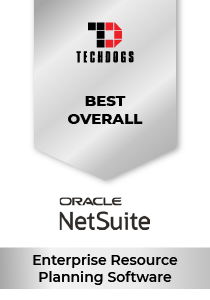
Oracle NetSuite: Best Overall
Oracle NetSuite retains its position in our 2026 list as one of the most established cloud ERP platforms, supporting finance, operations, and global process automation. NetSuite, acquired by Oracle in 2016, now serves more than 43,000 customers across over 219 countries and territories. In 2024, it even earned recognition as a G2 Leader in ERP Systems and Accounting Software and received Frost & Sullivan’s 2024 Global Company of the Year Award for cloud business management. #BestOverall for a reason!
Why We Chose Oracle NetSuite In 2026
NetSuite’s strongest advantage lies in its unified, cloud-native ERP architecture that supports multi-entity operations, global financial consolidation, and AI-driven automation. Its industry-specific editions and deep financial controls give it a competitive edge over modular ERP tools that require heavy integration.
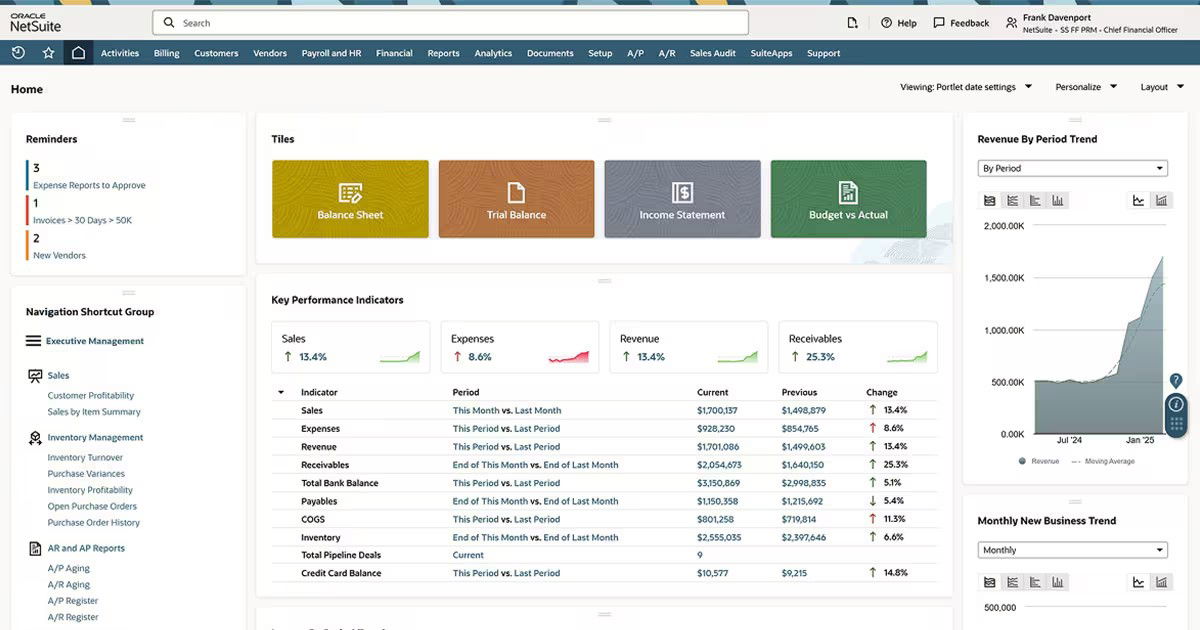
Organizations benefit from advanced financial management, inventory control, subscription billing, and PSA capabilities bundled within a single system. NetSuite continues expanding AI-led insights, workflow automation, and partner integrations. Security remains enterprise-grade with SOC 1 and SOC 2 Type II, ISO 27001/27018, GDPR alignment, and encryption of all sensitive data at rest and in transit.
Pricing
Oracle does not publicly disclose NetSuite pricing. Costs vary depending on modules, user counts, and deployment scale, and businesses must request a customized quote directly from Oracle.
What Works And What Doesn’t
| Pros | Cons |
| Extensive multi-entity, multi-currency, and global financial consolidation capabilities | Complex implementation for smaller teams |
| Unified platform covering finance, operations, CRM, and commerce | Requires certified specialists for customization |
| Robust security framework with strong compliance | Limited pricing transparency |
Our Final Take
NetSuite is ideal for midsize and enterprise organizations that need a scalable, globally capable ERP with strong financial governance. It may not be suitable for smaller companies with limited budgets. However, for growing firms seeking a secure, AI-enhanced, all-in-one ERP foundation, NetSuite can be a great choice.
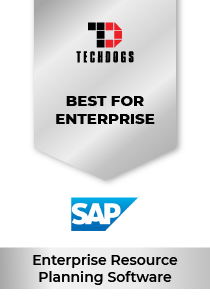
SAP Cloud ERP: Best For Enterprise
The SAP Cloud ERP platform continues to hold a leading position in 2026 as a comprehensive, cloud-first enterprise resource planning solution for finance, supply chain, manufacturing, and service operations. Founded by SAP SE, it has been recognized in the 2024 Gartner, Inc. Magic Quadrants for Cloud ERP for both product-centric and service-centric enterprises. The software supports global companies across multiple industries, and SAP reports broad adoption through its cloud edition offerings.
Why We Chose SAP Cloud ERP In 2026
SAP Cloud ERP earns its place due to its mature cloud architecture built on SAP HANA in-memory database, embedded AI capabilities, and strong industry-specific process support. It excels in organizations seeking global scalability, nonlinear business models, and deep integration across finance, operations, procurement, manufacturing, and service.
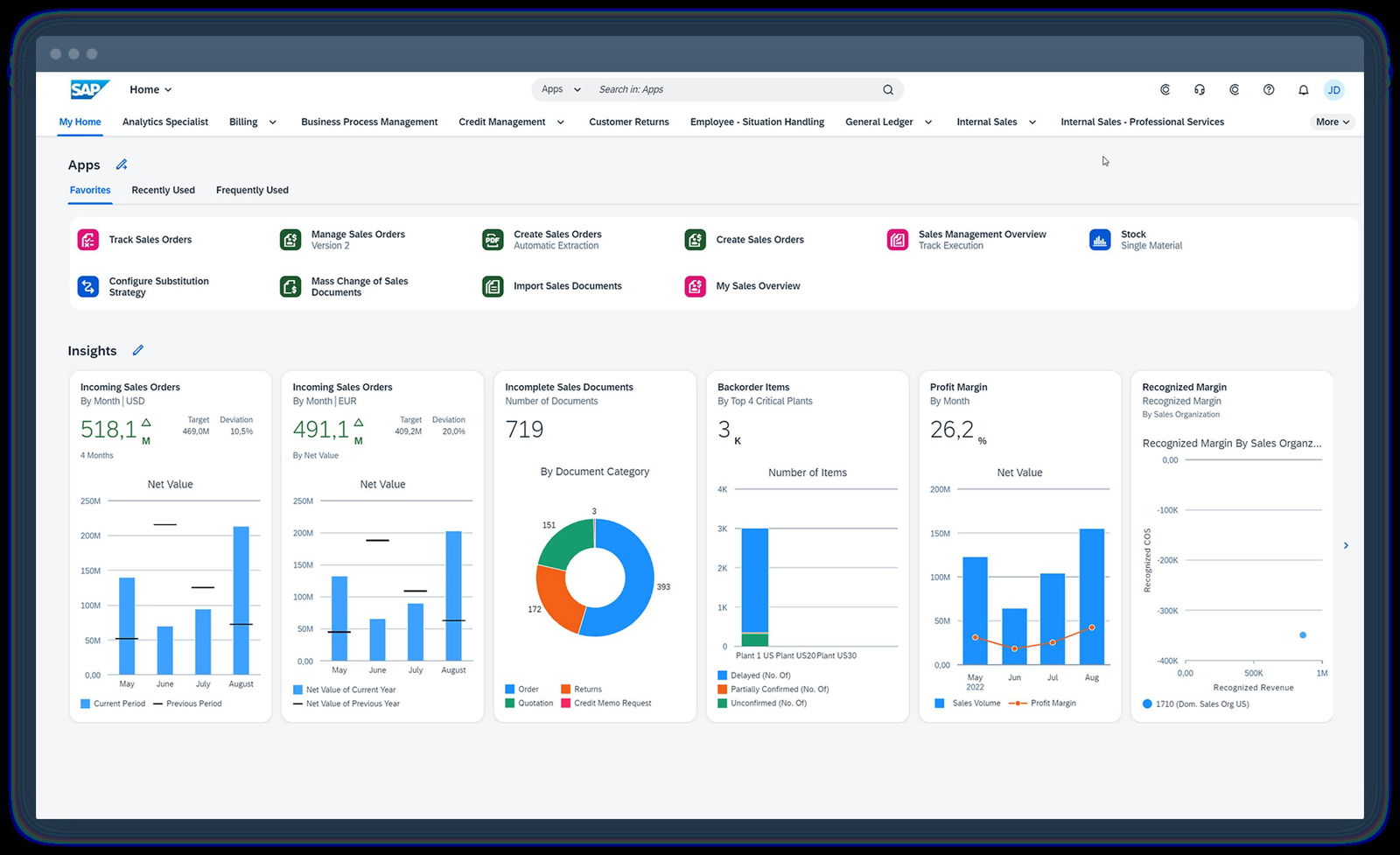
SAP Cloud ERP offers features such as real-time analytics, integrated finance and supply chain workflows, and flexibility across both public and private cloud deployment models. Security and compliance are robust: the solution supports ISO certifications, GDPR alignment, strong encryption, and SAP’s enterprise-grade trust center operations. The solution caters to enterprises needing a secure, scalable backbone with continuous innovation and cloud management.
Pricing
SAP does not publicly disclose fixed pricing for SAP Cloud ERP. Procurement requires a custom quote from SAP based on modules, user volumes, deployment model (public vs private), and service options.
What Works And What Doesn’t
| Pros | Cons |
| Strong global process depth with multi-industry support | High implementation cost |
| Embedded AI, real-time data processing, and advanced analytics capabilities | Overwhelming for smaller teams due to the wide range of features |
| Enterprise-grade security, stability, and vendor ecosystem support | Requires change management for customization and migration |
Our Final Take
SAP Cloud ERP is the best ERP software for large enterprises or global organizations looking for a future-proof, cloud-native ERP platform. It may not be ideal for smaller firms with limited IT resources. However, SAP Cloud ERP is an excellent choice if you need a robust, secure, and industry-hardened ERP.
Odoo: Best Value
Odoo continues to ascend in 2026 as a flexible, all-in-one ERP solution, serving over 15 million users worldwide across 100+ countries. The company achieved Unicorn status with a valuation of approximately €5 billion in late 2024. It also secured recognition at the 2025 Odoo Awards for partner excellence.
Why We Chose Odoo In 2026
Odoo stands out for its modular architecture, open-source core with optional enterprise features, and strong emphasis on usability and rapid deployment. Its ability to span CRM, e-commerce, accounting, inventory, manufacturing, and HR through a unified interface makes it compelling compared to legacy ERP systems, which often require multiple, disparate applications.
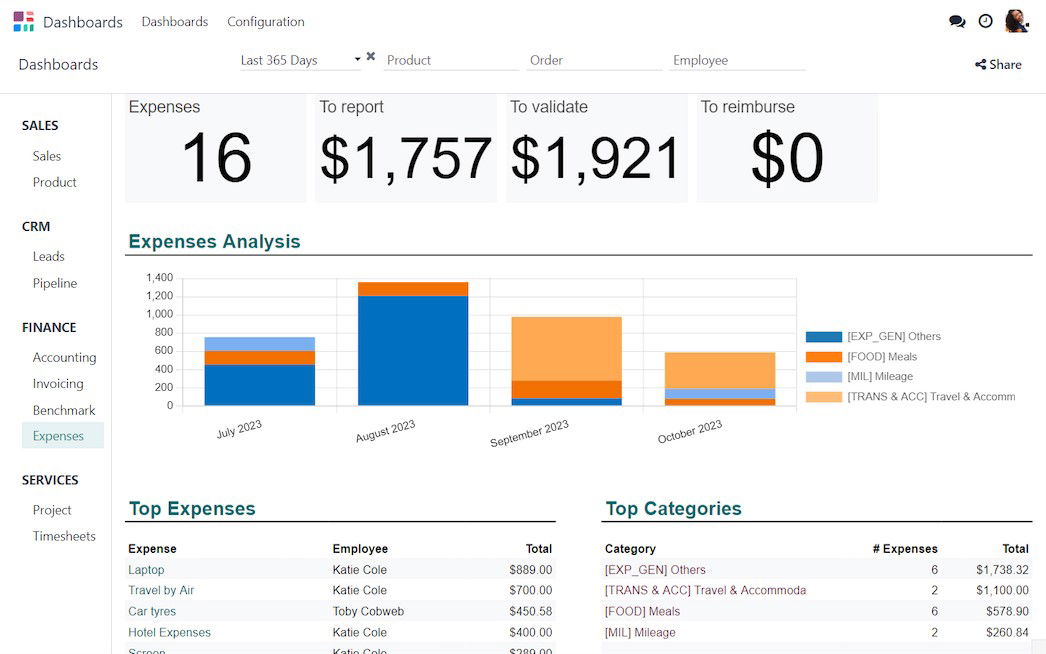
With Odoo, you get an ERP platform that supports cloud and on-premises deployments, an extensive ecosystem of modules and partners, and recent upgrades that bring embedded AI, improved scalability and performance. For security and compliance, Odoo supports encryption at rest and in transit and allows you to host on your own infrastructure if desired, giving you control over data location.
Pricing
Odoo offers a free Community Edition and a paid Enterprise Edition, both available on a per-user, per-month subscription model. Annual billing lowers costs, and the first app is included. Standard plans start around $16.30 annually, while Custom plans begin at $24.50 and include advanced customization features. #BestValue for a reason!
What Works And What Doesn’t
| Pros | Cons |
| Highly modular and scalable ERP | Requires significant configuration and partner expertise |
| Open-source base with optional enterprise features | Could be overwhelming for smaller organizations due to rich features |
| Strong ecosystem, frequent innovation, and an active partner network | Less depth in some industry-specific processes |
Our Final Take
Odoo is best suited for fast-growing mid-sized businesses and enterprise divisions that value flexibility, modularity, and a platform that can evolve. If your organization seeks a modern, integrated ERP backbone, Odoo can be a great choice in 2026.
Microsoft Dynamics 365: Best For Integration
Microsoft Dynamics 365 continues to hold a top position in 2026 as a comprehensive cloud ERP suite spanning finance, supply chain, operations, project services, and commerce. In 2024, it was recognized as a Leader in the Gartner Magic Quadrant for Cloud ERP for both product-centric and service-centric enterprises. Microsoft.com (Gartner announcement) and SoftwareReviews’ Emotional Footprint Awards 2024 also named Dynamics 365 an ERP winner.
Why We Chose Microsoft Dynamics 365 In 2026
The platform’s strength lies in its composable architecture, tight integration with other Microsoft Power Platform and Azure services, and embedded AI capabilities such as Copilot. These features make Dynamics 365 particularly attractive to organizations seeking an agile, scalable ERP that supports hybrid and global operations while leveraging existing Microsoft ecosystems.
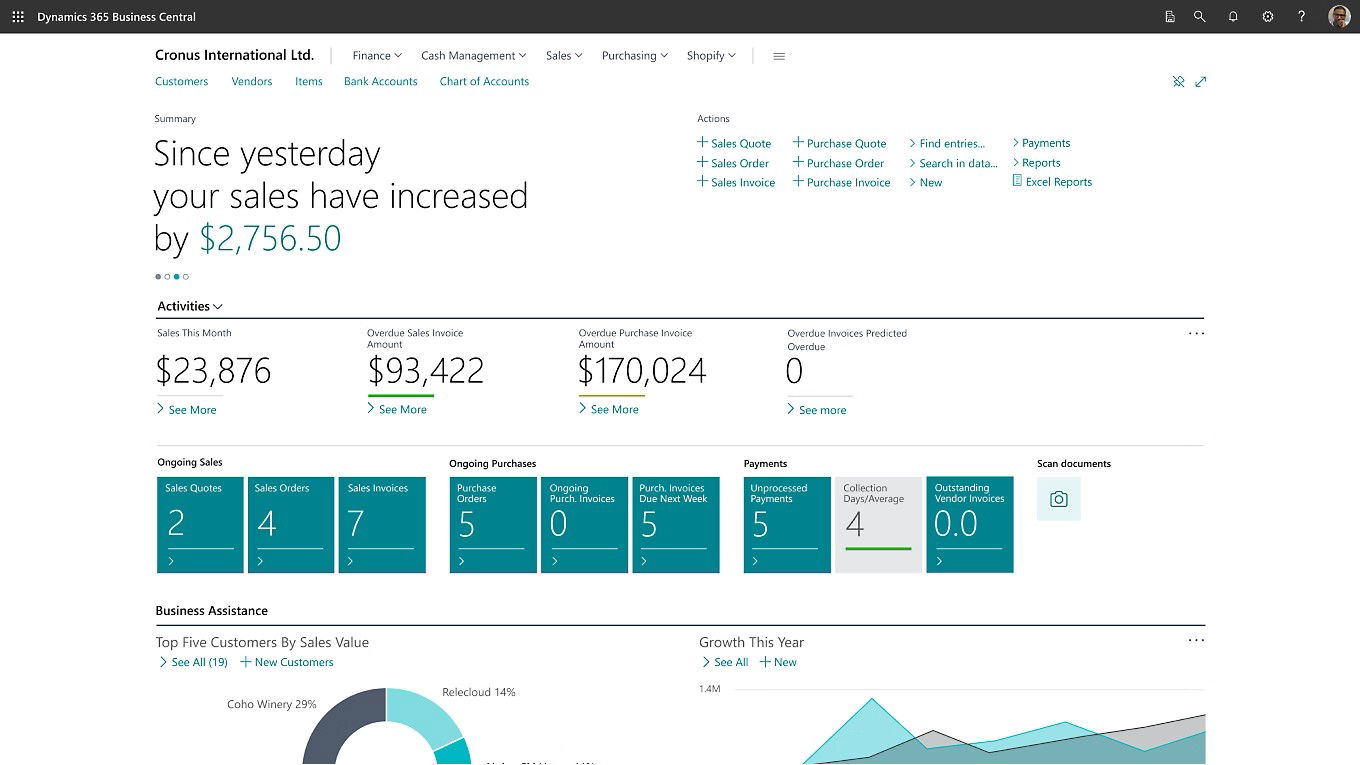
Dynamics 365 delivers real-time analytics, flexible cloud deployment, and a broad range of modules, including Finance, Supply Chain Management, Commerce, and Project Operations. Its security and compliance framework is robust, with role-based access control, audit-trail capabilities, and adherence to global standards (ISO 27001, GDPR, etc.). Organizations gain enterprise-grade governance and scalability from Microsoft’s cloud infrastructure.
Pricing
Microsoft offers two ERP options. Business Central at $80, Premium at $110, and Team Members at $8 per user/month. Finance and Supply Chain Management target enterprises at $210 each, or about $240 combined with attached licensing.
What Works And What Doesn’t
| Pros | Cons |
| Deep integration with the Microsoft ecosystem | Requires extensive deployment and change management |
| High flexibility and broad module coverage across finance, operations, and service | Complex licensing structures and potentially high total cost of ownership |
| Strong security, compliance credentials and global cloud infrastructure | Less industry-specific depth for highly specialized manufacturing or vertical workflows |
Our Final Take
Microsoft Dynamics 365 is best suited for large enterprises and organizations already invested in the Microsoft ecosystem. It may be the best ERP for small businesses with limited budgets or simpler process requirements, given the implementation complexity and cost. However, Microsoft Dynamics 365 remains an excellent choice for 2026.
Infor CloudSuite: Best Customization
Infor CloudSuite holds its position in 2026 as a leading industry-focused cloud ERP platform used by more than 60,000 customers worldwide, with over 15,000 cloud deployments across 175+ countries. In 2024, Infor was recognized as a Leader in the Nucleus Research ERP Technology Value Matrix, and it also earned high customer sentiment scores on G2’s 2024 Grid Reports for ERP. These accolades reinforce their strength in vertical-specific ERP for manufacturing-centric sectors.
Why We Chose Infor CloudSuite In 2026
Infor CloudSuite stands out for deep industry-tailored suites, especially manufacturing, distribution, food & beverage, and healthcare, built on the Infor OS platform and hosted on AWS. Its vertical depth, pre-configured process models, and advanced analytics provide capabilities that generic ERP systems often require heavy customization to achieve.
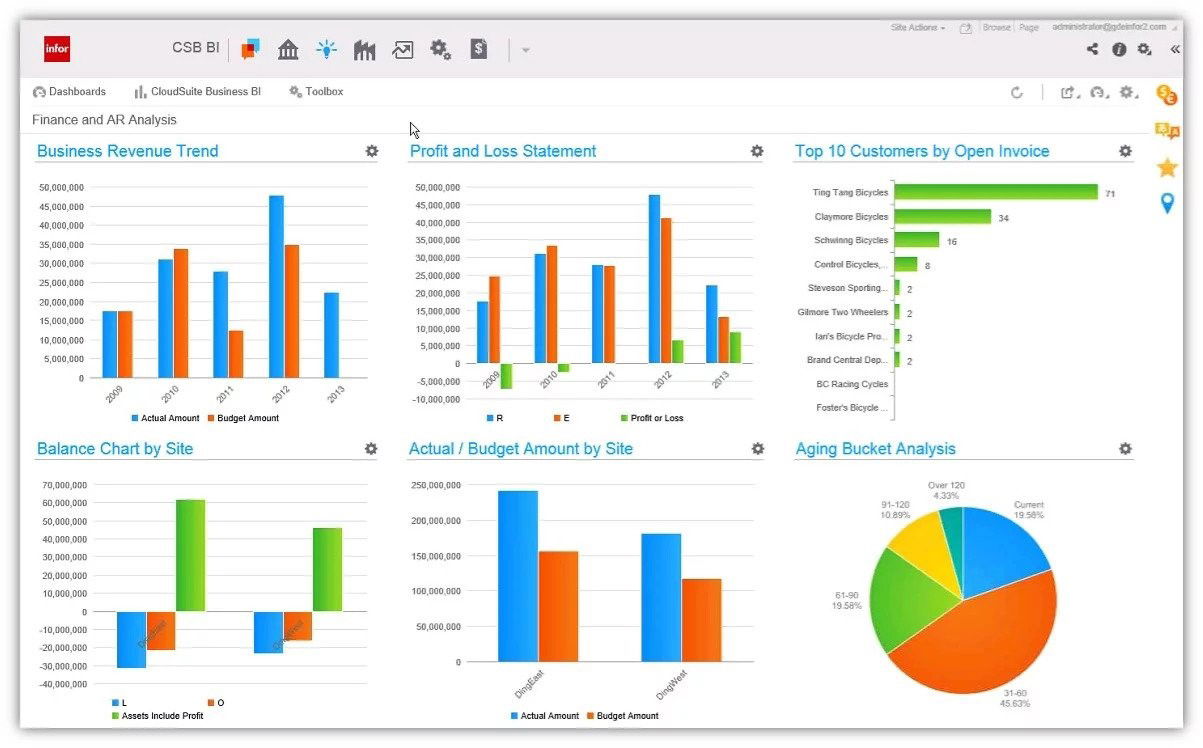
The suite offers real-time data integration, embedded AI and machine-learning capabilities, advanced supply-chain, inventory and production management, and continuous updates without big-bang upgrades. Security and compliance are maintained via data-center standards aligned with global requirements, while the platform supports flexible deployment paths and global scalability.
Pricing
Infor does not publish standard pricing for CloudSuite on its website. Organizations must engage with Infor or an authorized partner to obtain bespoke quotes tailored to modules, user counts, industry editions and deployment scale.
What Works And What Doesn’t
| Pros | Cons |
| Strong industry-specific pre-configured suites | Could be costly and complex for generalized business use |
| Modern cloud architecture with built-in AI, analytics and seamless updates | Lack of transparency in pricing and licensing |
| Global reach and proven large-scale deployments across multiple countries | Requires change management for implementation |
Our Final Take
Infor CloudSuite is best suited for enterprises in industry-intensive sectors seeking a cloud ERP that aligns closely with their business model and process complexity. For organizations prioritizing industry depth, scalability, and continuous innovation, Infor CloudSuite remains a compelling choice for 2026.
Top 5 Enterprise Resource Planning Software Comparison
P.S.: Always remember to visit the vendor’s site for the latest information!
| Criteria |  |
 |
 |
 |
 |
| Starting Price | N/A | N/A | $16.30/user/month | $80/user/month | N/A |
| Avg. User Rating | 4.6 | 4.6 | 4.0 | 4.3 | 4.0 |
| Trial Period / Demo | 14-Day Free Trial | 14-Day Free Trial | Free Demo | 30-Day Free Trial | Free Demo |
| Key Features | Unified cloud ERP, global financials, and AI automation | In-memory architecture and deep industry coverage | Modular apps, open-source base, and AI in Odoo 19 | Composable ERP, Copilot AI, and SCM | Vertical-focused ERP suites, supply chain planning, and embedded AI/ML |
| Integrations | Oracle ecosystem, Oracle Cloud integrations, and more | SAP HANA ecosystem, SAP industry solutions | Large module marketplace and third-party connectors | Microsoft 365, Azure, Power Platform, and more | Infor ION platform, AWS, and more |
Conclusion
Selecting the right enterprise resource planning system in 2026 depends on business size, industry needs, and growth plans. NetSuite and SAP Cloud ERP lead for global enterprises, while Dynamics 365 excels for organizations aligned with the Microsoft ecosystem. Odoo offers the most flexible and cost-efficient option for growing companies, while Infor CloudSuite is best suited to manufacturing-intensive industries.
All five platforms deliver strong security, automation, and cloud performance, but pricing transparency and implementation complexity differ. Companies that align ERP capabilities with operational maturity and long-term strategy will gain the strongest ROI from their chosen system.
So, what are you waiting for? Start planning your resources with Enterprise Resource Planning.
Frequently Asked Questions
What Are The Top 5 Enterprise Resource Planning (ERP) Software Of 2026?
The top ERP platforms of 2026 are Oracle NetSuite, SAP Cloud ERP, Odoo, Microsoft Dynamics 365, and Infor CloudSuite. These solutions stand out for their cloud-native architectures, strong automation capabilities, industry-specific depth, and scalability for organizations of all sizes.
What Are The Features Of Enterprise Resource Planning Software?
ERP software typically includes financial management, supply-chain coordination, inventory control, manufacturing management, project operations, HR and payroll, CRM, analytics, and automation tools. Modern ERP systems also offer AI-enhanced insights, real-time reporting, data security, regulatory compliance, and seamless integration with third-party or industry systems.
What Is The Best Enterprise Resource Planning Software Of 2026?
The best ERP software depends on business needs. Oracle NetSuite and SAP Cloud ERP are top choices for large, global enterprises; Microsoft Dynamics 365 is ideal for organizations within the Microsoft ecosystem; Odoo is best for flexible, cost-effective scaling; and Infor CloudSuite is the strongest for manufacturing-heavy or industry-specific operations.
Tue, Jan 13, 2026

Enjoyed what you read? Great news – there’s a lot more to explore!
Dive into our content repository of the latest tech news, a diverse range of articles spanning introductory guides, product reviews, trends and more, along with engaging interviews, up-to-date AI blogs and hilarious tech memes!
Also explore our collection of branded insights via informative white papers, enlightening case studies, in-depth reports, educational videos and exciting events and webinars from leading global brands.
Head to the TechDogs homepage to Know Your World of technology today!
Disclaimer - Reference to any specific product, software or entity does not constitute an endorsement or recommendation by TechDogs nor should any data or content published be relied upon. The views expressed by TechDogs' members and guests are their own and their appearance on our site does not imply an endorsement of them or any entity they represent. Views and opinions expressed by TechDogs' Authors are those of the Authors and do not necessarily reflect the view of TechDogs or any of its officials. While we aim to provide valuable and helpful information, some content on TechDogs' site may not have been thoroughly reviewed for every detail or aspect. We encourage users to verify any information independently where necessary.
Loading comments...