E-commerce
What Is Headless Commerce And Why Does It Matter?
Share
Overview
You know—the process of picking the plush body, choosing the right amount of fluff, and maybe adding a tiny heart that “beats” when you hug it? Feels good, right?
Well, at Build-A-Bear Workshop, that childhood dream came true for many of us. You didn’t just receive a bear; you built it with your own hands, customizing it from head to toe, complete with its tailored nickname and outfit.
Well, imagine doing that for your online store. Wouldn’t it be awesome?
Well, that’s exactly what Headless Commerce lets individuals and businesses do. Instead of sticking with a pre-built e-commerce platform, you can mix and match your favorite tools, technologies, and designs to craft the ideal experience for your customers.
In this article, we’ll explore what Headless Commerce is, how it works, and why brands everywhere are embracing this “build-it-yourself” approach to digital retail. By the end, you’ll see why decoupling your front-end and back-end could be the smartest way to future-proof your business—and why.
Keep reading!
Headless Commerce might sound like something challenging to understand, but it’s actually one of the biggest revolutions in the e-commerce world.
For most people, it means freedom. Freedom to redesign websites without disrupting their backend. Freedom to launch new channels (like apps, kiosks, or voice assistants) without rebuilding their entire infrastructure. Freedom to experiment faster, integrate smarter tools, and deliver consistent and personalized experiences.
So, if you’ve ever wished you could redesign your website without calling in an army of developers or update your store without breaking what’s already working—you’ve probably wished for Headless Commerce without even realizing it!
So, it’s time to lift the lid and peek inside this “decoupled” approach called Headless Commerce.
Let’s get on with it, shall we?
What Is Headless Commerce?
At its core, Headless Commerce is an e-commerce architecture that separates the front-end (the “head”) from the back-end (the “body”).
In traditional e-commerce platforms, both elements are glued together—the website’s look and the system that powers it are an inseparable unit. If you change one, you risk breaking the other.
Headless Commerce cuts that cord, allowing each part to evolve independently. Think of it as a “best of both worlds” setup, where:
-
The backend handles logic, data, and checkout (your store’s brain).
-
The frontend handles how everything looks and feels to customers (your store’s face).
-
APIs (Application Programming Interfaces) act as the “nerves,” connecting the two and passing information seamlessly between them.
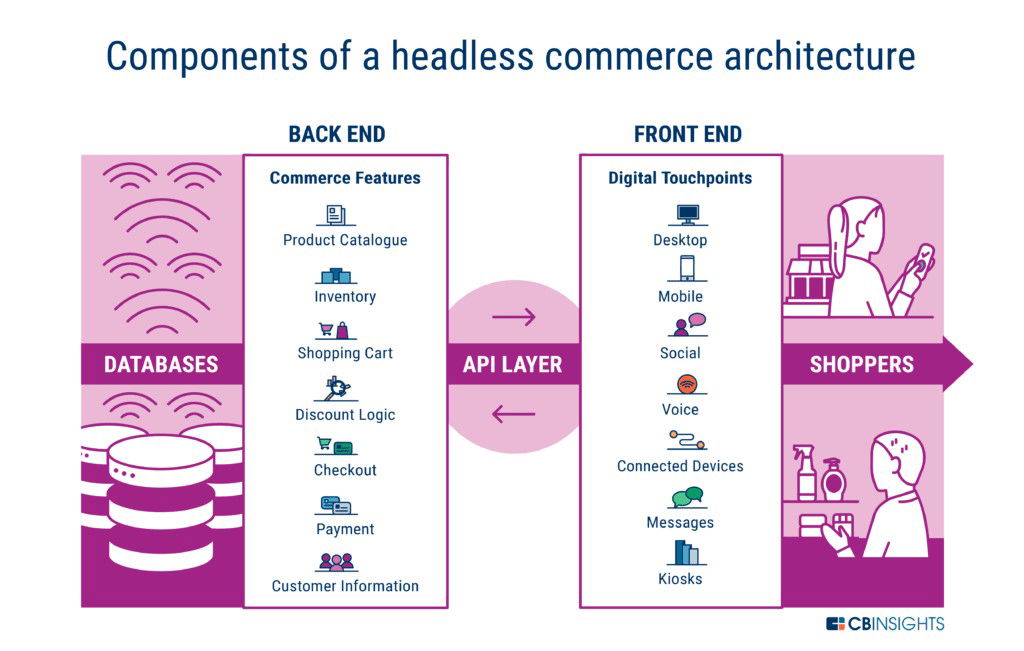
This separation gives developers the freedom to use any front-end technology—React, Vue, Next.js, or even new devices like smart mirrors or voice assistants—while keeping the same back-end engine running behind the scenes.
Similar to how Build-A-Bear lets you choose the bear’s external outfit and internal stuffing separately. That’s Headless Commerce in action—the stuffing (back-end) stays the same, but you can give your bear (storefront) a new outfit (front-end), without starting from scratch.
Now that we know what Headless Commerce is, you might be wondering: how did we get here?
Let’s take a quick stroll through the timeline of how Headless Commerce came to life.
A Brief History Of Headless Commerce
Like most great ideas, Headless Commerce wasn’t invented in a single “Eureka!” moment—it evolved from decades of digital growing pains. Here’s how:
-
The Early 2000s: The Monolithic Era
Back in the early days of online shopping, e-commerce platforms were monolithic—everything was bundled together: the front-end, back-end, database, and checkout. Changing your homepage banner often meant risking the entire site’s stability. Customization was clunky, innovation was slow, and developers lived in fear of “breaking production.”
-
The 2010s: The Omnichannel Awakening
Then came the rise of smartphones and social media. Shoppers began buying through mobile apps, social feeds, and even voice assistants, but traditional commerce systems couldn’t keep up. Each new channel required building yet another storefront, eating up time, money, and developer sanity.
That’s when a question started circulating in dev circles: What if we could keep the powerful backend but use any front-end we want for any device? -
The Mid-2010s: The API-First Revolution
That question sparked a revolution. Developers began decoupling their front-ends from their back-ends using APIs—lightweight digital bridges that could deliver data anywhere. Commerce giants like Shopify, Magento, and BigCommerce embraced this API-driven approach, while innovators like CommerceTools and Contentful made “headless” their core identity.
-
The 2020s: The Headless Era
By the 2020s, Headless Commerce became the new backbone of e-commerce. Brands adopted it to power faster, more personalized, and consistent shopping experiences across every device and channel. From websites to TikTok shops to smart fridges, the same backend could now fuel a thousand unique front-ends—connected and streamlined.
Not bad for a concept that started as a developer’s wish to stop crashing the checkout page, right?
However, how does this modern, “build-it-yourself” e-commerce setup tick beneath the surface?
Let’s learn about that next!
How Headless Commerce Works
Headless Commerce might sound complex, but it actually works through a straightforward concept: separation and communication.
Here's how the magic happens, step by step.
-
Step 1: The Back-end
This is your store’s hidden engine that's managing products, pricing, checkout, and customer data. In Headless Commerce, the backend focuses purely on performance, not presentation—like the stuffing inside a Build-A-Bear: vital, but unseen.
-
Step 2: The API Layer
APIs are the messengers linking your backend to any front-end—website, app, or voice assistant. When a shopper taps “Add to Cart,” the API fetches that data instantly, ensuring every channel speaks the same digital language.
-
Step 3: The Front-end
This is your storefront’s style statement. Since it’s decoupled, you can use any programming language—React, Vue, and even AR—to create customer experiences. It’s like changing your bear’s outfit without ever touching the stuffing inside!
-
Step 4: Omnichannel Harmony
Once connected, your backend becomes a single source of truth for every touchpoint—web, app, social, or voice. Each can have its own look while sharing the same foundation, ensuring consistent, seamless shopping everywhere.
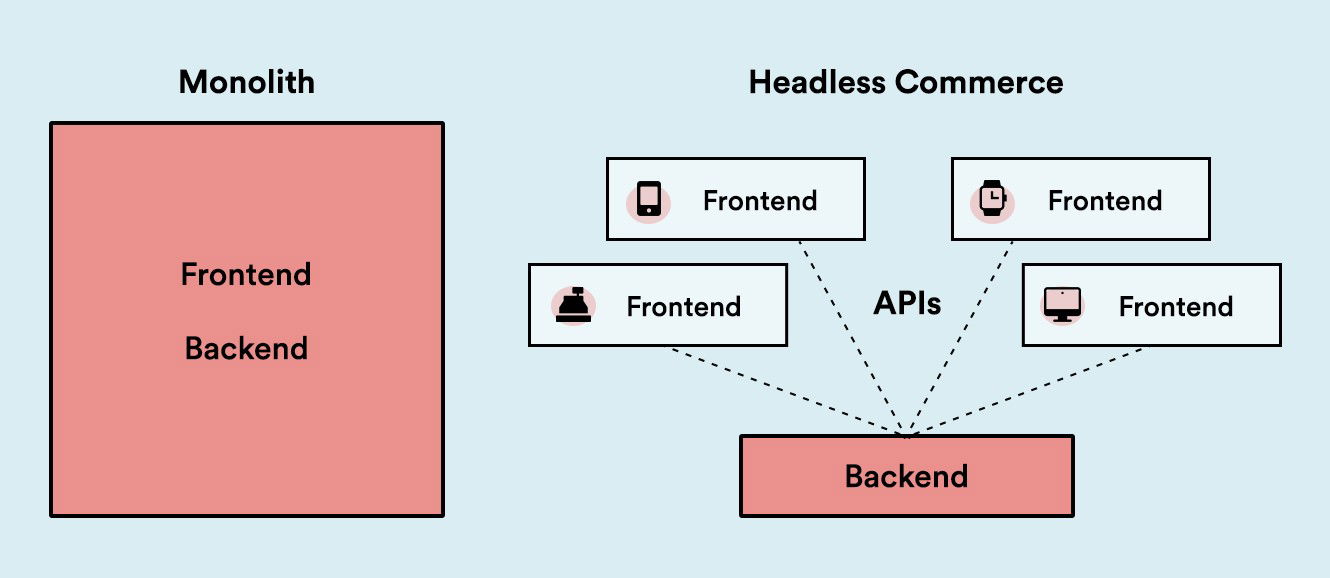
That’s how brands today create those seamless, cross-device shopping journeys that feel consistent no matter where customers engage.
So, we’ve seen how Headless Commerce works its behind-the-scenes wizardry—but what makes it so valuable to businesses?
Let’s explore that next!
Why Does Headless Commerce Matter?
In a digital world where customers expect everything everywhere all at once (no multiverse required), Headless Commerce helps brands stay agile, creative, and competitive.
Let’s explore the key reasons why businesses are going headless.
-
Omnichannel Power
Shoppers don’t just buy on websites anymore—they shop on phones, apps, and even voice assistants. Headless Commerce keeps every channel connected to the same backend, ensuring consistent pricing, products, and experiences everywhere. In fact, Vocal Media states that 76% of organizations say using headless improves their ability to deliver cross-channel experiences.
-
Performance And Speed
Headless sites load faster because they use modern frameworks like React and Next.js, pulling only the data they need. Less bloat, more speed—meaning better SEO, smoother shopping, and fewer impatient customers clicking away. According to Magenest’s study, brands adopting headless architectures have reported 30% performance improvements and 23% lower bounce rates.
-
Personalization And Creativity
With Headless Commerce, your team can design unique experiences for every device or audience—all powered by the same backend. Plus, 91% of consumers say they’re more likely to shop with brands that remember and reward them, as stated by Crystallize’s study. No more cookie-cutter storefronts!
-
Innovation And Future-Proofing
Because it’s API-driven, you can plug in new tech—from AI tools and AR try-ons to conversational shopping—without rebuilding everything. Headless Commerce keeps your business ready for what’s next, not just what’s now.
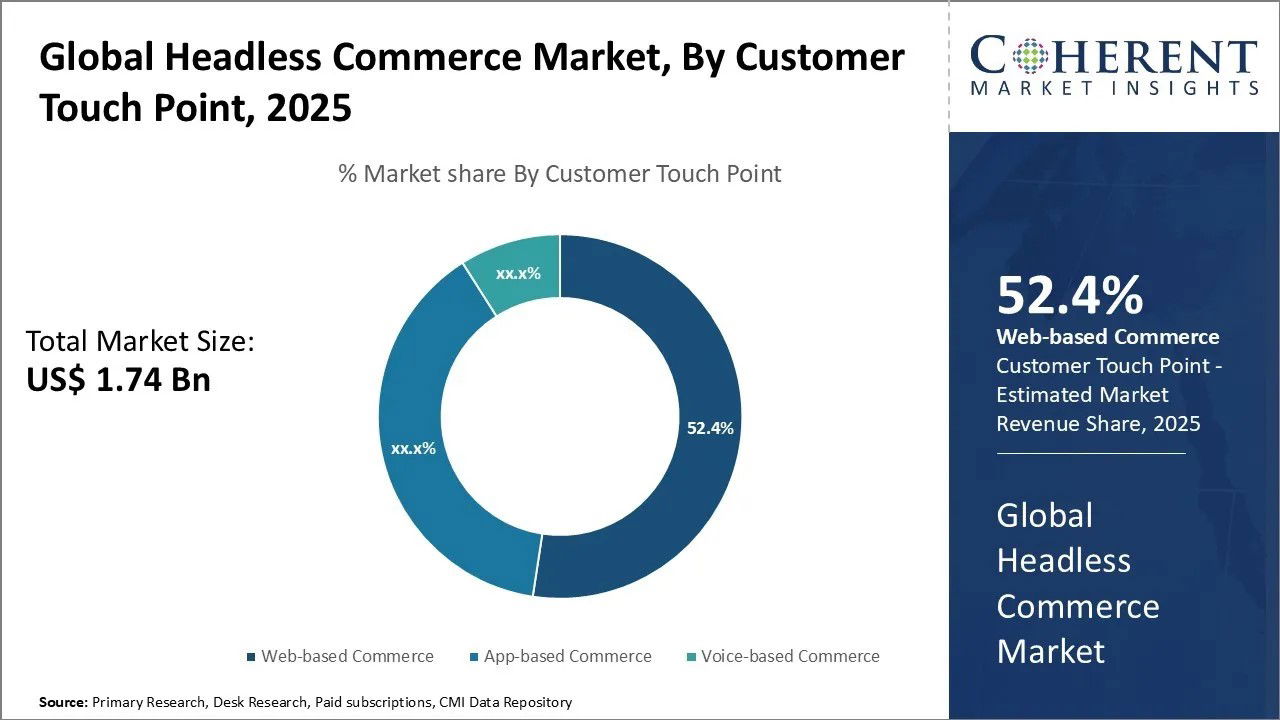
The Headless Commerce market, according to Modern Diplomacy’s study, is projected to grow at a CAGR of ~22.5% from 2024 to 2035, reaching ~$13.2 billion, and 80% of organizations plan to adopt headless architecture in the coming years.
Together, these benefits make Headless Commerce less of a “nice-to-have” and more of a survival strategy for modern brands.
While Headless Commerce unlocks flexibility and innovation, it’s not all fluff and fairy dust. This model comes with its own hurdles—mostly around complexity, cost, and coordination.
Let’s look at the not-so-cuddly side of going headless!
Challenges Of Headless Commerce
Sure, Headless Commerce sounds like a dream setup, but it introduces a few real-world challenges that brands should know before diving in.
-
Complexity And Cost
Going headless often means building more from scratch front-end, integrations, and maintenance. It’s powerful but can be pricey, especially for small businesses without strong in-house development expertise.
-
Technical Skill Requirements
Headless Commerce calls for developers who understand APIs, front-end frameworks, and system integrations. It’s not exactly “plug and play”, but more like “assemble and orchestrate.”
-
Integration And Consistency
When everything’s modular, things can slip through the cracks. Ensuring real-time data sync between your CMS, PIM, and checkout requires constant monitoring—one laggy experience and the customer moves to a competitor’s website.
-
Strategic Fit
Not every business needs to go fully headless. For smaller brands, a hybrid approach (part headless, part traditional) can offer flexibility without the complexity overload.
So, yes, Headless Commerce is a game-changer, but not a one-size-fits-all solution.
Now, even with a few bumps on the road, brands everywhere are jumping on the headless bandwagon—and for good reason. Let’s peek at how some of the biggest names in retail have stitched this strategy into their digital DNA!
Real-World Examples Of Headless Commerce
Here’s how some of your favorite brands are using Headless Commerce to stay fast, flexible, and focused.
-
Nike
Nike went headless to deliver lightning-fast site performance and personalized product drops across devices. Their new architecture lets teams test campaigns, roll out features, and handle global traffic spikes—all without breaking a sweat (or a server).
-
Burrow
Furniture brand Burrow built a headless platform to give customers a smoother, design-rich shopping experience. Their front-end, built with modern frameworks, integrates seamlessly with a custom backend—allowing interactive product previews and faster load times.
-
Target
Target’s headless approach allows its content and commerce teams to work independently—updating blog stories, deals, and product listings simultaneously. This means faster publishing, localized campaigns, and a consistent omnichannel experience.
-
Sephora
Sephora uses headless architecture to unify its web, app, and in-store digital experiences. Customers can browse products on the app, scan items in-store, or shop online—all powered by one central commerce engine.
With these examples, it’s clear that headless commerce isn’t just a tech trend, but a creative canvas for brands that want control, consistency, and speed.
Looks cool when Nike and Sephora do it, right?
Although, how can you start building your own headless success story—minus the billion-dollar budget and celebrity endorsements?
Let’s break it down step by step!
How To Get Started With Headless Commerce?
Diving into Headless Commerce doesn’t mean flipping your store upside down overnight. The trick is to start small, scale smart, and build the right foundation from day one.
-
Step 1: Audit Your Stack
Before cutting any heads off (digitally speaking), take stock of your current setup. Which parts of your site slow you down—the CMS, checkout flow, or design limitations? Identifying these bottlenecks helps you decide where to “go headless” first.
-
Step 2: Choose The Right Platform
Pick a platform that plays nice with APIs, offers strong integrations, and can scale with you. Some popular options include Shopify Plus, CommerceTools, BigCommerce, and Contentful—each offers flexibility for both developers and marketers.
-
Step 3: Start Small—Go Hybrid
You don’t need to decouple everything on day one. Start with one channel (like your mobile site or blog) and test the results. Hybrid setups let you keep parts of your existing system while experimenting with headless benefits safely.
-
Step 4: Monitor And Iterate
Once it’s live, track your metrics—site speed, engagement, conversions—and use the data to refine your experience. Headless Commerce is a journey, not a one-time migration. The beauty is that you can evolve continuously without breaking the backend.
-
Common Pitfalls To Avoid
-
Overengineering: Don’t build fancy integrations you won’t use.
-
Neglecting UX: A fast backend means nothing if your UI confuses shoppers.
-
Skipping Maintenance: APIs and integrations need regular checkups—treat them like digital pets, not fire-and-forget tools.
-
In short, start slow, think modular, and build toward the experience your customers actually want—that’s the secret to a successful headless customer journey.
So, we’ve journeyed from stuffed bears to APIs—and if one thing’s clear, it’s this: Headless Commerce isn’t just a passing buzzword; it’s shaping the very future of how we shop.
Conclusion
Headless Commerce is more than clever architecture—it’s a mindset shift that frees you to design, innovate, and scale at your own pace.By separating the front-end “face” from the back-end “engine,” brands gain the agility to build truly personalized, lightning-fast, and omnichannel experiences—all without breaking the system that keeps the business running.
Sure, it takes effort. It’s not plug-and-play, but for brands that dream bigger and want to deliver seamless experiences from TikTok to tablet, it’s a worthy leap.
Headless Commerce lets you keep your store’s heart intact while giving it endless new outfits. So maybe it’s time to take a cue from that childhood bear—give your online store a new look, fresh features, and a whole lot of personality with the same core.
After all, the future of commerce isn’t about losing your head… it’s about thinking beyond it.
Frequently Asked Questions
What Is Headless Commerce?
Headless Commerce is an architecture where the frontend (user interface) is decoupled from the backend (commerce engine). APIs connect the two, letting businesses redesign or extend customer touchpoints freely without disrupting backend logic.
How Much Does It Cost To Run A Headless Commerce Solution?
Costs vary depending on platform, order volume, front-end complexity, and availability of integrations. Besides base platform fees, you need to account for building the frontend, integrating subsystems (search, CMS, etc.), and ongoing API maintenance.
Is Headless Commerce Future-Proof?
Yes, by design, it allows brands to adopt emerging touchpoints (voice, AR/VR, IoT, etc.) and update frontends without touching core systems. This flexibility helps businesses adapt to evolving customer behaviors and technology trends.
Wed, Oct 8, 2025

Liked what you read? That’s only the tip of the tech iceberg!
Explore our vast collection of tech articles including introductory guides, product reviews, trends and more, stay up to date with the latest news, relish thought-provoking interviews and the hottest AI blogs, and tickle your funny bone with hilarious tech memes!
Plus, get access to branded insights from industry-leading global brands through informative white papers, engaging case studies, in-depth reports, enlightening videos and exciting events and webinars.
Dive into TechDogs' treasure trove today and Know Your World of technology like never before!
Disclaimer - Reference to any specific product, software or entity does not constitute an endorsement or recommendation by TechDogs nor should any data or content published be relied upon. The views expressed by TechDogs' members and guests are their own and their appearance on our site does not imply an endorsement of them or any entity they represent. Views and opinions expressed by TechDogs' Authors are those of the Authors and do not necessarily reflect the view of TechDogs or any of its officials. While we aim to provide valuable and helpful information, some content on TechDogs' site may not have been thoroughly reviewed for every detail or aspect. We encourage users to verify any information independently where necessary.
Loading comments...