
 Featured
Data Management
Top 5 Database Security Tools Of 2026
Share
TL;DR
-
Satori: Provides a self-service data portal with automated classification and just-in-time access for cloud environments.
-
DBHawk: Features a user-friendly web-based platform that implements a zero-trust approach for managing database credentials.
-
Oracle Data Safe: Delivers a centralized cloud service for risk assessment and activity auditing specifically for Oracle ecosystems.
-
Trellix: Offers extensive vulnerability management and virtual patching to protect sensitive information without requiring system downtime.
-
Imperva: Scales protection across large environments using a data security fabric that automates compliance and threat monitoring.
Introduction
Imagine a bank in a wild world where everything looks fine, until a hacker finds a small gap in the system. In just a few hours, millions of records like names, addresses, and credit details are exposed. This isn’t just fiction; it reflects the real Capital One breach that affected over a hundred million people. It shows how one weak point can quickly damage trust and cause major losses.
Today, database security is no longer optional but a basic need. These tools help protect important data by allowing only the right users in and blocking threats using encryption and real-time monitoring. They focus on prevention rather than fixing damage later. In this guide, we look at the top 5 Database Security Tools of 2026 that help keep your data safe and systems strong. Read on!
What Are Database Security Tools?
Database Security Tools help protect sensitive data from threats, such as cyberattacks, unauthorized access, and data breaches. These tools act as a security shield, ensuring that only the right people can access critical information while keeping hackers and malicious activities at bay.
They offer features like encryption, access control, real-time monitoring, and automated threat detection. Whether a small business or a large enterprise, these tools help organizations maintain data integrity, comply with security regulations, and prevent costly breaches.
So, grab your coffee and settle in as we explore the top 5 Database Security Software of 2026!
Top 5 Database Security Tools Of 2026
Meet the top 5 Database Security Tools of 2026. Each brings something unique to the table. The best? That’s up to your business needs.
 |
 |
 |
 |
 |
Satori: Best for Integration
Back on this year's list, Satori is a go-to choice for businesses trying to balance data access with strong security. The platform gives teams a self-service data portal where they can quickly find and access approved datasets without waiting through long manual approval cycles. Recognized as a G2 High Performer and Leader in Winter 2024, Satori is helping organizations reduce risk, speed up operations, and make data more accessible without compromising security.
Why We Chose Satori In 2026
Satori stands out for making data security feel far less complicated than it usually is. The platform gives security teams a clear view of where sensitive data lives, who is accessing it and how it’s being used from one centralized dashboard. Instead of relying on slow manual processes, Satori continuously discovers and classifies data automatically.
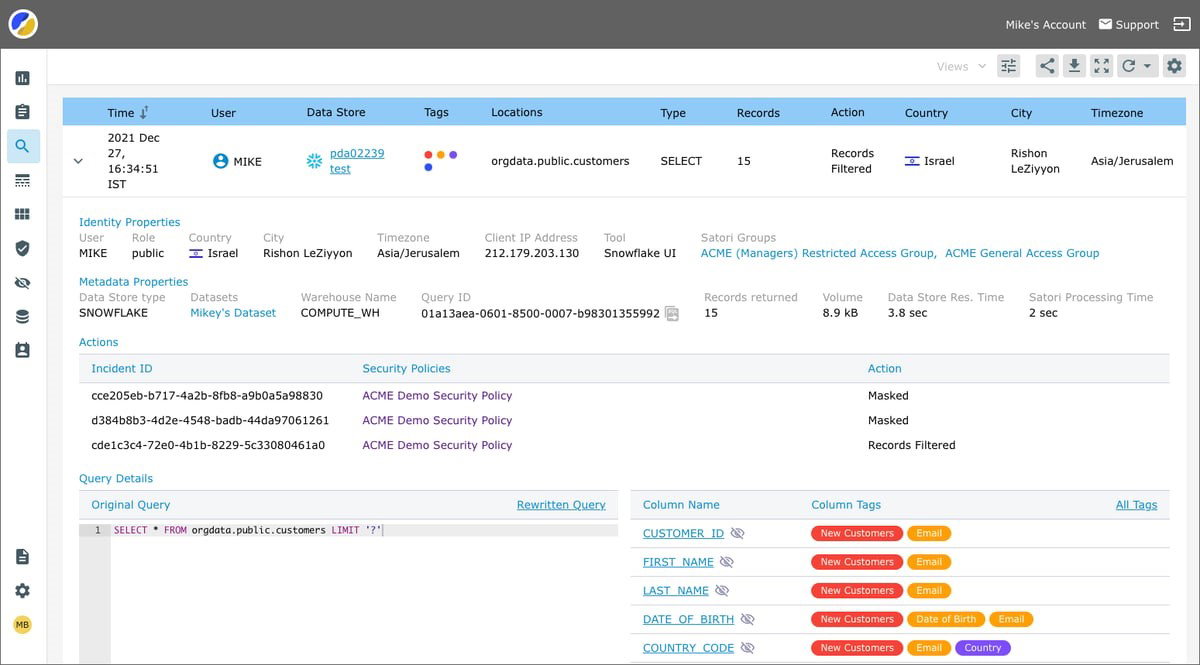
With Satori, teams can set access policies across multiple data stores, monitor activity in real time, and even automate actions when risks appear. Features like just-in-time access and live enforcement help reduce unnecessary exposure to sensitive information while still keeping data available to the right people. For companies dealing with fast-moving AI and analytics workloads, Satori offers visibility and control many older security systems still struggle to deliver.
Pricing
Satori’s pricing comes in three layers which are Discover, Monitor, and Protect. It starts with automatically finding and classifying data, then moves to continuous monitoring of databases and AI apps, and finally stronger access controls to reduce security risks at scale. Businesses can get detailed pricing by reaching out to the Satori team directly.
What Works And What Doesn’t
| Pros | Cons |
| Clear data visibility | Initial setup effort |
| Automated data classification | Performance lag issues |
| Strong access controls | High pricing concerns |
Our Final Take
Satori is best suited for modern data-driven teams and larger organizations looking for stronger visibility, control, and policy-based security across cloud and AI environments. It may not be ideal for teams wanting a very simple, lightweight setup. Overall, it’s a good choice if you need scalable, hands-on data security without slowing down operations.
DBHawk: Best User Experience (UX)
A fresh entry to the lineup, DBHawk by Datasparc makes database access simpler and more manageable for businesses. The platform follows a zero-trust approach to help organizations control who can access sensitive data while keeping credentials protected and activity monitored in real time. Ranked as G2’s 1st Easiest To Use Database Security software, DBHawk stands out as a practical option for businesses looking to strengthen database security without adding unnecessary complexity to everyday operations.
Why We Chose DBHawk In 2026
DBHawk keeps database security practical without turning it into a complicated process for teams. The platform brings together real-time monitoring, auditing, access control, SQL analytics, compliance reporting and data masking in one place, so businesses do not have to rely on multiple tools to manage security. One thing that stands out is its web-based setup, which lets users securely access databases through a browser instead of traditional desktop clients. DBHawk also keeps credentials protected in the background while applying security measures like SSL encryption, 2FA and SSO to reduce unnecessary exposure.
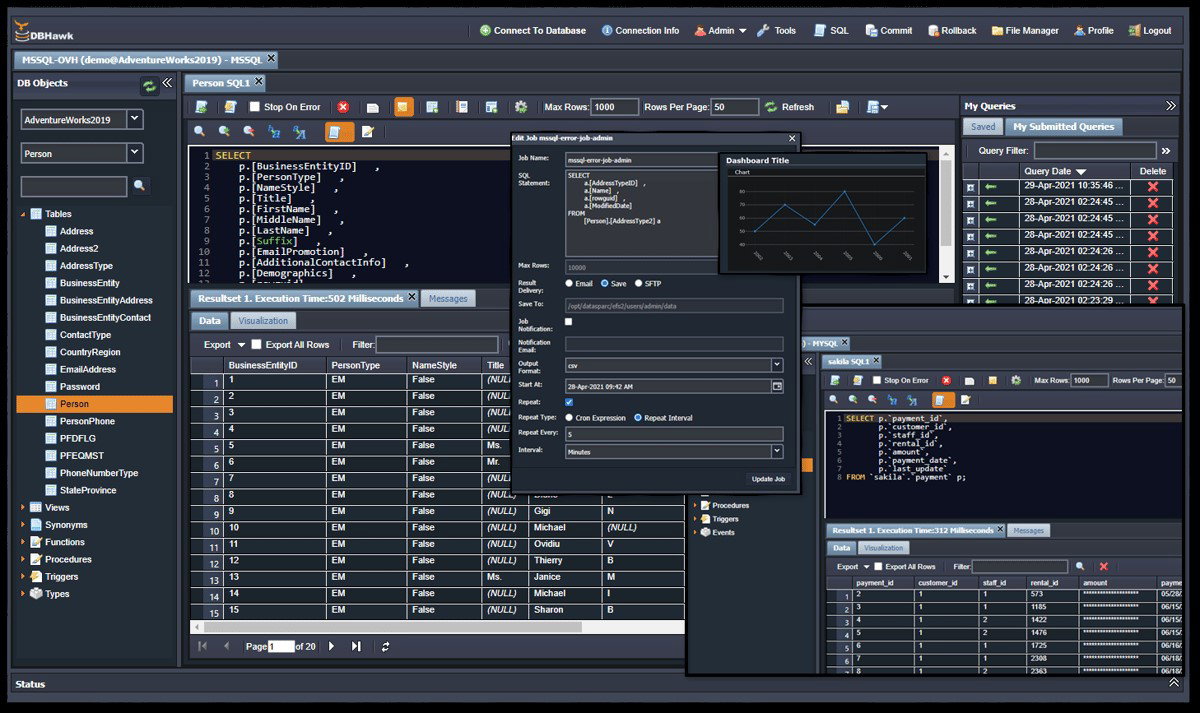
What also helped DBHawk stand out in 2026 is how approachable it feels for businesses managing both cloud and on-prem databases. Teams can monitor activity, control access and stay aligned with compliance requirements without making daily workflows harder. The platform also offers expert support, online documentation and demo walkthroughs, which makes onboarding and ongoing management a lot smoother for growing organizations.
Pricing
DBHawk offers two pricing options which are SaaS and Enterprise. The SaaS plan starts at $40 per user per month and includes hosting, security features, SQL tools and support. Businesses that want to run DBHawk on their own cloud or on-prem systems can choose the Enterprise plan and contact the sales team for pricing details.
What Works And What Doesn’t
| Pros | Cons |
| Easy web-based access | Initial learning time |
| Strong security controls | Complex queries |
| Smooth cloud integration | Testing takes time |
Our Final Take
For businesses that need secure and centralized database access without adding extra complexity, DBHawk stands out as a practical option. It may not be the best fit for teams working with very limited budgets, but it works well for organizations that want easier database access management, secure user control and better visibility across their data systems.
Oracle Data Safe: Best for Enterprise
Returning to the list is Oracle Data Safe. Built as a cloud-based service on Oracle Cloud Infrastructure, the tool has become a trusted database security solution for organizations running large Oracle environments and handling sensitive business data. Designed for Oracle Autonomous Database and Oracle Database Cloud Service environments, Oracle Data Safe provides stronger visibility and protection across databases while keeping security management more organized and manageable.
Why We Chose Oracle Data Safe In 2026
Oracle Data Safe brings together activity auditing, risk assessment, user monitoring, data masking and compliance management through one centralized cloud service. Its sensitive data discovery capability automatically scans databases to identify personal, financial, healthcare and other regulated information. This helps teams quickly understand where sensitive data lives and what needs stronger protection before it becomes a compliance issue.
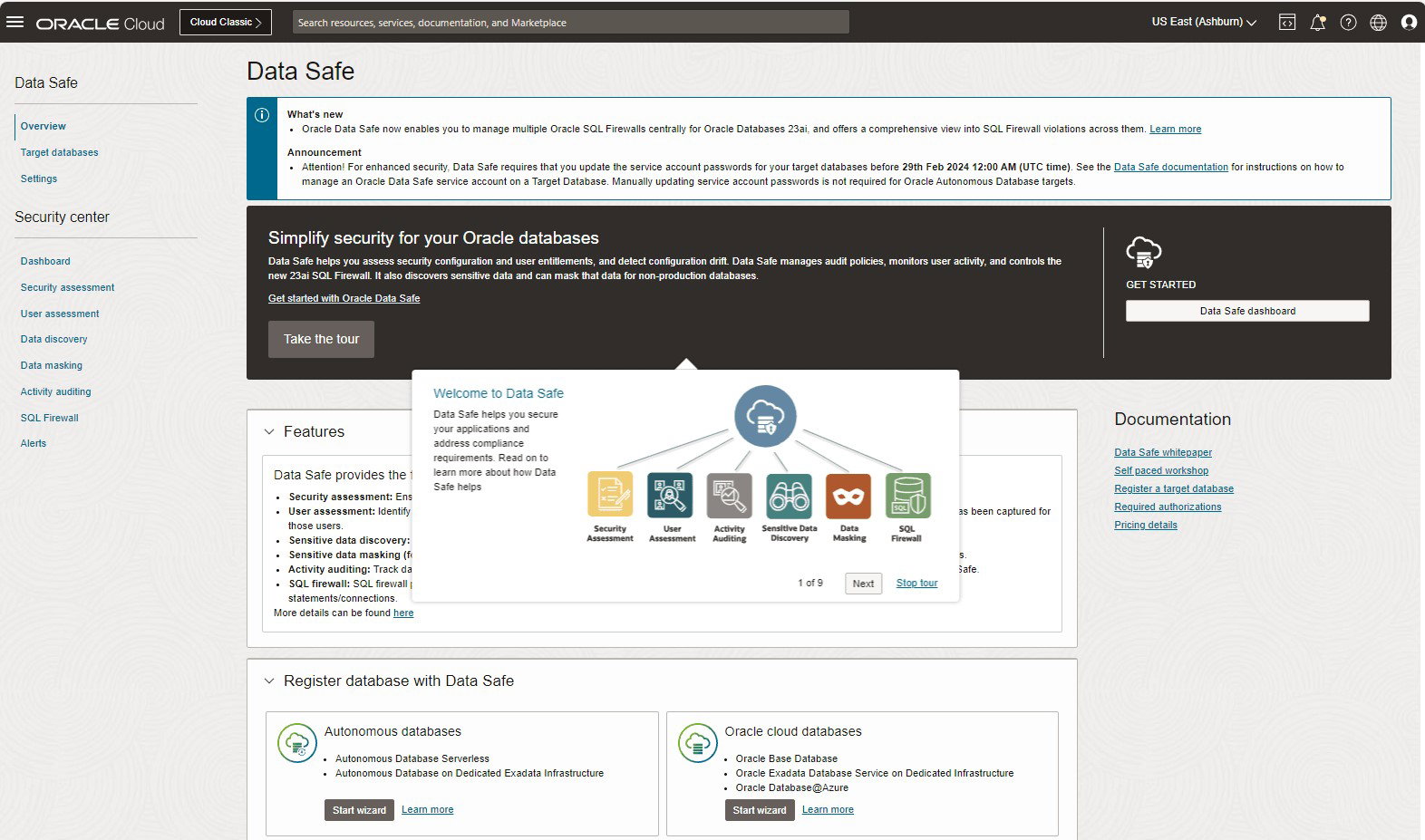
The tool also handles security across large database environments, including multicloud and on-premises setups. It helps organizations identify risky users, weak passwords, unusual activity and configuration issues while keeping long-term audit records for compliance needs like GDPR, HIPAA and PCI DSS. Features like SQL Firewall management, automated alerts, REST APIs and centralized policy controls also make ongoing security operations feel far more manageable for database and security teams.
Pricing
Oracle Data Safe follows a usage-based cloud pricing model, where costs depend on factors like database size and overall usage. Oracle also includes free usage options with some Oracle Cloud database services, which can make the platform a practical choice for businesses already working within the Oracle ecosystem.
What Works And What Doesn’t
| Pros | Cons |
| Strong data protection | Slow onboarding process |
| Automatic activity auditing | Complex setup |
| Helpful compliance reporting | Outdated UI |
Our Final Take
Businesses already invested in Oracle databases will find Oracle Data Safe especially useful for keeping security, compliance and monitoring tasks more organized from one place. While it is more tailored toward Oracle environments, it remains a strong choice for teams looking to manage sensitive data and database risks at scale through a cloud-based platform.
Trellix: Best for Security
Trellix, formerly part of McAfee’s enterprise security business, makes its debut on this year’s list with a strong focus on database and data security. The platform helps businesses protect sensitive information, manage user access and secure data at scale with 700+ patch protections, support for 400+ file formats and over 24 million protected drives worldwide. Recognized as a Challenger in the 2025 Gartner Magic Quadrant for Endpoint Protection Platforms and a Strong Performer in Forrester’s Endpoint Security report, Trellix continues to build a strong presence in the database security space.
Why We Chose Trellix In 2026
Trellix helps organizations discover and classify sensitive information across databases by giving teams a clearer picture of where important business and customer data exists. It also helps reduce compliance pressure by monitoring database activity, controlling access and blocking unauthorized actions before they become serious security issues.
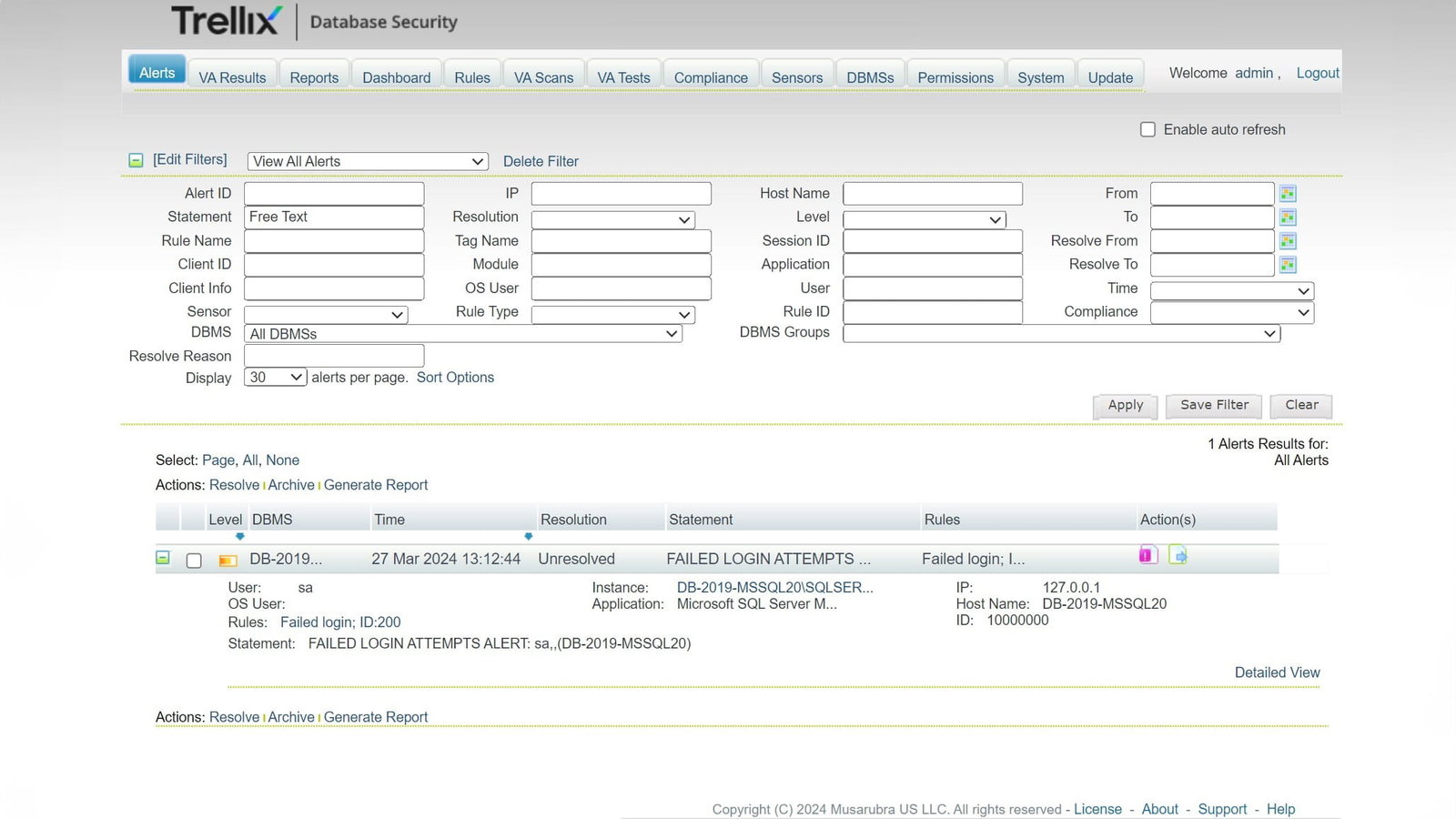
Trellix also does a good job of helping security teams stay ahead of vulnerabilities without interrupting operations. Its vulnerability management tools automatically scan supported databases, identify known risks and provide guidance on how to fix them. The platform’s virtual patching feature adds another layer of protection by helping businesses defend against vulnerabilities and attacks without needing system downtime. Combined with real-time database activity monitoring, Trellix gives organizations stronger visibility and control while keeping security operations more manageable.
Pricing
While Trellix does not publicly list detailed pricing, businesses can contact the Trellix team directly to get custom pricing quotes based on their security and database requirements.
What Works And What Doesn’t
| Pros | Cons |
| Strong threat detection | Expensive for small teams |
| Helpful audit automation | Complex customization process |
| Detailed security reporting | Slight system slowdowns |
Our Final Take
Trellix works best for enterprises that need broad database protection, vulnerability management and centralized security monitoring across large environments. It may not be the easiest fit for smaller organizations with limited security budgets, but it remains a good option for businesses focused on long-term database and data protection.
Imperva: Best for Scalability
Imperva is back again as one of the well-recognized names in database and application security. Trusted by more than 35,000 organizations and supported by over 500 partners worldwide, the platform delivers security solutions across 150 countries. Recognized as a Leader in the 2025 Forrester Wave™ WAF Report, for its strong position in the cybersecurity market Imperva helps businesses protect sensitive information and reduce security risks at large scale.
Why We Chose Imperva In 2026
Imperva provides businesses a more complete view of how sensitive data is being accessed and used across different environments. Its Data Security Fabric and Data Activity Monitoring capabilities help security teams track database activity, reduce compliance risks and quickly spot unusual behavior before it turns into a larger security problem.
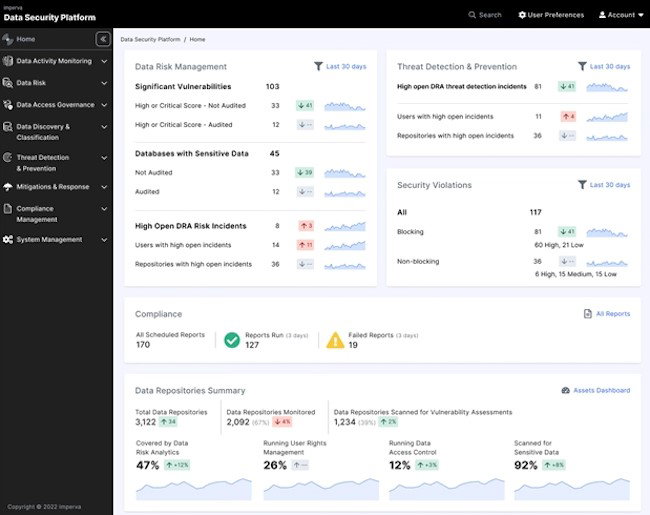
Imperva also helps organizations discover and classify sensitive data, enforce protection policies and improve visibility across more than 100 data repositories. The platform simplifies compliance efforts by automating reporting and centralizing security operations through one unified platform. With built-in integrations for security operations teams, it gives businesses a practical way to strengthen threat monitoring and respond faster to security incidents across large digital environments.
Pricing
Imperva’s pricing is structured around three plans which includes Data Assure for discovering and classifying data, Data Secure for quick, agentless data security with compliance and hybrid visibility, and Data 360 for a full Imperva Data Security Fabric setup. Businesses can contact Imperva directly for custom quotes based on their requirements.
What Works And What Doesn’t
| Pros | Cons |
| Highly scalable setup | Expensive licensing cost |
| Strong threat detection | Weak vendor support |
| Good activity monitoring | Limited beginner guidance |
Our Final Take
Imperva is a good choice for large organizations that need stronger control over data security, monitoring and compliance in one place. It may not suit teams looking for a simple, quick setup, but it works well for those that need deeper data protection and visibility across complex data environments.
Top 5 Database Security Tools Comparison
Choosing the right database security tool can play a major role in how well your organization protects sensitive data and manages compliance. This guide compares the Top 5 Database Security Tools of 2026 so you can quickly find the right platform to secure, monitor and control your database environment with confidence.
P.S. Always remember to visit the vendor's site for the latest information!
| Criteria |  |
 |
 |
 |
 |
| Starting Price | NA | $40/user/month | NA | NA | NA |
| Avg. User Rating | 4.7 | 4.9 | 4.3 | 4.3 | 4.4 |
| Free Trial/Demo | Demo | NA | NA | Demo | 30 Days |
| Key Features | Automated classification, real-time monitoring, just-in-time access | Web-based access, real-time auditing, data masking | Sensitive discovery, activity auditing, risk assessment | Threat detection, virtual patching, vulnerability scanning | Data activity monitoring, behavioral analytics, policy automation |
| Integrations | Snowflake, Tableu, Jira | Splunk, Okta, Datadog | Microsoft Sentinel, Kafka, Terraform | Microsoft Azure, ServiceNow, MongoDB | ArcSight, Graylog, Cloudera |
Wrapping Up
From real-world breaches like Capital One to the growing complexity of modern data systems, one thing is clear. Database security isn’t a background task anymore; it’s the front line.
Across the tools we explored, the approaches differ, but the goal stays the same, which is to stop small gaps from turning into massive incidents. Some focus on visibility, some on control, and others on automation. Well, all of them exist because prevention has become non-negotiable.
So as the story goes, it’s not about reacting after chaos, but making sure the chaos never gets a chance to start.
Frequently Asked Questions
Which Are The Top Database Security Tools In 2026?
The best Database Security Software of 2026 include Satori, DBHawk, Oracle Data Safe, Trellix, and Imperva. Each tool offers a different mix of monitoring, access control, compliance, and threat protection based on business needs and infrastructure.
Why Do Businesses Need Database Security Tools?
Businesses need database security tools to protect sensitive customer and company data from cyberattacks and leaks. They also help meet compliance requirements, reduce risks, and improve visibility into how data is accessed and used across systems.
How Do Database Security Tools Work?
Database security tools work by tracking database activity, controlling user access, and identifying suspicious behavior. Many also include automation for threat detection, data masking, and compliance reporting to reduce manual security effort.
Fri, May 15, 2026

Enjoyed what you read? Great news – there’s a lot more to explore!
Dive into our content repository of the latest tech news, a diverse range of articles spanning introductory guides, product reviews, trends and more, along with engaging interviews, up-to-date AI blogs and hilarious tech memes!
Also explore our collection of branded insights via informative white papers, enlightening case studies, in-depth reports, educational videos and exciting events and webinars from leading global brands.
Head to the TechDogs homepage to Know Your World of technology today!
Disclaimer - Reference to any specific product, software or entity does not constitute an endorsement or recommendation by TechDogs nor should any data or content published be relied upon. The views expressed by TechDogs' members and guests are their own and their appearance on our site does not imply an endorsement of them or any entity they represent. Views and opinions expressed by TechDogs' Authors are those of the Authors and do not necessarily reflect the view of TechDogs or any of its officials. While we aim to provide valuable and helpful information, some content on TechDogs' site may not have been thoroughly reviewed for every detail or aspect. We encourage users to verify any information independently where necessary.
Loading comments...