
Data Management
Top 5 Data Integration Tools Of 2026
Share
TL;DR
-
Informatica Cloud Data Integration: Provides a comprehensive, enterprise-grade stack with advanced metadata management and deep governance.
-
Qlik Talend Cloud: Unifies integration, quality, and governance into a single cloud-native environment for modern infrastructures.
-
Boomi: Offers an intuitive low-code interface that accelerates the integration of applications and APIs across diverse systems.
-
Airbyte: Delivers unmatched flexibility through an open-source core and a massive ecosystem of over 600 connectors.
-
Fivetran: Excels as a fully managed no-code service that automates data movement with minimal engineering overhead.
Introduction
Finding the right business insights is remarkably similar to the legendary treasure hunt undertaken by Ben Gates and his crew in National Treasure. Just as they had to painstakingly gather every hidden clue to reveal a massive trove of history, modern companies must collect and connect scattered fragments of information to find their own "big score" of success. This process requires a level of patience and intelligence to ensure that no vital piece of the map is left behind in a silo. Without a way to unify these digital clues, the most valuable secrets of your operation remain buried under mountains of unrefined data.
Data integration tools serve as the modern-day compass for this journey, automating the collection and cleansing of information into a single source of truth. By transforming raw variables into a centralized repository, these solutions empower teams to move past guesswork and make truly informed decisions. As your organization scales across various apps and clouds, the ability to unify this information becomes a primary competitive advantage. Here are 5 of the most capable Data Integration Tools of 2026 to help you build a reliable and scalable data ecosystem. Read on!
What Are Data Integration Tools?
Data integration tools are digital solutions that automate the collection, processing, and presentation of data from multiple sources into a centralized repository, enabling businesses to generate insights and make informed, data-driven decisions. They serve as a single source of truth for all data-related matters.
Now that you understand what it is, without further ado, let’s explore the Top 5 Data Integration Tools of 2026!
Top 5 Data Integration Tools Of 2026
As businesses scale across multiple apps, clouds, and data environments, the ability to unify information seamlessly becomes a competitive advantage. These platforms help organizations break silos, accelerate analytics, and make AI initiatives truly data ready.
So, here are the Top 5 Data Integration Tools of 2026 in random order.
 |
 |
 |
 |
 |
Informatica Cloud Data Integration: Best For Enterprise
Retaining its place on our list from last year, Informatica Cloud Data Integration (part of IDMC) remains a flagship enterprise data-integration platform. Informatica, which has agreed to be acquired by Salesforce, was named a Leader in the 2024 Gartner® Magic Quadrant™ for Data Integration Tools and in The Forrester Wave™: Master Data Management, Q2 2025. It also ranks #1 in the Cloud MDM market share, according to Gartner’s 2024 report. Informatica reports customers in more than 100 countries, including 80+ Fortune 100 companies.
Why We Chose Informatica Cloud Data Integration In 2026
We chose Informatica Cloud Data Integration for 2026 because it offers one of the most comprehensive, enterprise-grade integration stacks on the market, spanning batch Extract-Transform-Load (ETL), real-time integration, application and API integration, and strong data governance on a single cloud-native platform. Its breadth of pre-built connectors, advanced metadata management, and deep integration with IDMC make it particularly compelling for global enterprises running complex hybrid and multi-cloud architectures.
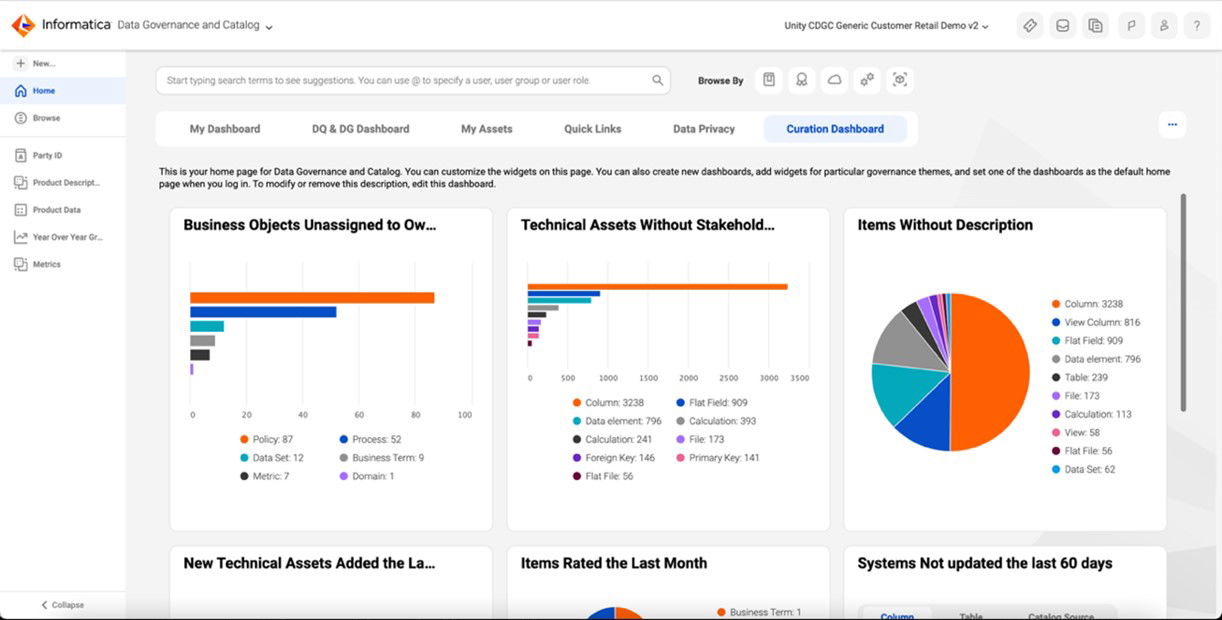
Technically, Informatica excels with high-throughput parallel processing, advanced transformation capabilities, and rich lineage, cataloging, and observability across pipelines. On the security side, IDMC aligns to ISO/IEC 27001 and supports SOC 1, SOC 2 and SOC 3 reporting, with HIPAA-validated controls and strong support for GDPR/CCPA-centric governance. Encryption in transit and at rest, granular RBAC, and audit trails make it suitable for regulated industries.
Pricing
Informatica Cloud Data Integration uses flexible, consumption-based pricing via Informatica Processing Units, with subscription plans described on its official pricing pages. Exact per-unit prices are not publicly disclosed; customers must request a quote.
What Works And What Doesn’t
| Pros | Cons |
| Cloud-native and scalable engine handles large and complex pipelines | Steep learning curve; requires specialist expertise to operate efficiently |
| Broad connector support and rich metadata, lineage & transformation features | Costly for high-volume workloads due to consumption-based pricing |
| Strong built-in compliance, governance, encryption, and security features | Complex UI and user experience |
Our Final Take
Informatica Cloud Data Integration is best suited for large, regulated, or globally distributed enterprises that need end-to-end integration, governance, and strong security at scale. It may not be ideal for smaller teams or simpler use cases due to its complexity and cost model. For organizations needing robust, enterprise-grade pipelines with compliance and long-term stability, it remains a top-tier choice.
Qlik Talend Cloud: Best For Integration
A new entrant to our 2026 list, Qlik Talend Cloud (re-branded after Talend’s acquisition by Qlik), has quickly proved itself as a leading cloud-native platform for data integration and governance. It was named a Leader in the 2024 Gartner Magic Quadrant for Data Integration Tools and continues to expand globally, now serving over 40,000 customers across multiple countries.
Why We Chose Qlik Talend Cloud In 2026
We chose Qlik Talend Cloud because it unifies data integration, transformation, governance, and quality in a single cloud-native environment. Its tight integration with Qlik’s analytics ecosystem gives organizations an end-to-end data operation layer, making it a compelling choice for companies modernizing fragmented data infrastructures.
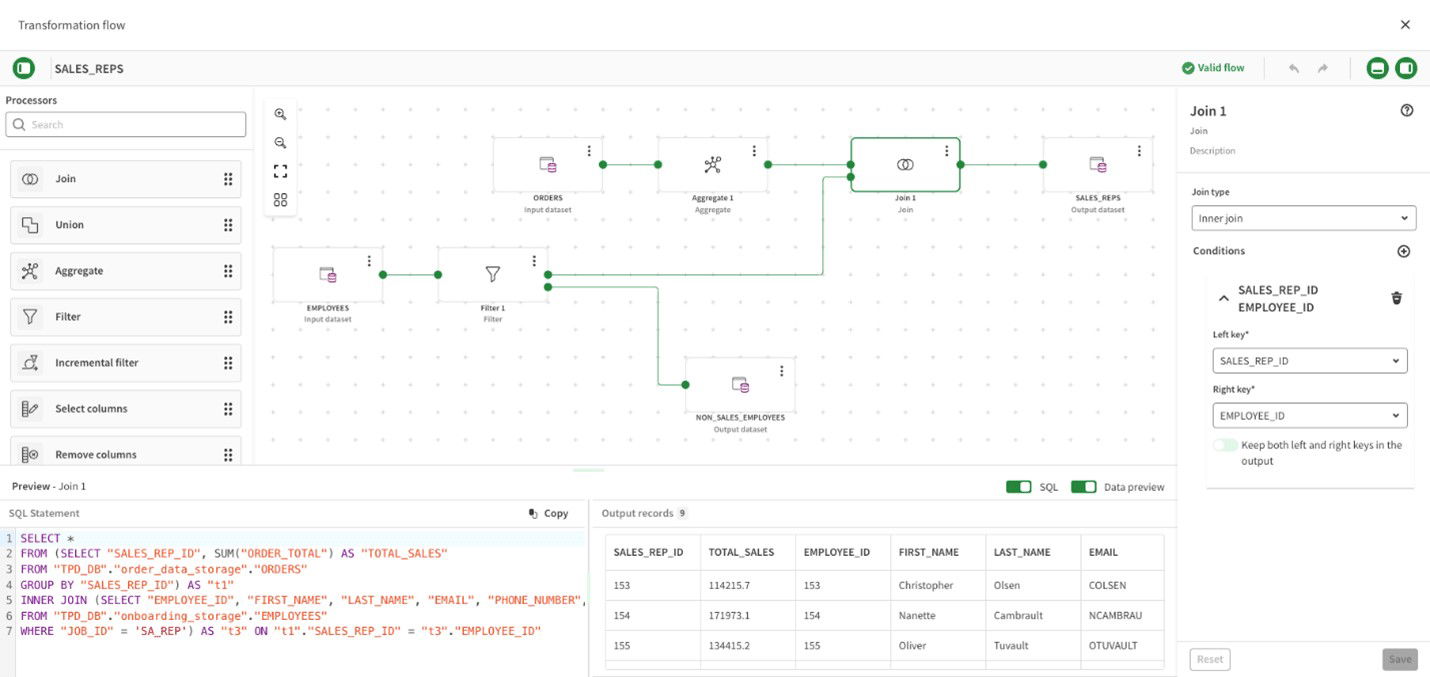
Technically, the platform stands out for robust ETL/ELT execution, change data capture, streaming ingestion, API integration, and strict data-quality controls. Qlik Talend Cloud leverages native code generation (Java/Spark) for efficient pipeline execution and supports multi-cloud, hybrid, and on-premises environments.
Pricing
Qlik Talend Cloud provides a 14-day free trial for testing. Post-trial pricing follows a usage-based subscription model, but the company does not publicly disclose exact pricing.
What Works And What Doesn’t
| Pros | Cons |
| Unified data integration + governance platform with strong quality controls | Complex to configure governance and quality features |
| Wide connector ecosystem across SQL, SaaS, APIs, big data, and streaming | Requires enterprise tiers for advanced features |
| Multi-cloud and hybrid support with efficient code-generated execution | Requires onboarding time for complex pipelines or hybrid setups |
Our Final Take
Qlik Talend Cloud is ideal for enterprises seeking a consolidated platform that combines integration, quality, and governance while supporting modern multi-cloud architecture. It may not be suitable for smaller teams looking for low-touch or budget-friendly tools. Still, it is an excellent choice for organizations modernizing at scale and enforcing high-quality standards across mission-critical data pipelines.
Boomi: Best User Experience (UX)
Retaining its position on our 2026 list, Boomi remains a leading iPaaS platform for application, data, and API integration. Boomi earned a 2024 Gartner Peer Insights Customers’ Choice recognition for Enterprise iPaaS. It was also named a Leader in the 2024 Gartner Magic Quadrant for Enterprise Integration Platform as a Service. Boomi reports serving 20,000+ customers across more than 70 countries.
Why We Chose Boomi In 2026
We selected Boomi because it offers an intuitive, low-code environment that accelerates integration across SaaS, on-premises, and cloud systems. Prebuilt connectors, reusable components, and a robust partner ecosystem reduce development overhead and improve time-to-value in integration-heavy environments.
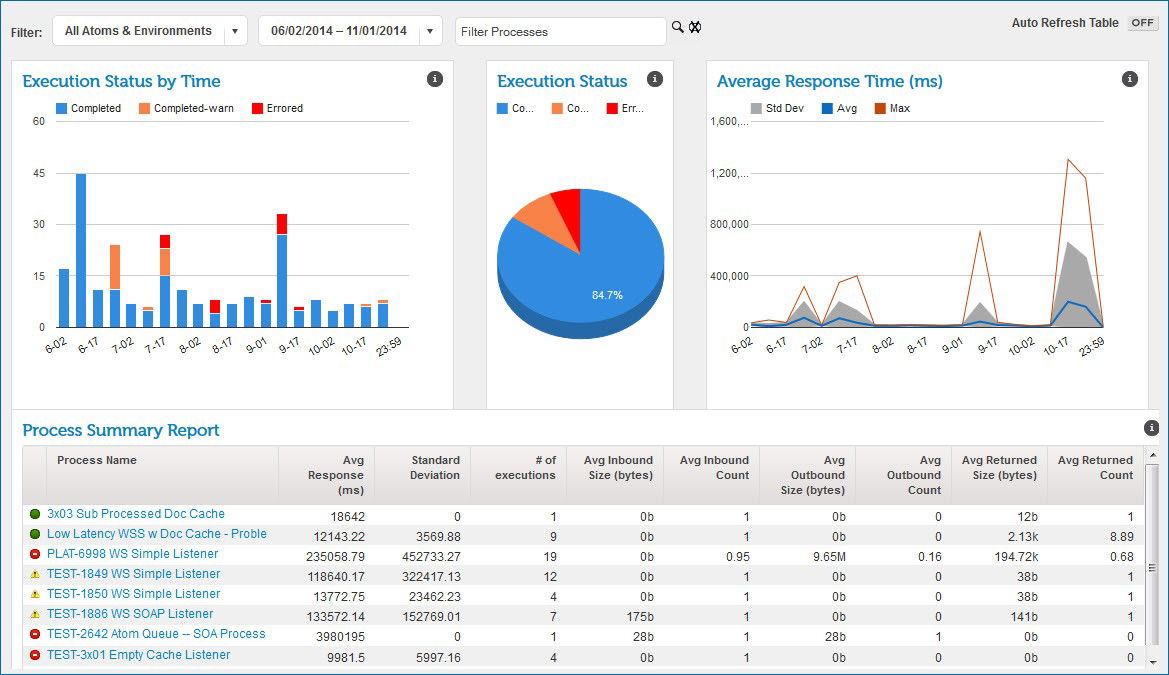
From a technical perspective, Boomi provides support for event-driven architecture, API management, EDI/B2B capabilities, and workflow automation. Its Atom runtime enables distributed deployments across cloud, edge, or on-prem systems. Security includes SOC 1 Type II, SOC 2 Type II, ISO 27001, and GDPR compliance, along with encryption in transit and at rest.
Pricing
Boomi offers a 30-day free trial and a Pay-As-You-Go plan starting at $99+. Subscription tiers: Standard, Professional, Professional Plus, Enterprise, and Enterprise Plus offer expanded features, including advanced integrations, orchestration, API enablement, governance, and clustered runtimes.
What Works And What Doesn’t
| Pros | Cons |
| Low-code interface with fast deployment | Requires tuning for complex workloads |
| Distributed Atom runtime supports cloud, hybrid, and edge environments | Heavy transformations can feel limited |
| Strong API, EDI, and workflow automation capabilities | Can become cumbersome due to monitoring and debugging large integration landscapes |
Our Final Take
Boomi is best suited for enterprises seeking rapid, scalable integration across business applications, APIs, and data workflows. It may not fully satisfy teams needing intensive custom ETL logic, but for application integration at speed, it remains one of the most capable platforms in 2026.
Topics for more insights
Airbyte: Best Value
Fresh on our 2026 list, Airbyte has rapidly evolved into a leading open-source ELT platform. It was recognized as a G2 Momentum Leader and High Performer in the 2025 G2 Grid Report and was also named a 2025 CRN Tech Innovators Awards Finalist (same source). Airbyte now supports thousands of companies worldwide and has a community of more than 25,000 contributors.
Why We Chose Airbyte In 2026
We selected Airbyte because it offers unrivaled flexibility through an open-source core and a rich connector ecosystem. With 600+ pre-built connectors covering databases, APIs, SaaS tools, data lakes/warehouses, and more, Airbyte empowers organizations to integrate virtually any data source rapidly. This makes it especially attractive for teams that require agility, often experiment, or face unique data source requirements.
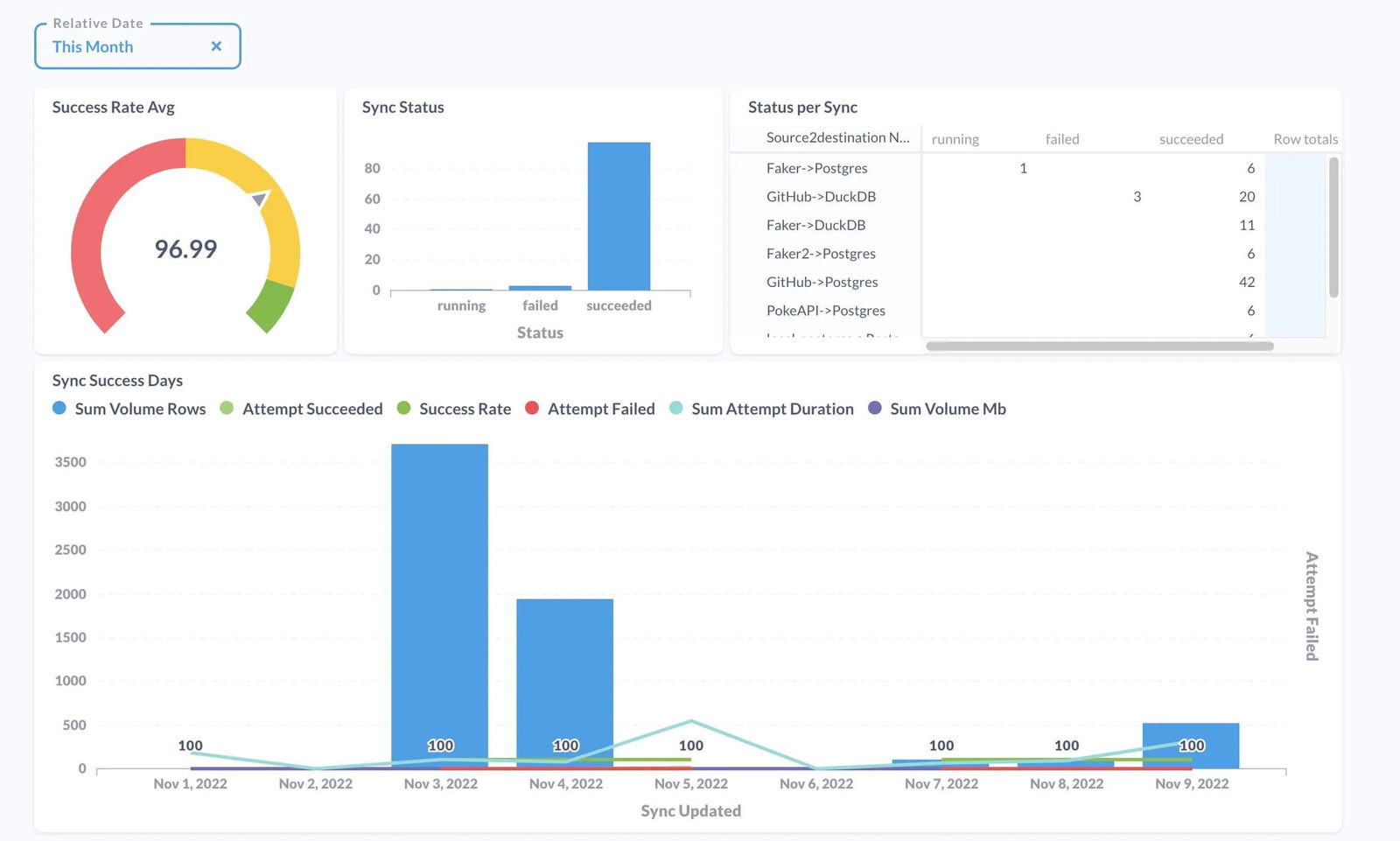
Technically, Airbyte supports ELT-first workflows, change-data-capture (CDC), and large-scale data movement, with options for self-hosted, cloud, or hybrid deployments. Its open-source license (MIT / ELv2) ensures transparency and extensibility. For modern data stacks that require frequent updates, schema changes, or custom integration logic, Airbyte strikes a strong balance among control, flexibility, and community-driven innovation.
Pricing
Airbyte offers a free open-source version pricing model for self-hosted use, with no licensing fees (you pay only for your infrastructure). For managed deployments, Airbyte offers a cloud service with capacity-based pricing: Core, Standard, Plus, and Pro plans start with a trial and scale as needed.
What Works And What Doesn’t
| Pros | Cons |
| Large connector ecosystem + customizable via open-source connector SDK | Requires engineering resources and ops overhead for self-hosting or custom connectors |
| ELT-first design with CDC and flexible destination support | Requires tuning for large concurrent workloads |
| Community-driven, transparent licensing | Lacks enterprise-level governance |
Our Final Take
Airbyte is an excellent fit for organizations seeking a flexible, open, and customizable data integration platform without vendor lock-in. It is especially well-suited to cases involving diverse or evolving data sources, rapid development cycles, and a need for control over infrastructure. If you need robust enterprise-grade data governance with minimal operational effort, supplementary tooling may be required; however, for agile, scalable data pipelines, Airbyte stands out in 2026.
Fivetran: Best For Scalability
Retaining its spot in 2026, Fivetran remains a premier cloud-native data integration and ELT platform. In 2025, Fivetran was honored with the Microsoft Marketplace Partner of the Year Award and recognized as a finalist for the 2025 Microsoft Americas SDC Emerging Partner of the Year Award—a testament to its leadership in automating data movement for cloud and AI-ready workloads.
Why We Chose Fivetran In 2026
We selected Fivetran because it offers a fully managed, no-code data movement service that dramatically simplifies source-to-destination pipelines. Its ability to automatically replicate data from hundreds of sources into centralized data warehouses or lakes makes it ideal for businesses that prioritize speed, reliability, and minimal operational overhead.
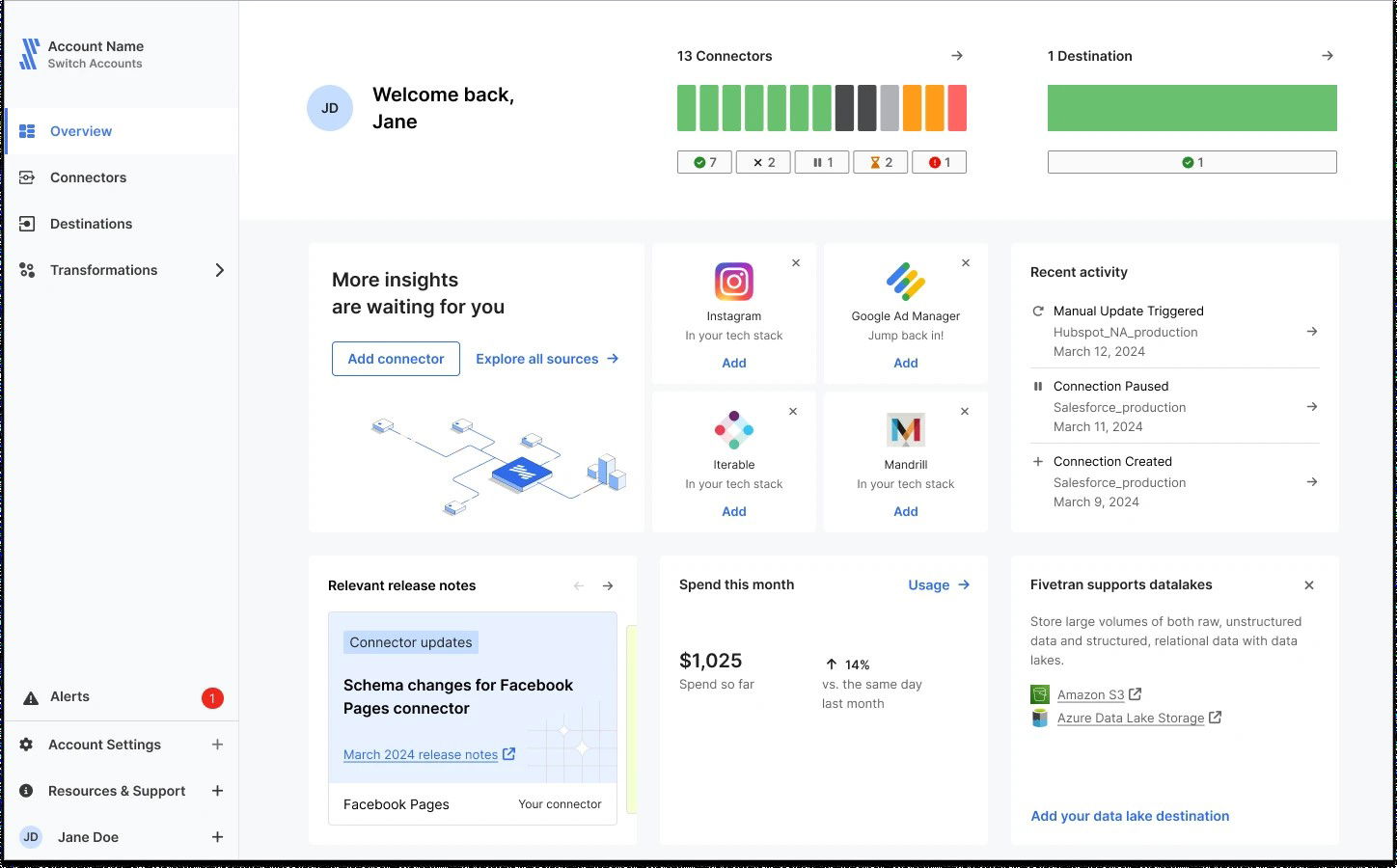
On the technical front, Fivetran excels with automated schema drift handling, incremental updates, and low-maintenance ELT workflows. This means that changes to source systems seldom disrupt downstream pipelines. It supports over 700+ fully managed connectors (databases, SaaS tools, APIs, etc.), and offers secure, governed data movement with built-in encryption and compliance features.
Pricing
Fivetran offers a Free plan with core features, 500k MAR, and 5k model runs. The Standard paid plan adds 15-minute syncs, 700+ connectors, RBAC, API access, and SSH tunnels. Enterprise includes 1-minute syncs, enterprise connectors, custom roles, VPN, SCIM, multi-cloud, and hybrid deployment. Business Critical adds enhanced security and governance. Pricing is not publicly disclosed.
What Works And What Doesn’t
| Pros | Cons |
| Requires minimal engineering efforts to set up and maintain data pipelines | High data volume or frequent syncs can make usage-based cost unpredictable |
| Large connector library with 700+ pre-built connectors | Limited near-real-time syncs |
| Automated schema drift handling and destination schema updates | Limited transformation capabilities |
Our Final Take
Fivetran is an excellent choice for companies looking for an automated, maintenance-free way to consolidate data from multiple sources into a data warehouse or lake, especially when reliability and rapid deployment are priorities over complex custom transformations. For analytics teams needing quick and consistent data ingestion with minimal ops burden, Fivetran stands out in 2026. For workflows demanding very low-latency syncs or complex transformations, supplementary tools may still be required.
Top 5 Data Integration Tools Comparison
P.S.: Always remember to visit the vendor’s site for the latest information!
| Criteria |  |
 |
 |
 |
 |
| Starting Price | NA | NA | $99/month | NA | NA |
| Avg. User Rating | 4.4/5 | 4.3 | 4.3 | 4.5 | 4.5 |
| Trial Period / Demo | 30-Day Free Trial | 14-Day Free Trial | 30-Day Free Trial | Free Demo | Free Demo |
| Key Features | Enterprise ETL/ELT, cataloging, and lineage | ETL/ELT, hybrid integration, and code generation | Low-code integration, EDI, and distributed runtime | Open-source ELT, 600+ connectors, and custom connector builder | Fully managed ELT, automated schema drift handling, and 700+ connectors |
| Integrations | Databases, SaaS, APIs, and more | SaaS platforms, APIs, cloud service providers, and more | Data integrations, prebuilt connectors, and more | 600+ connectors + custom connectors | SaaS platforms, events, and more |
Conclusion
Choosing the right data integration platform in 2026 depends on your organization’s scale, governance needs, and technical maturity. Enterprise platforms like Informatic and Qlik Talend Cloud excel in governance-heavy, hybrid environments, while Boomi stands out for rapid application and data integration with minimal coding.
For engineering-led teams seeking flexibility, Airbyte offers unmatched openness, and Fivetran remains the strongest option for automated, maintenance-free ELT.
Together, these five tools stand for the most capable, future-ready integration solutions for building modern, reliable, and scalable data ecosystems.
Frequently Asked Questions
What Are The Top 5 Data Integration Tools Of 2026?
The leading data integration tools of 2026 are Informatica Cloud Data Integration, Qlik Talend Cloud, Boomi, Airbyte, and Fivetran, selected for their scalability, governance capabilities, automation, connector ecosystems, and support for modern cloud and hybrid data architectures.
What Are The Features Of Data Integration Tools?
Key features include ETL/ELT processing, real-time and batch data movement, prebuilt connectors, API integration, data quality and governance, workflow automation, schema handling, security compliance, and support for cloud, hybrid, and on-premises environments to unify data across systems.
What Is The Best Data Integration Tool In 2026?
The “best” tool depends on business needs: Informatica leads for governance-heavy enterprises, Airbyte for open-source flexibility, and Fivetran for automated ELT. Overall, Informatica and Fivetran are the strongest all-around choices for 2026.
Fri, Jan 9, 2026

Liked what you read? That’s only the tip of the tech iceberg!
Explore our vast collection of tech articles including introductory guides, product reviews, trends and more, stay up to date with the latest news, relish thought-provoking interviews and the hottest AI blogs, and tickle your funny bone with hilarious tech memes!
Plus, get access to branded insights from industry-leading global brands through informative white papers, engaging case studies, in-depth reports, enlightening videos and exciting events and webinars.
Dive into TechDogs' treasure trove today and Know Your World of technology like never before!
Disclaimer - Reference to any specific product, software or entity does not constitute an endorsement or recommendation by TechDogs nor should any data or content published be relied upon. The views expressed by TechDogs' members and guests are their own and their appearance on our site does not imply an endorsement of them or any entity they represent. Views and opinions expressed by TechDogs' Authors are those of the Authors and do not necessarily reflect the view of TechDogs or any of its officials. While we aim to provide valuable and helpful information, some content on TechDogs' site may not have been thoroughly reviewed for every detail or aspect. We encourage users to verify any information independently where necessary.
Loading comments...