
What Is Klaviyo Automation and Why Is It Important for Retention?
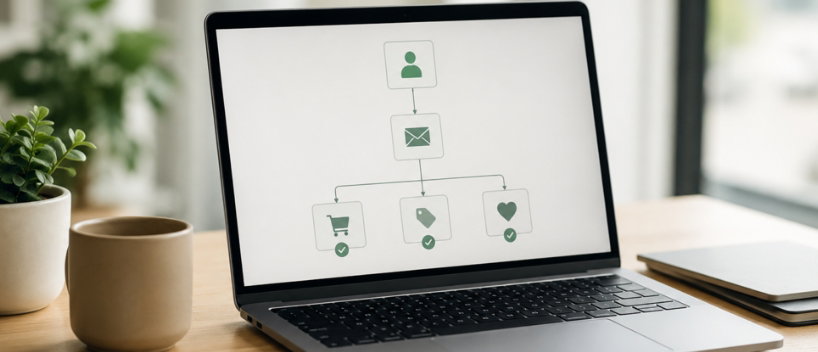
Klaviyo automation refers to the triggered email and SMS sequences that activate based on specific customer behaviours rather than manual campaign sends scheduled by a marketing team. When a customer abandons a cart, a flow activates. When a purchase is completed, a post-purchase sequence begins. When engagement drops below a defined threshold, a win-back sequence starts automatically without anyone pressing a send button.
Retention depends on consistent, timely, relevant communication across every stage of the customer relationship. Manual campaign management cannot deliver that consistency at scale because it requires constant human input to produce output that should be running automatically. Klaviyo automation removes that dependency and allows the retention system to work continuously regardless of what else the marketing team is focused on at any given moment. Businesses that want to build more advanced automation workflows often work with experienced providers of Klaviyo email marketing services to implement custom customer journeys, improve segmentation, and continuously optimise retention performance.
How Klaviyo Automation Helps Businesses Retain More Customers
-
Creating Personalized Customer Journeys
Retention is fundamentally about making customers feel understood rather than marketed to. Klaviyo automation creates personalised journeys by using each customer's own behavioural data to determine what they receive, when they receive it, and how the content of that communication reflects their specific history with the brand rather than a generic template applied uniformly across the entire list.
-
Engaging Customers at Every Stage of the Lifecycle
Different customers need different communication depending on where they are in their relationship with the brand. A new subscriber needs onboarding. A first-time buyer needs encouragement toward a second purchase. A repeat buyer needs recognition and loyalty building. A lapsed customer needs a genuine reason to return. Klaviyo automation handles all of these simultaneously without the team having to manually identify which customer is in which stage at any given point across a growing contact base.
-
Increasing Repeat Purchases Through Automated Follow-Ups
Automated follow-up sequences timed around each customer's actual behaviour and purchase cycle produce higher repeat purchase rates than broadcast campaigns sent on a fixed schedule regardless of where individual customers are in their personal buying rhythm. A customer whose predicted next purchase date is approaching receives a well-timed, relevant communication that feels responsive rather than coincidental.
The Most Important Klaviyo Flows for Customer Retention
-
Welcome Flow for New Customer Engagement
The welcome flow sets the tone for everything that follows in the customer relationship. A well-built welcome sequence introduces the brand properly, communicates what makes it worth buying from again, and creates a path to first purchase for new subscribers without leading immediately with a hard promotional push that establishes a discount-first relationship from the very beginning of the engagement.
-
Post-Purchase Flow to Build Long-Term Relationships
The post-purchase flow is where most retention work actually happens in a Klaviyo account. It uses the highest-engagement window in the customer lifecycle to acknowledge the purchase genuinely, provide product guidance that adds real value, request a review at the right moment, and introduce complementary products when the timing reflects the customer's likely product experience rather than the brand's promotional calendar.
-
Win-Back Flow to Re-Engage Inactive Customers
Lapsed customers are not lost customers in most cases. They are customers who stopped receiving communication that felt relevant enough to maintain their engagement. A win-back flow that opens with something connected to the customer's previous purchase history and offers a genuine reason to return rather than a generic discount performs meaningfully better than a single re-engagement email sent after an arbitrary inactivity period has elapsed.
-
Loyalty and VIP Flows for High-Value Customers
High-value customers generate a disproportionate share of total revenue and deserve communication that reflects their importance to the business. A dedicated VIP flow that provides early access, exclusive content, and recognition of their loyalty builds the relationship that keeps high-value customers engaged with a brand rather than exploring competitors who might offer similar products at a comparable price point without the accumulated relationship the brand has already established.
How Klaviyo Segmentation Improves Customer Retention
-
Using Customer Behaviour Data for Better Targeting
Segmentation built on actual customer behaviour rather than demographic assumptions produces targeting that is accurate enough to affect what customers receive in a way they actually notice as relevant. Browse history, purchase frequency, product category preferences, and engagement patterns all provide signals that demographic data alone cannot generate at the same level of individual specificity.
-
One-time buyers
Customers who have purchased once but not returned within a defined window form a segment that needs specific communication designed to convert the first purchase into the beginning of a longer relationship rather than a single transaction that ends there.
-
Active buyers
Customers who purchase regularly need communication that maintains engagement and builds toward higher lifetime value rather than treating them identically to customers who have just made their first purchase and have no established history with the brand.
-
At-risk customers
Contacts showing declining engagement before they formally lapse represent an intervention opportunity that predictive segmentation in Klaviyo makes possible before the customer has crossed the threshold into the lapsed category, where recovery becomes more difficult and more expensive.
Why Personalization Is Critical for Retention Marketing
Customers who receive communication that reflects their actual relationship with a brand stay engaged longer, purchase more frequently, and are harder for competitors to displace than customers who receive generic campaigns that could have come from any brand selling similar products. Personalisation is not a feature that improves retention marketing at the margin. It is the mechanism by which retention marketing works at all, beyond the most basic level of keeping the brand visible in a crowded inbox.
How AI Is Improving Klaviyo Automation Strategies
-
AI-Powered Customer Behaviour Analysis
Klaviyo's AI analyses customer behaviour patterns across the full account dataset to surface insights that manual segmentation and analysis would not identify within a practical time investment. Churn probability scores, predicted lifetime value calculations, and expected next purchase dates are all generated automatically from behavioural data without requiring a data science capability within the marketing team itself.
-
Intelligent Product Recommendations and Personalised Messaging
AI-driven product recommendations in Klaviyo generate suggestions from each customer's actual browsing and purchase history rather than from a manually curated bestsellers list that applies identical recommendations to every customer in the same broad segment regardless of their individual product interests and category preferences.
Measuring the Impact of Klaviyo Retention Automation
Key Metrics to Track Customer Retention Success
-
Repeat purchase rate
The percentage of first-time buyers who make a second purchase within a defined window is the most direct measure of whether the retention automation is converting single transactions into ongoing customer relationships at the rate the programme is designed to achieve.
-
Customer lifetime value
Tracking whether CLV is growing across customer cohorts that entered the list after retention automation was implemented confirms whether the flows are producing the compounding commercial outcome that retention investment is designed to generate over time.
-
Flow revenue attribution
The percentage of total email revenue coming from automated flows rather than manual campaigns indicates whether the retention infrastructure is working or whether most revenue still depends on the marketing team actively sending campaigns rather than the automation running independently.
Optimising Flows Through Testing and Performance Data
A/B testing individual elements within flows, including subject lines, send timing, offer framing, and content structure, produces learnings that accumulate into meaningful performance improvements across the full retention programme rather than the one-off gains that campaign-level testing produces without affecting the automated layer that generates the majority of retention revenue.
Common Klaviyo Automation Mistakes That Reduce Retention
-
Over-sending
Triggering too many automated messages within a short window trains customers to ignore emails from the brand before the retention content has had time to produce the engagement it was designed to generate across the customer relationship.
-
Generic content
Flows that use automation infrastructure without genuine personalisation produce the same declining engagement as broadcast campaigns because the customer experience of receiving them is not meaningfully different from a non-personalised send despite the technical sophistication of the delivery mechanism behind it.
-
No suppression logic
Sending retention flows to contacts who have already converted or whose behaviour has changed since the flow was triggered wastes communication frequency and damages the relevance perception that retention automation depends on to produce engagement rather than unsubscribes.
Best Practices for Building a Retention-Focused Klaviyo Strategy
Start with the flows that affect the highest proportion of the customer base rather than building edge-case automations before the core retention infrastructure is properly established and optimised. The welcome series, post-purchase flow, and win-back sequence together cover the three most commercially significant moments in the customer lifecycle and should be built and tested before any additional automation complexity is added to the account.
A strong retention strategy also depends on choosing the right technology partner and digital approach. Companies like IR Solutions help businesses build scalable digital solutions that support automation, customer engagement, and long-term growth.
Review flow performance at regular intervals rather than assuming that a flow that performed well at launch will continue to perform without adjustment as the customer base evolves, the product catalogue changes, and the competitive context shifts around the brand over time.
Conclusion
Customer retention does not happen because a brand sends more emails. It happens because the right communication reaches the right customer at the right moment with content that reflects where they actually are in their relationship with the brand rather than where the marketing calendar says everyone on the list should be simultaneously. Klaviyo automation is the infrastructure that makes that precision possible at scale, and the brands that build it properly are the ones consistently generating more revenue from the same customer base rather than spending more every year to acquire new customers to replace the ones they are quietly losing through inadequate retention communication.