
Regulatory Technology (RegTech)
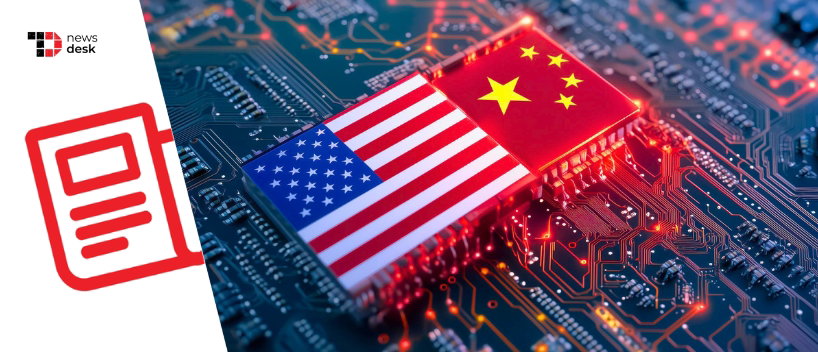
US Targets China's Overseas AI Compute Access With New Chip Export Rules
Updated on Tue, Nov 17, 2026
Share
The latest twist in the U.S.-China AI chip dispute?
Restricted hardware doesn't have to enter China for Chinese companies to use it.
Now, the United States is targeting overseas data centers providing advanced computing power remotely, closing in on a potential workaround to existing chip export restrictions.
TL;DR
- The U.S. Commerce Department has introduced new export controls targeting overseas data centers supplying advanced AI computing to companies in China and other restricted destinations.
- The rules target computing access exceeding 12 million total processing performance (TPP), including linked facilities.
- Five additional countries face licensing requirements, while certain existing data center operators have a 90-day licensing window.
US Expands AI Chip Export Controls To Overseas Data Centers
The U.S. Commerce Department's Bureau of Industry and Security (BIS) announced new restrictions on November 16, targeting a gap that could allow restricted companies to access American AI computing infrastructure without importing the chips themselves.
Under the interim final rule, licenses will be required for specified chip exports, reexports, and transfers when exporters know the equipment will support substantial remote computing for companies headquartered in Country Group D:5 or Macau.
The restricted group includes China, Russia, Iran, North Korea, and other designated countries. The rules also consider a customer's ultimate parent company, rather than only its registered location.
Importantly, accessing computing power through intermediaries or brokers will not automatically bypass these restrictions.
Data center operators, foreign foundries, and chip exporters must conduct due diligence on customer ownership and access arrangements, extending oversight beyond physical hardware shipments.

US Sets 12 Million TPP Threshold For Remote AI Computing
The new restrictions apply when covered entities can access more than 12 million aggregate TPP, a metric used to measure chip processing capabilities.
As per reports, that roughly corresponds to the maximum computing capacity of approximately 750 NVIDIA H100 or H200 chips.
Crucially, the threshold includes linked data centers, even when their connections are digital rather than physical. Splitting computing resources across multiple facilities would not necessarily remove the licensing requirement.
This is particularly relevant for demanding AI training workloads powered by advanced processors, as explored in TechDogs' comparison of NVIDIA, AMD, and Intel AI chips.
Essentially, the new controls address who can access significant amounts of computing power, not merely who purchases the hardware.
Malaysia, Singapore And Three Other Countries Face New AI Chip Restrictions
The regulation separately introduces additional licensing requirements for advanced semiconductor exports to Malaysia, Singapore, Indonesia, Thailand, and Brazil.
The Commerce Department identified these destinations as presenting elevated risks of restricted technology being diverted elsewhere.
However, chips destined for U.S.-headquartered companies in those countries may qualify for an exception, provided applicable reporting requirements are satisfied.
The development adds another dimension to the existing scrutiny surrounding NVIDIA and AMD chip exports to China, particularly as Chinese AI companies reportedly seek overseas computing capacity.
Topics For More Insights
- NVIDIA Denies China-Specific Groq LPU Report As China AI Chip Battle Intensifies
- China’s DeepSeek Is Reportedly Building Its Own AI Chip To Cut Reliance On Nvidia And Huawei
- Taiwan Suspects Nvidia AI Chips Were Smuggled To China Through Japan
- NVIDIA And AMD AI Chip Exports To China Raise Security Alarms For US Analysts
US Replaces AI Diffusion Rule And Gives Cloud Operators 90 Days To Seek Licenses
The interim rule also formally rescinds the Biden administration's AI Diffusion Rule, introduced in January 2025 but never enforced.
Instead of retaining that framework's broad country-based restrictions, the new approach combines destination-specific controls with requirements based on how advanced computing is accessed.
Existing data centers providing covered computing services must obtain licenses within 90 days after the new rule takes effect. The effective date is tied to publication in the Federal Register.
Notably, commercial recommendation systems, including those used by online retailers and social media platforms, are excluded from the new remote-access licensing requirement.
For affected chip suppliers and cloud operators, verifying customer ownership and computing access will become central to complying with Washington's latest export restrictions.
First published on Tue, Nov 17, 2026

Enjoyed what you read? Great news – there’s a lot more to explore!
Dive into our content repository of the latest tech news, a diverse range of articles spanning introductory guides, product reviews, trends and more, along with engaging interviews, up-to-date AI blogs and hilarious tech memes!
Also explore our collection of branded insights via informative white papers, enlightening case studies, in-depth reports, educational videos and exciting events and webinars from leading global brands.
Head to the TechDogs homepage to Know Your World of technology today!
Disclaimer - Reference to any specific product, software or entity does not constitute an endorsement or recommendation by TechDogs nor should any data or content published be relied upon. The views expressed by TechDogs' members and guests are their own and their appearance on our site does not imply an endorsement of them or any entity they represent. Views and opinions expressed by TechDogs' Authors are those of the Authors and do not necessarily reflect the view of TechDogs or any of its officials. While we aim to provide valuable and helpful information, some content on TechDogs' site may not have been thoroughly reviewed for every detail or aspect. We encourage users to verify any information independently where necessary.
Loading comments...