

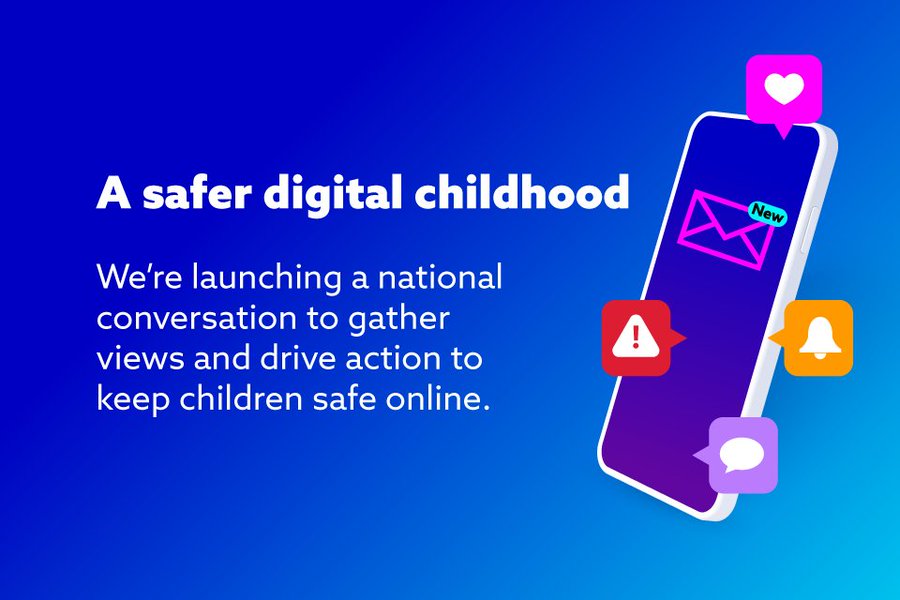
Although, this one might take a little while to go into effect, as currently the UK government has opened a wide-ranging consultation on children’s use of social media, which will explore options including a potential ban for under-16s, stricter age-verification, and tougher guidance on mobile phone use in schools.
The consultation aims to safeguard children’s wellbeing, tackle addictive online design features, and ensure a healthier digital relationship for young people.
While the decision on banning it or not it pending, the UK government has decided to ban mobile phones in schools. The government has tasked Ofsted (Office for Standards in Education, Children's Services and Skills) inspectors to ensure the mobile phone bans are being properly enforced in schools.
TL;DR
- The UK government begins a national consultation on banning social media for under-16s and enforcing phone-free schools.
- Ofsted will now inspect mobile phone policies to ensure full compliance.
- Ministers will host nationwide events as part of a “national conversation” with parents and young people.
- The consultation will examine raising the digital age of consent, restricting addictive features, and strengthening parental guidance.
A National Conversation On Children’s Digital Wellbeing
The government’s new consultation marks a major step toward reshaping how young people engage with mobile phones and social media. The initiative, launched in January 2026, forms part of a broader plan to improve mental health outcomes and ensure children’s online experiences remain positive and age-appropriate.
A nationwide tour of events will invite parents, educators, young people, and civil society groups to share views. The government said it will respond to the findings in the summer.
The consultation will also gather evidence from international examples—including Australia, which became the first country to ban social media for under-16s in December 2025—and will examine how similar measures might work in the UK.
What the Consultation Will Consider
- Determining the appropriate minimum age for social media access, including whether to ban accounts for children under a set age.
- Improving age assurance systems to strengthen enforcement of existing limits.
- Reviewing whether the current digital age of consent (currently 13) is too low.
- Restricting addictive platform features such as “streaks” and “infinite scrolling.”
- Implementing phone curfews to reduce excessive use.
- Developing clearer guidance for parents and simpler parental control options.
These measures would build on the Online Safety Act, which already compels platforms to remove illegal content and protect children from harmful material.
Phone-Free By Default
Education Secretary Bridget Phillipson announced tougher new rules that make it clear: “Mobile phones have no place in our schools. No ifs, no buts.” From now on, Ofsted inspectors will check whether schools are enforcing phone bans. Schools that struggle to comply will receive targeted support from the Attendance and Behaviour Hub network.
New national guidance states that pupils must not have access to phones during lessons, breaks, or between classes. Staff are also expected to model behaviour by avoiding personal phone use in front of students.
While 99.9% of primary schools and 90% of secondary schools already have phone policies, government data shows 58% of secondary pupils report phones being used without permission in some lessons—rising to 65% for key stage 4 students.
"My message to headteachers is you now have all the backing - and the backing of my inspectors - to ban mobile phones in schools immediately. They chip away at children’s attention span, distract from learning and can be detrimental to children’s wellbeing," said Sir Martyn Oliver, His Majesty’s Chief Inspector, Office for Standards in Education, Children’s Services and Skills.
Tackling Addictive Design And Screen Time
Alongside enforcement in schools, ministers will produce evidence-based screen time guidance for parents of children aged 5 to 16, complementing existing advice for under-fives.
The government is also developing new safety standards for AI tools used in education, ensuring that digital products do not include addictive or exploitative patterns that harm children’s learning or social development.
“Through the Online Safety Act, this government has already taken clear, concrete steps to deliver a safer online world for our children and young people. These laws were never meant to be the end point," said Technology Secretary Liz Kendall. "We are determined to ensure technology enriches children’s lives, not harms them—and to give every child the childhood they deserve.”
Topics For More Insights
Political And Public Response
The proposal has sparked widespread debate across Parliament, schools, and the public.
Over 60 Labour MPs have written to the Prime Minister supporting a ban, joined by Esther Ghey, mother of murdered teenager Brianna Ghey, who said social media “limited her ability to engage in real-world social interactions.”
However, critics have called the consultation too slow.
Conservative leader Kemi Badenoch accused the government of “dither and delay,” claiming her party had proposed a ban earlier. Liberal Democrat education spokeswoman Munira Wilson said the government was “kicking the can down the road,” arguing there was “no time to waste in protecting children from social media giants.”
Education unions largely welcomed the consultation.
"Every day, parents and teachers see how social media shapes children's identities and attention long before they sit their GCSEs, pulling them into isolating, endless loops of content," said National Education Union (NEU) general secretary Daniel Kebede, who also called the move a "welcome shift."
Experts Urge Caution On Ban Effectiveness
Researchers have urged the government to proceed carefully.
Professor Amy Orben of Cambridge University said there was “broad agreement” that more needs to be done, but “not strong evidence” yet that age-based bans work. Dr. Holly Bear of Oxford University echoed that view, calling for a “balanced approach” focused on reducing harmful algorithmic exposure and improving digital literacy.
A joint statement by 42 individuals and organizations, including the NSPCC, Childnet, and the Molly Rose Foundation, warned that a blanket ban would be the "wrong solution."
They said, "It would create a false sense of safety that would see children - but also the threats to them - migrate to other areas online. Though well-intentioned, blanket bans on social media would fail to deliver the improvement in children's safety and wellbeing that they so urgently need."
Building On Progress
The government highlighted that the Online Safety Act has already reduced exposure to adult content online: 8 million people now access age-checked adult sites daily, visits to pornography sites have dropped by one-third since July 2025, and the number of children encountering age checks has increased from 30% to 47%, with 58% of parents reporting improved online safety.
Ofcom has opened investigations into more than 80 adult sites and issued fines to non-compliant platforms.
New laws have also criminalized cyberflashing, required removal of self-harm content before it spreads, and banned AI “nudification” tools that generate explicit images. The government said the new consultation would build on these achievements by addressing design-driven overuse, not just harmful content.
