
Manufacturing Technology
Tesla Launches Steering-Wheel-Free Cybercab Rides In Austin As NHTSA Evaluates Rollout
Updated on Fri, Sep 4, 2026
Share
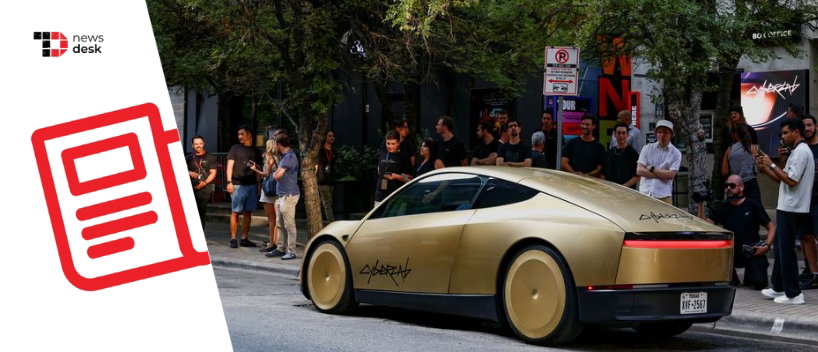
Tesla has started offering public rides in its purpose-built Cybercab robotaxi in limited areas of Austin, Texas, marking the vehicle’s first public deployment while drawing attention from the US National Highway Traffic Safety Administration over its unconventional design.
The two-seat autonomous vehicle has no steering wheel or pedals, distinguishing it from the Model Y vehicles that Tesla has primarily used for its Robotaxi service so far. NHTSA says it is now evaluating the rollout as federal safety requirements typically contemplate vehicles with human controls.
TL;DR
- Tesla has begun offering Cybercab rides to the public in limited areas of Austin.
- The two-seat autonomous vehicle has no steering wheel or pedals.
- Texas records show Tesla has registered 45 Cybercabs.
- NHTSA says it is evaluating the rollout.
- Tesla has not disclosed when Cybercab rides will begin charging passengers.
Tesla Opens Cybercab Rides To The Public
Tesla officially added its purpose-built Cybercab to its public Robotaxi fleet during a launch event in Austin on September 3.
Tesla Vice President of AI Ashok Elluswamy announced that anyone could use the service, telling attendees, “It’s open to the entire public.”
Business Insider reported that Cybercab has joined Tesla's public robotaxi fleet, which had previously consisted of Model Y vehicles.
Users can summon the Cybercab through Tesla’s Robotaxi app. Videos from the event showed passengers using the app to open the vehicle’s butterfly doors before they automatically closed once riders entered.
Tesla itself says Cybercab rides are currently available in limited Austin areas.
The company has not revealed exactly how many Cybercabs are currently carrying passengers. However, Texas Department of Motor Vehicles records cited by Reuters and Business Insider show that Tesla had registered 45 Cybercabs as of September 3.
Cybercab Has No Steering Wheel Or Pedals
Unlike Tesla’s existing Model Y robotaxis, Cybercab was designed specifically for autonomous ride-hailing rather than conventional personal driving.
The two-seat vehicle does not have a steering wheel or pedals. Reuters also reports that it does not have mirrors, making its design significantly different from conventional passenger vehicles covered by existing federal safety standards.
CEO Elon Musk has described Cybercab as “the first car that is specifically built for unsupervised full self-driving.”
Tesla first unveiled the Cybercab at its We, Robot event in October 2024. The company has positioned the vehicle as a high-volume autonomous car that could eventually form the backbone of its broader Robotaxi network.
Tesla said Cybercab production started during the second quarter of 2026, alongside engineering tests of production vehicles on public roads and employee rides at Gigafactory Texas.
Musk previously said production would initially move very slowly. Tesla eventually plans to allow customers to purchase Cybercabs and potentially add them to its autonomous ride-hailing network when they are not being personally used.
NHTSA Is Evaluating Tesla's Cybercab Rollout
The steering-wheel-free design is also creating a regulatory question for Tesla.
The US National Highway Traffic Safety Administration told Reuters that it is evaluating Tesla's Cybercab rollout.
“NHTSA is in contact with Tesla and is evaluating the situation,” an agency spokesperson said.
Federal safety standards typically require equipment such as steering wheels and pedals. Reuters notes that regulations also limit how many vehicles manufacturers can sell without these traditional controls, although established automakers can use unlimited numbers for testing.
Business Insider similarly notes that Tesla would need to certify that the Cybercab meets applicable federal safety standards, or receive temporary exemptions, before selling steering-wheel-free vehicles more broadly to consumers.
The regulatory situation could therefore influence how quickly Tesla can move Cybercab from its limited Austin rollout to a much larger commercial deployment.
Topics For More Insights
Tesla Has 420 Autonomous Vehicles Registered In Texas
Tesla’s autonomous fleet remains smaller than that of rival Waymo in Texas.
State records cited by Reuters show Tesla had 420 autonomous vehicles registered in Texas, including its 45 Cybercabs. Waymo had 988 registered vehicles in the state.
Tesla first launched its Austin Robotaxi pilot in June 2025 and has since expanded autonomous ride-hailing operations to other locations in Texas and Florida.
Its official Robotaxi service currently operates in limited areas of Austin, Dallas and Houston in Texas, alongside Miami, Orlando and Tampa in Florida. Tesla lists its current Robotaxi service areas here.
Tesla has not yet announced when Cybercab rides will become available beyond Austin.
The company also did not specify when it will begin charging passengers for Cybercab rides. Executives at the launch event discussed plans for dynamic pricing, where fares could change depending on demand.
What Happens Next For Tesla Cybercab?
Tesla sees autonomous driving as a major part of its future as competition continues to intensify across the electric vehicle market.
However, expanding Cybercab will depend on more than simply producing additional vehicles. Tesla will also have to navigate federal and state regulations, demonstrate that the vehicles can operate safely at scale and expand its Robotaxi service areas.
For now, the launch represents a significant step beyond Tesla’s existing Model Y-based robotaxi network: members of the public can finally ride in the purpose-built Cybercab, but only within limited parts of Austin.
NHTSA’s evaluation could now become one of the most important factors determining how quickly Tesla can take its steering-wheel-free robotaxi beyond that initial deployment.
First published on Fri, Sep 4, 2026

Enjoyed what you read? Great news – there’s a lot more to explore!
Dive into our content repository of the latest tech news, a diverse range of articles spanning introductory guides, product reviews, trends and more, along with engaging interviews, up-to-date AI blogs and hilarious tech memes!
Also explore our collection of branded insights via informative white papers, enlightening case studies, in-depth reports, educational videos and exciting events and webinars from leading global brands.
Head to the TechDogs homepage to Know Your World of technology today!
Disclaimer - Reference to any specific product, software or entity does not constitute an endorsement or recommendation by TechDogs nor should any data or content published be relied upon. The views expressed by TechDogs' members and guests are their own and their appearance on our site does not imply an endorsement of them or any entity they represent. Views and opinions expressed by TechDogs' Authors are those of the Authors and do not necessarily reflect the view of TechDogs or any of its officials. While we aim to provide valuable and helpful information, some content on TechDogs' site may not have been thoroughly reviewed for every detail or aspect. We encourage users to verify any information independently where necessary.
Loading comments...