
Networking Solutions
SpaceX Designs Rooftop Mini Cell Towers To Fix Starlink’s Indoor Dead Zones
Updated on Fri, Nov 20, 2026
Share
SpaceX wants to eliminate cell phone dead zones, but its satellites have a problem: they cannot reliably reach phones inside certain buildings.
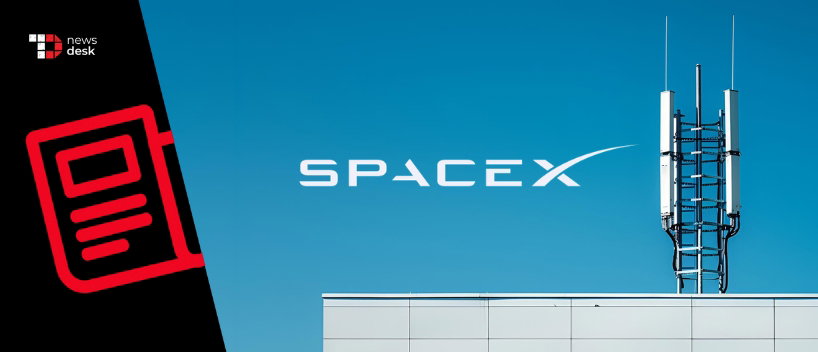
Elon Musk says the company has designed miniature rooftop cell towers to bridge that gap, with production targeted for 2027.
TL;DR
- SpaceX has completed the design of rooftop micro cell towers intended to improve indoor mobile connectivity.
- Starlink's Direct-to-Cell V2 satellites are expected to launch in 2027, potentially increasing bandwidth 40-fold.
- The company is exploring a hybrid satellite-terrestrial network, although pricing, availability, and deployment details remain unconfirmed.
SpaceX Develops Rooftop Cell Towers To Overcome Starlink’s Indoor Coverage Limitations
During a recent DealBook Summit appearance, Musk reportedly revealed that SpaceX had completed the design of miniature cellular base stations that could be installed on rooftops, much like Starlink dishes.
The reason? Satellite signals struggle to penetrate buildings with thick or metal roofs, leaving coverage gaps even where Starlink's satellite network is available.
SpaceX wants to address this limitation with smaller, low-power terrestrial stations rather than traditional large cell towers.
“We’ve got a plan that enables ubiquitous access on Earth, including via cell phone,” Musk said.
Interestingly, SpaceX President Gwynne Shotwell had discussed using small cellular base stations in August. Musk's latest remarks suggest the company has progressed from concept to completed hardware design.

Starlink Direct-to-Cell V2 Satellites And Spectrum Deals Support SpaceX’s Coverage Expansion
The rooftop hardware would complement SpaceX's next-generation Direct-to-Cell V2 satellite constellation, which Musk expects to launch in 2027.
According to Musk, the upgraded satellites could deliver 40 times more bandwidth, while the ground-based equipment would help address indoor connectivity limitations.
The strategy builds on SpaceX and T-Mobile's earlier direct-to-cell satellite launches and its expanding wireless spectrum portfolio.
SpaceX struck a $17 billion spectrum deal with EchoStar in 2025 and agreed to acquire additional low-band spectrum valued at $8 billion in 2026, strengthening its satellite connectivity ambitions.
Meanwhile, T-Mobile's official update confirms that its existing T-Satellite service already supports messaging and selected applications on compatible smartphones beyond conventional cellular coverage.
SpaceX Expects AI And Robots To Drive Future Wireless Bandwidth Demand
Despite its ambitions, Musk does not expect the hybrid satellite-cellular network to eliminate established telecommunications operators such as AT&T and Verizon.
Although he acknowledged that traditional carriers could lose some revenue, he anticipates substantial additional bandwidth demand from artificial intelligence systems and robots.
That positions SpaceX's connectivity strategy beyond conventional mobile coverage, potentially supporting an increasingly connected ecosystem of autonomous technologies.
Topics For More Insights
- SpaceX And T-Mobile Launch The First Set Of Direct To Cell Starlink Satellites!
- Musk’s Mega Tesla Pay, AI Chip Ambitions, And SpaceX Moves
- AST SpaceMobile Challenges SpaceX After Receiving Backing From Google, AT&T And Vodafone!
- SpaceX Seeks FCC Approval For 100,000 Gen3 Starlink Satellites To Supercharge Bandwidth
SpaceX Targets 2027 Production But Rooftop Cell Tower Rollout Remains Unclear
Musk indicated that production could begin in 2027, although his timeline was tentative.
SpaceX is also considering bundling the miniature base stations with Starlink terminals, but has not confirmed pricing, installation requirements, commercial availability, or deployment locations.
For now, the design represents another step toward eliminating mobile dead zones, rather than a guarantee that uninterrupted cellular connectivity is imminent.
First published on Fri, Nov 20, 2026

Liked what you read? That’s only the tip of the tech iceberg!
Explore our vast collection of tech articles including introductory guides, product reviews, trends and more, stay up to date with the latest news, relish thought-provoking interviews and the hottest AI blogs, and tickle your funny bone with hilarious tech memes!
Plus, get access to branded insights from industry-leading global brands through informative white papers, engaging case studies, in-depth reports, enlightening videos and exciting events and webinars.
Dive into TechDogs' treasure trove today and Know Your World of technology like never before!
Disclaimer - Reference to any specific product, software or entity does not constitute an endorsement or recommendation by TechDogs nor should any data or content published be relied upon. The views expressed by TechDogs' members and guests are their own and their appearance on our site does not imply an endorsement of them or any entity they represent. Views and opinions expressed by TechDogs' Authors are those of the Authors and do not necessarily reflect the view of TechDogs or any of its officials. While we aim to provide valuable and helpful information, some content on TechDogs' site may not have been thoroughly reviewed for every detail or aspect. We encourage users to verify any information independently where necessary.
Loading comments...