
Federal prosecutors used ChatGPT logs as part of their evidence in the Palisades Fire arson trial, pushing AI conversations into a high-stakes courtroom debate over intent, digital privacy, and how much weight chatbot interactions should carry in criminal cases.
TL;DR
- Prosecutors used ChatGPT logs, iPhone location data, security footage, and witness testimony in the trial of Jonathan Rinderknecht.
- Rinderknecht was accused of starting the January 1, 2025 Lachman fire, which prosecutors said later became the Palisades Fire.
- The trial ended in a mistrial after jurors deadlocked 10-2 in favor of acquittal.
- Prosecutors plan to retry the case, while the defense says the government failed to prove guilt.
The Palisades Fire arson trial has turned into one of the clearest examples yet of how AI chatbot interactions may enter criminal proceedings as evidence.
Jonathan Rinderknecht, a 30-year-old former Uber driver with dual U.S.-French citizenship, faced three federal charges tied to the Lachman/Palisades Fire case. According to the U.S. Department of Justice, he was indicted on destruction of property by means of fire, arson affecting property used in interstate commerce, and timber set afire.
The DOJ said the case arose from the January 2025 Lachman/Palisades Fire, which became one of the most destructive wildfires in Los Angeles history.
The most unusual part of the prosecution’s case was its use of ChatGPT logs. Prosecutors said Rinderknecht had used ChatGPT to generate images involving fire, asked the chatbot why he was angry all the time, expressed resentment toward wealthy people, and asked whether someone could be blamed for a fire if it was caused by their cigarette.
That AI evidence was paired with more conventional evidence, including iPhone location data, security footage, witness statements, and trial testimony. Prosecutors argued that Rinderknecht intentionally started a fire on January 1, 2025, which they said continued smoldering underground before reigniting on January 7 during powerful winds.
However, the jury was not persuaded. U.S. District Judge Anne Hwang declared a mistrial on June 26, 2026, after jurors said they were deadlocked 10-2 in favor of acquittal and could not reach a unanimous verdict on any charge.
Topics For More Insights
What Did Prosecutors And The Defense Say?
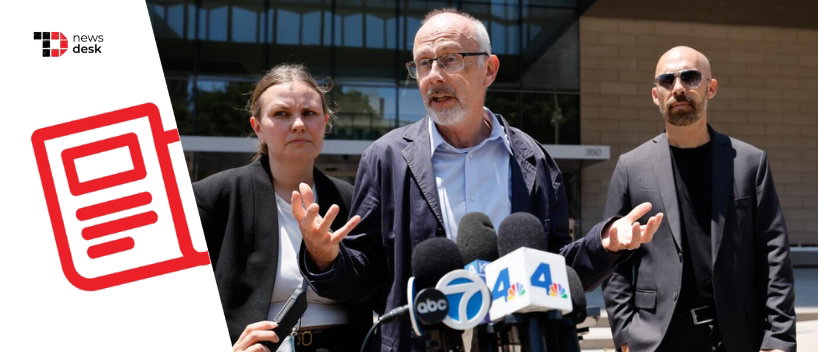
U.S. Attorney Bill Essayli said prosecutors would retry the case. “The evidence is strong that Jonathan Rinderknecht is responsible for igniting the fire on January 1, 2025, which eventually became the Palisades fire. We fully intend to retry this case before a new jury and obtain guilty verdicts on all charged counts,” Essayli said.
Defense attorney Steve Haney pushed back, saying the deadlock showed the government had not met its burden. “Ten to two (for not guilty) is an overwhelming message from the jury that the government failed and did not have enough evidence to prove their case,” Haney said.
Haney also ruled out a plea deal, saying, “Absolutely no deal. They're not going to offer one. We're not going to have any conversations. He didn't do it.”
The defense argued that fireworks were a more likely cause of the initial blaze. Reports noted that prosecutors lacked direct evidence that Rinderknecht sparked the first fire but placed him in the area and argued he was angry and erratic that night.
Why This Matters For AI And Law
The trial shows how AI conversations can become part of a digital evidence trail, even when the chatbot itself is not accused of facilitating a crime.
At least one juror was reportedly skeptical of the ChatGPT material, saying she did not believe the logs proved anything and objected to the suggestion that using ChatGPT reflected a character flaw.
That reaction matters because AI chat logs can contain emotional, hypothetical, creative, or exploratory prompts that may not neatly translate into intent. The case could become an early reference point for courts, prosecutors, defense teams, and AI companies as they evaluate how chatbot records should be interpreted in criminal investigations.
For now, the legal outcome remains unresolved. Rinderknecht remains in custody, with a status conference expected in mid-July and a retrial tentatively set for October 19, 2026.
