
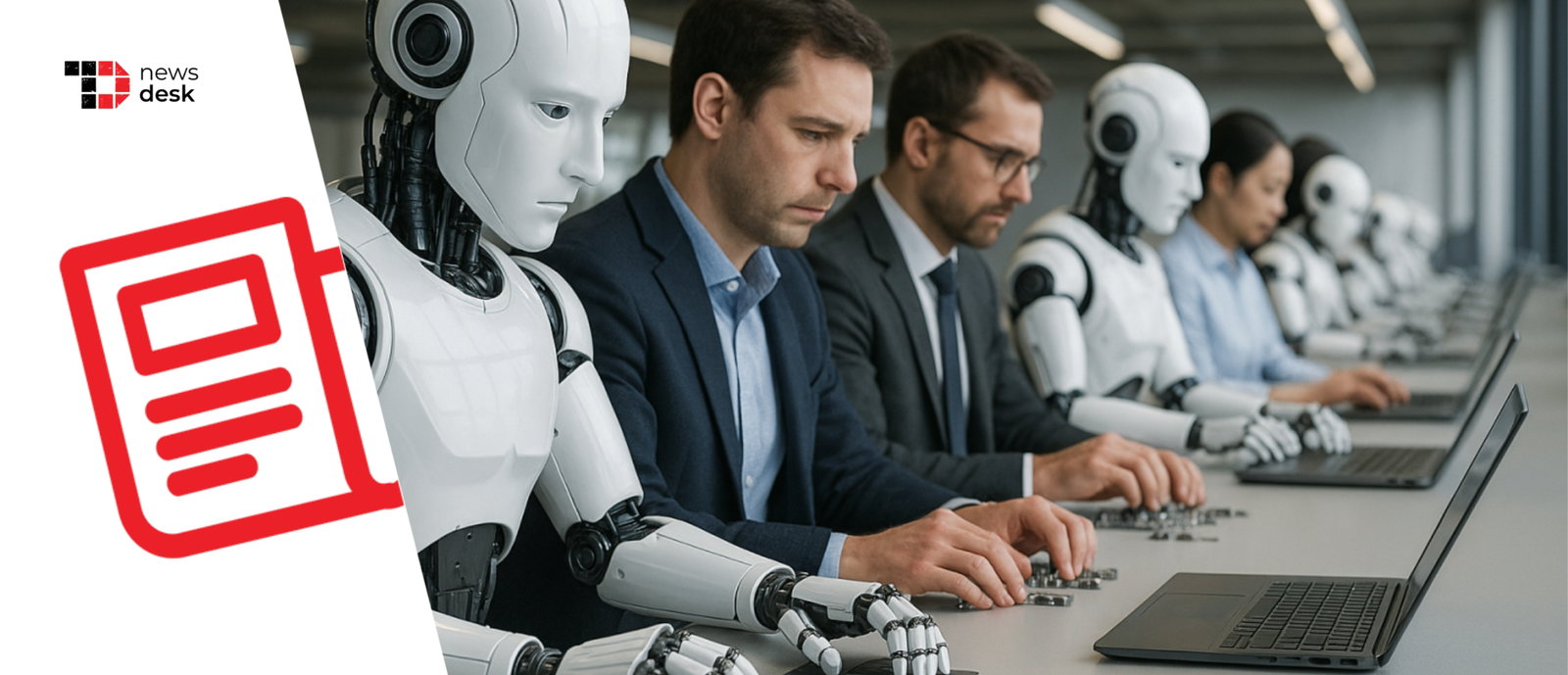
OpenAI CEO Sam Altman says artificial intelligence is unlikely to trigger a global “jobs apocalypse,” walking back earlier fears that AI would quickly eliminate large numbers of entry-level white-collar jobs. However, he added that AI’s labor-market impact remains a risk worth discussing.
TL;DR
- OpenAI CEO Sam Altman said AI has not eliminated as many white-collar jobs as he once feared.
- He admitted OpenAI was “roughly right” about AI’s technology progress but “pretty wrong” about near-term social and economic impacts.
- Altman said the “human part” of work remains hard to replace, even as companies automate some roles using AI.
The fear that artificial intelligence will wipe out large portions of the global workforce may have been overstated, at least for now, according to OpenAI CEO Sam Altman.
Speaking virtually at a Commonwealth Bank of Australia conference in Sydney on Tuesday, May 26, Altman said the rapid development and adoption of AI would not lead to the kind of global “jobs apocalypse” that many in the technology sector have warned about.

The OpenAI chief said he had initially been worried about AI’s impact on global employment, especially after the launch of ChatGPT in 2022. Yet, he acknowledged that those predictions have not played out in the way he expected.
He said OpenAI and its executives were “roughly right” about the technological direction of AI, but “pretty wrong” about its social and economic implications. “I'm delighted to be wrong about this, I thought there would have been more impact on entry-level white-collar jobs being eliminated by now than has actually happened,” Altman told CBA Chief Executive Matt Comyn.
That does not mean AI is having no effect on jobs. Reuters noted that companies including HSBC, Amazon, Standard Chartered, and CBA have announced that some roles are being replaced by AI. Altman also did not provide any fresh employment figures during the discussion.
Still, his latest remarks mark a noticeable shift from some of the sharper warnings that have surrounded generative AI since ChatGPT’s debut. Business Insider reported that Altman had previously warned about “entire classes” of jobs disappearing, while Anthropic CEO Dario Amodei has also warned of major risks to entry-level office jobs.
According to Altman, the answer lies in the “human part” of employment. He said that even though AI can take on more tasks across industries, people continue to value real human interaction in ways that are difficult to automate.
Altman gave the example of using AI to respond to Slack and email messages, before deciding to handle some of those interactions himself again. “We really do care about our interactions with people and this thing, which is a huge amount of my time, is not something that I can imagine myself outsourcing to an AI anytime soon,” he said.
That experience, he said, changed how he thinks about the future of work. “It really, in both positive and negative ways, updated me to thinking that the jobs picture is likely to be very different than we thought,” Altman added.
Topics for more insights:
The comments arrive as OpenAI itself is reportedly moving toward a major financial milestone. Reuters reported that the company is preparing to confidentially file for a U.S. initial public offering in the coming weeks, with earlier reporting suggesting it could seek a valuation of up to $1 trillion and raise at least $60 billion.
For businesses, Altman’s comments do not remove the need to plan for AI-driven disruption. They do, however, suggest a more nuanced near-term picture, where AI changes tasks, workflows, and expectations rather than instantly removing entire job categories.
In other words, the AI jobs story may not be about humans versus machines. It may be about which parts of work companies choose to automate, and which parts people still insist should remain human.
