
Artificial Intelligence
All About Edge Artificial Intelligence In Consumer Devices
Share
Overview
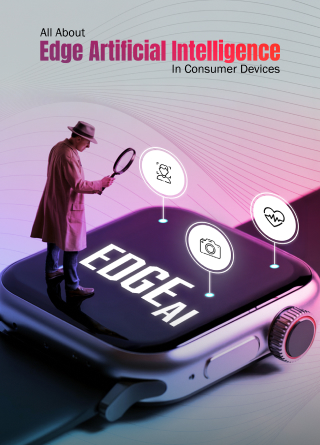
That’s exactly how Edge AI works, too!
In traditional AI systems, Sherlock would have to wait. He'd send a runner, wait for a response, and then act based on the information he received. It takes too long, requires outside help, and clues are often missed.
However, in Edge AI, Sherlock has Wi-Fi, can research clues right away, and can respond to situations in real-time.
Coming to technology, Edge AI means you don't have to send data to a faraway cloud service. Instead, your device does the work. Right there, it sees, thinks, and acts!
In this article, we’ll explain what Edge AI really is, how it powers everyday consumer devices like phones, wearables, and home appliances, and why it’s becoming a big deal for speed, privacy, and smarter user experiences.
Dive in!
.jpg.aspx "TechDogs-\"All About Edge Artificial Intelligence In Consumer Devices\"")
Everyone must have experienced Edge AI but never realize it. So, to understand how Edge AI is changing the game, let’s look at some everyday moments.
When a smart doorbell tells you there's a person at the door or your smartphone unlocks with facial identification, that’s where Edge AI is in action. It like hiring a digital Sherlock Holmes: quick, smart, and always-on-call!
Edge Artificial Intelligence (AI) lets your device understand and act on data right when it's received, instead of sending it to the cloud (aka distant servers) to be processed. It's better for privacy and doesn't always need the internet to work.
Edge AI handles data processing directly on devices, including sensors, cameras, and industrial machines, instead of solely depending on the cloud. This change allows for quicker choices, enhanced productivity, and increased safety.
Edge AI is reshaping industries by putting artificial intelligence closer to the source of data generation at the edge of networks.
We touched the surface-level, but to truly grasp the technology, we need to look much closer. Let’s dive in then!
Understanding Edge AI
Edge AI refers to the implementation of edge computing for AI applications in various devices across the physical world. It’s called “Edge AI” since the AI processing occurs right at the edge of the network, close to the data source, instead of being handled centrally in a cloud computing facility or private data center.
Edge AI is being drastically embedded across various sectors, including healthcare, retail, manufacturing, and smart cities. Deep learning at the edge of the network helps this use case by enabling real-time data processing and decision-making at the source of data generation. Pretty cool, right?
However, what’s wrong with traditional AI? Here’s what Edge AI changes!
The Objective Of AI In Edge Devices
With this setup, edge devices can quickly decide what to do, like helping a car drive itself, finding problems on a factory line, or identifying suspicious activity in a security feed. Only the most relevant data is sent back to the cloud, saving bandwidth and making analysis and response faster.
As AI works at the edge, it becomes more flexible, able to anticipate needs, and multimodal, so it won't need to be prompted every time. Talk about making processes even smoother!
We bet you would be interested in learning more about the operation of Edge AI. Let’s explore!
Working Of Edge Artificial Intelligence (AI)
Here’s how Edge AI functions across applications:
-
Data Collection
Edge devices send a steady stream of data to the cloud from cameras, sensors, and other sources constantly. This information can be health data, environmental measurements, video feeds or even audio recordings.
-
Data Processing
Edge devices have AI built in that which lets them quickly look at data, detect patterns, and make decisions without sending it to the cloud. Local processing then ensures that decisions are made rapidly and on the spot.
-
Real-Time Action
Edge devices can act quickly based on the AI model’s output. These actions might include adjusting the path, triggering alarms, or sending data to the cloud for further analysis.
Simple, wasn’t it?
Now, let's explore how consumer devices make use of Edge AI.
Applications Of Edge AI In Consumer Devices
-
Smartphones
Now a days, smartphones integrate Edge AI for activities like recognizing faces, voice assistants, and improved cameras. These features can work without using cloud services because AI processing is done on the device itself.
-
Wearable Devices
Edge AI is built into wearables like fitness trackers and smartwatches to keep an eye on health metrics in real time and give users instant feedback and personalized insights.
-
Smart Home Devices
Devices like security cameras, home assistants and others use Edge AI to understand user preferences and alter their behavior accordingly. This improves the quality of automation and the overall user experience.
Artificial intelligence is now being integrated heavily in consumer and personal devices, enabling personalized experiences, better power efficiency, enhanced security, and innovative features.
With that, let’s check how Edge AI is improving consumer technology. Scroll on!
Benefits Of Edge AI
By now you understand what Edge AI is, how it functions, and how you interact with it using your consumer devices. So, what about its benefits?
-
Enhanced Privacy And Security
Edge AI reduces the risk of data breaches and unauthorized access since the data is processed locally on the devices.
-
Reduced Bandwidth Consumption
Edge AI lowers the bandwidth needs and related costs as only relevant data is sent to the cloud.
-
Improved Reliability
Edge AI operates without the need for constant internet access, which makes it suitable for remote regions.
-
Low Latency
Edge AI provides immediate responses by processing data close to the source which is quite essential for applications such as industrial automation and self-driving cars.
-
Scalability
With Edge AI, the distribution of AI capabilities across various edge devices enables scalable solutions without overloading cloud infrastructure.
While it offers many benefits, like every coin with two sides, Edge AI also has some limitations. So, let’s explore them next.
Limitations Of Edge AI
Despite its quick, local processing prowess, Edge AI has some drawbacks, such as:
-
Security Concerns
Protecting AI models and data on edge devices is very crucial.
-
Standardization
Edge AI development frameworks vary from brand to brand, and if they aren't used consistently, varied systems can slow the industry's progress.
-
Hardware Limitations
Edge devices have limited memory and processing power, so they need AI models that work really well.
Edge AI is limited to some aspects, but it is still getting advanced. Here are some new trends that will redefine its capabilities in the near future.
Evolving Trends In Edge AI
-
Federated Learning
This strategy allows training AI models across multiple devices without any exchange of raw data, further improving privacy.
-
5G Integration
The integration of 5G networks will enhance the potential of Edge AI by providing lower latency and faster connectivity.
-
Edge AI In AR/VR
Augmented and virtual reality applications are adapting Edge AI for engagement in real-time interactions and captivating experiences.
-
Sustainability
Edge AI is supporting sustainable activities by lowering carbon footprints and optimizing energy use.
While future trends point to exciting possibilities, let's bring it all together with our final thoughts on Edge AI.
Final Words
Edge AI isn't just a technical improvement; it changes the way your daily devices think and act. Smartphones, smartwatches, home assistants, and medical devices are all getting faster, safer, and more personalized–without relying on the cloud.
We've also seen how Edge AI works, where it contributes, and where it falls short. However, as new technological trends emerge, Edge AI will become much smarter and more useful in our daily lives.
In short: the future isn’t just smart it’s happening right at the edge and chances are, it’s already in your pocket or on your wrist.
Frequently Asked Questions
What Is Edge AI In Consumer Devices?
Edge AI refers to artificial intelligence that processes data directly on consumer devices like smartphones, wearables, and home assistants, without needing constant cloud access. This enables faster decisions, improved privacy, and real-time functionality.
What Are The Main Benefits Of Edge AI In Everyday Electronics?
Edge AI offers low latency, improved privacy, reduced bandwidth use, and reliable performance even without internet. It enables smart features like facial recognition, instant alerts, and on-device diagnostics.
How Is Edge AI Different From Traditional Cloud AI?
Unlike cloud AI, which processes data remotely, Edge AI works locally on the device. This minimizes data transfer, boosts response speed, and enhances privacy by keeping sensitive data on the device.
Wed, Jul 16, 2025

Liked what you read? That’s only the tip of the tech iceberg!
Explore our vast collection of tech articles including introductory guides, product reviews, trends and more, stay up to date with the latest news, relish thought-provoking interviews and the hottest AI blogs, and tickle your funny bone with hilarious tech memes!
Plus, get access to branded insights from industry-leading global brands through informative white papers, engaging case studies, in-depth reports, enlightening videos and exciting events and webinars.
Dive into TechDogs' treasure trove today and Know Your World of technology like never before!
Disclaimer - Reference to any specific product, software or entity does not constitute an endorsement or recommendation by TechDogs nor should any data or content published be relied upon. The views expressed by TechDogs' members and guests are their own and their appearance on our site does not imply an endorsement of them or any entity they represent. Views and opinions expressed by TechDogs' Authors are those of the Authors and do not necessarily reflect the view of TechDogs or any of its officials. While we aim to provide valuable and helpful information, some content on TechDogs' site may not have been thoroughly reviewed for every detail or aspect. We encourage users to verify any information independently where necessary.
Loading comments...