

Over three years later, ChatGPT remain the most used AI platform worldwide.
A large reason it has managed to keep a hold of its leading position is the continual upradation of its models—we're up to GPT-5.2.
However, newer models means that the older ones are now outdated and effectively redundant—meaning there soon will come a time when they must be scrapped. '
This is what OpenAI conveyed through its latest blog post about its models.
OpenAI says it will remove GPT-4o, GPT-4.1, GPT-4.1 mini, and OpenAI o4-mini from ChatGPT on February 13, 2026. However, there are no changes to the API at this time.
The change arrives alongside the previously announced retirement of GPT-5 (Instant and Thinking).
TL;DR
- ChatGPT will retire GPT-4o, GPT-4.1, GPT-4.1 mini, and OpenAI o4-mini On February 13, 2026.
- This move will be alongside the already announced retirement of GPT-5 (Instant and Thinking).
- There are no API changes at this time.
- OpenAI says most usage has moved to GPT-5.2, with only 0.1% of users choosing GPT-4o daily.
Why OpenAI Is Retiring These Models Now
OpenAI says it is sharing this retirement decision now because the newer improvements are already in place and because usage has broadly moved on.
According to the company, the vast majority of ChatGPT usage has shifted to GPT-5.2, with only 0.1% of users still selecting GPT-4o each day.
Topics For More Insight
Why GPT-4o Is Getting Extra Context
While the retirement covers multiple older models, OpenAI highlights GPT-4o as a special case.
After initially removing GPT-4o and later restoring access during the GPT-5 release, the company says it gained a clearer picture of how people rely on the model day to day.
OpenAI said it received direct feedback from numerous Plus and Pro users who wanted more time to move important workflows, including creative ideation, as well as many who preferred GPT-4o’s conversational style and warmth.
How Feedback Shaped GPT-5.1 And GPT-5.2
Such user signals directly influenced GPT-5.1 and GPT-5.2.
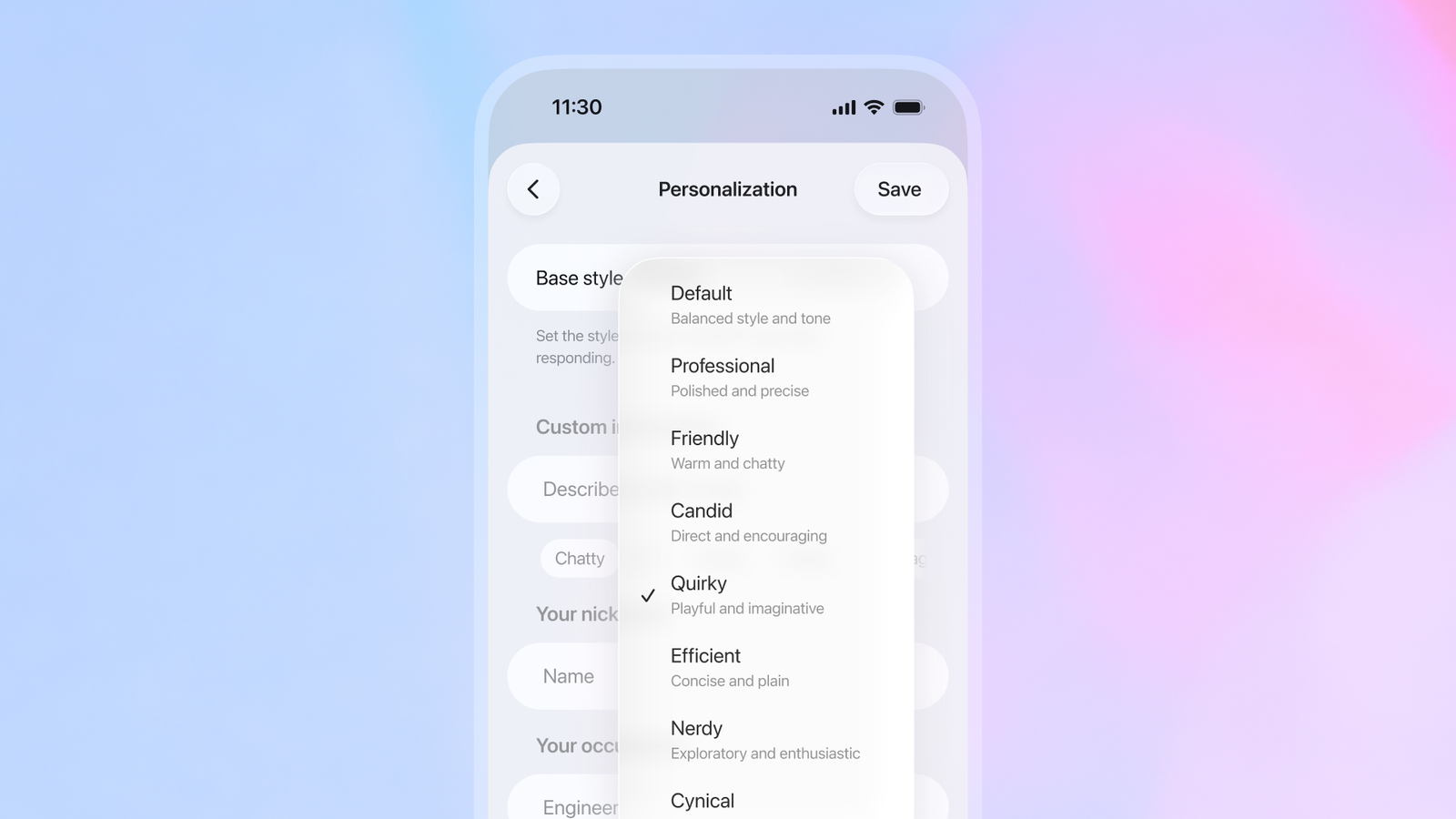
The company points to personality improvements, stronger support for creative ideation, and expanded customization so people can steer how ChatGPT responds. Users can choose from base styles and tones, along with controls for factors such as warmth and enthusiasm.
A personality defines the style and tone of its responses, shaping how answers feel rather than what the system can do. It blends traits, voice, and behavior to produce responses that may sound friendly and casual, concise and professional, or somewhere in between.
Selected personalities leverage saved memories and custom instructions, which can refine or override certain traits. Users can choose from seven personalities: Professional, Candid, Cynical, Efficient, Friendly, Nerdy, and Quirky, or use the Default neutral style.
OpenAI clarified that personality settings do not override task-specific instructions, meaning that no matter which tone or style you use, it will deliver the correct answer.
What's Next For OpenAI?
Beyond this change, OpenAI says it is continuing to improve ChatGPT in areas users have flagged.
The company cites additional work on personality and creativity, along with efforts to reduce unnecessary refusals and overly cautious or preachy responses, with updates coming soon.
It's also designing a verrsion of ChatGPT for adults over 18, grounded in the principle of treating adults like adults, while expanding user choice and freedom within appropriate safeguards.
To support this endeavor, OpenAI rolled out age prediction for users under 18 in most markets.
