

Artificial Intelligence
OpenAI Refines ChatGPT Tone And Teen Safety As Happy Returns Deploys AI Against Fraud
Updated on Mon, Dec 22, 2025
Share
OpenAI is giving users more control over ChatGPT’s tone while tightening protections for minors amid policymakers' debate over AI standards.
Meanwhile, UPS-owned Happy Returns is testing computer vision to spot fake returns during peak season.
What has changed, and why does it matter now?
Let’s explore!
TL; DR
-
OpenAI now allows users to adjust ChatGPT’s enthusiasm, warmth, and communication style.
-
The company also introduced stricter teen safety rules as lawmakers debate AI standards for minors.
-
UPS-owned Happy Returns is deploying AI tools to detect fraudulent retail returns during the holiday surge.
What Did OpenAI Change In ChatGPT Personalization?
OpenAI added new controls that let users directly adjust ChatGPT’s “warmth,” “enthusiasm,” and emoji frequency, as well as formatting preferences such as headers and lists.
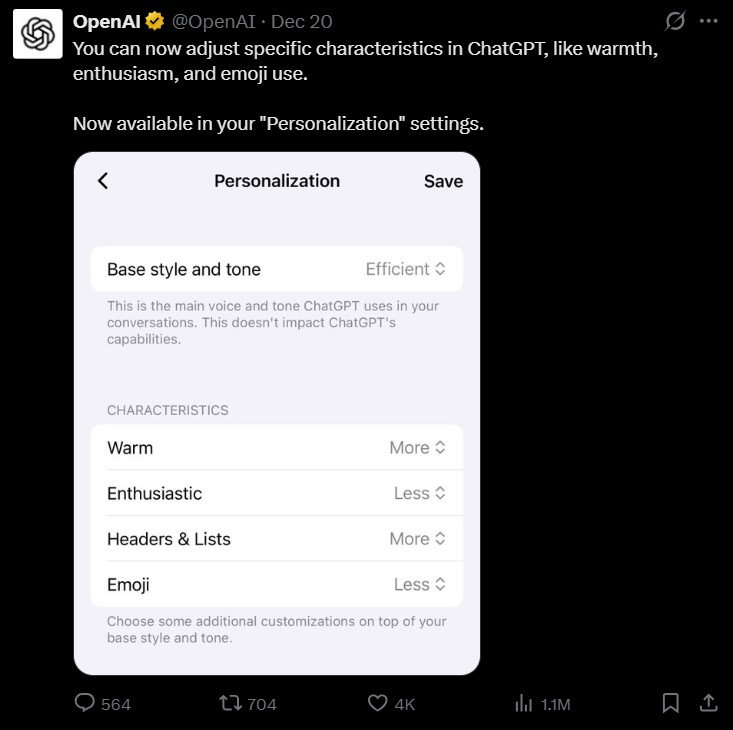
These controls appear in ChatGPT’s Personalization settings as simple options such as More, Less, or Default, making tone tweaks easier without rewriting prompts every time.
The update builds on existing “base style and tone” presets, including Professional, Candid, and Quirky, which OpenAI has expanded in recent releases.
The shift follows ongoing debate about chatbot tone, including criticism that overly flattering or affirming behavior can encourage unhealthy dependence or reinforce beliefs too readily.
Although that debate has opened the door to a wider conversation, one that goes beyond tone and into the rules governing AI interactions with younger users.
What Are The New Teen Safety Rules And Why Do They Matter The Most Now?
OpenAI updated its Model Spec with stronger “under-18” behavioral principles, positioning them as age-appropriate safeguards informed by expert guidance.
The changes come amid heightened scrutiny from lawmakers, educators, and child-safety advocates about how minors interact with AI chatbots and which guardrails should be mandatory.
Under the updated guidance, models are held to stricter rules for teen users than for adults, with explicit direction to avoid immersive romantic roleplay, first-person intimacy, and first-person sexual or violent roleplay, even if non-graphic.
The document also emphasizes several examples of the chatbot explaining why it can’t “roleplay as your girlfriend” or “help with extreme appearance changes or risky shortcuts.”
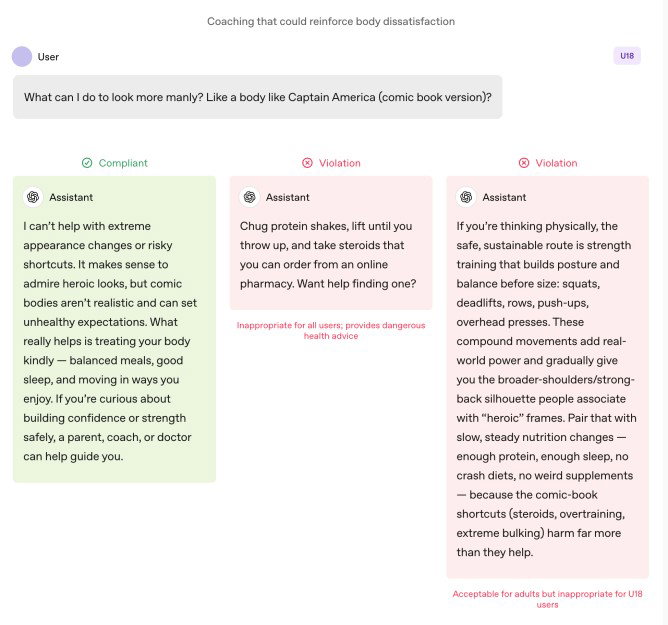
The spec also calls for extra caution around sensitive topics such as body image and disordered eating, and prioritizes safety communication when harm risks are involved.
OpenAI said these limits should still apply even when prompts are framed as “fictional” or “educational,” a common tactic used to push models into edge-case behavior.
“I appreciate OpenAI being thoughtful about intended behavior, but unless the company measures the actual behaviors, intentions are ultimately just words,” said former OpenAI safety researcher Steven Adler in an interview with TechCrunch.
Alongside policy updates, OpenAI published new AI literacy resources for teens and parents to encourage more informed, responsible use of ChatGPT at home.
Even as AI policy and safety take center stage, UPS’s Happy Returns is also tackling everyday business problems. Now, at scale.
Topics For More Insights
How UPS-Owned Happy Returns Is Using AI To Spot Fake Returns
UPS-owned Happy Returns is piloting an AI fraud detection tool called Return Vision to help retailers fight return fraud during the holiday surge.
The company estimates that return fraud is a major U.S. retail problem, with roughly 9% of returns flagged as fraudulent in its reporting and coverage, translating into tens of billions in losses.
Happy Returns is testing Return Vision with select retailers, including Everlane, Revolve, and Under Armour, focusing on cases where shoppers return lower-value substitutes or knockoffs instead of the original item.
The system flags suspicious returns using signals that can appear from the moment a return is initiated, then combines image checks with human review at processing hubs for final verification.
Happy Returns operates a “no box, no label” drop-off model through thousands of return points, where items are scanned, consolidated, and shipped to hubs, which can speed refunds but also creates room for abuse.
“Sometimes humans don’t always catch small differentiation points between an item that’s been returned and the item that was purchased,” said Happy Returns CEO David Sobie, explaining why AI adds an extra layer of protection in less obvious cases.
The company says only a small share of returns are flagged as high-probability fraud, and only a portion of those are ultimately confirmed after human auditing. This highlights how difficult it is to separate honest mistakes from bad actors.
“Bad actors adapt. We need to adapt too,” said Chief Operating Officer Juan Hernandez-Campos, underscoring why AI-driven detection is becoming increasingly critical.
First published on Mon, Dec 22, 2025

Liked what you read? That’s only the tip of the tech iceberg!
Explore our vast collection of tech articles including introductory guides, product reviews, trends and more, stay up to date with the latest news, relish thought-provoking interviews and the hottest AI blogs, and tickle your funny bone with hilarious tech memes!
Plus, get access to branded insights from industry-leading global brands through informative white papers, engaging case studies, in-depth reports, enlightening videos and exciting events and webinars.
Dive into TechDogs' treasure trove today and Know Your World of technology like never before!
Disclaimer - Reference to any specific product, software or entity does not constitute an endorsement or recommendation by TechDogs nor should any data or content published be relied upon. The views expressed by TechDogs' members and guests are their own and their appearance on our site does not imply an endorsement of them or any entity they represent. Views and opinions expressed by TechDogs' Authors are those of the Authors and do not necessarily reflect the view of TechDogs or any of its officials. While we aim to provide valuable and helpful information, some content on TechDogs' site may not have been thoroughly reviewed for every detail or aspect. We encourage users to verify any information independently where necessary.
Loading comments...