

Artificial Intelligence
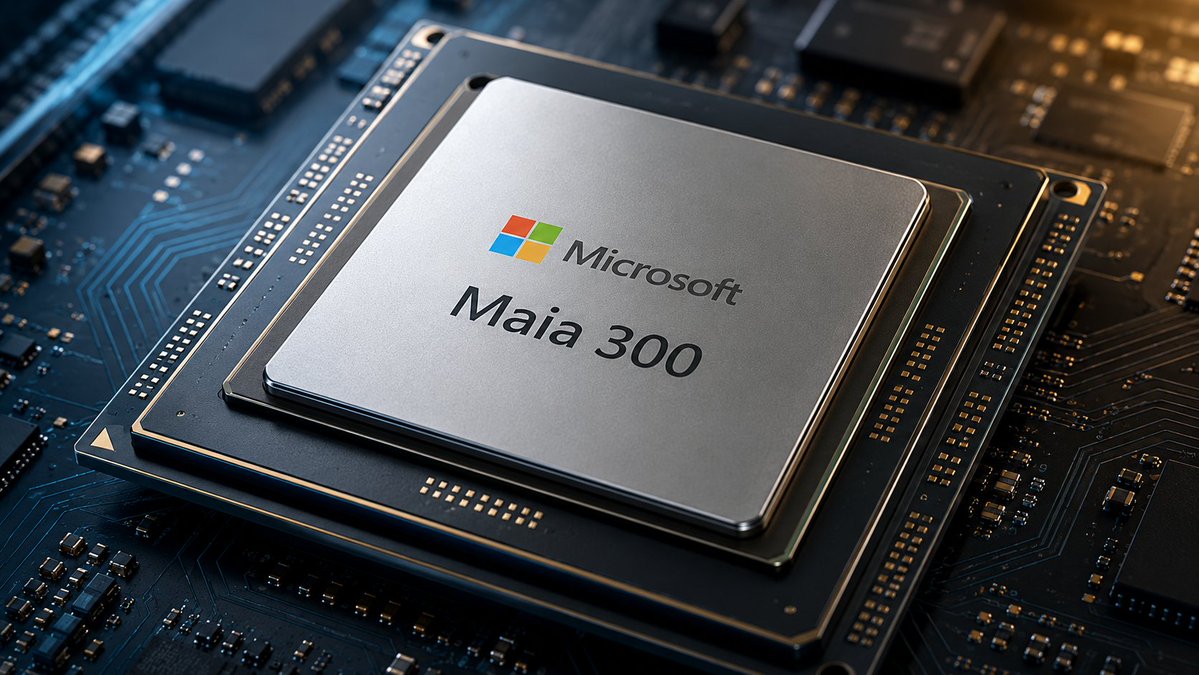
Microsoft Reportedly Plans Maia 300 AI Chip Reveal In September, Seeks TSMC Capacity For 300,000-Plus Units
Updated on Tue, Aug 11, 2026
Share
Microsoft is reportedly preparing to unveil its next-generation Maia 300 AI accelerator as early as September 2026, while holding talks with TSMC for manufacturing capacity exceeding 300,000 chips for delivery in 2027. Microsoft, however, has not confirmed the reported production figure.
TL;DR
- Microsoft could unveil its Maia 300 AI chip as early as September 2026.
- The company is reportedly negotiating with TSMC for capacity exceeding 300,000 chips for 2027 delivery.
- Microsoft eventually wants capacity for more than one million Maia 300 chips, according to the report.
- Microsoft disputed the reported production figures without revealing its own numbers.
Microsoft is looking to accelerate its custom AI chip push as it seeks to reduce its dependence on Nvidia processors and close the gap with cloud rivals Google and Amazon.
Reuters, citing a report by The Information and people with direct knowledge of the plans, said Microsoft could publicly unveil Maia 300 this fall, potentially as soon as September. The Yahoo Finance-hosted Quartz report also highlighted the planned launch and Microsoft's negotiations with Taiwan Semiconductor Manufacturing Company (TSMC).
Microsoft Reportedly Wants More Than 300,000 Maia 300 Chips
According to Reuters, Microsoft has been discussing manufacturing capacity with TSMC for more than 300,000 Maia 300 chips, with delivery targeted for 2027. The company reportedly wants to increase production substantially after that and ultimately secure capacity for more than one million units.
However, that larger target could face constraints from component availability and ongoing negotiations with TSMC. Reuters also reported that Microsoft is trying to persuade major cloud customers, including Anthropic, to adopt its custom accelerator.
Microsoft did not confirm the production numbers.
“While we don't share production volumes, the figures reported don't reflect the scale of our program,” Andrew Wall, General Manager for Microsoft Azure Maia, told Reuters. He added that Microsoft continues investing in custom silicon as part of its long-term AI infrastructure strategy.
TSMC was not immediately available for comment to Reuters outside regular business hours.
Maia 300 Would Follow Microsoft’s Maia 200 AI Accelerator
Microsoft introduced its original Maia accelerator family in November 2023 before unveiling the second-generation Maia 200 in January 2026. Maia 200 is manufactured using TSMC's 3-nanometer process and was designed primarily for large-scale AI inference.
According to Microsoft's official Maia 200 announcement, the accelerator contains more than 140 billion transistors, 216GB of HBM3e memory, 272MB of on-chip SRAM, and delivers more than 10 petaFLOPS of FP4 performance. Microsoft said Maia 200 offers 30% better performance per dollar than the latest-generation hardware then operating in its fleet.
The chip is already being used for workloads including OpenAI's GPT-5.2 models, Microsoft 365 Copilot, and Microsoft's internal AI projects. Microsoft described the Maia program as “multi-generational,” confirming in January that future generations were already being designed.
Microsoft Wants To Reduce Its Reliance On Nvidia
The Maia 300 effort comes as Microsoft and other hyperscalers develop more of their own AI silicon to reduce infrastructure costs and reliance on Nvidia's processors.
Reuters noted that Microsoft has so far lagged Google and Amazon in scaling its custom chip operation. Google has built out its Tensor Processing Unit portfolio, while Amazon has expanded adoption of its Trainium processors for AI workloads.
Topics for more insights:
Firstpost has also reported the planned Maia 300 September unveiling, framing the move around Microsoft's effort to challenge Nvidia's position in AI chips.
For Microsoft, Maia 300 could therefore represent more than another chip generation. If the reported production plans materialize, the company would be attempting to deploy its proprietary AI hardware at a much larger scale while offering Azure customers another alternative within its AI infrastructure stack.
However, the September unveiling, the 300,000-plus capacity negotiations, and the eventual one-million-chip target remain reported plans rather than formally announced Microsoft commitments.
First published on Tue, Aug 11, 2026

Enjoyed what you read? Great news – there’s a lot more to explore!
Dive into our content repository of the latest tech news, a diverse range of articles spanning introductory guides, product reviews, trends and more, along with engaging interviews, up-to-date AI blogs and hilarious tech memes!
Also explore our collection of branded insights via informative white papers, enlightening case studies, in-depth reports, educational videos and exciting events and webinars from leading global brands.
Head to the TechDogs homepage to Know Your World of technology today!
Disclaimer - Reference to any specific product, software or entity does not constitute an endorsement or recommendation by TechDogs nor should any data or content published be relied upon. The views expressed by TechDogs' members and guests are their own and their appearance on our site does not imply an endorsement of them or any entity they represent. Views and opinions expressed by TechDogs' Authors are those of the Authors and do not necessarily reflect the view of TechDogs or any of its officials. While we aim to provide valuable and helpful information, some content on TechDogs' site may not have been thoroughly reviewed for every detail or aspect. We encourage users to verify any information independently where necessary.
Loading comments...