

Software Development
Meta Connect: Meta Invites Outside Developers To Build Apps For Its Smart Glasses
Updated on Fri, Sep 19, 2025
Share
2025’s version was held from September 17 to 18, 2025, where the first day spoke mainly about hardware—here’s a quick roundup.
From the new Meta Ray-Ban Display smart glasses and EMG Meta Neural Band to updates made to existing lineups such as Ray-Ban Meta (Gen 2), Oakley Meta Vanguard and Hyperscape Capture—which included a host of Meta Horizon products—Meta Connect 2025 was quite a treat.
Meta Connect also plays the role of the company’s developer conference—and the event’s second day witnessed a wide range of reveals focusing on developer tools and avenues for collaboration.
To facilitate improved collaboration, Meta introduced the developer preview of the Meta Wearables Device Access Toolkit. This will allow application developers to access a variety of on-device sensors that enable them to build features in their apps that can be operated on Meta’s smart glasses.
The toolkit brings them the ability to use the smart glasses’ microphone, audio, and video capabilities, allowing them to offer users distinctive hands-free experiences and other benefits of AI glasses.
“Extend the functionality of your existing mobile applications into the physical world, creating new and exciting use cases that can be unlocked with the glasses form factor,” says Meta.
The idea behind the preview is to help Meta leverage feedback from developers in order to “build the future” of the toolkit. Through the preview, developers can access the toolkit, build prototypes, test sensor-based experiences, and distribute to testers using Meta’s beta testing platform in the Wearables Developer Center.
Developers will also be handed access to pre-built libraries, sample apps, dedicated testing tools and environments, and early access to the documentation and its technical specifications and functionalities.
However, Meta provided a disclaimer stating that limited audiences would be privy to deployed features in the preview phase, allowing the tech giant to responsibly test, learn, and refine the toolkit. Also, developers won’t be able to leverage the Meta AI capabilities of its smart glasses, but the company plans to explore such capabilities in future updates.
The preview comes ahead of general availability, which is expected to become available in 2026.
“This early release is all about building the right foundation, and that means working closely with our developer community to understand what matters most. Your feedback will directly influence how the platform evolves.”
As such, Meta’s toolkit has already been tested by several other companies, which Meta highlights in the blog post introducing the Meta Wearables Device Access Toolkit.
Disney Imagineering’s R&D team explored how Meta’s AI glasses can help bring easy-to-access tips while in the parks. 18Birdies found that golfers can be offered real-time yardages, club recommendations, and seamless social capture, while remaining focused. Logitech’s Streamlabs can provide hands-free streaming, dynamic overlays, and multistreaming options.
Other beneficiaries include Be My Eyes, HumanWare, L&R, Microsoft's Seeing AI, Pixel and Texel, and popular streaming platform Twitch.
Developers interested in trialing Meta’s Wearable Device Access Toolkit can join the waitlist.
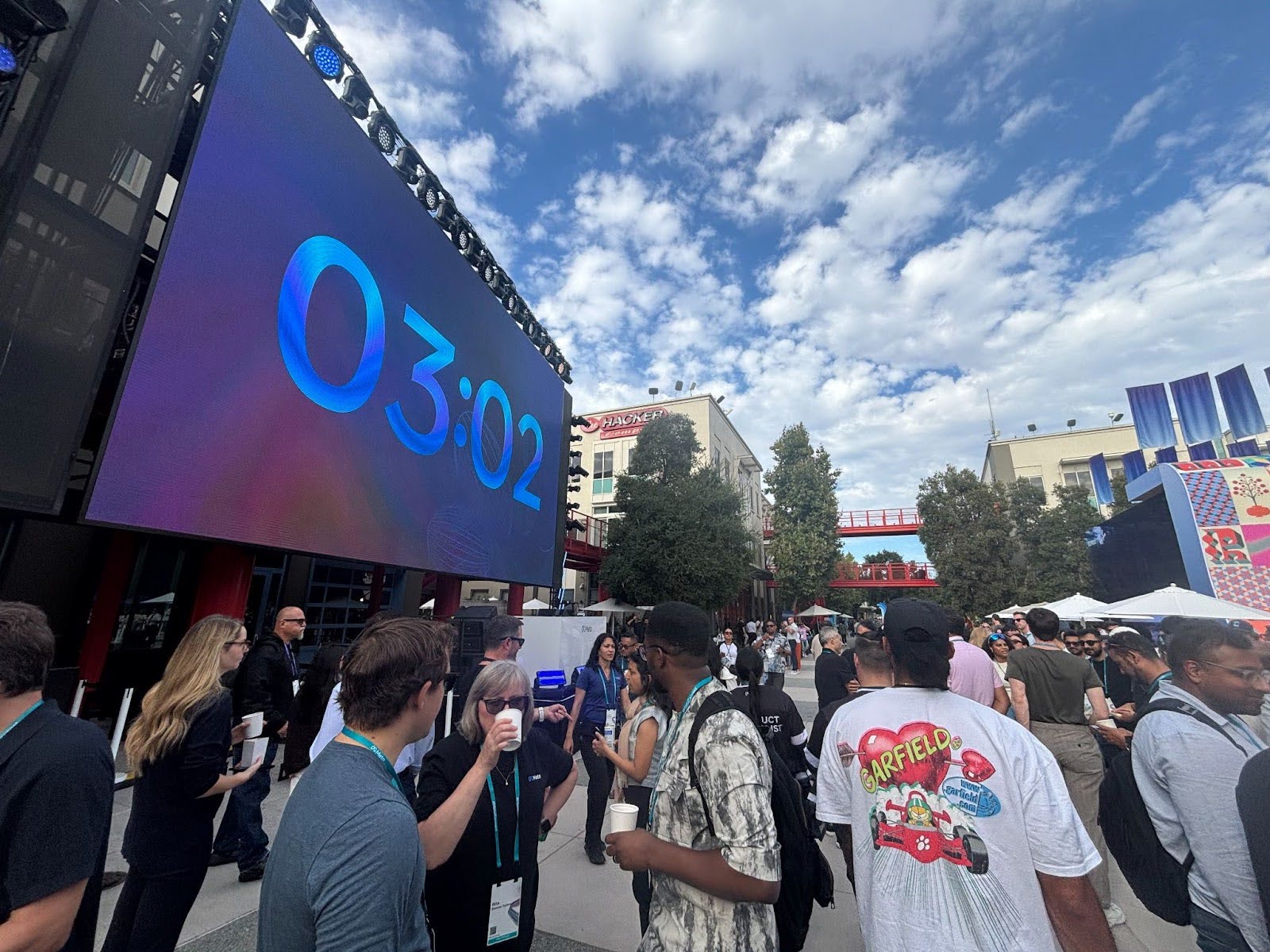
Meta also offered event attendees a sneak peek at upcoming and latest breakthroughs, tools, and programs that are poised to craft virtual reality (VR) and augmented reality (AR) experiences.
“As our audience grows and evolves, we’re seeing new use cases emerge, leading to more opportunities for VR developers to find success. In fact, over 300 apps on the Meta Horizon Store have now generated more than $1 million in revenue, and 10 apps have generated over $50 million,” Meta said.
Meta is betting that generative artificial intelligence (GenAI) will play a major role in the development of VR applications, which is why it's offering a preview of various AI tools that will be made available to VR developers.
“By linking AI to our suite of development tools, you can achieve streamlined workflows, faster optimizations, and accelerate overall development.”
As such, GenAI can help developers with code generation, performance optimization, real-time app debugging, end-to-end prototyping, and get accurate responses to support troubleshooting through the Horizon OS Knowledge Base.
Ahead of this, the company listed way in which developers can use Meta Horizon to earn and engage user better; spoke of three tool updates that can help them build, experiment, and test efficiently, including Passthrough Camera Access and Feed Visualizer, object detection, and connectivity to LLMs; unveiled a redesigned interface and streamlined workflows in Meta XR Simulator; introduced the Immersive Web SDK to streamline immersive web development; revealed improvements to Android 2D and announced Spatial SDK, a native app framework to spatialize existing mobile apps or create new VR experiences for Quest; and more.
What do you think about Meta's new tools for developers?
Do you think it will shape the future of VR, AR, and smart glasses, helping Meta capture a commanding position in the industry?
Let us know in the comments below!
First published on Fri, Sep 19, 2025

Enjoyed what you've read so far? Great news - there's more to explore!
Stay up to date with the latest news, a vast collection of tech articles including introductory guides, product reviews, trends and more, thought-provoking interviews, hottest AI blogs and entertaining tech memes.
Plus, get access to branded insights such as informative white papers, intriguing case studies, in-depth reports, enlightening videos and exciting events and webinars from industry-leading global brands.
Dive into TechDogs' treasure trove today and Know Your World of technology!
Disclaimer - Reference to any specific product, software or entity does not constitute an endorsement or recommendation by TechDogs nor should any data or content published be relied upon. The views expressed by TechDogs' members and guests are their own and their appearance on our site does not imply an endorsement of them or any entity they represent. Views and opinions expressed by TechDogs' Authors are those of the Authors and do not necessarily reflect the view of TechDogs or any of its officials. While we aim to provide valuable and helpful information, some content on TechDogs' site may not have been thoroughly reviewed for every detail or aspect. We encourage users to verify any information independently where necessary.
Loading comments...