

Artificial Intelligence
IndiaAI Mission Launches 3 Homegrown AI Models, Including 2 That Work Offline
Updated on Thu, Nov 5, 2026
Share
India has taken another step towards developing its own artificial intelligence (AI) ecosystem, as the IndiaAI Mission unveiled three indigenous foundation models designed for multilingual applications, advanced reasoning, and secure offline operations.
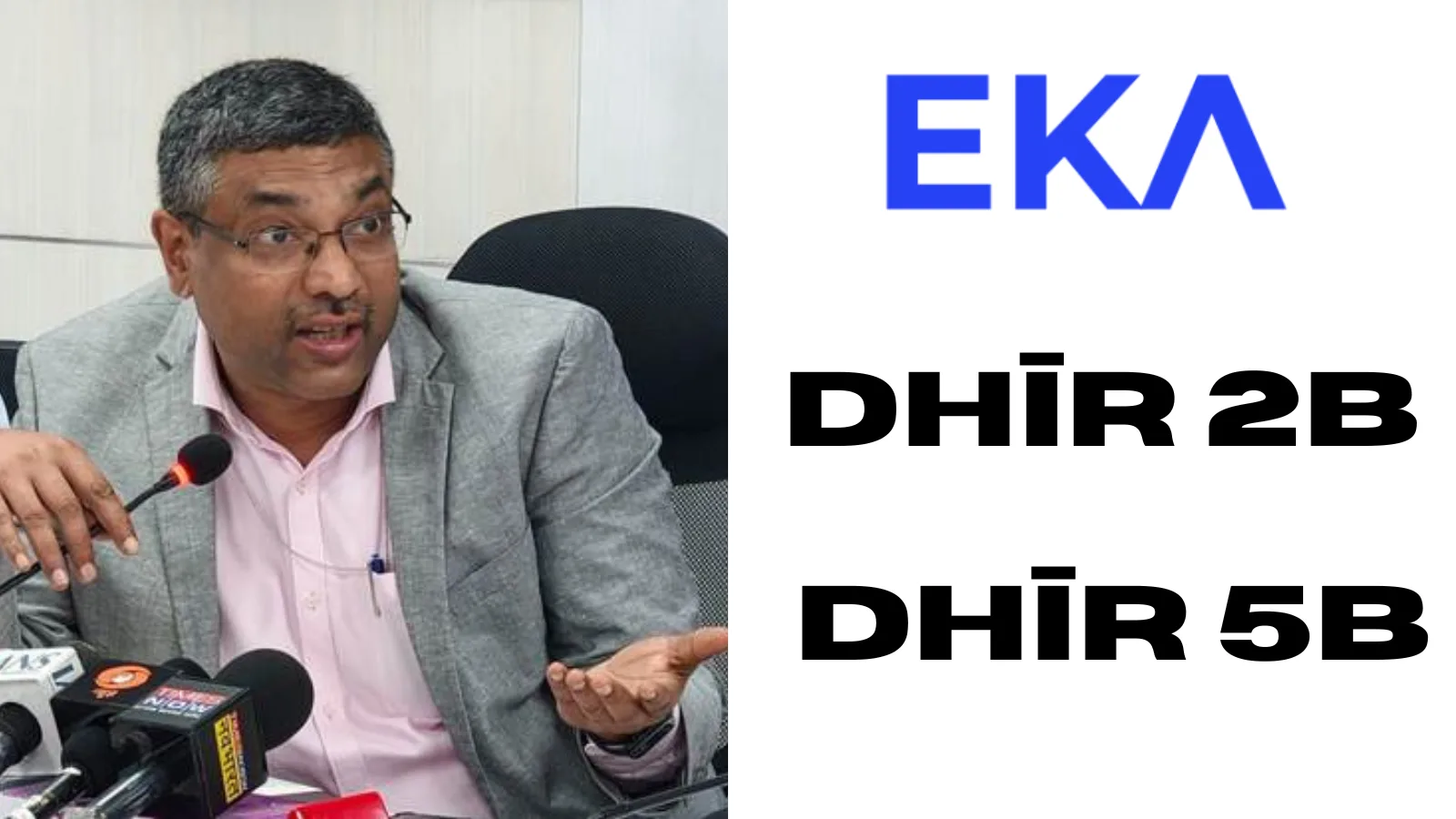
The newly released models, EKA-1, Dhīr 2B, and Dhīr 5B, aim to strengthen India's domestic AI capabilities while supporting applications across banking, cybersecurity, defence, government, and education.
The announcement also highlights an interesting development, as two of the models are designed to run directly on compatible mobile devices without requiring an active internet connection.
Here's what happened.
TL;DR
- India's Ministry of Electronics and Information Technology (MeitY) unveiled three indigenous AI models on November 3, 2026.
- Soket Labs' EKA-1 features 26.3 billion parameters and supports 22 Indian languages alongside English.
- ZenteiQ's Dhīr 2B and Dhīr 5B support offline AI processing on compatible devices.
- The models target secure, multilingual AI applications across several critical sectors.
IndiaAI Mission Introduces Three Indigenous AI Foundation Models
The PIB officially announced the release of three homegrown AI foundation models at an event in New Delhi.
Developed under the IndiaAI Mission's Innovation Centre pillar, the models include EKA-1 by Soket Labs Technology and Research Private Limited and Dhīr 2B and Dhīr 5B by ZenteiQ AiTech Innovations.
The initiative forms part of India's efforts to develop domestic AI technologies that address local linguistic requirements, industry-specific challenges, and sensitive data-processing needs.
As reported by TechGig, the models are intended to reduce India's reliance on foreign AI technologies, particularly for applications in critical sectors.
Meanwhile, the IndiaAI Mission supported the development of these models through subsidised access to national AI computing infrastructure and assistance with research-related expenses.
Speaking at the announcement, S. Krishnan, Secretary of MeitY, highlighted how developing indigenous AI models could help strengthen India's technological independence.
"The development of such indigenous models strengthens India's technological and strategic autonomy in Artificial Intelligence," said Krishnan.
He also noted that the models could improve productivity and operational efficiency across government, industry, research, and education.
EKA-1 Brings 26.3 Billion Parameters And Support For 22 Indian Languages
Developed by Soket Labs, EKA-1 is an open, sparse hybrid language model designed for advanced AI applications, including mathematics, programming, logical reasoning, and agentic workflows.
EKA-1 features 26.3 billion parameters and has been trained on approximately 7.5 trillion tokens.
The model supports all 22 scheduled Indian languages alongside English, positioning it for multilingual applications across India's diverse linguistic landscape.
EKA-1 is also designed to address specialised requirements in banking, financial services, and cybersecurity, where organisations must consider data security, regulatory requirements, and infrastructure control.
Abhishek Upperwal, CEO of Soket Labs Technology and Research Private Limited, said the model had been developed specifically for India's banking, financial services, and cybersecurity landscape.
He explained that the model aims to address industry-specific requirements while delivering AI capabilities aligned with the country's technological priorities.
While EKA-1 focuses on more complex reasoning and analytical workloads, the other two models take a different approach by prioritising smaller, locally deployable AI systems.
Dhīr 2B And Dhīr 5B Bring Offline AI Processing To Mobile Devices
ZenteiQ AiTech Innovations introduced Dhīr 2B and Dhīr 5B as open-source, multilingual AI assistants designed for secure deployment across different computing environments.
The models support English and 10 Indian languages and are intended for tasks such as document-based automation, knowledge retrieval, and enterprise services.
Their most notable capability is offline deployment.
As highlighted by SuperPower Daily, the Dhīr models are designed to perform document-related tasks locally without continuously depending on cloud connectivity.
This means compatible devices can process certain requests without sending information to external cloud servers, potentially offering greater control over sensitive data.
Topics For More Insights
The models can also be deployed on an organisation's own infrastructure, making them relevant for government departments, defence applications, industrial operations, and educational institutions.
Professor Sashikumar, CEO of ZenteiQ AiTech Innovations, explained the significance of this architecture.
"Their lightweight architecture also enables on-device deployment on mobile phones, without dependence on cloud connectivity," he said.
He added that local processing could improve privacy, security, and accessibility by allowing users to access AI capabilities while keeping data on their devices.
ZenteiQ is also developing a free mobile application for Android and iOS that would allow users to access its models after downloading them.
However, the practical experience will depend on device compatibility, available computing resources, and the complexity of the tasks being performed.
India Pushes Towards Greater AI Independence
The launch comes as India continues investing in domestically developed foundation models, computing infrastructure, and AI applications tailored to national requirements.
The initiative aims to make AI more accessible through national infrastructure, indigenous model development, research support, and platforms such as AIKosh.
The mission was approved by India's Union Cabinet on March 7, 2024, with the vision of making AI in India and making AI work for India.
Sudeep Shrivastava, Chief Operating Officer of IndiaAI, said the new models demonstrate the country's ability to build different classes of AI systems, ranging from lightweight models for everyday devices to larger models for complex enterprise applications.
The development also reflects a broader focus on AI deployment in environments where data privacy, connectivity, and local language support remain important considerations.
However, the announcement does not establish how the new models compare with leading international alternatives in independent performance testing.
Their actual impact will depend on real-world adoption, supported hardware, reliability, and the ability of developers and organisations to integrate them into existing systems.
For now, the three releases represent a further step in India's effort to develop AI capabilities that can serve its domestic requirements without relying entirely on foreign models and cloud infrastructure.
First published on Thu, Nov 5, 2026

Enjoyed what you've read so far? Great news - there's more to explore!
Stay up to date with the latest news, a vast collection of tech articles including introductory guides, product reviews, trends and more, thought-provoking interviews, hottest AI blogs and entertaining tech memes.
Plus, get access to branded insights such as informative white papers, intriguing case studies, in-depth reports, enlightening videos and exciting events and webinars from industry-leading global brands.
Dive into TechDogs' treasure trove today and Know Your World of technology!
Disclaimer - Reference to any specific product, software or entity does not constitute an endorsement or recommendation by TechDogs nor should any data or content published be relied upon. The views expressed by TechDogs' members and guests are their own and their appearance on our site does not imply an endorsement of them or any entity they represent. Views and opinions expressed by TechDogs' Authors are those of the Authors and do not necessarily reflect the view of TechDogs or any of its officials. While we aim to provide valuable and helpful information, some content on TechDogs' site may not have been thoroughly reviewed for every detail or aspect. We encourage users to verify any information independently where necessary.
Loading comments...