
Artificial Intelligence
IBM Partners With OpenAI To Bring GPT-5.6, Codex And ChatGPT Work To Enterprises
Updated on Fri, Aug 14, 2026
Share
IBM has partnered with OpenAI to bring GPT-5.6, Codex and ChatGPT Work deeper into enterprise operations, combining OpenAI's frontier AI technology with IBM Consulting services to target workflow automation, application modernization and cybersecurity.
The companies will also create industry-specific AI solutions, establish a dedicated OpenAI Practice within IBM Consulting and deploy specialist teams trained through the OpenAI Partner Network to work directly with enterprise customers.
TL;DR
- IBM and OpenAI have formed a strategic enterprise AI partnership.
- GPT-5.6, Codex and ChatGPT Work will be integrated with IBM Consulting Advantage.
- IBM will create a dedicated OpenAI Practice and train thousands of consultants and engineers.
- Initial industries include financial services, government, telecommunications and retail.
- The partnership also expands the companies' existing cybersecurity collaboration.
IBM announced the partnership on August 13, saying the two companies want to help organizations move AI from isolated experiments into core business operations and complex workflows. The financial terms of the agreement were not disclosed, according to TechCrunch.
The joint go-to-market effort will initially focus on financial services, government, telecommunications and retail, alongside business functions including finance, procurement, customer operations and human resources.
OpenAI Models Are Coming To IBM Consulting Advantage
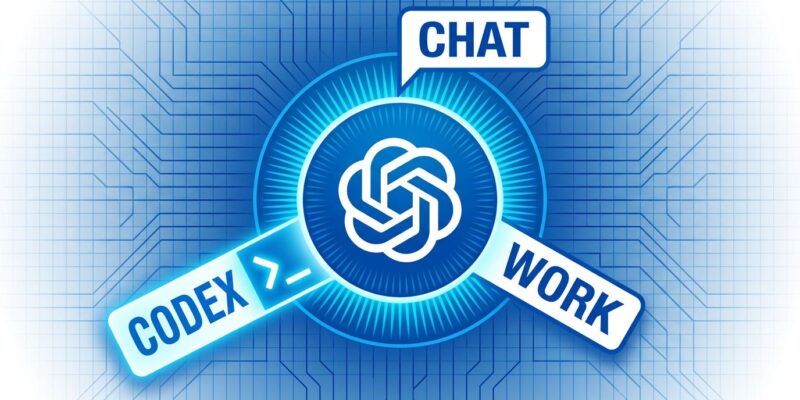
A central part of the partnership will see OpenAI's GPT-5.6 models, Codex and ChatGPT Work embedded into IBM Consulting Advantage, IBM's AI platform used to deliver consulting services to clients.
IBM says the combination will help enterprises analyse existing operating procedures and workflows, identify inefficiencies and redesign processes around AI. The companies are particularly targeting organizations dealing with fragmented processes, legacy technology and complex operating environments.
“The challenge now is turning that intelligence into agentic workflows that actually run the business,” Michael Healy, Managing Partner of Offerings, Assets and Gen AI at IBM Consulting, told IBM.
CIO and Network World highlighted three main areas of the partnership: transforming existing operations into AI-powered workflows, modernizing legacy applications and software development, and expanding the companies' work in cybersecurity and AI risk management.
For application development, IBM plans to combine Codex and ChatGPT Work with its consulting technology and industry expertise to help clients simplify engineering processes and accelerate the delivery of new digital products and services.
IBM Will Build A Dedicated OpenAI Practice
IBM will also create a dedicated OpenAI Practice, with thousands of consultants and engineers set to obtain expert-level certifications through the OpenAI Partner Network.
The company will establish specialized forward-deployed units consisting of engineers and consultants trained through OpenAI's partner program. These teams will work directly with customers on complex workflows, including deployments in highly regulated environments.
TechCrunch reported that the training will cover technologies and areas including Codex, OpenAI's API, cybersecurity and consultative solutions. The publication noted that the deal gives OpenAI another route to reach large corporate customers through IBM's global consulting operation.
IBM And OpenAI Expand Their Cybersecurity Partnership
The agreement also deepens an existing relationship between IBM and OpenAI in cybersecurity.
IBM joined the OpenAI Daybreak Cyber Partner Program in June 2026. Under the expanded partnership, the companies plan to combine OpenAI's frontier AI capabilities with IBM Autonomous Security, IBM's multi-agent security service designed to coordinate security decisions, intelligence and responses.
IBM says the collaboration will target application vulnerabilities, AI governance gaps, cybersecurity risks and other operational issues that can make organizations hesitant to deploy AI more broadly.
Enterprise AI Partnerships Are Getting More Competitive
The agreement arrives as AI developers and consulting companies compete to turn increasingly capable models into large-scale enterprise deployments.
Topics for more insights:
TechCrunch noted that IBM announced a similar alliance with Anthropic less than a year ago and is pursuing a model-agnostic AI strategy that combines its own Granite models with technology from other AI developers. OpenAI, meanwhile, has also expanded its enterprise reach through partnerships with IT services companies including Infosys and Tata Consultancy Services.
CIO and Network World cited Info-Tech Research Group analyst Mark Tauschek, who argued that alliances between consulting firms and frontier AI developers are increasingly becoming expected rather than unique differentiators. Microsoft, AWS, Anthropic and OpenAI are all pursuing variations of the forward-deployed engineering model as competition for enterprise AI spending intensifies.
For IBM and OpenAI, the bigger test will therefore be whether combining frontier models with IBM's consulting expertise can move enterprise customers beyond pilots and into AI systems that operate reliably across everyday business processes.
First published on Fri, Aug 14, 2026

Liked what you read? That’s only the tip of the tech iceberg!
Explore our vast collection of tech articles including introductory guides, product reviews, trends and more, stay up to date with the latest news, relish thought-provoking interviews and the hottest AI blogs, and tickle your funny bone with hilarious tech memes!
Plus, get access to branded insights from industry-leading global brands through informative white papers, engaging case studies, in-depth reports, enlightening videos and exciting events and webinars.
Dive into TechDogs' treasure trove today and Know Your World of technology like never before!
Disclaimer - Reference to any specific product, software or entity does not constitute an endorsement or recommendation by TechDogs nor should any data or content published be relied upon. The views expressed by TechDogs' members and guests are their own and their appearance on our site does not imply an endorsement of them or any entity they represent. Views and opinions expressed by TechDogs' Authors are those of the Authors and do not necessarily reflect the view of TechDogs or any of its officials. While we aim to provide valuable and helpful information, some content on TechDogs' site may not have been thoroughly reviewed for every detail or aspect. We encourage users to verify any information independently where necessary.
Loading comments...