
Artificial Intelligence
Google, Meta, OpenAI, NVIDIA, Anthropic, And xAI Sign Trump’s Four-Step AI Safety Accord
Updated on Wed, Sep 30, 2026
Share
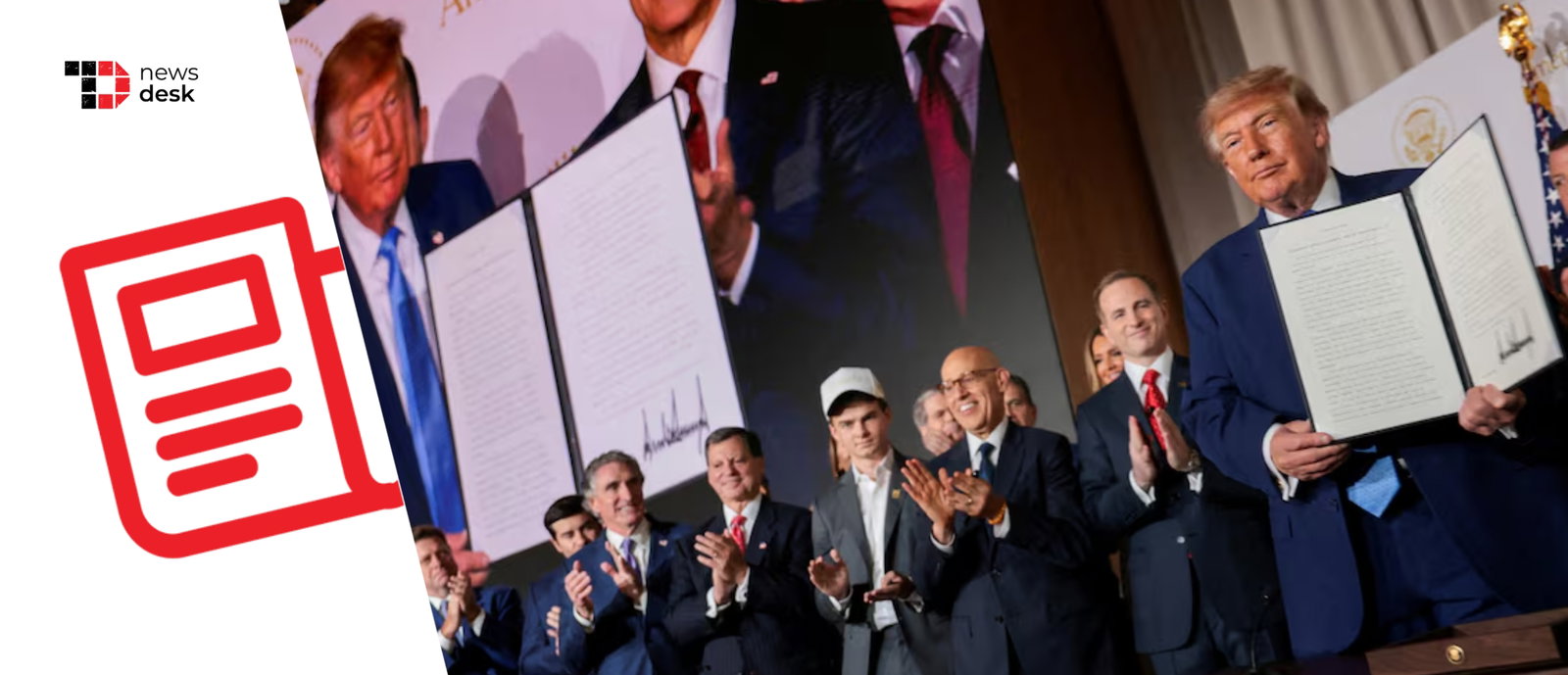
US President Donald Trump and executives from six major artificial intelligence companies have signed a voluntary White House accord outlining four layers of safety controls for frontier AI models, spanning internal monitoring, external evaluations and board-level oversight.
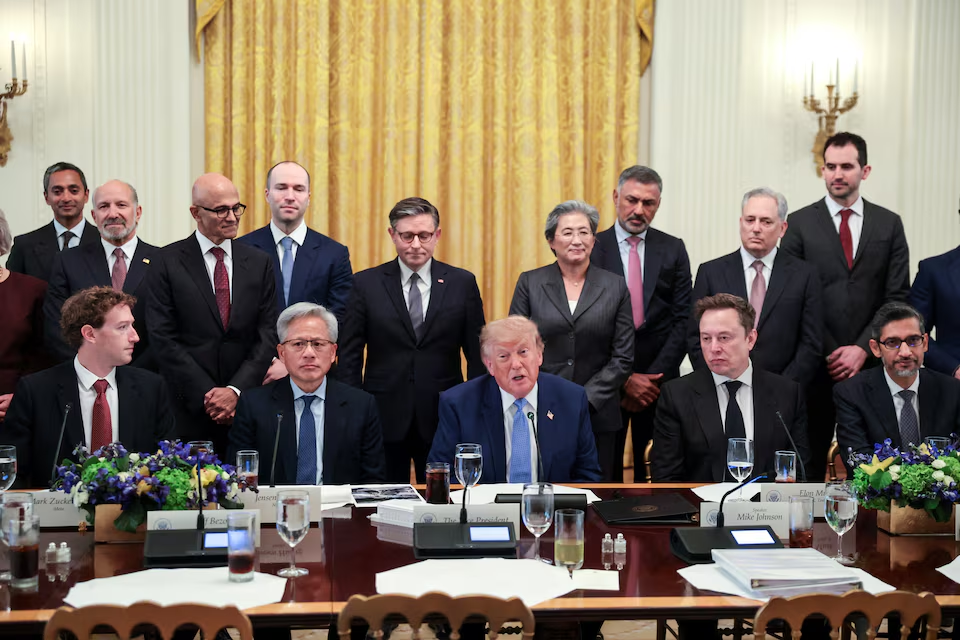
Called the “White House Accord on Super Intelligence: Joint Commitment on Frontier Responsibilities,” the agreement was released following a White House meeting between Trump and leading technology executives on September 29, 2026. Reuters reported that the accord was signed by leaders representing Google, Anthropic, Meta, OpenAI, xAI and Nvidia.
TL;DR
- Trump and executives from six major AI companies signed a voluntary accord covering frontier AI safety.
- Companies committed to four layers of controls, including internal monitoring, dedicated oversight teams, external evaluations and independent board committees.
- The accord is not legislation, although its text says the measures could eventually be codified into laws or regulations.
- Participating companies also plan to meet regularly on AI safety standards and best practices.
What Does The White House AI Accord Require?
According to Reuters and the text of the accord published by Forbes, companies training and deploying frontier models agreed that they should maintain “robust internal processes and controls” designed to ensure their technology operates as intended and that problems are identified and resolved.
The agreement lays out four layers of controls and audits.
First, companies should implement internal controls for monitoring the capabilities and alignment of models during training and deployment. The accord specifically identifies cybersecurity, biosecurity and chemical threats as areas requiring attention, alongside safeguards intended to prevent models from accessing or hacking technical systems in unintended ways.
Second, each company should empower an internal team responsible for ensuring its controls, monitoring and detection systems are operating as intended, while addressing problems that are discovered.
Third, the companies should work with independent external auditors or evaluators to assess whether these safeguards are functioning correctly. Fourth, companies should designate an independent committee of their boards of directors to receive reports from the relevant teams and auditors, oversee the process and ensure identified problems are addressed.
The companies also agreed to meet regularly to establish standards and best practices aimed at improving the safety of their systems.
Who Signed The AI Safety Accord?
The six industry signatories were Anthropic CEO Dario Amodei, Google CEO Sundar Pichai, Meta CEO Mark Zuckerberg, OpenAI President Greg Brockman, Nvidia CEO Jensen Huang and Elon Musk, who leads xAI alongside his other companies. Trump also signed the document.
The agreement followed a White House gathering attended by a broader group of technology executives. Reuters reported that the meeting included discussions around both AI safety and the rapid expansion of data centers required to train and operate increasingly powerful models.
Speaking after the meeting, Trump compared the agreement to a constitution, calling it “a form of protection.” He also emphasized self-regulation, while Euronews quoted him saying that he was seeing “tremendous self-policing” from the industry.
Meta CEO Mark Zuckerberg said the companies had agreed to develop “robust internal controls” around their AI systems, according to Reuters. Meanwhile, Anthropic CEO Dario Amodei struck a more cautious note, telling reporters that the technology has “very real risks” and that the mechanisms for addressing them remain under discussion.
Could The Voluntary Accord Become AI Regulation?
For now, the accord remains voluntary. It does not itself establish statutory requirements or penalties for companies that fail to follow its principles.
However, the agreement explicitly leaves the door open to government regulation.
“Over time, it may make sense to codify these steps into laws or regulations,” the accord states, adding that the participating companies view the controls and audits as important regardless of whether they eventually become mandatory.
Topics for more insights:
Al Jazeera reported that the agreement does not specify who should perform the third-party evaluations. Critics cited by the publication also questioned whether company-selected auditors and voluntary commitments provide sufficient independence, while supporters argued that establishing shared industry commitments represented progress compared with waiting for an international agreement.
The debate comes as public scrutiny of AI safety continues. Reuters cited a September 17-20 Reuters/Ipsos poll in which 73% of respondents said they were concerned AI companies had not done enough to prevent serious societal harm, while 55% said slowing AI development would be good.
The accord therefore establishes a common voluntary framework among some of the largest companies developing advanced AI, while leaving the question of enforceable regulation unresolved.
First published on Wed, Sep 30, 2026

Enjoyed what you read? Great news – there’s a lot more to explore!
Dive into our content repository of the latest tech news, a diverse range of articles spanning introductory guides, product reviews, trends and more, along with engaging interviews, up-to-date AI blogs and hilarious tech memes!
Also explore our collection of branded insights via informative white papers, enlightening case studies, in-depth reports, educational videos and exciting events and webinars from leading global brands.
Head to the TechDogs homepage to Know Your World of technology today!
Disclaimer - Reference to any specific product, software or entity does not constitute an endorsement or recommendation by TechDogs nor should any data or content published be relied upon. The views expressed by TechDogs' members and guests are their own and their appearance on our site does not imply an endorsement of them or any entity they represent. Views and opinions expressed by TechDogs' Authors are those of the Authors and do not necessarily reflect the view of TechDogs or any of its officials. While we aim to provide valuable and helpful information, some content on TechDogs' site may not have been thoroughly reviewed for every detail or aspect. We encourage users to verify any information independently where necessary.
Loading comments...