
The deal, announced through a memo published by Elon Musk, comes as he claims building AI data centers in space could satiate the growing technology's insatiable power needs, positioning orbital infrastructure as a cornerstone of future AI scaling.
As per reports, the combined entity is valued at $1.25 trillion, making it the world’s most valuable private company. As per a person familiar with the matter, the deal values SpaceX at $1 trillion and xAI at $250 billion.
The purchase of xAI marks a new record for the world's largest M&A (mergers and acquisitions) deal, following following Vodafone's acquisition of Germany’s Mannesmann in 2000 for $203 billion.
According to a source familiar with the matter, the deal will see investors of xAI receive 0.1433 shares of SpaceX for every share of xAI. Alternatively, those seeking cash for their shares instead of SpaceX stock, will receive $75.46 per share for each xAI share.
TL;DR
- SpaceX has acquired xAI, valuing the combined company at $1.25 trillion.
- SpaceX valued at $1 trillion and xAI valued at $250 billion.
- The merger centers on building space-based AI data centers powered by solar energy.
- It sets a new record for the world's largest M&A deal.
- Musk argues Earth-based data centers cannot meet future AI power needs.
- The deal links AI growth directly to satellite launches and Starship.
While SpaceX has been preparing for a potential IPO (initial public offering) as early as this year, Musk did not clarify whether the merger would alter those plans.
SpaceX also conveyed plans of launching a constellation of 1 million low earth orbit (LEO) satellites that will drive the space AI data center ambition, for which the company is seeking approval from the FCC (Federal Communications Commission), as per a filing made last Friday.
Why Space-Based Data Centers Matter For AI
In his memo, Musk outlined the motivation behind the acquisition.
"Current advances in AI are dependent on large terrestrial data centers, which require immense amounts of power and cooling," Musk said. "Global electricity demand for AI simply cannot be met with terrestrial solutions, even in the near term, without imposing hardship on communities and the environment."
This limitation has pushed his focus toward orbital solutions, where near-constant solar energy and vast physical space could enable far greater compute scale.
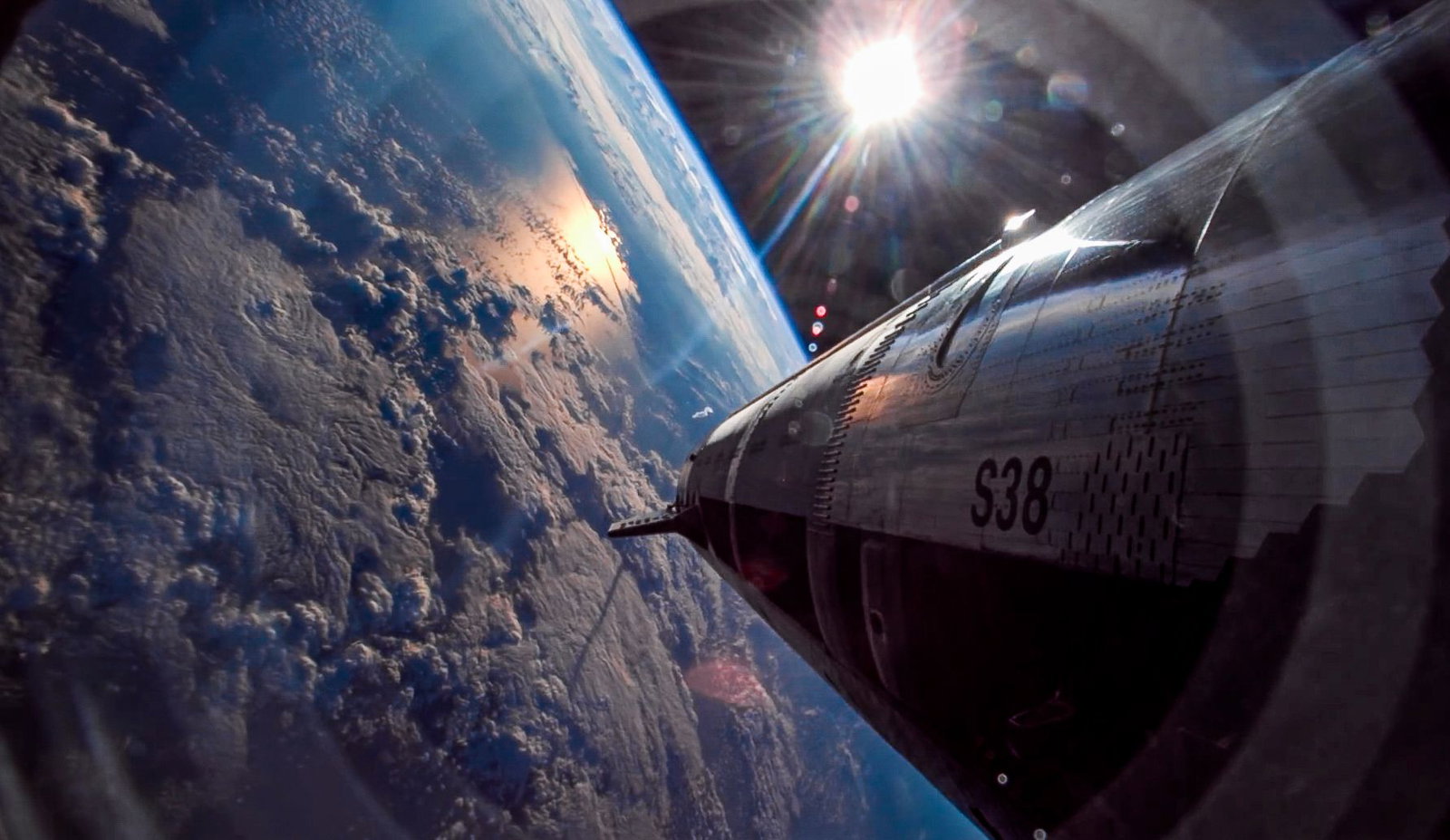
Orbital Data Centers And The Starship Roadmap
The long-term vision centers on deploying massive constellations of satellites that function as orbital data centers. Musk said this approach would require a continuous stream of satellite launches, reinforcing SpaceX’s launch cadence and revenue base.
This strategy is closely tied to Starship, SpaceX’s next-generation launch vehicle. Starship is expected to deliver far more payload mass per flight than existing rockets, enabling the deployment of next-generation Starlink satellites and future AI-focused orbital platforms.
Musk estimates that launching a million tons of satellites per year, each generating 100 kilowatts of compute per ton, could add 100 gigawatts of AI compute capacity annually, with a longer-term path toward terawatt-scale output.
Financial Pressures And A Self-Reinforcing Revenue Loop
The merger also connects two businesses with very different financial profiles. xAI is reportedly burning around $1 billion per month, while SpaceX generates a majority of its revenue by launching its own Starlink satellites.
Musk noted that satellites are required to be de-orbited every five years under U.S. regulations. This creates a built-in replacement cycle that could ensure steady demand for launches, further stabilizing SpaceX’s revenue while supporting xAI’s compute ambitions.
Topics For More Insights
Diverging Near-Term Goals For SpaceX And xAI
Despite the shared long-term vision, SpaceX and xAI face distinct near-term challenges. SpaceX is focused on proving Starship’s ability to carry astronauts to the Moon and Mars, while xAI is competing with leading AI firms such as Google and OpenAI.
Pressure on xAI has reportedly led to changes in how its chatbot Grok is managed. Loosened restrictions have drawn scrutiny, highlighting the risks associated with rapid AI deployment as competition intensifies.
Musk’s (Ever) Expanding Corporate Ecosystem
The acquisition further consolidates Musk’s business portfolio, which also includes Tesla, The Boring Company, and Neuralink. Both Tesla and SpaceX previously invested $2 billion each in xAI, and xAI last year acquired the social media platform X.
Together, SpaceX and xAI are now positioned to pursue one of Musk’s most ambitious goals yet, moving large-scale AI compute beyond Earth and into orbit.
