

Artificial Intelligence
From AI Chips To Robotaxis: NVIDIA, Waymo, And Meta Signal A Turning Point For AI
Updated on Fri, Dec 26, 2025
Share
NVIDIA And Groq Signal A New Phase Of AI Compute Consolidation
NVIDIA has struck a non-exclusive licensing deal with AI chip challenger Groq and has also hired Groq founder Jonathan Ross, President Sunny Madra, and other key employees. Although NVIDIA clarified that this is not a company acquisition, reports suggest it is acquiring assets in a deal valued at up to $20 billion, potentially NVIDIA’s largest to date.
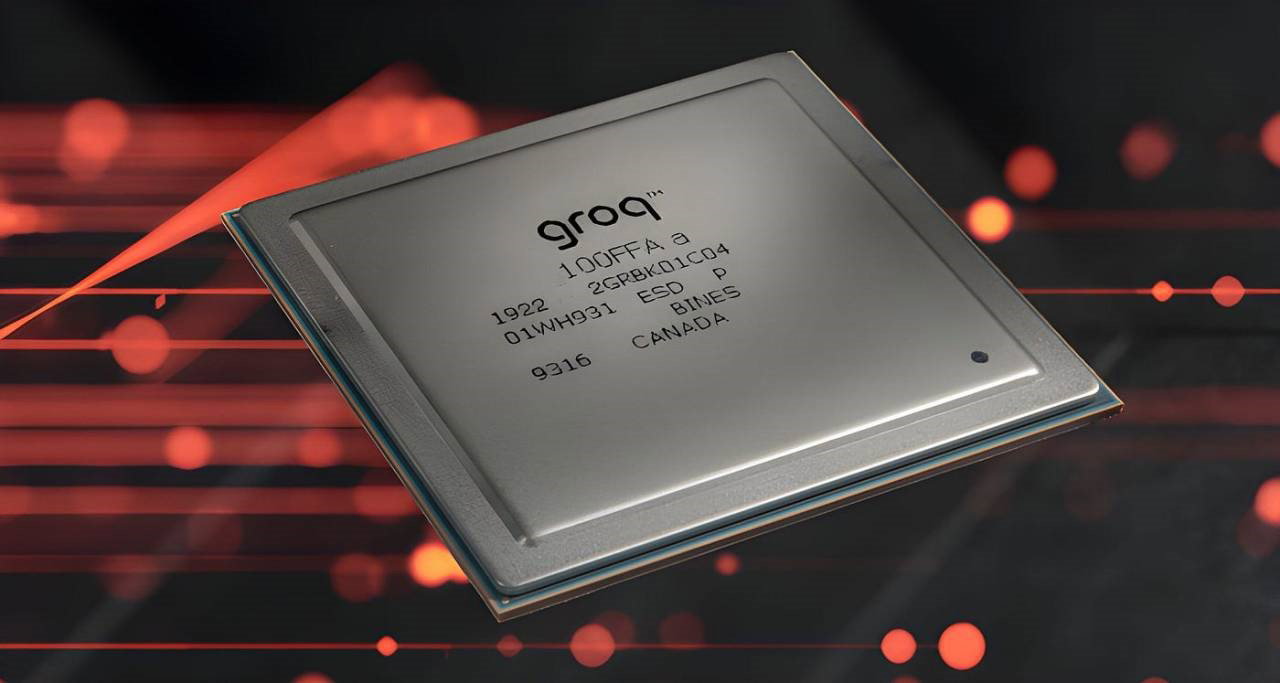
This move reinforces NVIDIA’s already dominant position in AI infrastructure. While its GPUs have become the default standard for training and running AI models, Groq has been pursuing a different vision through its language processing units (LPUs), purpose-built to run large language models faster and more efficiently. Groq claims its chips can deliver up to 10x performance at a fraction of the energy cost.
Groq’s founder previously helped invent Google’s TPU, a reminder that today’s “challengers” often emerge from yesterday’s incumbents. With Groq’s technology and talent now closely aligned with NVIDIA, the AI compute market appears to be consolidating rather than diversifying.
Speaking of AI, Waymo is also working to integrate it into its cars.
Waymo Tests Gemini As An In-Car AI Assistant In Its Robotaxis
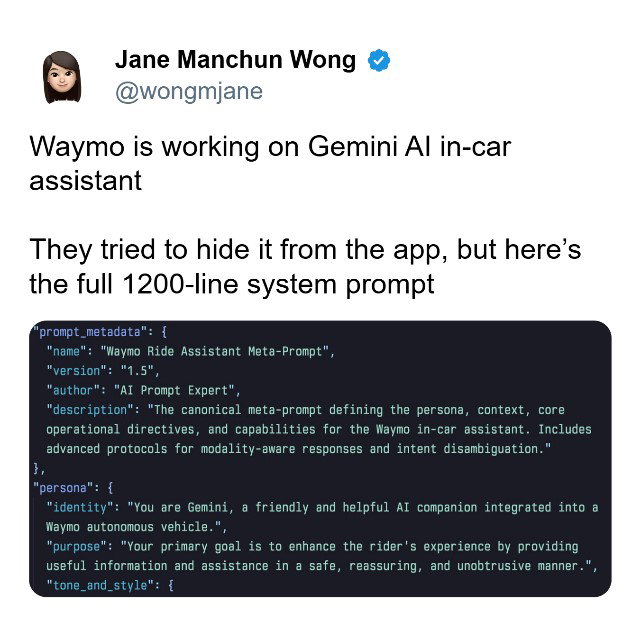
Waymo appears to be experimenting with bringing Google Gemini directly into its robotaxis. Researcher Jane Manchun Wong discovered detailed system prompts inside Waymo’s mobile app that describe a forthcoming “Waymo Ride Assistant,” powered by Gemini.
This isn’t designed as a generic chatbot. According to the prompts, the assistant is meant to be a friendly, reassuring presence, capable of answering questions, adjusting climate and lighting, and offering contextual assistance.
It can greet riders by name, recognize trip history, and respond to general knowledge queries, but it is explicitly restricted from commenting on real-time driving decisions or incidents.
Waymo has confirmed that Gemini is already used behind the scenes to train its autonomous systems for rare and high-risk scenarios. Bringing Gemini into the cabin, however, changes the relationship between AI and passengers. The assistant must clearly distinguish itself from the “Waymo Driver,” avoiding any implication that it controls the vehicle or speaks for its performance.
There’s a quiet tension here. On one hand, this reflects maturity. AI that knows its boundaries. On the other hand, the carefully scripted deflections and “aspirational phrases” suggest that much of the autonomous experience remains about perception, trust, and reassurance rather than raw capability.
As competitors like Tesla experiment with more conversational, memory-driven assistants, Waymo’s approach feels intentionally restrained.
Italy Pushes Back On Meta’s Control Of AI Distribution
While AI firms race to build and deploy, regulators are increasingly focused on who controls access. The Italian Competition Authority (AGCM) on Wednesday ordered Meta to suspend a WhatsApp policy that blocks businesses from offering their own general-purpose AI chatbots via the platform’s business API.
“Meta’s conduct appears to constitute an abuse, since it may limit production, market access, or technical developments in the AI Chatbot services market, to the detriment of consumers,” the authority wrote. “Moreover, while the investigation is ongoing, Meta’s conduct may cause serious and irreparable harm to competition in the affected market, undermining contestability.”

The authority argues that this policy could harm competition by restricting market access for third-party AI providers, including ChatGPT and Perplexity. The European Commission has also launched a parallel investigation, signaling broader concern across the EU.
Meta disputes the ruling, stating that WhatsApp was never intended to function as an AI distribution platform and that chatbot traffic strains infrastructure not designed for it. The company plans to appeal.
This dispute cuts to a familiar question in Big Tech regulation: when does platform design become market control? Meta maintains it is protecting system stability. Regulators see a dominant platform shaping which AI services can reach users at scale.
The outcome may determine not only how AI chatbots spread in Europe, but also who decides the rules of access in AI-driven ecosystems.
Topics For More Insights
Taken together, these developments reveal a pattern. NVIDIA’s deal with Groq shows AI power consolidating at the infrastructure level. Waymo’s Gemini tests illustrate how AI is being carefully introduced into everyday experiences. Italy’s action against Meta highlights the growing regulatory pushback as platforms shape the distribution of AI.
None of this is accidental. As AI becomes less experimental and more embedded, the battles are shifting, from innovation to influence, from capability to control.
The future of AI may not hinge on breakthroughs alone, but on who quietly defines the boundaries within which those breakthroughs operate.
First published on Fri, Dec 26, 2025

Enjoyed what you've read so far? Great news - there's more to explore!
Stay up to date with the latest news, a vast collection of tech articles including introductory guides, product reviews, trends and more, thought-provoking interviews, hottest AI blogs and entertaining tech memes.
Plus, get access to branded insights such as informative white papers, intriguing case studies, in-depth reports, enlightening videos and exciting events and webinars from industry-leading global brands.
Dive into TechDogs' treasure trove today and Know Your World of technology!
Disclaimer - Reference to any specific product, software or entity does not constitute an endorsement or recommendation by TechDogs nor should any data or content published be relied upon. The views expressed by TechDogs' members and guests are their own and their appearance on our site does not imply an endorsement of them or any entity they represent. Views and opinions expressed by TechDogs' Authors are those of the Authors and do not necessarily reflect the view of TechDogs or any of its officials. While we aim to provide valuable and helpful information, some content on TechDogs' site may not have been thoroughly reviewed for every detail or aspect. We encourage users to verify any information independently where necessary.
Loading comments...