

UI and UX
Figma Config India 2026 Unveils Code Layers, Specs, Payload & 20 New MCP Integrations
Updated on Mon, Oct 19, 2026
Share
AI is making coding easier, but Figma believes design is becoming more important, not less.
At Config India 2026, Figma unveiled a series of updates bringing working code, AI agents, product specifications, and website backends into its collaborative design canvas.
The announcements aim to help teams move from experimentation to finished products without losing design context along the way.
TL;DR
- Figma introduced code layers in open beta, allowing teams to collaborate on functional prototypes directly on the canvas.
- Figma Specs, improved design systems, and 20 new Model Context Protocol (MCP) integrations expand AI-assisted development.
- Payload CMS integration brings backend functionality to Figma Make, while the company announced new initiatives for India's growing design community.
Figma Code Layers Enter Open Beta To Bring Working Prototypes Into Design
Figma is bringing code directly onto its design canvas, giving teams a way to collaborate on functioning prototypes rather than static screens.
With code layers now in open beta, users can convert existing designs into working code, import lightweight prototyping projects from GitHub or local folders, and capture live websites through Figma's Chrome extension.
The feature also supports bringing prototypes from external coding tools onto the canvas using MCP.
This makes vibe coding more collaborative, allowing teams to compare functional versions, collect feedback, and refine experiences together.
Code layers is rolling out across all Figma plans using AI credits. Creation and editing are free on paid plans through November 4, 2026.
Figma Expands Design Systems With Guidelines And Code Sources For AI Agents
To make those generated experiences more consistent, Figma is expanding its design-system capabilities.
Teams can now attach guidelines to published libraries, helping AI agents follow established design patterns, component behavior, and visual standards.
Figma is also introducing code-source imports from GitHub repositories and npm packages, allowing agents to reference existing implementations when generating components.
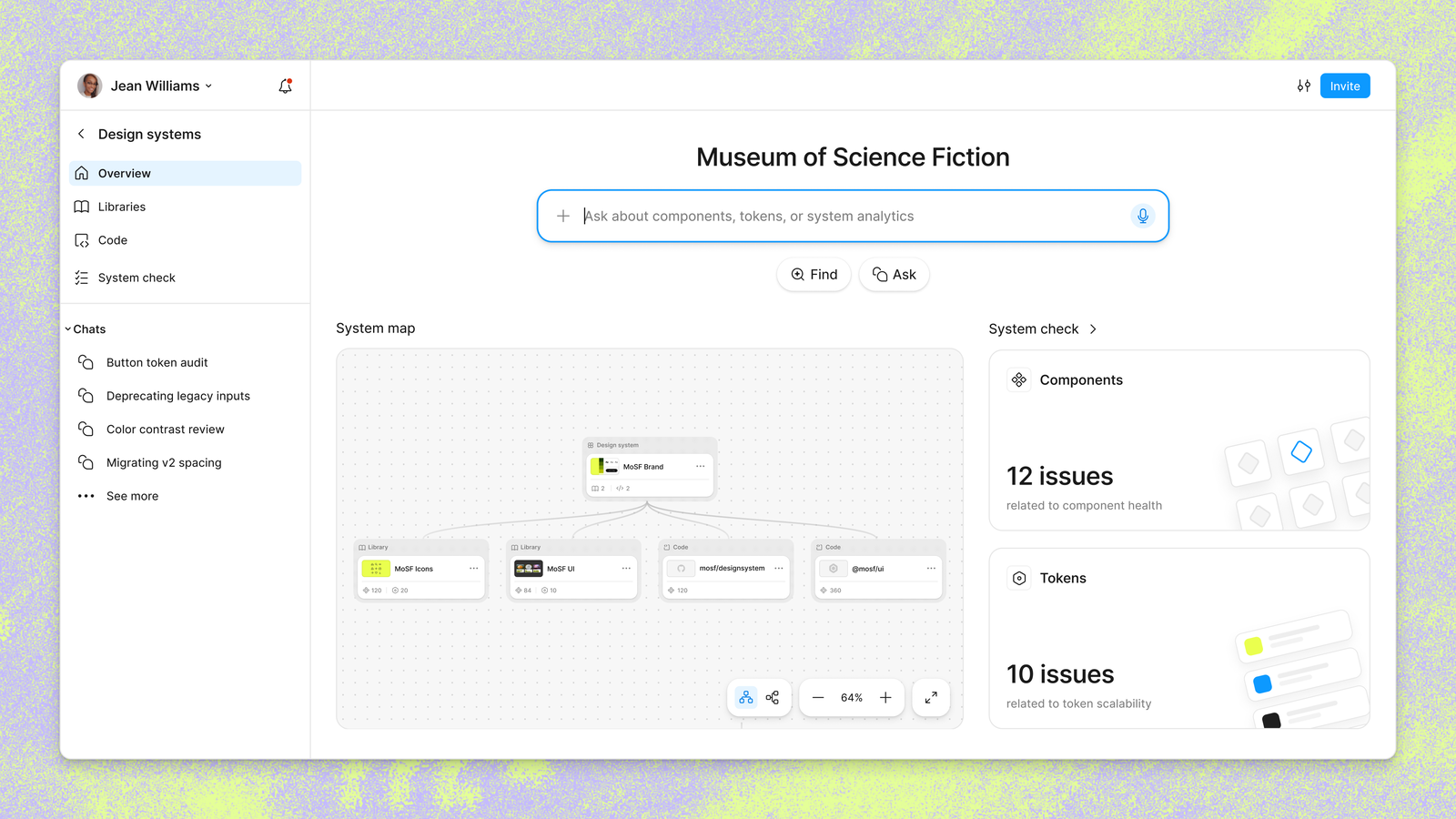
Meanwhile, a new design-system management experience is being previewed with dependency mapping and automated checks for missing information.
Guidelines are in open beta, while code sources are entering closed beta, both for paid plans.
Figma Specs Turns Markdown Into Shared Product Development Context
Keeping designs consistent is one challenge. Preserving the decisions behind them is another.
Figma's new Specs feature creates a collaborative space where teams can combine Markdown documentation, product requirements documents (PRDs), diagrams, and design references.
Users can import existing Markdown files, embed FigJam content, and work with AI agents to develop technical specifications.
Specs can also pass project context to coding agents through Figma's MCP server or help create code layers directly from documented requirements.
Rather than maintaining disconnected files, teams can keep technical decisions alongside the designs they influence.
Specs is rolling out in open beta across web, desktop, and mobile for paid plans.
Figma Make Integrates Payload CMS To Build Data-Backed Websites
Moving beyond documentation, Figma is also making it easier to turn prototypes into functioning websites.
Through its Payload CMS integration, Figma Make can provide applications with databases, file storage, user authentication, APIs, and content-management capabilities.
Designers can generate website experiences, marketers can update content using an administrative panel, and developers can customize applications through Payload's open-source framework.
Granular permissions also help organizations manage access to content and data.
Payload is rolling out across all plans. Hosting for Payload-backed projects remains in beta and is currently free, with pricing to be announced before charges begin.
Figma Agent And MCP Expand AI Workflows With 20 New Integrations
Figma is also strengthening the AI tools connecting these workflows.
Its design agent is now generally available, supporting tasks such as documenting design systems, incorporating feedback, and creating motion effects.
Figma says the improved agent performed better in more than 60% of its human-graded evaluations against the previous version.
Meanwhile, enhanced MCP capabilities allow external AI tools to generate code layers, work with Specs, create visual assets, and execute Figma Weave workflows.
The company also announced 20 new MCP partner integrations, including OpenCode, Dia, JetBrains Junie, and Meta Muse.
This builds on the wider integration ecosystem, including Claude's existing Figma-connected workplace apps.
Topics For More Insights
Figma Expands In India With Sarvam AI Partnership And Campus Leaders Program
Alongside its product launches, Figma announced a deeper investment in India, which became its second-largest market by daily active users as of June 30, 2026.
Config India 2026 attracted over 30,000 registrations across in-person and virtual participation, making it Figma's largest international conference yet.
The company announced an India-first MCP partnership with Sarvam, connecting Figma's design context with Sarvam's Indus AI platform.
It also introduced its Campus Leaders program for Indian university students, with the inaugural cohort beginning in January 2027. Applications close November 7, 2026.
Supporting the expansion, Figma's research involving 507 Indian builders found that 83% reported improved productivity or efficiency and 82% said their teams were moving faster from ideas to finished products.
The announcements reflect Figma's central strategy: connecting design, code, and AI agents in one workspace while expanding the community building with those tools.
First published on Mon, Oct 19, 2026

Liked what you read? That’s only the tip of the tech iceberg!
Explore our vast collection of tech articles including introductory guides, product reviews, trends and more, stay up to date with the latest news, relish thought-provoking interviews and the hottest AI blogs, and tickle your funny bone with hilarious tech memes!
Plus, get access to branded insights from industry-leading global brands through informative white papers, engaging case studies, in-depth reports, enlightening videos and exciting events and webinars.
Dive into TechDogs' treasure trove today and Know Your World of technology like never before!
Disclaimer - Reference to any specific product, software or entity does not constitute an endorsement or recommendation by TechDogs nor should any data or content published be relied upon. The views expressed by TechDogs' members and guests are their own and their appearance on our site does not imply an endorsement of them or any entity they represent. Views and opinions expressed by TechDogs' Authors are those of the Authors and do not necessarily reflect the view of TechDogs or any of its officials. While we aim to provide valuable and helpful information, some content on TechDogs' site may not have been thoroughly reviewed for every detail or aspect. We encourage users to verify any information independently where necessary.
Loading comments...