
Artificial Intelligence
Canva Launches Craft, Its First AI Image Model, With 2K Images & Editable Designs
Updated on Fri, Oct 23, 2026
Share
Canva already lets people generate AI (artificial intelligence) images, but it now has a model built specifically for its own design platform.
Called Canva Craft, the company's first image generation model aims to produce detailed visuals, readable text, and compositions users can refine without rebuilding everything.
TL;DR
- Canva has introduced Craft, its first image generation foundation model developed from scratch, with 2K output and more than 30 aspect ratios.
- Unlike conventional text-to-image tools, Craft plans composition before creating pixels, helping users control layout, typography, and individual objects.
- The model is available through Canva's Dream Lab and public API, while AI assistant integrations and faster variants are planned.
Canva Craft Plans Image Layouts Before Generating 2K Visuals
The twist is that Craft does not immediately turn a text prompt into an image. According to Canva's official announcement, its two-stage system first works out what should appear, where objects belong, their relative sizes, the visual hierarchy, and any words that must be displayed.
A separate rendering model then translates that plan into an image at up to 2K resolution across more than 30 aspect ratios. Canva says separating planning from rendering helps deliver better placement and legible typography while letting users change specific details instead of regenerating an entire composition.
The model accepts prompts in any language and can produce text in 55 languages. That makes it relevant to promotional materials, presentations, and social posts where a correctly positioned headline can matter as much as the image itself.
Canva Trains Its AI Image Generator On Millions Of Human-Made Designs
Craft's training material also departs from the usual emphasis on photographs. Canva used millions of human-made templates from its library, including posters, menus, infographics, presentations, and typography-heavy designs, to teach the model about alignment, layout, and visual structure.
After pretraining, Canva refined the model through supervised fine-tuning and reinforcement learning, using feedback from professional designers. The company says designers and researchers assessed more than 25,000 image pairs in head-to-head comparisons, with human judgment taking precedence when automated scores disagreed.
Those choices help explain why Canva is emphasizing design usefulness rather than image quality alone. Its Magic Layers feature can turn generated pictures into editable elements, allowing creators to adjust components without treating the result as one fixed image. The approach builds on Canva's earlier push toward editable AI design workflows, including Canva AI 2.0.
Canva Research Highlights Craft's Image Generation Rankings
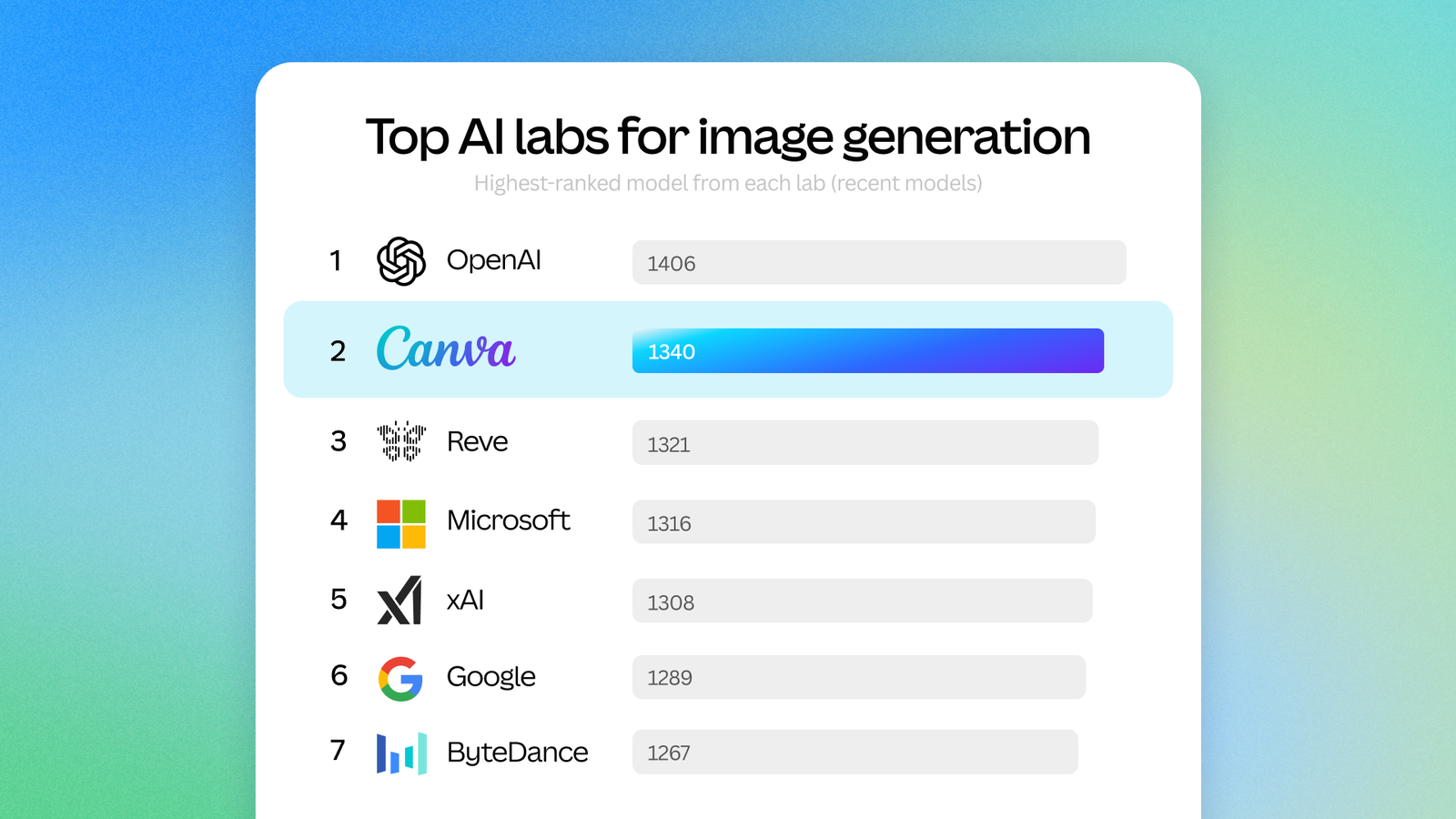
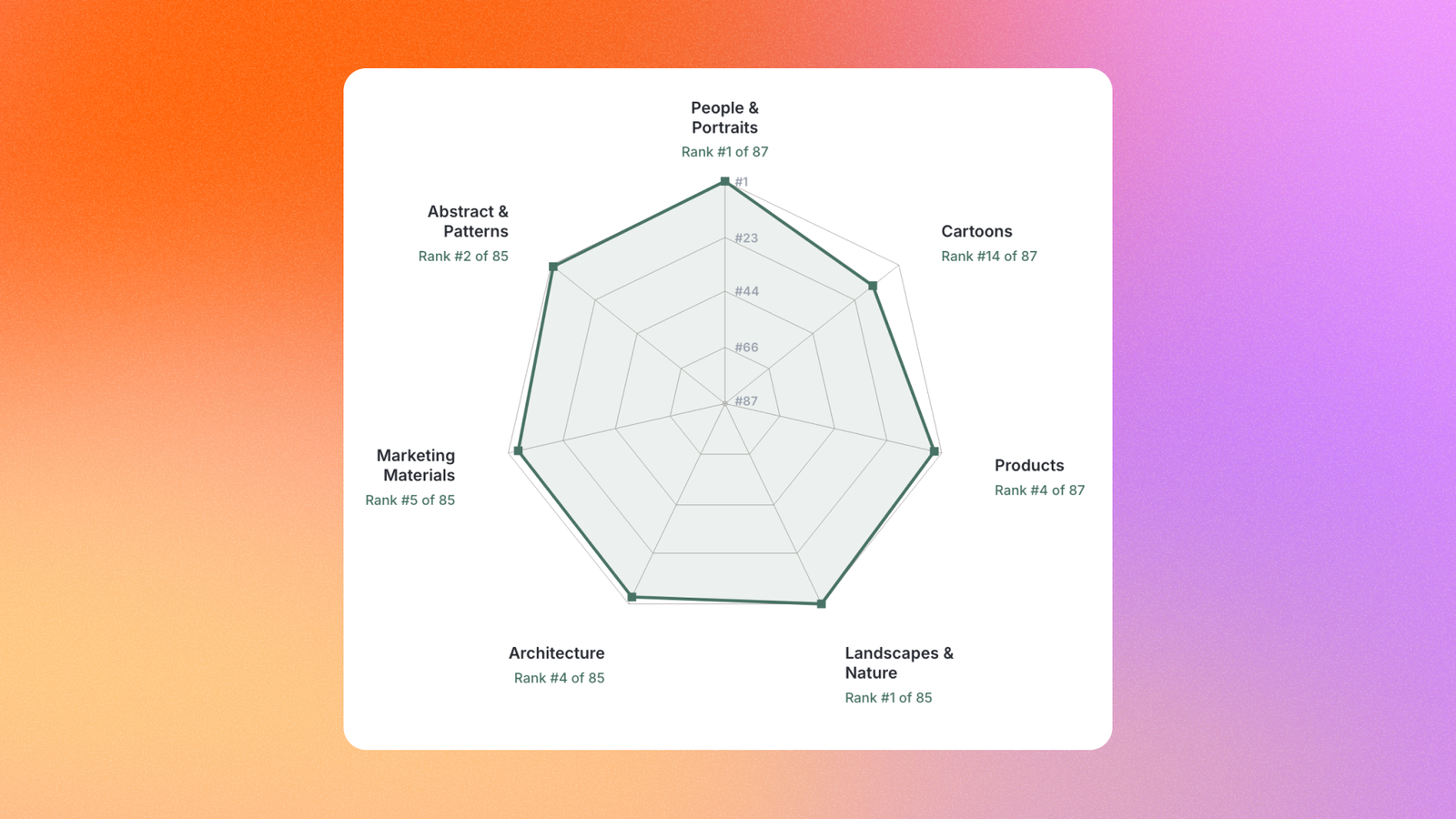
Canva says Craft debuted fourth overall on DesignArena, a crowdsourced benchmark for AI design, and placed Canva Research second among image generation labs. Its outputs reportedly ranked first for People & Portraits and Landscapes & Nature, second for Abstract & Patterns, and fourth for Products.
These are rankings cited by Canva, not a guarantee that every generated image will meet the same standard. The company's research team also says the evaluation process incorporated direct feedback from working designers.
Canva Research now includes more than 160 scientists and engineers within a broader 400-person AI organization. Its foundations include the 2024 acquisition of Leonardo.ai and later additions such as Simtheory, part of Canva's expanding AI research and automation efforts.
Canva Expands AI Design Editing While Working To Reduce Generation Costs
With more than a quarter-billion Canva users creating over 400 designs every second, the challenge extends beyond image quality to running the model efficiently. Canva says distillation reduced Craft's inference steps, while a custom engine made its planning process an order of magnitude faster than its original internal implementation.
That work underpins two upcoming versions, Craft-fast and Craft-ultrafast, designed to deliver lower-cost generation. For marketers and designers, the immediate value is more practical: generating a draft visual, refining its components, and carrying those assets into existing Canva projects.
Topics For More Insights
- Canva Create 2026 Sees The Launch Of Offline Mode, Pro Tools & A Learning Hub
- Google Launches Pics At I/O 2026 To Challenge Canva And AI Design Rivals
- OpenAI Launches ChatGPT Images 2.0 With Better Accuracy, Design, And Usability!
- Meta Pulls Muse Image’s Public Instagram Feature After Privacy Backlash
Canva Makes Craft Available In Dream Lab And Its Public API
Craft is available to Canva users worldwide through Dream Lab and to developers through Canva's public API. The company also plans to connect it to AI assistants and automated workflows through its Canva MCP Server, although that integration is not yet available.
Canva says its Shield safeguards apply to Craft, including input and output moderation, privacy controls, and content reporting. Further updates are expected to improve detailed text and technical drawings, while Craft's broader promise remains straightforward: give people an image they can keep editing instead of a picture they must accept as finished.
First published on Fri, Oct 23, 2026

Enjoyed what you've read so far? Great news - there's more to explore!
Stay up to date with the latest news, a vast collection of tech articles including introductory guides, product reviews, trends and more, thought-provoking interviews, hottest AI blogs and entertaining tech memes.
Plus, get access to branded insights such as informative white papers, intriguing case studies, in-depth reports, enlightening videos and exciting events and webinars from industry-leading global brands.
Dive into TechDogs' treasure trove today and Know Your World of technology!
Disclaimer - Reference to any specific product, software or entity does not constitute an endorsement or recommendation by TechDogs nor should any data or content published be relied upon. The views expressed by TechDogs' members and guests are their own and their appearance on our site does not imply an endorsement of them or any entity they represent. Views and opinions expressed by TechDogs' Authors are those of the Authors and do not necessarily reflect the view of TechDogs or any of its officials. While we aim to provide valuable and helpful information, some content on TechDogs' site may not have been thoroughly reviewed for every detail or aspect. We encourage users to verify any information independently where necessary.
Loading comments...