
Artificial Intelligence
Apple Accuses OpenAI Of Destroying Evidence In Trade Secrets Case, Citing Ex-Employee’s Involvement
Updated on Tue, Sep 1, 2026
Share
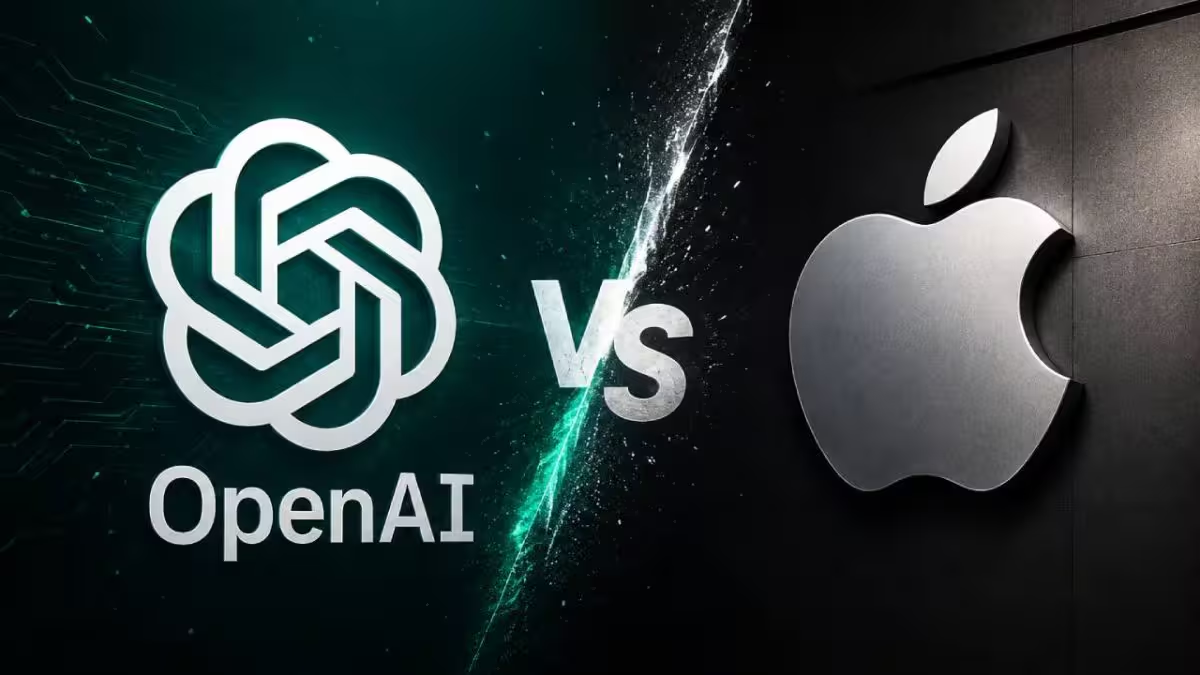
Apple has escalated its trade secrets lawsuit against OpenAI, alleging that a former Apple engineer used confidential circuit information while working at the AI company and that evidence relevant to the case was being destroyed.
The new allegations emerged after an Apple-issued MacBook previously used by former engineer Chang Liu was handed over for forensic examination, giving Apple what it calls new evidence to support its request for faster discovery.
TL;DR
- Apple alleges former engineer Chang Liu used a confidential power-converter circuit schematic while working at OpenAI.
- Apple says Liu and an OpenAI colleague discussed actions that could destroy forensic data after learning about its investigation.
- OpenAI denies Apple’s trade secret allegations and is seeking dismissal of the lawsuit.
- A hearing on Apple’s motion is scheduled for October 1, 2026.
What Did Apple Find On The Former Employee’s MacBook?
Apple’s latest claims were detailed in an August 31 supplemental brief supporting its motion for expedited discovery in the US District Court for the Northern District of California.
According to Reuters, Apple alleges Liu, a former senior system electrical engineer at the company, accessed a proprietary power-converter circuit schematic after joining OpenAI and used Apple information while training an AI agent to run simulations in March 2026. Apple says the new evidence emerged from a MacBook that OpenAI provided on August 21 as part of the proceedings.
TechCrunch reported that Apple also alleges Liu used a tool at OpenAI bearing the same name as an internal Apple engineering application. The publication said Apple claims OpenAI was aware Liu continued to have access to Apple information after leaving the iPhone maker.
Apple’s public filing says Liu’s alleged use of its power-converter circuit alongside AI agents raises additional concerns because information supplied to an AI system could potentially be learned and repeatedly reused. However, that argument remains Apple’s position in an ongoing lawsuit, not a court finding.
Apple Says Evidence Was At Risk Of Destruction
The evidence-destruction allegation represents another escalation in the dispute.
Reporting carried by Yahoo Finance said Apple alleges Liu sent instructions concerning the destruction of evidence to an OpenAI colleague, who indicated she would comply. The Straits Times reported the same allegation, citing Apple’s filing.
The publicly available redacted court brief provides additional context. It says Liu and OpenAI colleague Ms. Peng discussed the need to “restore” and then “start using” Apple-owned devices after learning about Apple’s investigation in June.
Apple’s lawyers argue that doing so would destroy or overwrite forensic information such as logs, metadata and usage records needed for its investigation. The company consequently argues that its “trade secrets are being used and evidence is being destroyed.”
Moneycontrol noted that much of the evidence Apple references remains sealed or redacted from the public record, meaning outside observers cannot independently examine all the material on which Apple is basing its latest claims.
OpenAI Rejects Apple’s Allegations
OpenAI disputes Apple’s version of events and is seeking to have the lawsuit dismissed.
In an August response published by OpenAI, the company said Liu’s continued access stemmed from Apple’s handling of employee access and that former Apple colleagues had contacted Liu after his departure for help locating information. OpenAI said it does not “have, nor want, any of their trade secrets.”
Reuters reported on September 1 that OpenAI also denied Apple had demonstrated that confidential information was stolen. In its own court filing, OpenAI said, “This dispute is a mess of Apple’s own making,” and argued that Apple was attempting to slow a potential hardware competitor and discourage employees from leaving.
Topics for more insights:
Liu has also said his post-departure access to Apple documents was intended to help former colleagues who continued contacting him for assistance, according to Reuters. OpenAI has argued that Apple’s offboarding and iCloud practices made separating company information from personal accounts difficult.
What Happens Next?
Apple originally sued OpenAI and former employees including Liu and Tang Tan in July, alleging misappropriation of trade secrets related to hardware design, manufacturing and supply-chain operations as OpenAI expands into consumer devices.
The company is now pushing for expedited discovery and has also sought a preliminary injunction aimed at preventing OpenAI from using allegedly misappropriated Apple technology while the case continues. Apple has previously said more than 400 former Apple employees now work at OpenAI.
The court filing lists an October 1, 2026 hearing before US District Judge Edward J. Davila. Until the court rules on the motions and the evidence is tested through the legal process, Apple’s claims about trade secret misuse and evidence destruction remain allegations disputed by OpenAI.
First published on Tue, Sep 1, 2026

Liked what you read? That’s only the tip of the tech iceberg!
Explore our vast collection of tech articles including introductory guides, product reviews, trends and more, stay up to date with the latest news, relish thought-provoking interviews and the hottest AI blogs, and tickle your funny bone with hilarious tech memes!
Plus, get access to branded insights from industry-leading global brands through informative white papers, engaging case studies, in-depth reports, enlightening videos and exciting events and webinars.
Dive into TechDogs' treasure trove today and Know Your World of technology like never before!
Disclaimer - Reference to any specific product, software or entity does not constitute an endorsement or recommendation by TechDogs nor should any data or content published be relied upon. The views expressed by TechDogs' members and guests are their own and their appearance on our site does not imply an endorsement of them or any entity they represent. Views and opinions expressed by TechDogs' Authors are those of the Authors and do not necessarily reflect the view of TechDogs or any of its officials. While we aim to provide valuable and helpful information, some content on TechDogs' site may not have been thoroughly reviewed for every detail or aspect. We encourage users to verify any information independently where necessary.
Loading comments...