

Content Management
YouTube's New Monetization Rules
Share
TL;DR
-
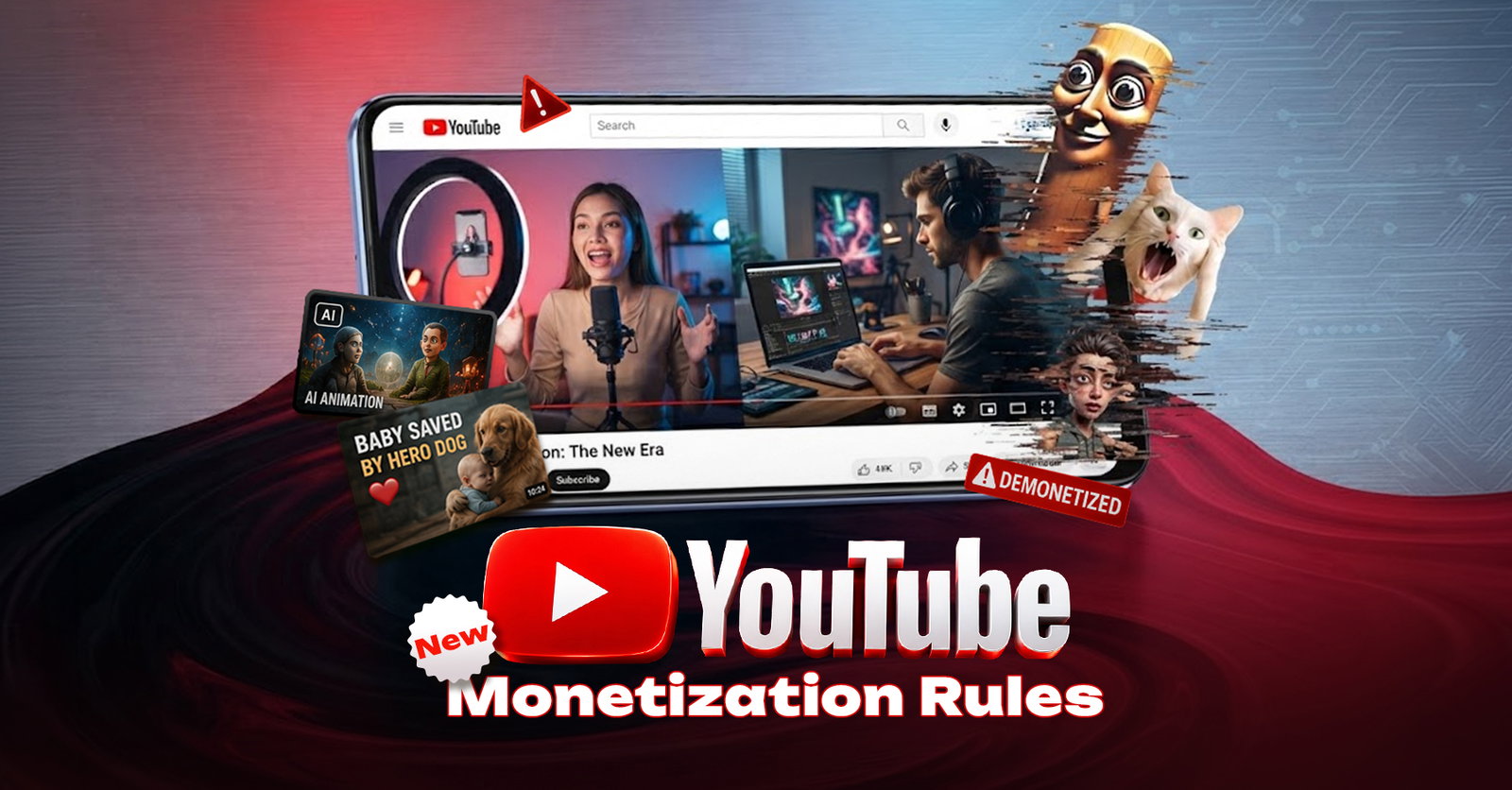
The July 2026 clarification organizes inauthentic content into three categories.
-
Generic, repetitive, or template-built channels may lose access to monetization.
-
Emotionally manipulative rescue stories and shock-focused videos are also affected.
-
AI personas cannot pose as human experts on health, finance, legal matters, or politics.
-
Reaction videos, recurring formats, and reused clips can still qualify when meaningfully transformed.
-
Creators using AI for scripts, visuals, characters, or production assistance can remain eligible when the final work is original and valuable.
Introduction
While the world focuses on Christopher Nolan’s latest epic flick, The Odyssey, we’re taking a look back at his 2006-released magic film The Prestige.
What made it special was that it kept audiences guessing how Alfred Borden (Christian Bale) managed to perform The Transported Man illusion, in which he teleports from one side of the stage to the other immediately.
Side-stepping spoilers, what made this movie a critically acclaimed majestic marvel was its unique plot, brilliant direction, and high-quality production.
That’s what YouTube is looking to achieve with its latest monetization rules. Original videos that offer high-quality viewer experiences from unique content, while also beating AI slop. These aren’t simple guidelines that the video platform is laying out, but strict, ardent rules that will change how creators produce videos and earn from them.
AI slop has already flooded social media feeds with repetitive stories, recycled formats, synthetic personalities, and low-effort videos designed primarily to attract clicks. YouTube now wants to separate creators who use AI to improve their craft from content farms repeating the same hollow illusion endlessly.
So, what does this move entail, and how does it affect content creators? Here’s the full scoop.
What Are YouTube’s New Monetization Rules?
YouTube is not banning AI videos or introducing an entirely new standard. Its July 16, 2026, revision adds clearer examples to its existing inauthentic content policy, which has long required monetized videos to be original, authentic, and useful or entertaining.
The 2025 update had already renamed “repetitious content” as “inauthentic content” and confirmed that mass-produced or repetitive uploads were ineligible for revenue. The latest YouTube Partner Program updates now divide that problem into three recognizable categories.
For creators asking what the new YouTube monetization rules are, the simplest answer is that YouTube is judging the finished experience. The revised YouTube monetization policies cover Shorts, long-form videos, and livestreams, while reviewers may examine a channel’s theme, newest and most-viewed uploads, watch-time leaders, metadata, and About section.
These YouTube channel monetization rules therefore look at the wider channel, rather than judging one isolated upload without context.
That broader review becomes clearer once the three affected categories are separated.
Which Three Categories Will Be Affected?
YouTube’s clarified policy divides inauthentic content into three distinct categories, beginning with videos that repeat the same formula with little creative variation.
-
Generic Or Repetitive Content
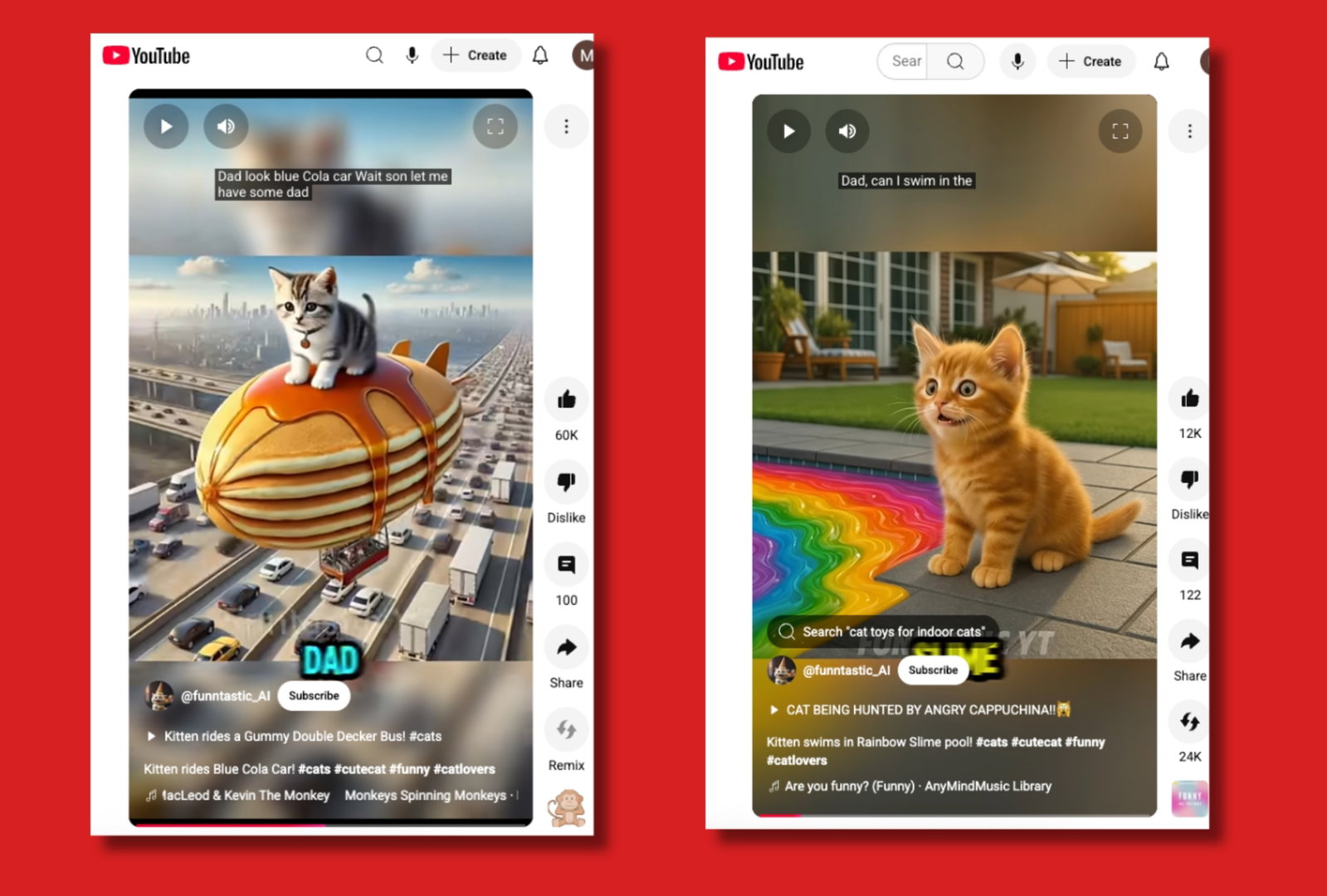
The first category includes template-driven uploads with little variation, repeated storylines with the same outcomes, low-value slideshows, copied tutorials, and AI-generated videos that appear mass-produced without an original viewpoint.
A familiar format is not automatically disqualified. However, each upload must provide a materially different story, focus, lesson, or creative idea. Channels where videos feel interchangeable may struggle to prove that viewers are receiving fresh entertainment, education, commentary, or insight. -
Unsatisfying Or Off-Putting Content
The second category targets channels that repeatedly use distress, loss, danger, or emotional manipulation mainly to attract views.
Examples include exaggerated animal rescue scenarios, unrelated AI clips stitched together for shock, and realistic-looking videos that falsely suggest a celebrity died or a natural disaster occurred. The rule applies whether the video was generated with AI, traditional editing software, CGI, templates, or staged footage. -
AI Personas Covering Sensitive Topics
The third category covers AI personas presenting themselves as human experts on sensitive subjects.
An AI doctor offering diagnoses, a synthetic podcast host giving investment tips, or an AI lawyer interpreting laws could make a channel ineligible for monetization. YouTube also includes politics alongside health, finance, and legal matters because misleading expert-like advice can confuse viewers and create real-world harm.
YouTube has already gained a reputation for killing faceless channels.
The scale of the platform helps explain the tighter approach. YouTube says more than 20 million videos are uploaded every day on average. With content arriving at that volume, repetitive, mass-produced, and AI-generated videos become easier to distribute, while genuine originality becomes harder to identify and protect.
Still, using AI or following a familiar format does not automatically make a video ineligible for revenue.
What Content Can Still Be Monetized On YouTube?
Creators can still use recurring introductions, familiar formats, reactions, clips, commentary, and AI tools when the result contains clear original value.
-
Product-review channels may follow the same structure if every review has a distinct focus.
-
Reaction videos can qualify when the creator adds meaningful commentary, while reused footage may remain monetizable when it is substantially edited, explained, criticized, or shaped into a new narrative.
-
The YouTube AI content monetization rules also permit creators to use AI for script editing, original background visuals, or unique characters and stories.
What matters is whether the final video demonstrates a creative voice, logical progression, research, educational value, or satisfying entertainment.
How does YouTube's inauthentic content policy affect AI-generated videos? It blocks low-effort automation and deceptive expert personas, not responsible AI-assisted creation itself. YouTube’s separate reused-content policy also remains unchanged, meaning commentary, compilations, clips, and reaction videos are not automatically being demonetized.
In other words, YouTube is not removing the magician’s tools. It is asking creators to perform more than the same trick on an endless loop.
What Did YouTube Say?
In an interview with Creator Insider, YouTube Trust and Safety Chief Matt Halprin said, “AI can actually allow people to make a lot of videos. Sometimes those videos are great, and it really enhances creativity. And you can create a higher volume of high-quality content that we want to encourage and have in YPP.”
“But that exact same new tool can allow you to make lots of videos really quickly that are very similar. They’re very generic and don’t really have a narrative arc and don’t really show your creativity. So, the same technology really enables great stuff, but it also enables stuff that’s kind of content farming, and that’s the stuff that we don’t want to have in YPP.”
Halprin’s comments make the distinction clear: YouTube is not targeting AI itself, but channels that use it to mass-produce generic videos.
He also noted that manipulative rescue-style content can drive viewers away, making quality control essential for creators, audiences, advertisers, and the wider monetized ecosystem.
How Will The Policy Affect Creators And Advertisers?
For creators, the clearest shift is from chasing volume to proving value.
Channels that depend on templates, synthetic experts, copied tutorials, automated slideshows, or repetitive emotional hooks may need to redesign their workflows. Creators should make their contribution obvious through commentary, research, storytelling, editing, on-screen participation, or a noticeably different idea in every upload.
Losing YPP access can remove advertising and subscription-based income, while serious violations may affect related channels too.
For advertisers, stronger YouTube monetization rules reduce the chance of brands appearing beside deceptive, manipulative, or disposable content. YouTube’s own guidance says creator earnings suffer when advertisers lose trust, making quality control central to the entire ecosystem.
The timing also reflects YouTube’s growing position among video platforms, television networks, and OTT services. Market research firm, Digital i, estimated that average daily YouTube usage across 20 international markets reached 99.1 minutes per account in 2025, ahead of Netflix’s 93.4 minutes.
Alphabet also said annual YouTube revenue exceeded $60 billion across advertising and subscriptions, while MoffettNathanson estimated that the platform generated $40.4 billion in advertising revenue during 2025. Its advertising revenue reached approximately $9.9 billion in the first quarter of 2026, rising about 11% YoY.
As an over-the-top entertainment destination, Google-owned YouTube now competes for television screens and major advertising budgets. Cleaner monetized inventory may help protect viewers, credible creators, and advertiser confidence as that influence grows.
Topics For More Insights
Conclusion
YouTube’s updated monetization guidance does not remove AI from the creator toolkit. Instead, it separates original, purposeful production from automated volume, recycled templates, manipulative stories, and synthetic experts.
Like the Transported Man trick, the finished illusion still has to impress the audience, but creators must now show real craft behind it. For viewers, advertisers, and serious creators, this could make the platform more rewarding and trustworthy.
Frequently Asked Questions
Can Creators Appeal A YouTube Monetization Suspension?
Yes. Eligible creators can appeal through YouTube Studio by submitting a short video explaining how their channel follows program policies or by contacting Creator Support. A pre-suspension appeal must be filed within seven days, while a creator already suspended may have 21 days. YouTube says its teams usually respond within 14 days. If the appeal fails, the creator can typically reapply to the program 90 days after the suspension date.
Do Creators Have To Label AI-generated YouTube Videos?
Creators must disclose meaningfully altered or synthetic content when it appears realistic, such as footage making a real person say something they never said or showing an event that never happened. Minor edits, idea generation, script support, captioning, and unrealistic scenes generally do not require disclosure. YouTube says applying the label does not reduce reach or monetization eligibility, although repeatedly failing to disclose qualifying content may lead to penalties.
Does Demonetization Remove A Creator’s Videos From YouTube?
Not automatically. Losing access to the partner program means a channel can no longer earn through advertising, Premium revenue, or memberships, but creators may usually continue uploading and building their audience. Video removal is a separate enforcement action tied to issues such as Community Guidelines or copyright violations. Severe or repeated monetization-policy violations can lead to broader account action, so creators should review the notice displayed inside YouTube Studio.
Wed, Jul 22, 2026

Enjoyed what you've read so far? Great news - there's more to explore!
Stay up to date with the latest news, a vast collection of tech articles including introductory guides, product reviews, trends and more, thought-provoking interviews, hottest AI blogs and entertaining tech memes.
Plus, get access to branded insights such as informative white papers, intriguing case studies, in-depth reports, enlightening videos and exciting events and webinars from industry-leading global brands.
Dive into TechDogs' treasure trove today and Know Your World of technology!
Disclaimer - Reference to any specific product, software or entity does not constitute an endorsement or recommendation by TechDogs nor should any data or content published be relied upon. The views expressed by TechDogs' members and guests are their own and their appearance on our site does not imply an endorsement of them or any entity they represent. Views and opinions expressed by TechDogs' Authors are those of the Authors and do not necessarily reflect the view of TechDogs or any of its officials. While we aim to provide valuable and helpful information, some content on TechDogs' site may not have been thoroughly reviewed for every detail or aspect. We encourage users to verify any information independently where necessary.
Loading comments...