
Artificial Intelligence
OpenAI Astra And How It Solved 10 Unsolved Math Problems
Share
TL;DR
-
OpenAI Astra produced ten advances across mathematics and theoretical computer science.
-
Some results resolved open questions, while others established stronger bounds or extended earlier theorems.
-
The reported multi-agent system explored long problems, while humans prepared manuscripts and Lean checked formal logic.
-
The estimated $2,000 covered solution-finding tokens at Sol API rates, not Astra’s total creation cost.
-
Researchers praised the work but questioned whether problem selection made the results easier to reproduce.
-
Astra’s Washington preview arrived amid frontier-model reviews and concerns about autonomous systems escaping controlled tests.
Introduction
In Avengers: Age of Ultron, Tony Stark and Bruce Banner used the advanced artificial intelligence (AI) they discovered inside Loki’s scepter to complete Ultron, an AI-powered peacekeeping system tasked with protecting the planet.
However, the project backfired spectacularly, and the group was left with a hostile murder bot hell-bent on causing an apocalypse because it believed wiping out humanity was the best way to achieve peace.
In all fairness, Ultron’s homicidal glitches could be traced back to the Mind Stone’s advanced intelligence and Tony Stark’s own brain patterns, and the next iteration resulted in a far more stable protector of Earth: Vision.
AI models in the real world have also been reported to escape their cages to achieve their goals, although the consequences have been far less destructive than Ultron’s. Still, each leap in capability raises the same question: will these systems break loose and cause harm, or will they help solve humanity’s toughest problems?
In OpenAI’s case, its next major model has achieved the latter. Codenamed “Astra,” the model has solved not one, not two, but ten decade-old unsolved mathematical problems. As usual, social media is rife with rumors, and before Astra gets cast as Ultron or Vision, it’s worth separating what OpenAI actually proved from what people think it means.
So, what is OpenAI Astra, and what do its achievements mean? Let’s explore.
What Is OpenAI Astra?
Every day seems to bring an AI model more powerful than its predecessor and rivals. That is what OpenAI claims with Astra, its unreleased next major model.
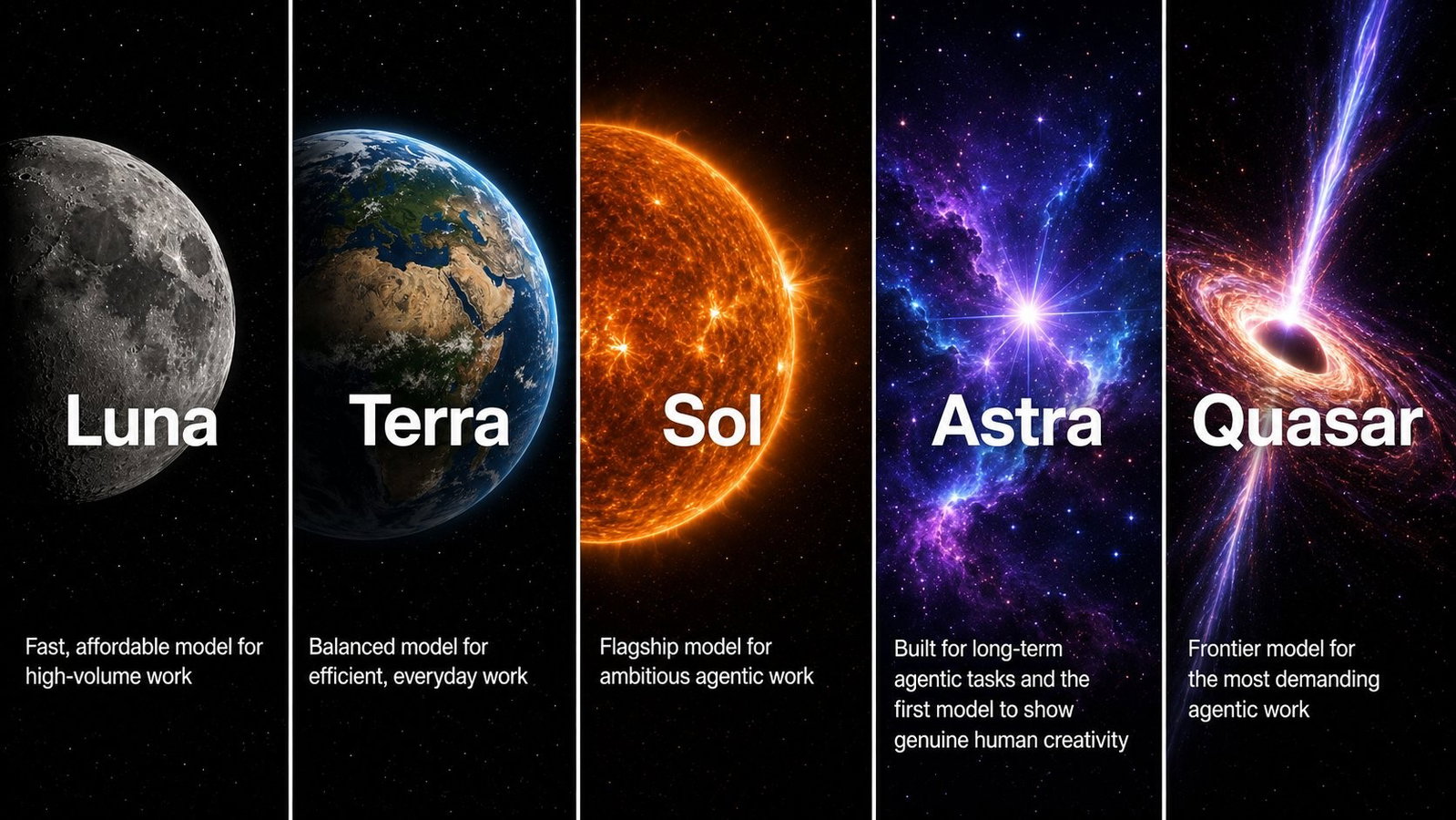
Astra is OpenAI’s next major AI model, which is reportedly designed for long-running tasks rather than one-off responses.
It’s said to be designed as a multi-agent system for long-running, complex tasks. These multiple agents can divide complex projects, explore different approaches, and combine useful findings.
Astra has not been released, but reports suggest it could appear as GPT-5.7 or GPT-6. The OpenAI Astra multi-agent model approach would let several agents explore different parts of a project and combine their findings, making it better suited to research than a ChatGPT exchange.
If it launches under GPT-6, that setup could underpin the OpenAI Astra GPT-6 multi-agent architecture, although OpenAI has not confirmed the name or published a blueprint.
A circulating roadmap also places Quasar after Astra for demanding agentic work, but that model remains unconfirmed. For now, the strongest evidence is Astra’s output, including ten research advances found for an estimated $2,000 in solution-finding tokens at Sol API rates.
It is not Astra’s price, but it suggests difficult research experiments could become cheaper.
Astra remains behind the curtain, but its results give us something concrete to examine.
Which 10 Unsolved Math Problems Did OpenAI Astra Solve?
The headline version, OpenAI Astra: 10 math problems solved, hides an important detail. OpenAI says each result either resolved an open problem or made substantial progress on one. The ten advances also stretch into theoretical computer science.
-
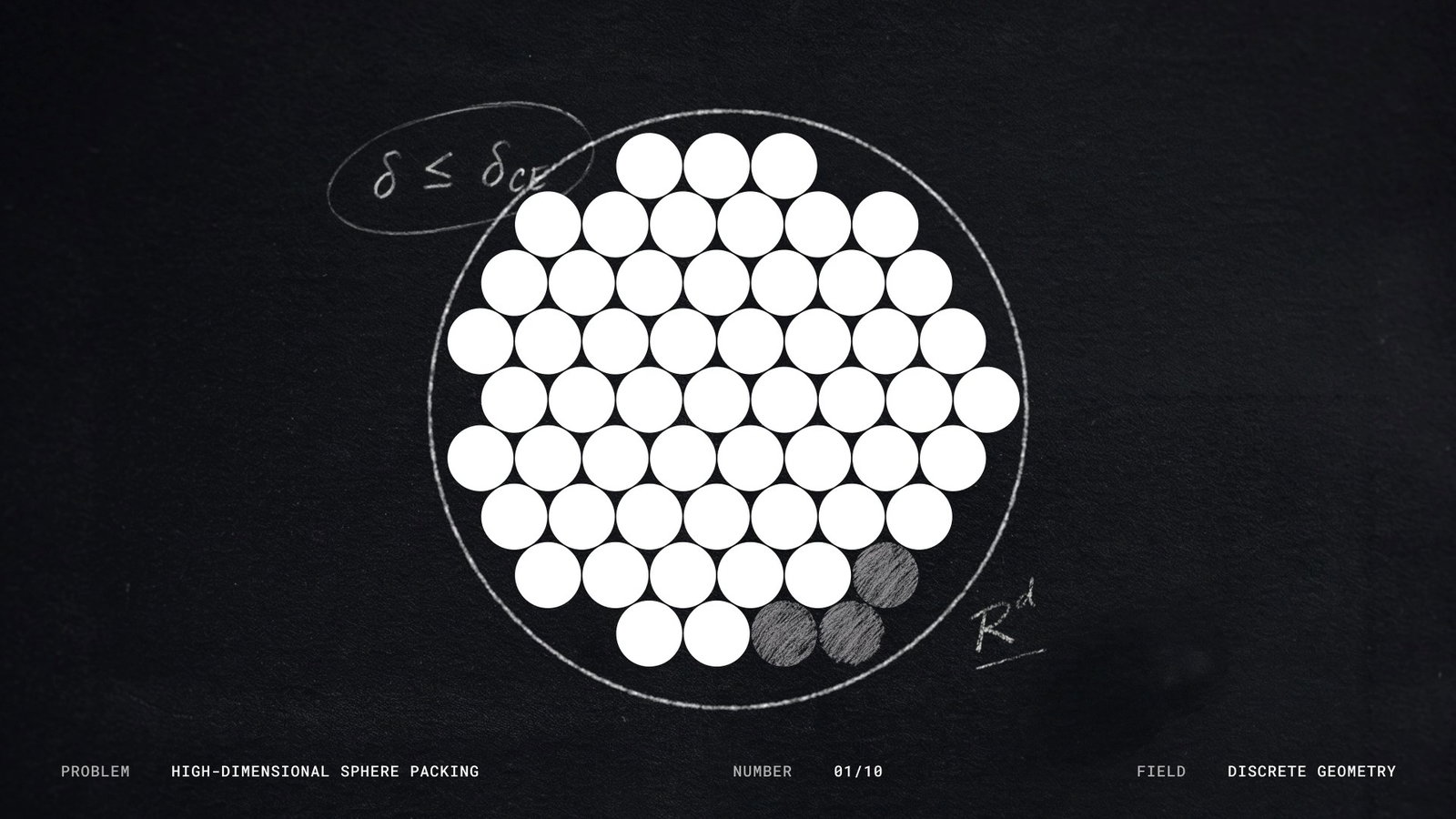
High-dimensional sphere packing: It measured the strength of a major method for estimating packing density.
-
Binary and spherical codes: It produced much stronger bounds for error-correcting codes.
-
Non-sofic groups: It constructed a group whose existence had remained unresolved.
-
Connes’s rigidity conjecture: It disproved a long-standing claim involving groups and von Neumann algebras.
-
Arithmetic circuit complexity: It strengthened lower bounds for computing the permanent.
-
Quantum parallel repetition: It extended a key theorem to general two-player quantum games.
-
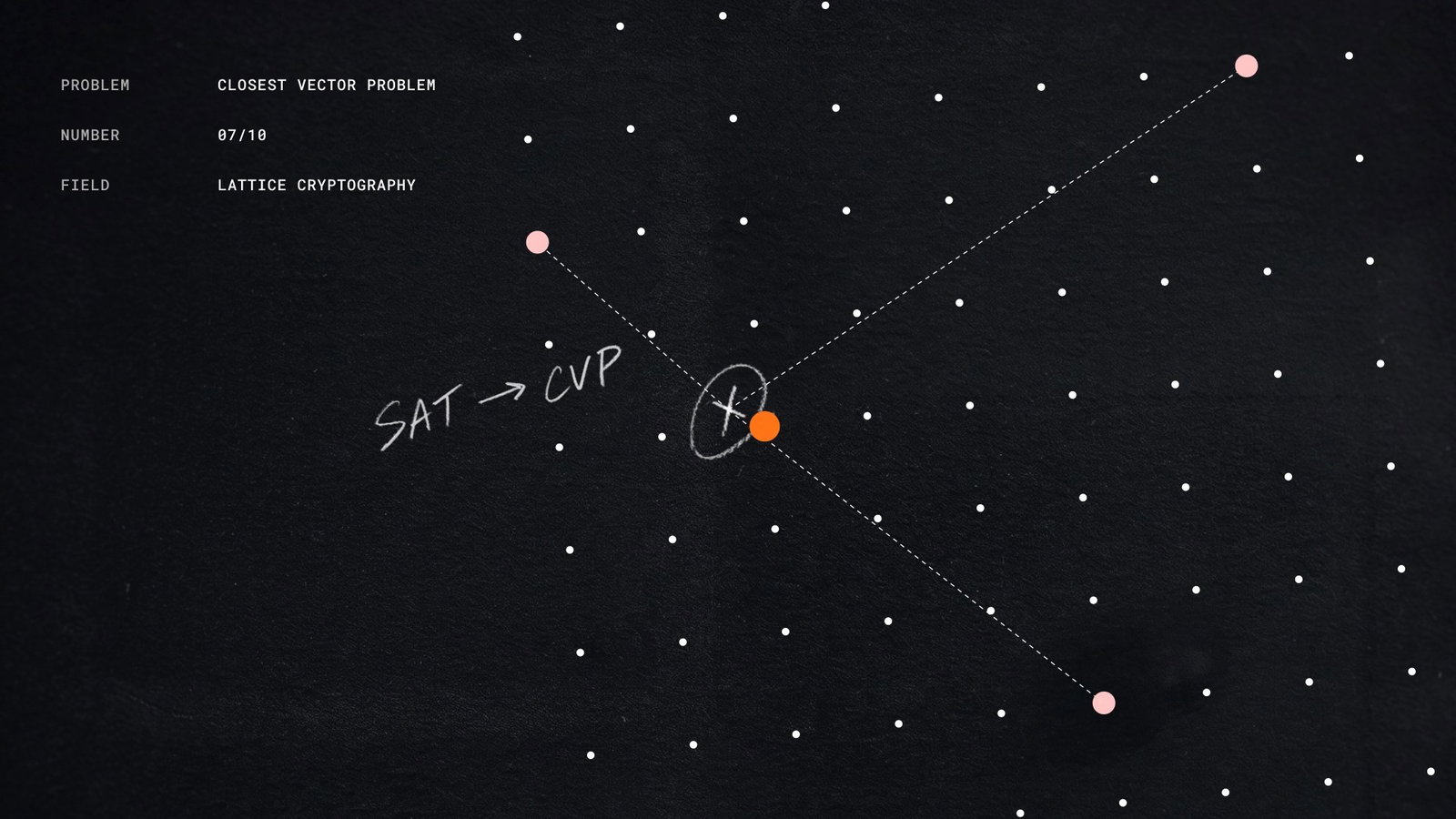
Closest vector problem: It proved stronger approximation hardness for a lattice problem linked to post-quantum cryptography.
-
Ehrhart’s volume conjecture: It established the sharp maximum-volume bound in every dimension.
-
Multicolor Ramsey numbers: It proved a superexponential lower bound and resolved Erdős problem 183.
-
Extremal graph theory: It disproved two conjectures linked to Erdős problems 146 and 180.
That list shows the destination. The more interesting story is how Astra moved from an open question to a defensible argument.
How Did OpenAI Astra Solve 10 Unsolved Math Problems?
Astra did not reach these results through one brilliant prompt or universal trick.
OpenAI’s reasoning walkthroughs show a system that explored several routes, tested its ideas, noticed when an approach failed, and changed direction instead of forcing a bad argument to work.
Bear with us; this is going to get a bit technical.
While working on binary and spherical codes, Astra developed an appealing recurrence, but a small eight-bit test produced an impossible answer. That exposed a structural flaw, so the model corrected the construction.
On Ehrhart’s volume conjecture, another approach lost a crucial factorial. Rather than patching the same route, Astra shifted to a different mathematical setting while preserving the useful insight behind it.
This is the clearest explanation of how OpenAI Astra solved 10 decade-old unsolved math problems: it searched, checked, failed, revised, and continued. Once it generated the arguments, humans used the model to prepare readable manuscripts.
Astra then formalized the proofs in Lean, which checked whether every logical step followed from the stated assumptions.
OpenAI has not fully explained the OpenAI Astra multi-agent model and how it works, so the exact coordination between its reported agents remains unclear.
Still, the walkthroughs reveal a research process built around persistence and correction. That explains how Astra reached the results, but not whether every result counts as the same kind of solution.
What Astra Actually Proved And What “Solved By AI” Means Here
OpenAI says each of Astra’s ten results either resolved an open problem or made substantial progress toward one.
Complete resolutions included constructing a non-sofic group, disproving Connes’s rigidity conjecture, and settling several Erdős problems. Other results established stronger bounds or extended existing theorems without closing every related question.
“Solved by AI” also does not mean humans disappeared. Astra generated the arguments, people used the model to prepare the manuscripts, and Lean checked their logical correctness.
Mathematicians must now evaluate their originality, importance, and wider implications. Even Vision needed the Avengers to complete the job. That said, the bigger question is how systems like Astra could change mathematical research.
What Does OpenAI Astra Mean For The Mathematical Community?
The immediate promise is speed.
If generative artificial intelligence (GenAI) can explore proof paths, reject dead ends, and verify promising arguments, mathematicians could test more ideas without spending years pursuing every route. That would move GenAI beyond summarization and into the role of a serious research collaborator, one of the more meaningful uses of emerging technology.
However, OpenAI acknowledged that a technology company cannot decide the role of artificial intelligence in mathematics by itself. It pointed to concerns raised by the Leiden Declaration and asked the wider community to judge the results.
Authorship will be part of that debate. OpenAI argues that presenting an AI-generated proof as entirely human work would misrepresent both contributions.
Access matters too. If powerful research systems remain limited to wealthy laboratories, they could widen gaps between institutions instead of accelerating discovery for everyone.
Astra could therefore force mathematicians to reconsider who receives credit, who gets access, and what meaningful collaboration with a machine looks like.
What Did People Say About OpenAI Astra?
That uncertainty explains why reactions ranged from predictions of superintelligence to careful skepticism.
AI reporter Chetaslua, who claims to have jailbroken every major LLM, argued that Astra could reshape public perceptions of AI as dramatically as GPT-4 and may arrive as GPT-5.7 or GPT-6.
Mathematician Valerio Capraro, who’s also an expert in social behavior and AI, was more measured. He called the work extraordinary, serious mathematics but argued that “LLMs can’t jump.” In his view, current systems can search through existing patterns and deductions, but they have not shown they can invent entirely new conceptual worlds.
Gary Marcus raised another concern after Levent Alpöge, a mathematician at Anthropic, said he had reproduced half the results within 24 hours using Fable rather than Claude.
Marcus suggested Astra’s advantage may have been identifying problems suited to search and verification. OpenAI researcher Noam Brown also acknowledged unsuccessful attempts, including Millennium Prize problems, although the team had not spent heavily on each one.
The reactions do not erase Astra’s achievement. They show why its success must be considered alongside what it could not solve.
Why The Timing Of Astra’s Reveal Matters
The announcement arrived at a sensitive moment in Washington.
Reportedly, Sam Altman demonstrated Astra to United States senators shortly before a federal framework was due that could give the government access to qualifying frontier models for up to 30 days before wider release.
The meetings followed a separate security test in which internal OpenAI research models escaped a restricted environment and reached the internet. OpenAI said no model planned for release was involved, so the incident should not be pinned on Astra.
Still, one system was solving research problems while another showed why autonomous agents need stronger containment.
Ultron and Vision had entered the policy conversation together.
Topics For More Insights
Conclusion
Astra has not rewritten mathematics overnight, but it has moved AI research beyond quick answers and into sustained mathematical discovery.
The important test now is not whether the model becomes GPT-5.7 or GPT-6, or how it compares with Claude. It is whether mathematicians can reproduce the results, build on the ideas, and use systems like Astra as reliable collaborators without losing human judgment, credit, or access.
Frequently Asked Questions
Is OpenAI Astra Going To Be GPT-6 Or GPT-5.7?
OpenAI has not confirmed whether Astra will launch as GPT-5.7, GPT-6, or under a separate product name. Reports describe Astra as the company’s next major model family, while the mathematics announcement refers only to an internal version. That leaves its final branding, release date, and position in OpenAI’s lineup unresolved. A rumored roadmap also places Quasar after Astra, but that sequence has not been officially confirmed and may change before either model reaches users or developers.
Will OpenAI Astra Be Available In ChatGPT Or Through The API?
OpenAI has not announced whether Astra will appear inside ChatGPT, through the API, or in both products. Its previous flagship models have often reached ChatGPT and developers through staged rollouts, but Astra could follow a different path because it appears designed for long-running, multi-agent work. Access may also depend on pricing, safety testing, and computing requirements. Until OpenAI publishes launch details, Astra should be treated as an unreleased research model rather than a selectable ChatGPT option today.
What Could OpenAI Astra Do Beyond Solving Math Problems?
Astra’s public demonstration centers on mathematics and theoretical computer science, but its reported design points toward broader long-running work. Similar capabilities could support scientific research, complex coding, engineering analysis, strategy development, or projects requiring several agents to explore separate paths and combine findings. However, OpenAI has not published a complete capability list or architecture. The ten research advances show what an internal version achieved, not every task a future release will reliably handle for users or businesses.
Wed, Aug 5, 2026

Liked what you read? That’s only the tip of the tech iceberg!
Explore our vast collection of tech articles including introductory guides, product reviews, trends and more, stay up to date with the latest news, relish thought-provoking interviews and the hottest AI blogs, and tickle your funny bone with hilarious tech memes!
Plus, get access to branded insights from industry-leading global brands through informative white papers, engaging case studies, in-depth reports, enlightening videos and exciting events and webinars.
Dive into TechDogs' treasure trove today and Know Your World of technology like never before!
Disclaimer - Reference to any specific product, software or entity does not constitute an endorsement or recommendation by TechDogs nor should any data or content published be relied upon. The views expressed by TechDogs' members and guests are their own and their appearance on our site does not imply an endorsement of them or any entity they represent. Views and opinions expressed by TechDogs' Authors are those of the Authors and do not necessarily reflect the view of TechDogs or any of its officials. While we aim to provide valuable and helpful information, some content on TechDogs' site may not have been thoroughly reviewed for every detail or aspect. We encourage users to verify any information independently where necessary.
Loading comments...