
Artificial Intelligence
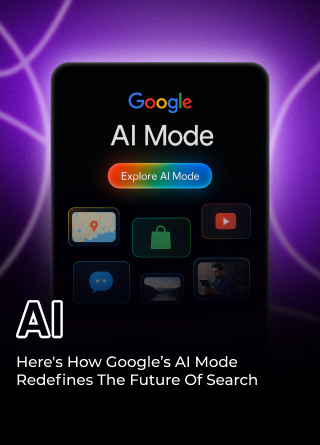
Here's How Google’s AI Mode Redefines The Future Of Search
Share
Overview
Then, they asked us questions to make sure we really understood the idea. Sometimes, they would share their own experiences to make ideas stick. Learning this way felt personal and engaging, much like having a genuine conversation.
Well, Google is trying to recreate that experience with its AI Mode. Instead of just listing links or quick facts, it explains things, summarizes information, and guides you, like a caring tutor. It helps you connect ideas, stay curious, and dive deeper.
In a way, it’s like having a wise friend by your side, but this time, it’s an AI-powered feature.
In this article, we will explore Google’s AI Mode and how it has the potential to redefine the future of search. Dive in!
-(1)-228.jpg.aspx "TechDogs-\"Here's How Google’s AI Mode Redefines The Future Of Search\"")
Google is changing the way we search. Its new search experience in Google Search is designed to give detailed, AI-powered answers to complex questions.
With the rollout of Google AI Mode, the search engine giant is shifting from traditional keyword-based queries to a more intelligent, conversational experience.
This new approach combines artificial intelligence with the familiar search interface to help users get faster, more accurate answers to complex questions. This is designed to make search more intuitive by providing users with clear summaries and deeper, more interactive responses.
So, how will Google’s AI Mode redefine the future of search? Don't Google it, we're here to explain!
What Is Google’s AI Mode?
Google has introduced a new feature called AI Mode in Search. When you turn it on in your profile, you can ask complicated questions, and the AI will give you answers based on information from the web.
The feature uses Google’s Gemini model, which is better at understanding and can work with different types of input, like text, images, and voice. You can ask all sorts of detailed questions, such as comparing products or planning trips, and get thoughtful answers that pull from various online sources.

It also lets you ask follow-up questions, making your search experience feel more interactive and personalized, acting like a smart assistant that offers:
-
Quick, Reliable Answers: Get accurate responses fast without browsing through multiple websites.
-
Context-Aware Conversations: Ask follow-ups without repeating yourself; it remembers your previous questions.
-
In-Depth Explanations: Receive clear, detailed answers instead of just links or short replies.
-
Real-Time Information: Stay updated with the latest, most accurate data pulled directly from the web.
Now that we know what Google’s AI Mode offers, let’s take a closer look at the features that power this new way of searching.
What Are The Key Features Of Google’s AI Mode?
Think of AI Mode like switching from watching a TV show with subtitles to having a narrator who explains everything as it unfolds in real time. That’s how much it reshapes the search experience!
-
Generative AI Overviews
Instead of just showing blue links, AI Mode gives you a clear and concise summary from top sources using AI overviews. It’s like having a helpful chatbot right in Google that provides direct, easy-to-understand answers.
For example, if you search “How to start a podcast in India?”
AI Overview will provide a simple guide that includes tools, platforms, tips on reaching your audience, and local regulations you should be know. Pretty cool, right? -
Conversational Follow-Up
You can ask follow-up questions naturally after your initial search, such as:
-
“What equipment should I get?”
-
“How much will it cost each month?”
-
“What are the best podcast topics for 2025?”
-
-
Vertical Search Integration
AI Mode works well with different categories like Shopping, Travel, News, and Local searches.
It improves each area by providing:-
Smart product comparisons
-
Trip planning
-
Hyper-local updates
-
Summaries of breaking news
-
-
Visual And Voice Search Enhancements
With Google Lens and voice search, you can:
-
Upload a picture and find similar styles (for clothes or home decor)
-
Speak your question and get spoken answers in real-time.
-

These features sound promising, but how exactly do they compare to traditional search as we know it?
What Is The Difference Between Google AI Mode Vs Traditional Search?
Before discussing the differences, let’s first understand traditional Google Search.
It is a keyword-based retrieval system that generates a ranked list of hyperlinks from indexed web pages in response to user queries.
Well, how does this differ from Google’s AI Mode?
| Feature | Traditional Google Search | AI Mode for Search |
| Result Format | List of links | Generative summary |
| Context Understanding | Limited | High |
| Follow-Up Queries | Manual rephrasing | Natural conversation |
| Data Sources | Indexed web pages | Real-time with AI training data |
| Multimodal Input | Yes (basic) | Yes (AI-enhanced) |
Understanding the differences is helpful, but what truly makes AI Mode stand out from the rest?
What Makes AI Mode Special?
Google is changing how we search online with its AI Mode. Instead of just being a regular search engine, it's now combining generative AI with its existing tools such as live web data and product information.
This means Google can pull in the best information from all over the internet and present it in a practical way. We bet you have started noticing this shift with features like AI Overviews, and now Google is going all in.
As GenAI systems become the norm for users accessing information, online visibility has changed. Now, instead of just aiming to "rank" high in search results, the focus is on being chosen, trusted, and referenced by Google's AI algorithm.
This means businesses need to rethink content strategies to ensure information is included in AI responses, and not just found in search listings.
So, AI Mode is clearly unique. However, how does it impact your everyday experience?
What Does Google’s AI Mode Mean For You As A User?
If you’re wondering what Google’s AI Mode offers for you, and end-user, here’s all you need to know
-
Refined, Direct Answers
You may no longer get a list of links, but rather a directly generated answer that you can refine.
-
Conversational Search
Traditional keyword search gives way to a conversation, with Google suggesting follow-up questions.
-
Blended Sources
The information doesn’t come from a single source, it’s blended from the web, Google Maps, YouTube, Product Listings, and more.
-
Context-Aware Memory
AI Mode remembers your past searches and suggests content that builds on your previous interests.

Considering everything, it is important to explore how to maximize AI Mode starting today. Let’s examine both the opportunities and risks associated with it.
What Are The Opportunities And Risks Of Google’s AI Mode?
AI Mode aims to make searching quicker, more helpful, and tailored to you. However, this improvement also brings new challenges for users, businesses, and the overall information landscape.
-
The Opportunities
-
Relevance Meets Context: AI Mode gets not just what you're searching for, but why you need it. Answers are customized to fit your situation and interests.
-
Efficiency: Complex questions that once needed several searches are answered all in one go.
-
Multimodal Support: AI Mode combines text, images, maps, and product data for a complete response.
-
Less Overload: Skip scrolling through tons of tabs or endless forum threads, you receive organized, curated answers instead.
-
-
The Risks
When search results are filtered and curated, it raises some important questions about transparency and diversity:
-
Echo Chamber Effects: If AI knows you too well, it might just show you more of what you already believe. This is a common issue in social media, especially regarding politics.
-
Citation Bias: The AI only shows sources it picks, which means smaller or newer sites may not get seen at all.
-
Fewer Clicks: The usual process of finding information online is changing. With fewer steps needed to get an answer, websites might lose traffic and visibility. This is a big worry for website owners who depend on visitors.
-
Loss Of Control: Businesses often don’t know how or why their content shows up (or doesn’t) in AI Mode. It's important to think about these issues as we use AI in content creation and sharing.
-
Google's new AI Mode helps users find answers more easily, but it can also make it harder to see different viewpoints.
Because of this, it's important for brands, publishers, and SEO teams to not only rank higher in searches but also to establish themselves as trustworthy sources in this new way of searching.
Additionally, as we wrap up, let’s look at the bigger picture, what does this shift say about where AI search is heading!
Final Thoughts
Google’s AI Mode represents the evolving landscape of how people engage with search engines, particularly reflecting Google’s adaptation to contemporary search behavior.
While the feature hasn’t yet reached widespread availability, trends indicate a clear shift from a focus solely on rankings to prioritizing direct answers to user inquiries.
We are no longer just “Googling”, we are starting conversations. Google’s AI Mode doesn’t just change search; it changes how we think about asking questions.
It’s like moving from flipping through a giant manual to chatting with someone who has already read it for you.
While it’s not perfect, with concerns around fairness, transparency, and loss in clickthrough traffic, one thing’s clear: the way we interact with information is entering a whole new phase.
So don’t just adapt. Explore it. Question it. Learn how to use it better, because this isn’t a passing trend, it’s the new default for online search!
Frequently Asked Questions
What Is Google’s AI Mode And How Is It Different From Normal Search?
Google AI Mode uses generative AI to give smarter, more personalized answers instead of just listing links.
Does Google AI Mode Replace Traditional Search?
Not entirely. It enhances search by summarizing results, offering follow-up questions, and pulling in multiple content formats.
Will My Website Still Get Traffic If AI Mode Gives Direct Answers?
Possibly less. To stay visible, websites must now optimize for AI inclusion and build trust as a content source.
Mon, Aug 11, 2025

Enjoyed what you've read so far? Great news - there's more to explore!
Stay up to date with the latest news, a vast collection of tech articles including introductory guides, product reviews, trends and more, thought-provoking interviews, hottest AI blogs and entertaining tech memes.
Plus, get access to branded insights such as informative white papers, intriguing case studies, in-depth reports, enlightening videos and exciting events and webinars from industry-leading global brands.
Dive into TechDogs' treasure trove today and Know Your World of technology!
Disclaimer - Reference to any specific product, software or entity does not constitute an endorsement or recommendation by TechDogs nor should any data or content published be relied upon. The views expressed by TechDogs' members and guests are their own and their appearance on our site does not imply an endorsement of them or any entity they represent. Views and opinions expressed by TechDogs' Authors are those of the Authors and do not necessarily reflect the view of TechDogs or any of its officials. While we aim to provide valuable and helpful information, some content on TechDogs' site may not have been thoroughly reviewed for every detail or aspect. We encourage users to verify any information independently where necessary.
Loading comments...