
Artificial Intelligence
All You Need To Know About Perplexity's New Computer
Share
Overview
However, with numerous AI tools coming into the market, there is little to no novelty in any of the tools. That is why a lot of tools are coming up with integration capabilities, while others are producing various products. For example, AI Browsers.
Joining the momentum, Perplexity wanted to do more than offer integration capabilities and an AI browser.
Introducing Perplexity Computer.
Perplexity Computer is being positioned as a cloud-based AI system that works more like an AI agent inside a single system.
What is this computer? What can it do? We will get into all the things you need to know about Perplexity Computer.
So, plug in!
TL;DR
-
Perplexity Computer is built to complete tasks, not only answer questions in chat.
-
It uses 19 AI models and is currently available to Max subscribers through Perplexity Max on the web.
-
It is live on the web for Max users and Enterprise Max users.
-
Max includes 10,000 monthly credits, while bonus credits can vary.
What Is Perplexity Computer?
Perplexity Computer is a cloud-based AI system that aims to act like a general-purpose digital worker, with support for deep research, connected tools, and persistent memory across tasks.
Regular Perplexity helps users find and understand information. Perplexity Computer is designed to respond to that information. According to Perplexity, it is capable of conducting research, creating assets, managing emails, creating reports and presentations, connecting to several business apps, recalling previous context, and performing background operations. As a result, it resembles a work layer rather than a search layer.
For a business reader, the real value is simple. Many teams do not lose time finding one fact. They lose time moving from facts to output. A task often starts with research, then turns into analysis, then a deck, then an email, then a follow-up. Perplexity is pitching the computer as the system that can connect those steps in one place.
The next thing to understand is how it actually gets the work done.
How Does Perplexity Computer Work?
Perplexity Computer combines several layers in one system.
-
Breaks One Goal Into Smaller Steps
Perplexity Computer starts with one large task and splits it into smaller parts that are easier to handle. For example, one request can turn into separate steps for research, analysis, writing, and final delivery. This makes it better suited for real workflows instead of one-off prompts.
-
Routes Tasks To Different Models
Perplexity Computer can assign different parts of a task to different AI models based on what each one does best. So, one model may support research, while another may be better for coding or writing. This helps the system handle mixed work more effectively.
-
Uses Sub-Agents For Specialized Work
Perplexity Computer uses sub-agents for focused tasks such as market research, financial analysis, and news monitoring. These sub-agents operate like specialists; each one handles a defined part of the work.
-
Runs In The Cloud
It enables asynchronous execution, which implies that tasks can continue to run even while the user is not actively observing. Perplexity also claims to monitor emails, calendars, files, and schedules.
-
Remembers Context Across Tasks
Unlike standard AI chat sessions that reset after each conversation, Perplexity Computer is designed to retain context from previous interactions. That means if you ran a competitor analysis last week, a follow-up request this week can build on that prior work without you re-explaining the background.
-
Uses Connected Tools
It can leverage web data as well as information from connected apps to develop assets, functional apps, manage communications, and perform research. That is how it gets from raw data to finished business output.
That sounds strong on paper, but readers also want to know the perplexity computer features. What can it do in day-to-day work?
What Can Perplexity Computer Do In Real Business Work?
Perplexity's own examples are quite practical. A computer can develop a live website from a single prompt, perform a financial analysis using the most recent earnings, and generate a detailed competitive breakdown based on numerous quarters of earnings calls.
It can generate reports and presentations, do research, manage emails, and plan recurring tasks. That implies a computer excels at work that begins with information and ends with a deliverable.
Competitive analysis, market research, pricing comparisons, financial evaluations, internal reports, and leadership decks are all excellent examples. It is less about casual searching and more about transitioning from "find this" to "finish this."
However, let’s see what makes it different.
What Makes Perplexity Computer Different?
Perplexity Computer includes several capabilities that make it different from typical AI assistants.
-
Built To Complete Work
Perplexity describes a computer as an "independent digital worker" who completes tasks and workflows. That is, it is intended to go beyond chat responses and help develop outputs such as reports, apps, emails, and other work items.
-
Uses Multiple AI Models In Parallel
Perplexity Computer orchestrates work across 19 models simultaneously. While Perplexity has not published a full named list, the system is built to route different parts of a task to whichever model handles that type of work best. Research queries may go to one model, coding tasks to another, and writing or summarization to a third. This parallel routing allows the system to handle complex, mixed workflows faster than a single-model tool would.
-
Works Across Business Apps
Perplexity Computer is compatible with Gmail, Outlook, GitHub, Linear, Slack, Notion, Snowflake, Databricks, Salesforce, and HubSpot. That makes it more useful for real-world business workflows that already exist across many products.
-
Designed For Multi-Step Workflows
Perplexity Computer can research, construct, manage, and deliver tasks based on a single request. This distinguishes it from tools that are good at summarizing or drafting but stop before the final output is completed.
-
Includes Enterprise Controls
According to Perplexity's Enterprise help page, Computer offers admin controls, connection controls, credit management, and security capabilities in a cloud-based environment. This makes it easy for businesses to manage how the product is used by teams.
Perplexity Computer Vs. Other AI Tools
Perplexity Computer is not the only tool chasing agentic workflows, but its positioning is distinct.
ChatGPT with operator mode and Claude's Projects feature both support multi-step tasks, but they largely operate within a single conversation window. Perplexity Computer is built around cloud execution, meaning tasks run in the background without the user staying active in the session.
Google's Gemini also supports app integrations, but its connector depth for business tools like Salesforce, Snowflake, and Databricks is narrower at this stage.
The clearest difference is Perplexity's search-first foundation. Because the system was built on real-time web retrieval, its research layer is more current than tools trained on static datasets. For work that depends on fresh data, earnings analysis, competitor monitoring, and pricing, that matters.
That leads to the next practical question: who is this really for?
Topics For More Insights
Who Should Use Perplexity Computer?
This is not a mass-market product right now. It makes the most sense for people and teams that do repeat knowledge work and care about speed, structure, and output quality.
-
Strategy Teams
Useful for competitor scans, market notes, pricing comparison, and presentation work.
-
Finance Teams
Perplexity’s examples include earnings-based analysis and hands-free financial work.
-
Founders And Operators
Helpful when one task touches research, docs, decks, and email together.
-
Enterprise Teams
Enterprise Max includes admin controls, connectors, and security layers.
Of course, interest becomes real only when pricing and access are clear.
Perplexity Computer Pricing, Access, And Credits
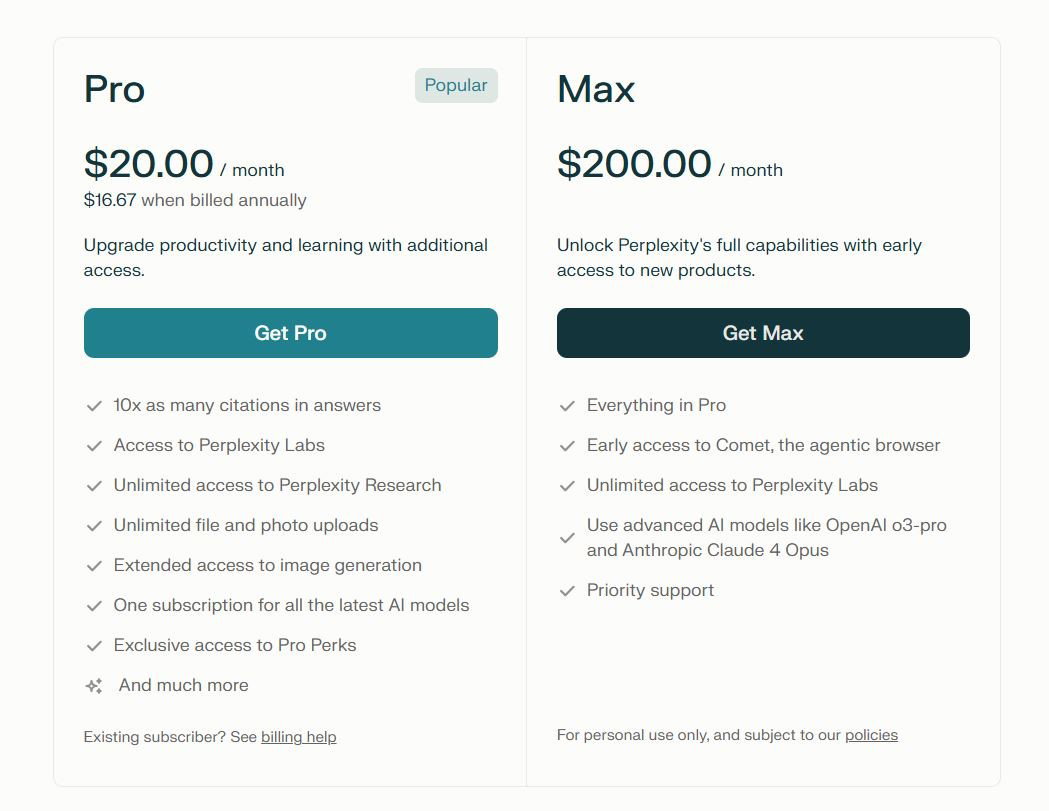
Perplexity Computer is currently available on the web for Max and Enterprise Max users only. A Max subscription is priced at $200 per month or $2,000 per year, which puts it firmly in the professional and business tier rather than casual consumer use.
If your credits run out mid-workflow, active tasks do not fail outright. They pause and automatically resume once credits become available again, which is a sensible design for longer background jobs.
Before committing internally, business buyers should verify their current credit balance and check Perplexity's Help Center directly, as these details can change without prior notice.
What Perplexity Computer Is Not
Despite its ambitions, Perplexity Computer has real boundaries worth knowing before committing to it.
It is not a replacement for specialized tools. If your team already runs deep workflows inside Salesforce, Notion, or Snowflake, a computer connects to those tools but does not replace the logic or structure inside them. It works on top of your stack, not instead of it.
It is also not fully autonomous. While Perplexity describes it as an independent digital worker, most meaningful business tasks will still need human review before anything goes out. Think of it as a fast first-draft engine, not a final decision maker.
Finally, it is not cheap at scale. At $200 per month for Max, the price makes sense for power users but may be hard to justify for casual or occasional use. Teams should map their actual workflow volume against the 10,000 monthly credits before committing.
What Should Buyers Watch Closely?
Perplexity Computer is promising, although it is still a new product. According to TechCrunch, Perplexity cancelled a planned press demo due to issues discovered just before the event. This does not invalidate the launch, but it does indicate that the product is still maturing.
The second item to keep an eye on is any changes to product details. Public Perplexity pages do not always display the same bonus credit number, and the firm states that allowances may change. Businesses should check the current account view and the Help Center before making internal use pledges.
What's New: Perplexity Personal Computer
Since its initial cloud launch, Perplexity has expanded its computer product significantly. The most notable development is Perplexity Personal Computer, a version that runs locally on a dedicated Mac mini rather than purely in the cloud.
Unlike the cloud-based version, the Personal Computer runs 24/7 on the user's own hardware. This means it has direct access to local files, apps, and system-level data without needing everything to be uploaded or connected through a third-party integration. For users who work heavily with local documents, internal databases, or sensitive files they prefer not to send to a cloud environment, this is a meaningful difference.
The two versions are designed to work together. Personal Computer handles local context and always-on availability, while the cloud system handles heavier research, multi-model orchestration, and connected business app workflows. Together they form a more complete picture of what Perplexity is building — not just a cloud AI tool but a persistent digital worker that operates across both local and cloud environments.
This is still an early and evolving product line. Buyers evaluating Perplexity Computer today should check whether Personal Computer is available for their setup and how it fits alongside the existing Max subscription.
That brings us to the simplest way to sum it all up.
Conclusion
Perplexity Computer matters because it pushes AI past search and into execution. That is the real story behind the launch. It is not just about getting a better answer. It is about getting the finished work from one request.
For business users, this can save time in workflows that usually move across research, analysis, documents, presentations, and follow-up. Perplexity’s official pages make it clear that Computer is built around many models, specialist agents, app connectors, and cloud-based execution.
The product is still early, and buyers should watch credits and rollout details closely. But if it works as promised, its biggest value will be simple: less handoff, less busywork, and faster delivery.
Frequently Asked Questions
Is Perplexity Computer Available To Everyone Right Now?
No. Official Perplexity documentation shows that the computer is available on the web for Max users, and the Enterprise help page says Enterprise Max users can access it in their workspace. Broader access is still expanding.
What Makes Perplexity Computer Different From Normal Perplexity?
Regular Perplexity focuses on answers and research. A computer is built to take action on top of that research, including analysis, reports, presentations, email handling, and follow-up workflows.
Does Perplexity Computer Use One Model Or Many Models?
Perplexity’s launch material says the computer orchestrates work across 19 models in parallel and chooses the best model for each part of the task. That multi-model design is one of its main product bets.
Fri, Mar 13, 2026

Liked what you read? That’s only the tip of the tech iceberg!
Explore our vast collection of tech articles including introductory guides, product reviews, trends and more, stay up to date with the latest news, relish thought-provoking interviews and the hottest AI blogs, and tickle your funny bone with hilarious tech memes!
Plus, get access to branded insights from industry-leading global brands through informative white papers, engaging case studies, in-depth reports, enlightening videos and exciting events and webinars.
Dive into TechDogs' treasure trove today and Know Your World of technology like never before!
Disclaimer - Reference to any specific product, software or entity does not constitute an endorsement or recommendation by TechDogs nor should any data or content published be relied upon. The views expressed by TechDogs' members and guests are their own and their appearance on our site does not imply an endorsement of them or any entity they represent. Views and opinions expressed by TechDogs' Authors are those of the Authors and do not necessarily reflect the view of TechDogs or any of its officials. While we aim to provide valuable and helpful information, some content on TechDogs' site may not have been thoroughly reviewed for every detail or aspect. We encourage users to verify any information independently where necessary.
Loading comments...