

Artificial Intelligence
AI Readiness: Key Factors And Best Practices
Share
Introduction
However, using AI requires more than just installing new software. Many organizations rush to adopt new solutions, only to realize they were not ready for the challenges that followed. Systems fail, people are perplexed, and outcomes do not meet expectations.
This is where AI Readiness is critical. It is about preparing people, data, technology, and regulations before AI is used in real-world business decisions. Companies that prioritize Readiness feel more confident and experience better results.
Before delving deeper, it is critical to understand what AI Readiness entails and why it is so vital today.
TL;DR
-
AI Readiness focuses on people, data, systems, and governance before AI adoption.
-
Most organizations use AI, but only a few have scaled it successfully.
-
Clean data, trained teams, and clear leadership decide AI success.
-
Responsible use builds trust and long-term value.
Understanding AI Readiness
AI Readiness means an organization is prepared to use AI safely, responsibly, and effectively. In 2026, this preparation is increasingly measured by an organization's ability to move from generic chatbots to specialized, autonomous AI Agents.
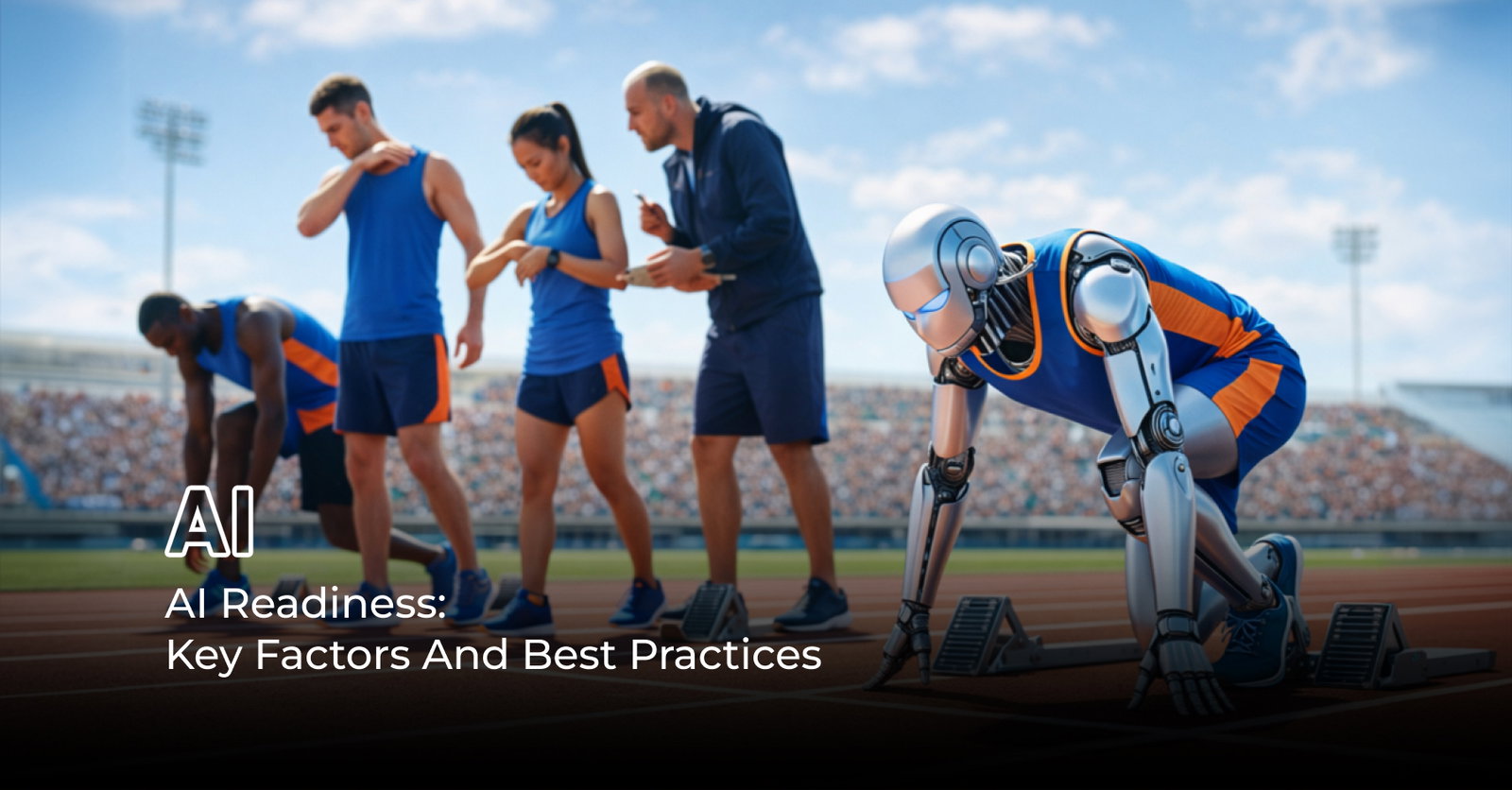
AI Readiness helps close this gap. It ensures that AI actually helps address real business needs rather than just being a temporary trial. Once organizations are all set, AI starts to weave itself into the daily work and decision-making processes.
The Importance Of Clean Data And Strong Systems
AI performance is directly tied to data quality. As of 2026, data growth has exploded by an estimated 250% since 2023, making fragmentation a more severe barrier than ever. If the data is missing, outdated, or poorly managed, AI results can be pretty unreliable. People often cite this as a key reason AI initiatives struggle to move past the pilot stage.
IBM Research highlights that AI-ready data must be accurate, accessible, and governed throughout its lifecycle. Their 2025 infrastructure study found that only 1 in 10 business leaders believe their current systems fully meet their AI needs.
“The value of AI depends on the quality of the data feeding it.” — IBM
Infrastructure is equally important. AI workloads really need robust, secure, and reliable cloud platforms for data storage and data pipelines. When systems are slow, unstable, or experience frequent outages, people lose trust quickly, and usage tends to decline.
When organizations get ahead of the game by investing early in their data foundations and infrastructure, they tend to have an easier time adopting new technologies and achieving better results down the line.
This is only part of the picture, and the focus now shifts to the data and systems that actually determine whether AI works at scale.
People And Skills Shape Real AI Readiness
In 2026, AI Readiness is defined by "Human-AI collaboration" rather than just tool usage.
Employees often hesitate to adopt AI when they lack clarity on how it works, how decisions are made, or how their roles will change. This uncertainty can really hold back adoption, even when the tools are right there.
The World Economic Forum’s Future of Jobs Report 2025 estimates that while AI may displace 92 million jobs, it will create 170 million new roles by 2030.
WEF stresses that 50% of all employees will need reskilling in 2025 to stay relevant as AI and big data become the fastest-growing required skills. Recent studies show that optimism now outweighs anxiety, but successful adoption requires role-based practical learning rather than just technical training.
Understanding how to interpret outputs, question results, and use AI responsibly is more valuable than knowing how models are built.
When learning is continuous and supported, confidence grows. Teams start seeing AI as a helpful tool rather than a threat, making it easier and quicker to adopt sustainably.
Even with solid data and systems in place, the success of AI adoption ultimately depends on how it's managed and overseen.
Leadership And Governance Build Trust And Direction
Leadership provides the narrative that shapes AI adoption. When leaders share why they're bringing in AI, how it can help, and what success looks like, teams really get a sense of direction. When there is no clarity, AI initiatives can come across as a bit all over the place and more like experiments.
These days, effective governance frameworks for privacy and bias monitoring are not seen as just limitations; they are more like the "safety nets" that help organizations roll out Agentic AI on a larger scale.
According to the World Economic Forum, organizations that balance innovation with responsibility are more likely to earn trust from employees, customers, and regulators. Governance acts as a safety net that protects long-term progress rather than slowing it down.
This is where you begin to see what all that preparation actually leads to.
Topics For More Insights
Benefits Of Being AI-Ready
Here are the benefits of AI Readiness:
-
Better Decision-Making
AI-ready organizations benefit from more consistent and reliable insights. Leaders can use truthful data and reliable methods to make decisions based on current signals rather than gut feelings. AI usually gives a $3.70 return on every $1 spent, but companies that are "AI-ready" and do well see returns of over $10 per dollar invested.
-
Productivity
When AI is integrated into daily operations, repetitive, time-consuming tasks are automated. Employees spend less time on physical tasks and more time on problem-solving, creativity, and strategic thinking. 64% of firms now report that AI has increased their ability to innovate, going beyond simple cost-cutting.
-
Faster Movement
According to McKinsey, firms that scale AI are more successful at integrating it into core processes rather than isolated trials. AI-ready allows teams to move beyond experimentation and achieve measurable business outcomes across functions.
“The biggest value from AI comes when it is embedded into how work actually gets done.” — McKinsey -
Stronger Trust
When the data is solid and the governance is straightforward, employees tend to have more trust in what AI produces. This trust helps people embrace it more and makes them less hesitant. Teams tend to trust AI insights more when they get a clear picture of how decisions are made and how risks are handled.
These days, 62% of organizations are diving into AI Agents, and those that are prepared are starting to automate those tricky, multi-step workflows that used to be done manually.

- Long-Term Competitive Advantage: AI-ready elevates AI from a short-term initiative to a long-term capacity. Strong foundations enable organizations to adjust more quickly as models, techniques, and use cases evolve. In marketplaces where speed and adaptability are important, flexibility becomes a competitive advantage.
Many organizations run into common roadblocks along the way.
Challenges That Slow AI Readiness
Below are the challenges of AI Readiness:
-
Data Quality And Fragmentation Issues
Many organizations struggle with inconsistent, siloed, or poorly governed data. Fixing these issues requires time, cross-team coordination, and sustained investment. Without addressing data foundations first, AI initiatives remain fragile and challenging to scale.
-
High Costs And Infrastructure Complexity
AI adoption often involves high upfront costs, including cloud infrastructure, data platforms, and security controls. Smaller organizations may find these investments challenging without a clear roadmap and phased implementation strategy.
-
Skills Gaps And Workforce Anxiety
Skill shortages remain a major barrier. Employees may lack confidence in using AI tools or fear being replaced by AI. Without structured training and transparent communication, resistance can slow adoption even when technology is available.
-
Data Privacy and Security Risks
As AI systems connect more data sources, privacy and security risks increase. Regulatory compliance, secure data handling, and responsible use become more complex, requiring stronger governance and monitoring mechanisms.
-
Lack Of Clear Ownership And Direction
When it comes to AI initiatives, things can really go sideways if ownership is not clear. If there is no strong leadership, clear goals, and accountability in place, projects can really start to lose their momentum. Having clear direction and governance is super important to ensure that everything stays in line with business priorities.
Taking all of this together, it becomes clear what AI Readiness is really about.
Conclusion
AI Readiness is not about rushing into the latest technology. It is all about getting ready thoughtfully and responsibly. When organizations prioritize people, data, systems, and trust, they create a solid foundation for achieving success with AI.
When Readiness comes first, AI feels less risky and more useful. Teams feel supported, decisions feel clearer, and progress feels steady.
In the long run, AI Readiness is not just about technology. It is about building confidence, trust, and a better way of working together.
Frequently Asked Questions
What Is AI Readiness And Why Does It Matter In 2026?
AI Readiness refers to an organization’s ability to use AI safely, responsibly, and at scale. In 2026, it matters because most companies already use AI, but only a small percentage have successfully embedded it into daily workflows and decision-making.
Why Do Many AI Initiatives Fail Despite High Adoption Rates?
Most AI initiatives fail due to poor data quality, fragmented systems, skills gaps, and weak governance. Organizations often prioritize speed over preparation, which prevents AI from moving beyond pilots into real business impact.
How Can Organizations Improve Their AI Readiness?
Organizations can improve AI Readiness by investing in clean and governed data, reliable infrastructure, role-based AI training, clear leadership communication, and strong governance frameworks that address privacy, bias, and accountability.
Tue, Jan 20, 2026

Enjoyed what you've read so far? Great news - there's more to explore!
Stay up to date with the latest news, a vast collection of tech articles including introductory guides, product reviews, trends and more, thought-provoking interviews, hottest AI blogs and entertaining tech memes.
Plus, get access to branded insights such as informative white papers, intriguing case studies, in-depth reports, enlightening videos and exciting events and webinars from industry-leading global brands.
Dive into TechDogs' treasure trove today and Know Your World of technology!
Disclaimer - Reference to any specific product, software or entity does not constitute an endorsement or recommendation by TechDogs nor should any data or content published be relied upon. The views expressed by TechDogs' members and guests are their own and their appearance on our site does not imply an endorsement of them or any entity they represent. Views and opinions expressed by TechDogs' Authors are those of the Authors and do not necessarily reflect the view of TechDogs or any of its officials. While we aim to provide valuable and helpful information, some content on TechDogs' site may not have been thoroughly reviewed for every detail or aspect. We encourage users to verify any information independently where necessary.
Loading comments...