
Sales Technology
Top 5 Sales Management Software Of 2026
Share
TL;DR
-
Pipedrive: Offers a salesperson-centric experience with intuitive pipeline visualization and essential activity reminders.
-
Microsoft Dynamics 365 Sales: Provides deep AI-driven insights and seamless integration with the Microsoft 365 ecosystem.
-
Salesforce Sales Cloud: Delivers an extremely powerful and extensible platform designed for complex enterprise-level customization.
-
Monday CRM: Features a highly flexible, no-code setup that connects sales pipelines with broader project operations.
-
HubSpot Sales Hub: Provides a unified growth platform that aligns sales, marketing, and service on one architecture.
Introduction
Have you ever watched The Simpsons? In the classic episode Marge in Chains, Homer Simpson unexpectedly finds himself running the family business while Marge is away. Lacking any real organizational skills, Homer quickly spirals into a mess of shipment mix-ups and logistical chaos. His experience is a perfect example of how quickly things can fall apart without the right structure. Much like Homer, many modern businesses struggle with manual inefficiencies that lead to missed opportunities and confused workflows.
Sales management software serves as the essential toolset that Homer was missing, providing a clear map for tracking progress and streamlining daily operations. By automating repetitive data entry, these platforms allow sales teams to focus on building relationships rather than managing spreadsheets. Implementing the right system transforms raw data into actionable insights, ensuring that no lead is forgotten and every decision is backed by solid information. Explore these Top 5 Sales Management Software Of 2026 to elevate your business performance.
What Is Sales Management Software?
Sales Management Software is a tool that helps sales representatives manage and streamline their daily sales activities. It allows them to track their pipelines, interact with leads and prospects, and record important tasks. For sales managers, it provides features to assign leads, analyze individual performance, and make improved decisions.
This software boosts productivity, saves time, improves team collaboration, and helps businesses make highly informed decisions. By streamlining sales operations, Sales Management Software can significantly reduce costs and offer better results for companies.
So, which tools are helping businesses sell smarter, faster, and better in 2026? Let’s explore the leading Sales Management Software of 2026.
Top 5 Sales Management Software Of 2025
Sales Management Software helps your entire sales team stay organized, focused and efficient. It’s not limited to senior team members; everyone can benefit from it. The right tool adapts to your team’s workflow, making processes highly smooth and increasingly tailored to your needs. The software solution combines key features, including Customer Relationship Management (CRM), call and email automation, lead management, and reporting, to create a unified system that supports sales teams at every level.
Here are the top 5 Sales Management Software for 2026, each offering unique benefits. We've listed them in no specific order to help you explore the best fit for your needs!
 |
 |
 |
 |
 |
Pipedrive: Best User Experience (UX)
Pipedrive serves as a streamlined, salesperson-centric CRM. With roots in Estonia but a global reach, Pipedrive is majority-owned by Vista Equity Partners. As of recent announcements, it is used by over 100,000 customers in 170 countries. In 2025, Pipedrive was recognized as a Summer 2025 Leader by SourceForge, a finalist for “Best SaaS Product for Small Business” at the SaaS Awards, and a Category Leader in Construction CRM by GetApp, a Gartner company. It also earned dual distinctions as a Data Quadrant Champion and Emotional Footprint Champion from McLean & Company.
Why We Chose Pipedrive In 2026
Pipedrive stands out for its focused simplicity, sales-pipeline visualization, and hands-on usability. Its positioning as a tool built by salespeople for salespeople gives it an edge in tailoring workflows, and it often wins praise for ease of use compared to bulkier .
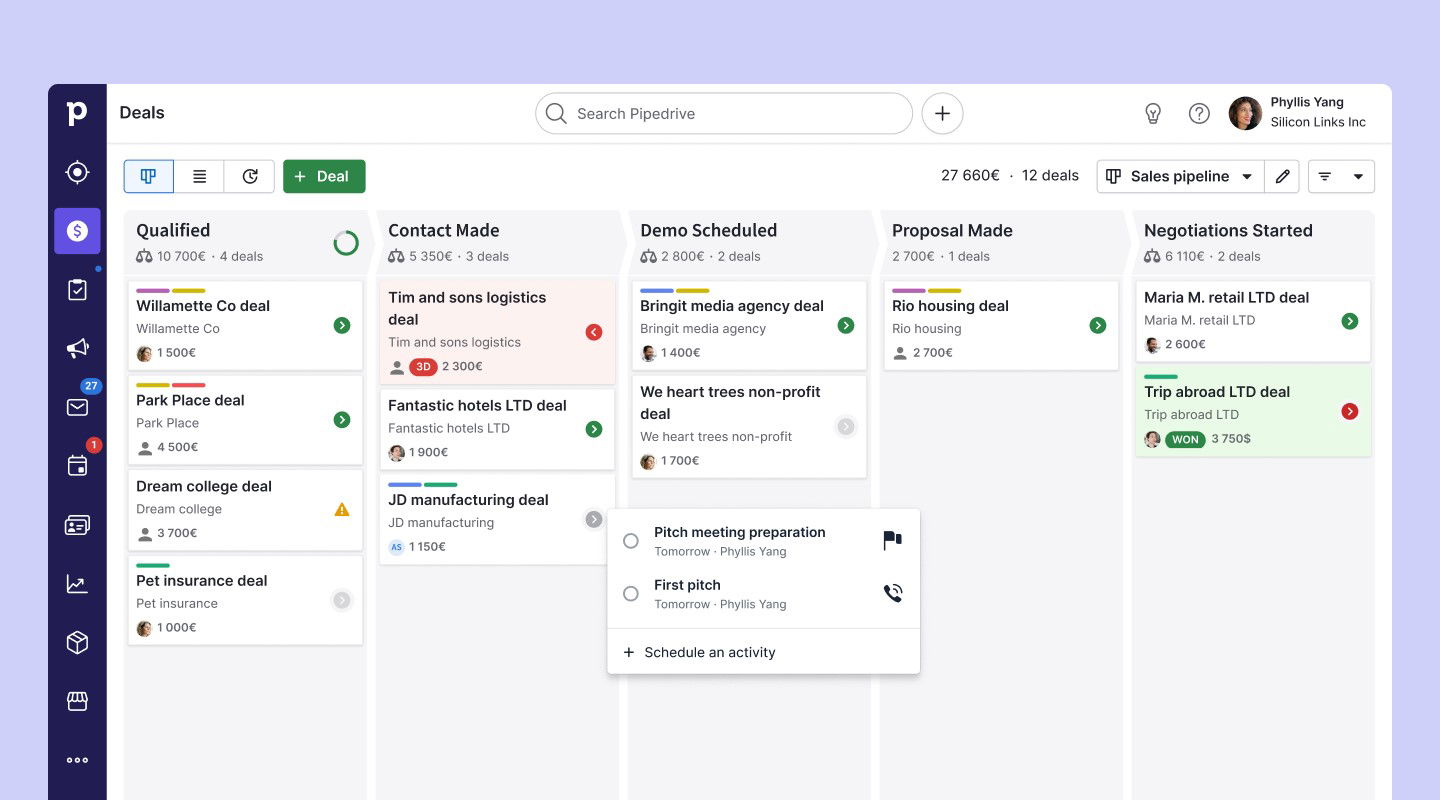
Its core features span pipeline management, activity reminders, email integration, day-to-day lead scoring, and automation. It scales well from small teams to mid-size sales orgs. On the security front, Pipedrive holds SOC 2 and SOC 3 certifications, ISO 27001 and ISO 27701 certifications, supports GDPR compliance, encrypts data in transit and at rest, and offers robust access controls (2FA and role-based permissions).
Pricing
Pipedrive offers four paid tiers billed annually: Lite ($14/seat/month) for essential pipeline tools, Growth ($24/seat/month) with automation and full email sync, Premium ($49/seat/month) for AI-driven multi-email tools and e-signatures, and Ultimate ($69/seat/month) featuring advanced security, data enrichment, and sandbox testing. All plans include a 14-day free trial, no credit card required.
What Works And What Doesn’t
| Pros | Cons |
| Intuitive, sales-driven UI | Lacks advanced enterprise features |
| Strong security and compliance posture | Customization and extensibility are limited |
| Extensive automation and pipeline visualization tools | Limited reporting and analytics capabilities |
Our Final Take
Pipedrive is ideal for small to mid-sized sales teams seeking a clean, usable, sales-first CRM without the bloat of enterprise systems. It may not satisfy organizations needing ultra-deep customization, but for teams focused on pipeline clarity and daily usability, it is a powerful and secure choice heading into 2026.
Microsoft Dynamics 365 Sales: Best For Integration
Microsoft Dynamics 365 Sales, remains a leading enterprise sales management tool in 2026. As part of Microsoft’s Dynamics 365 CRM, this sales platform is strengthened by its AI-driven updates and Copilot integration. Built on the Microsoft Cloud, it delivers predictive insights and a unified view of customer data. In 2025, it was recognized by Info-Tech Research Group as an Emotional Footprint Champion and a top performer in the Enterprise CRM Data Quadrant, while Microsoft’s Partner of the Year Awards 2025 highlighted its excellence with the enterprise ecosystem.
Why We Chose Dynamics 365 Sales in 2026
Dynamics 365 Sales distinguishes itself by combining deep customization, AI-infused insights, and native integration with Microsoft 365 (Outlook, Teams, Power Platform). For enterprises seeking to unify sales, service, marketing, and operations within a single ecosystem, it offers unmatched coherence and extensibility.
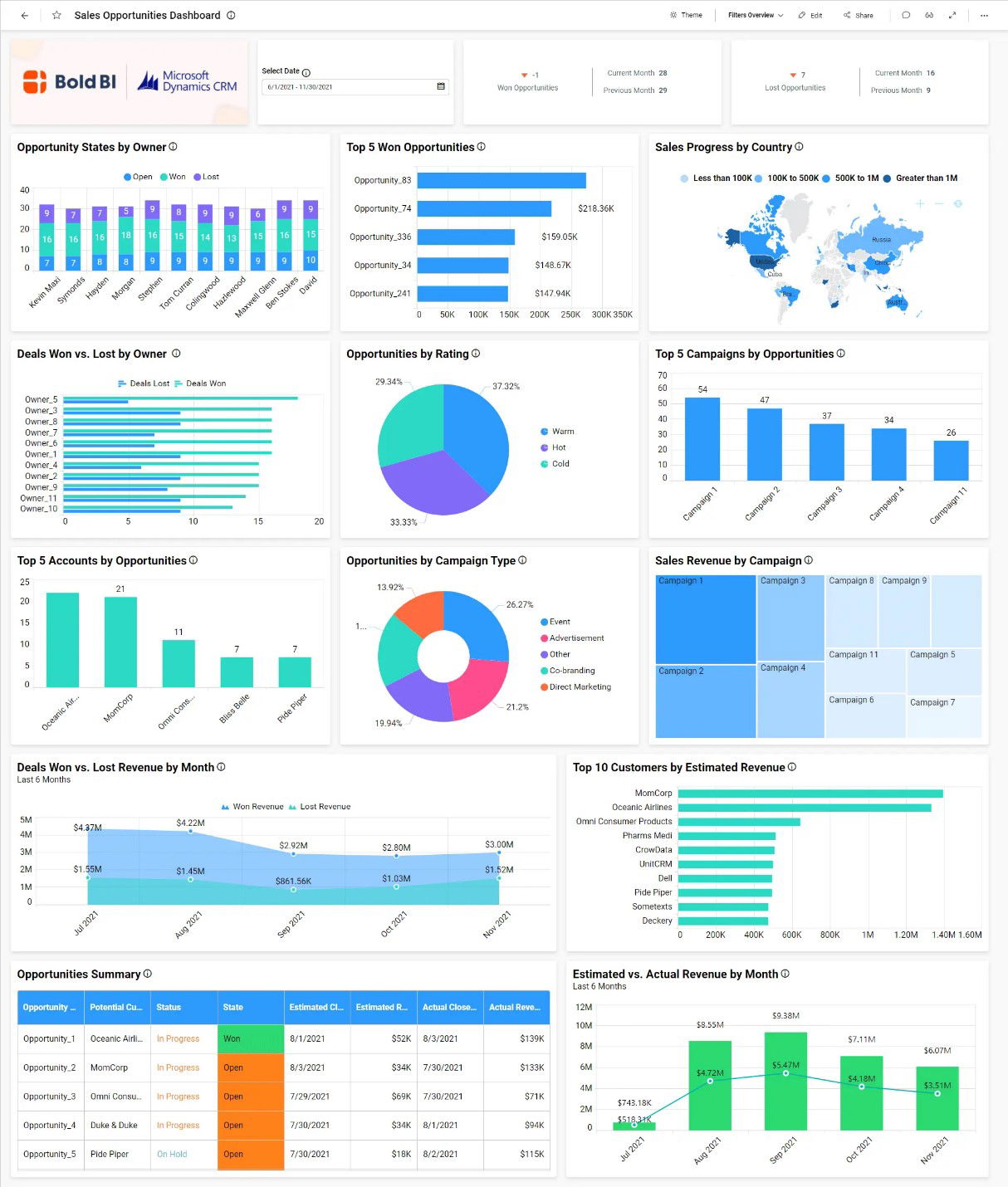
Key features include lead and opportunity management, sales forecasting, embedded Copilot intelligence (suggesting next steps, summarizing meetings, etc.), conversation analytics, and pipeline optimization. Its security and compliance posture is robust as Microsoft invests heavily in global standards, data isolation, role-based access, and encryption across its cloud services.
Pricing
Dynamics 365 Sales is offered in multiple tiers, all billed annually per user: Professional ($65/user/month), Enterprise ($105/user/month), and Premium ($150/user/month). A free trial is available for new users.
What Works And What Doesn’t
| Pros | Cons |
| Fully integrated with Microsoft 365 & Power Platform | High total cost, even for large teams |
| Advanced AI and analytics with Copilot support | Complexity in setup and customization |
| Enterprise-grade customization, extensibility, scalability | Steeper learning curve for non-Microsoft environments |
Our Final Take
Dynamics 365 Sales is ideal for medium to large-sized enterprises invested in the Microsoft ecosystem and seeking a sales CRM that scales across departments. While it may be overkill and costly for small teams, its depth of features, AI support, and integration capabilities make it a top choice for organizations seeking a unified, intelligent sales platform in 2026.
Salesforce Sales Cloud: Best For Enterprise
Salesforce Sales Cloud, a core component of the Salesforce CRM platform, remains the global leader in 2026, backed by a decade of market dominance. In 2025, Salesforce Sales Cloud was named the #1 Product in the G2 Best Software Awards, recognized by IDC as the #1 CRM provider for the 12th consecutive year, and honored with a Partner Innovation Award. It also earned Comparably Awards for top teams and company outlook and was named to Newsweek’s America’s Greatest Workplaces 2025 and to the Best Places to Work for Disability Inclusion.
Why We Chose Sales Cloud In 2026
Sales Cloud is built for scale, offering unmatched flexibility, deep customization, and AI-enabled features. Its mature ecosystem, AppExchange marketplace, and integration capabilities make it ideal for enterprises needing robust CRM and modular extensions.
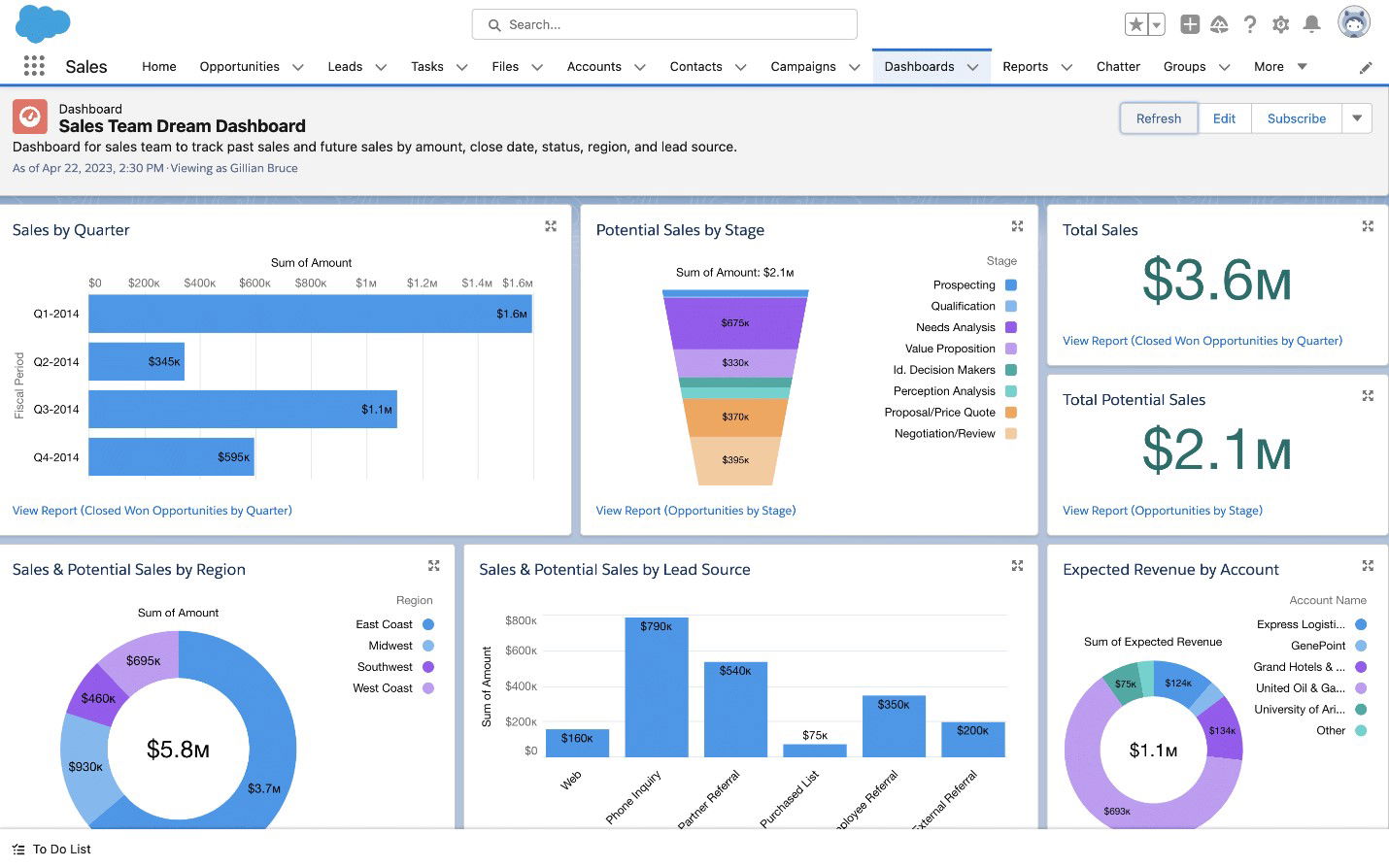
Core features include lead and opportunity management, sales forecasting, AI-driven insights via Einstein, conversation analytics, and workflow automation. Salesforce enforces strong security via SOC, ISO, and GDPR compliance, supports data encryption, and provides fine-grained access control across its platform.
Pricing
Sales Cloud offers five tiers: Starter ($25/user/month) for core CRM tools, Pro ($100) for enhanced sales and service features, Enterprise ($175) with APIs and advanced insights, Unlimited ($350) with predictive AI and automation, and Agentforce 1 Sales ($550) with unified data, full AI suite, and advanced analytics. All plans are billed annually and include free trials.
What Works And What Doesn’t
| Pros | Cons |
| Extremely powerful and extensible via AppExchange | Costly for full feature access |
| Mature platform with a vast partner ecosystem | Steep learning curve and configuration complexity |
| Strong AI tools and analytics | Requires ongoing admin support and expertise |
Our Final Take
Salesforce Sales Cloud is well-suited for medium to large organizations seeking highly configurable, scalable sales management software with rich features and an extensive ecosystem. It may be overkill for small teams with limited resources, but for those needing enterprise-level depth and flexibility, it remains one of the leading sales CRMs heading into 2026.
Topics For More Insights
Monday CRM: Best Customization
Monday CRM, the CRM extension of the monday.com Work OS, is one of the fastest-growing platforms for sales and customer management. As of 2025, monday.com supports over 152,000 customers worldwide. In 2025, it was recognized as a Data Quadrant Champion and Emotional Footprint Champion by SoftwareReviews and made its first appearance in Gartner’s Magic Quadrant for Sales Force Automation.
Why We Chose Monday CRM In 2026
Monday CRM stands out for its flexibility and deep integration within the monday.com ecosystem. Unlike traditional CRMs, it enables teams to connect sales pipelines with operations, project delivery, and client servicing in a single collaborative workspace, ideal for agile or hybrid teams.
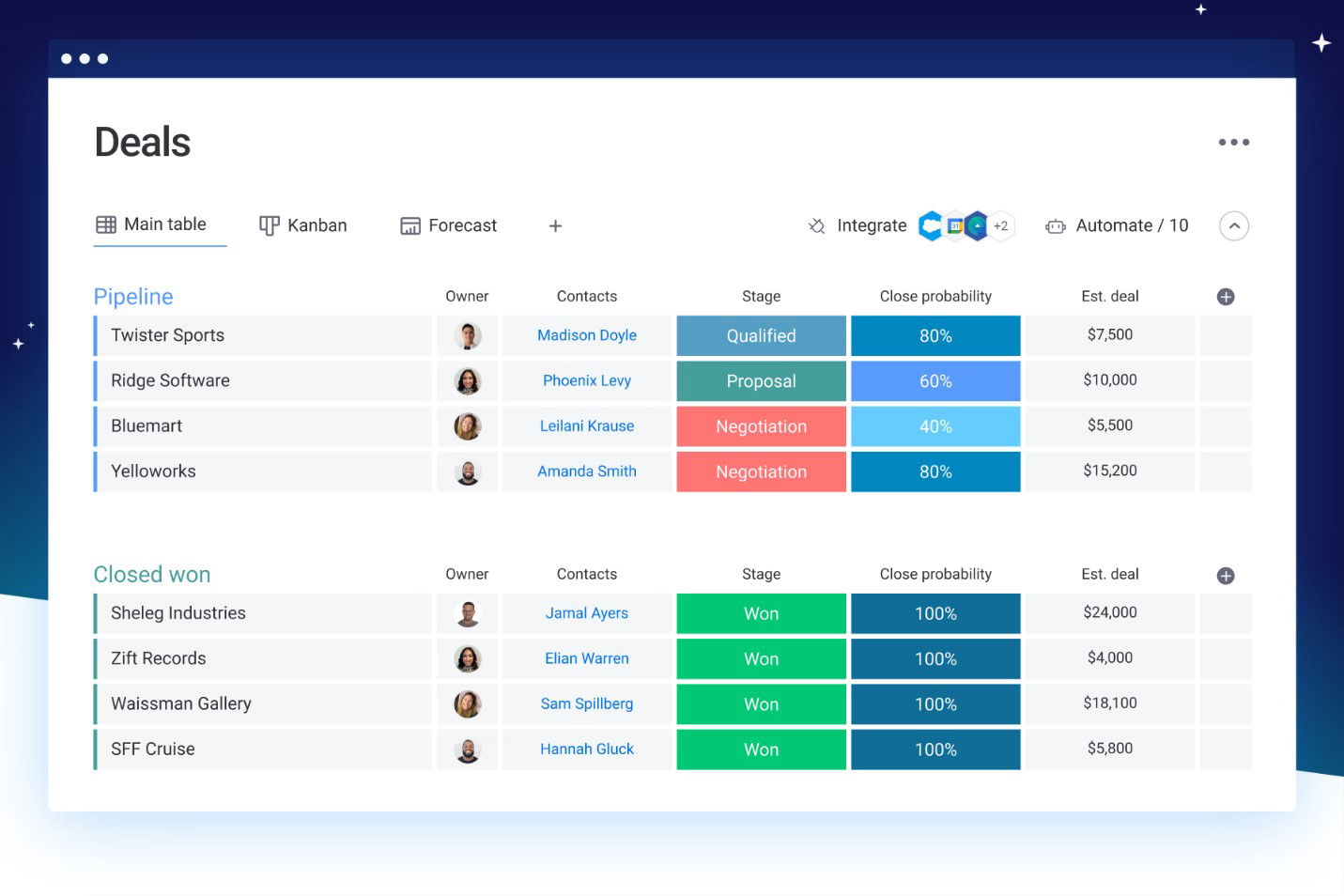
Key features include customizable pipelines, email integration (Gmail/Outlook), AI-powered automations, deal tracking, dashboards, and workflow templates. The system integrates with over 200 tools and supports role-based permissions, encryption, and compliance with ISO/IEC 27001, ISO/IEC 27018, and GDPR for secure data management.
Pricing
Monday CRM offers five tiers billed annually with a three-seat minimum: Free for individuals, Basic ($10/seat) for small teams, Standard ($14/seat) with added automations and integrations, Pro ($24/seat) with forecasting and advanced reporting, and Enterprise (custom) with HIPAA compliance, lead scoring, and enhanced security. All plans include a 14-day free trial.
What Works And What Doesn’t
| Pros | Cons |
| Highly customizable and easy to onboard | Limited advanced analytics and forecasting |
| Integrates seamlessly with monday.com Work OS | Not yet widely recognized among major sales CRMs |
| Affordable entry pricing for SMBs | Fewer native AI insights compared to other tools |
Our Final Take
Monday CRM is ideal for startups and midsize businesses that value simplicity, customization, and collaboration. While it lacks the deep analytics of enterprise CRMs, its flexibility, affordability, and strong user experience make it one of the most promising CRM solutions of 2026.
HubSpot Sales Hub: Best Overall
In 2025, HubSpot Sales Hub was named both a Data Quadrant and Emotional Footprint Champion by SoftwareReviews and recognized as a Leader in Gartner’s 2025 Magic Quadrant for B2B Marketing Automation. HubSpot also received Comparably Awards for Diversity, Women, and Leadership Teams. Its Impact Awards 2025 further honored partners for excellence in AI and customer success.
Why We Chose Sales Hub In 2026
HubSpot Sales Hub is designed for teams that want powerful sales automation, intuitive pipeline management, and seamless alignment across marketing, service, and operations on a unified platform. Its modular architecture lets businesses start small and scale features as they grow.
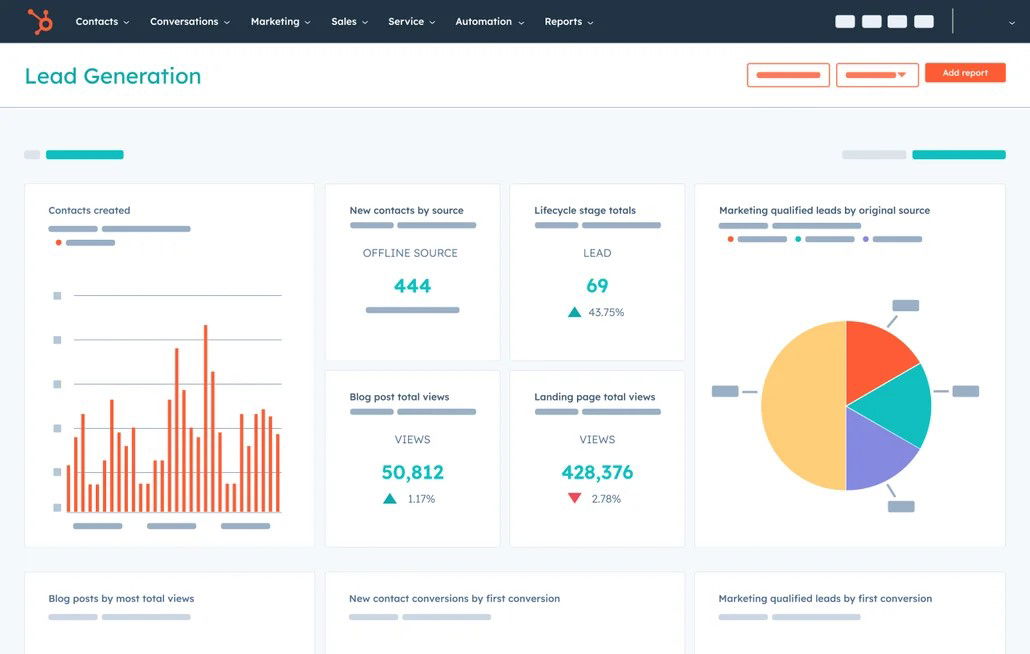
This software offers behavior-based sequences, pipeline automation, custom reporting, predictive scoring (for advanced price tiers), conversation intelligence, deep integration, and email support. It leverages HubSpot’s free CRM foundation for core contact and deal records and adds sales-specific capabilities on top. HubSpot maintains secure operations with encryption, role-based access, and strong compliance standards.
Pricing
HubSpot Sales Hub offers four tiers: Free for CRM essentials, Starter ($20/user/month) with core automation tools, Professional ($100/user/month) with advanced reporting and playbooks, and Enterprise ($150+/user/month) with predictive scoring, custom objects, and advanced permissions. A free trial is available.
What Works And What Doesn’t
| Pros | Cons |
| AI and automation boost forecasting accuracy and cut manual work | Pricing scales quickly with advanced tiers |
| Seamless integration across the HubSpot ecosystem | Limited custom workflow flexibility |
| Strong partner network and global support | Limited analytics tools in the beginning plan |
Our Final Take
HubSpot Sales Hub is a classic example of sales lead management software for businesses that already use (or plan to use) other HubSpot modules and want a unified growth platform. Its balance of usability, modular growth, and strong user sentiment makes it a top choice for scaling sales operations in 2026, although large enterprises should carefully evaluate cost vs. feature needs.
Top 5 Sales Management Software Comparison
P.S.: Always remember to visit the vendor’s site for the latest information!
| Criteria |  |
 |
 |
 |
 |
| Starting Price | $14/user/month | $65/user/month | $25/user/month | $10/user/month | $20/user/month |
| Avg. User Rating | 4.5 | 4.2 | 4.4 | 4.7 | 4.6 |
| Trial Period/Demo | 14-Day free trial | 30-Day free trial | 30-Day free trial | 14-Day free trial | 14-Day free trial |
| Key Features | Pipeline automation, AI reports, and strong security | AI Copilot, forecasting, and Microsoft 365 integration | Einstein AI, automation, and advanced analytics | No-code customization, visual dashboards, and AI automations | AI-powered automation, sales forecasting, and conversation intelligence |
| Integrations | Google, Zapier, Slack, and more | Microsoft 365, Power BI, LinkedIn Sales Navigator, and more | Slack, Tableau, MuleSoft, and more | Google, Outlook, Slack, and more | Outlook, Slack, Zapier, and more |
Conclusion
Choosing the right Sales Management Software in 2026 really comes down to your team’s size, workflow, and goals.
While Pipedrive is perfect for teams that want something straightforward and easy to use, Microsoft Dynamics 365 Sales is built for larger organizations that already rely on Microsoft tools. At the same time, Salesforce Sales Cloud remains the powerhouse for enterprises requiring deep customization and actionable insights, while Monday CRM is ideal for teams seeking flexibility and a visual, no-code setup. However, HubSpot Sales Hub offers the best all-in-one solution for growing businesses looking to unify sales and marketing silos.
At the end of the day, the best sales management system is the one that fits your team's actual workflow. Each of these platforms helps businesses streamline sales, improve collaboration, and close deals faster, making them standout sales management tools to watch in 2026.
Frequently Asked Questions
What Are The Top 5 Sales Management Software Of 2026?
The leading tools in 2026 are Pipedrive, Microsoft Dynamics 365 Sales, Salesforce Sales Cloud, monday CRM, and HubSpot Sales Hub—each offering strengths in usability, integration, AI, scalability, or all-in-one capabilities.
What Are The Features Of Sales Management Software?
Core features include lead and pipeline management, sales forecasting, task automation, email integration, real-time analytics and dashboards, reporting, contact management, and collaboration tools.
How Much Does A Good Sales Management Software Cost?
Sales management software pricing usually ranges from $15 to $40 per user/month for basic plans. Advanced or enterprise-level solutions with automation, forecasting, and integrations can cost $80 to $120+ per user/month, depending on customization and features.
Wed, Dec 17, 2025

Enjoyed what you've read so far? Great news - there's more to explore!
Stay up to date with the latest news, a vast collection of tech articles including introductory guides, product reviews, trends and more, thought-provoking interviews, hottest AI blogs and entertaining tech memes.
Plus, get access to branded insights such as informative white papers, intriguing case studies, in-depth reports, enlightening videos and exciting events and webinars from industry-leading global brands.
Dive into TechDogs' treasure trove today and Know Your World of technology!
Disclaimer - Reference to any specific product, software or entity does not constitute an endorsement or recommendation by TechDogs nor should any data or content published be relied upon. The views expressed by TechDogs' members and guests are their own and their appearance on our site does not imply an endorsement of them or any entity they represent. Views and opinions expressed by TechDogs' Authors are those of the Authors and do not necessarily reflect the view of TechDogs or any of its officials. While we aim to provide valuable and helpful information, some content on TechDogs' site may not have been thoroughly reviewed for every detail or aspect. We encourage users to verify any information independently where necessary.
Loading comments...