
Health Care Technology
Top 5 Hospital Management Software In 2026
Share
TL;DR
Digital transformation is now essential for hospitals to automate complex workflows and significantly enhance the quality of patient care.
-
eHospital Systems by Adroit Infosystems: Provides comprehensive clinical and operational management designed specifically for large-scale enterprise environments.
-
CareCloud: Offers an advanced AI-powered automation layer that effectively reduces administrative burdens and optimizes the revenue cycle.
-
athenaOne: Delivers a unified, cloud-based platform that seamlessly connects clinical data with financial performance and patient engagement.
-
CarePatron: Serves as a highly accessible and affordable all-in-one solution tailored for small clinics and solo practitioners.
-
ModMed: Provides deeply integrated, physician-driven workflows that are customized for specific medical specialties and surgical centers.
Introduction
If you have ever spent a night binge-watching Grey’s Anatomy or House M.D., you know that running a hospital is no joke. The high-stakes drama on screen perfectly captures the constant pressure where every second counts and errors are not an option. In these fictional worlds, doctors often juggle life-saving surgeries with the heavy weight of administrative chaos, yet in reality, no medical professional should have to manually track records while in the operating room. Modern healthcare demands more than just medical expertise; it requires a digital backbone to prevent the kind of systemic meltdowns that make for great television but terrible patient outcomes.
Hospital Management Software (HMS) serves as this essential foundation by automating billing, scheduling, and patient records through AI-powered tools and cloud services. By streamlining these complex workflows, these platforms allow staff to move away from paperwork and focus entirely on clinical excellence. Here are 5 Hospital Management Software solutions that are set to redefine healthcare efficiency in 2026. Read on!
What Is Hospital Management Software?
Hospital Management Software (HMS) is a digital platform that streamlines and automates hospital operations, including patient management, billing, scheduling, and inventory tracking. They help healthcare providers improve efficiency, reduce reliance on paperwork, and enhance the overall patient experience.
On that note, let’s get into the list of the top 5 Hospital Management Software of 2026.
Top 5 Hospital Management Software Of 2025
From patient admissions to complex billing, managing a hospital is no small feat. Every process needs to be seamless. To ensure high-quality healthcare delivery, hospital providers use Hospital Management Software (HMS).
If you’re also looking for one, here are the Top 5 Hospital Management Software of 2026.
 |
 |
 |
 |
 |
eHospital Systems By Adroit Infosystems: Best For Enterprise
Adroit Infosystems created eHospital Systems, a comprehensive hospital management software solution, to streamline clinical, administrative, and operational workflows in healthcare institutions. More than 250 healthcare facilities in over 20 countries on 4 continents have deployed this platform.
Why We Chose eHospital Systems In 2026
The platform helps you manage billing, pharmacy, laboratory (LIS), and inventory. It supports HL7-based lab machine integration, Microsoft BI dashboards, financial accounting integrations, specialty-based documentation templates, multilingual support, and flexible deployment options. This makes it suitable for diverse healthcare environments seeking operational consistency and centralized data management.
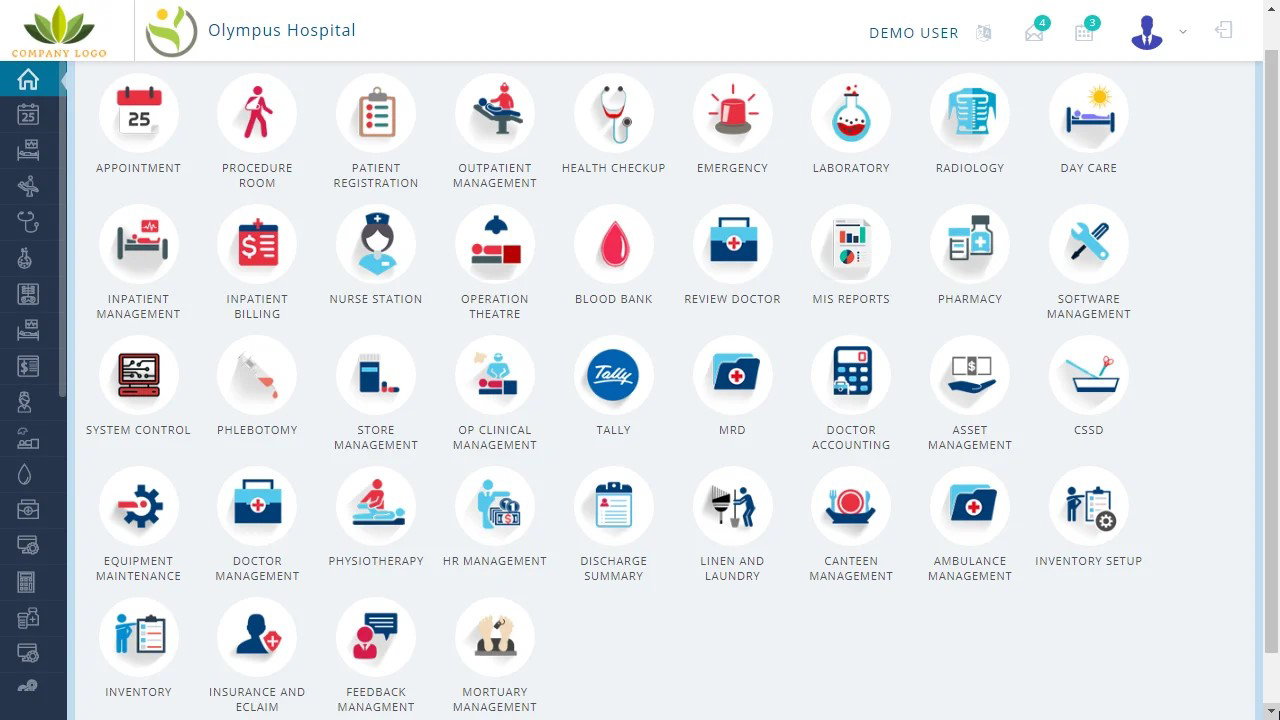
A key aspect of this platform is its deployment flexibility. Hospitals can adopt modules in phases, choosing on-premises or cloud deployment based on regulatory and operational needs. Multi-location support enables centralized oversight across branches, while patient and doctor mobile apps improve accessibility.
Pricing
eHospital Systems offers customized pricing based on hospital requirements. Organizations can request a demo and consultation to receive a tailored quote.
What Works & What Doesn't
| Pros | Cons |
| Easy to use | Lack of customization |
| Smooth setup process | Steep learning curve |
| Responsive customer support | Poor reporting process |
Our Final Take
eHospital Systems is one of the top hospital software solutions for mid- to large-sized hospitals and multi-location healthcare groups. While onboarding and training may take time, organizations that want to improve cross-department visibility will find this suitable.
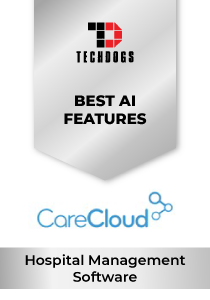
CareCloud: Best AI Features
CareCloud provides a full, cloud-based suite of solutions for expanding medical practices and healthcare organizations. It serves over 40,000 providers in more than 70 medical specialties across all 50 U.S. states. CareCloud helps with clinical, financial, and administrative operations on a single platform.
Why We Chose CareCloud In 2026
CareCloud offers an all-in-one healthcare practice management system that brings together clinical and administrative workflows. Its platform includes EHR, remote patient monitoring, billing and collections, patient eligibility and benefits verification, and claims and denial management. It also sports patient portals for appointment scheduling and self-check-in, telehealth, compliance support, and business intelligence dashboards.
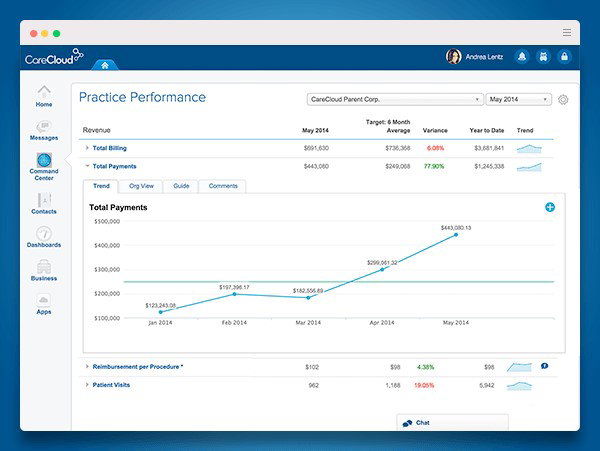
A key highlight is its AI-powered automation layer: CollectiveIQ. It helps scrub claims, flag errors, and prevent denials before submission, reducing administrative workload and improving cash flow. Features such as automated documentation, encounter summaries, robotic process automation, AI-based denial management and clinical chat assistant help reduce administrative burden. They also improve workflow accuracy.
Pricing
While G2 lists CareCloud Complete costs $629/provider/month, the company’s official website doesn’t disclose any pricing details. Similarly, CareCloud Central’s price is listed at $349/provider/month. CareCloud Concierge costs 3-7% of practice collections. However, the official website offers interested customers the option to request a free, tailored demo. This means that costs may vary depending on the capabilities selected.
What Works & What Doesn't
| Pros | Cons |
| Easy to use | Slow response time |
| Strong GenAI solutions | Complicated online process |
| Good customization | On the costlier side |
Our Final Take
CareCloud is best suited for small to mid-sized healthcare practices. It's also helpful for specialty groups seeking a unified cloud-based platform for clinical, billing, and patient engagement workflows. While onboarding may require adjustments, practices aiming to streamline operations and strengthen revenue cycle performance will find CareCloud a scalable, growth-oriented solution.
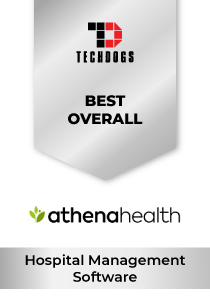
athenaOne By athenahealth: Best Overall
athenahealth was founded in 1997 with a mission to reduce complexity in ambulatory care. Its flagship solution, athenaOne, connects over 170,000 providers serving more than 20% of the U.S. population and processes over 315 million claims annually. The company is known as a prominent provider of cloud-based clinical, financial, and patient engagement solutions designed to help practices operate more efficiently and improve care outcomes.
Why We Chose athenaOne In 2026
athenaOne is a comprehensive healthcare practice management system that combines EHR, revenue cycle management (RCM), and patient engagement into a single AI-powered platform. With its AI-native foundation and well-connected healthcare network, athenahealth helps practices of all sizes provide accessible, sustainable healthcare. Its EHR system simplifies documentation with customizable web, mobile, and voice-driven workflows while providing real-time clinical insights from its large provider network.
On the financial side, its AI-driven billing engine, rules-based claim scrubbing, and expert coding support help reduce denials and accelerate collections. By integrating clinical and financial data into a single system, athenaOne minimizes administrative friction and enhances operational visibility.
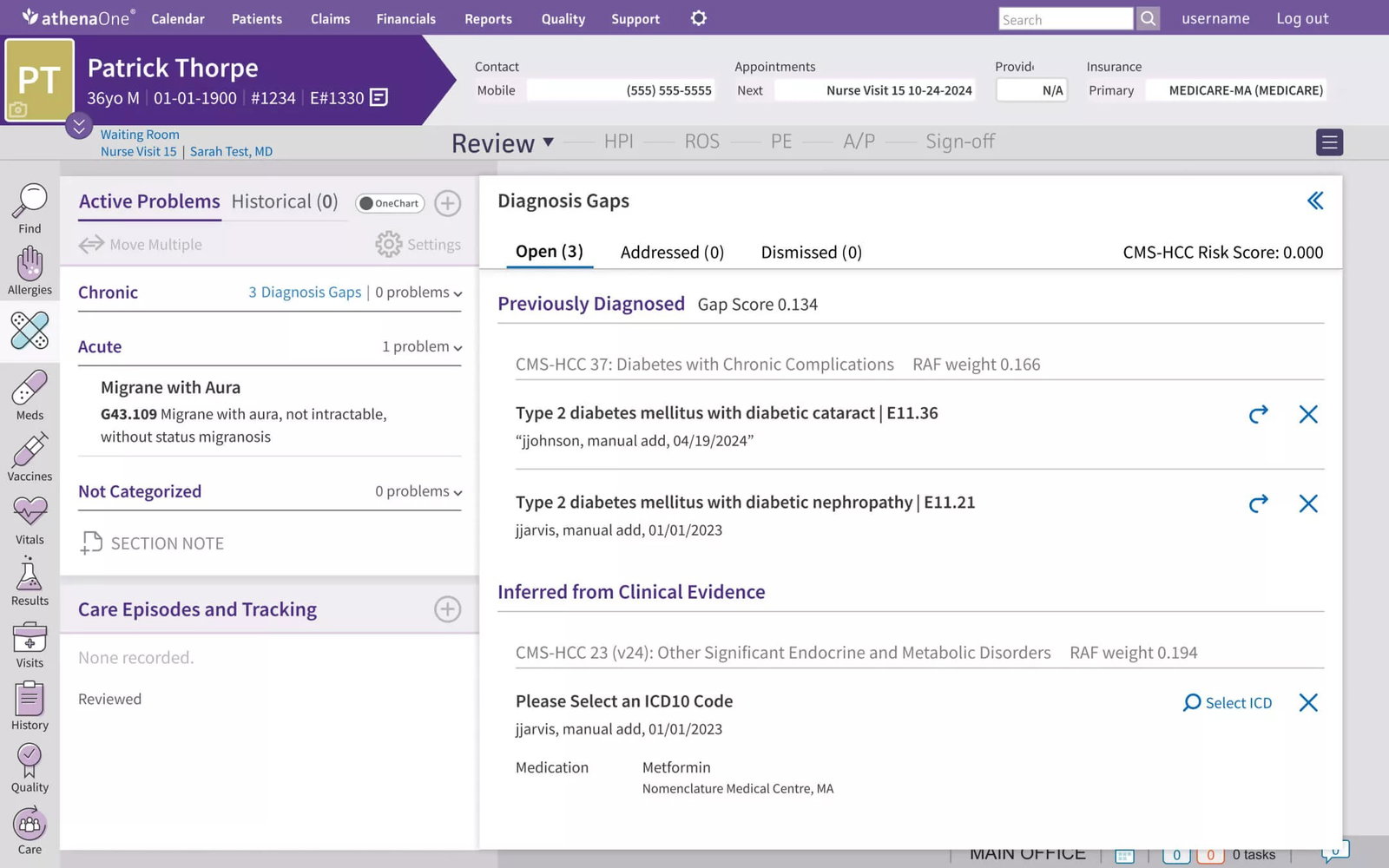
The standout feature is its fully integrated Patient Portal and patient mobile app. These tools allow patients to access health records, schedule appointments, manage payments, communicate securely, and participate in telehealth visits within a single environment. Automated reminders and wellness outreach further support engagement beyond the clinic.
Pricing
“athenaOne’s cost is based on a percentage of collections model, so we only get paid when you do. It’s a model that ensures your success is our primary focus,” is what athenaOne says on its website, based on the belief that its pricing is “aligned with your success.”
What Works & What Doesn't
| Pros | Cons |
| Robust feature set | High learning curve |
| Seamless integrations | Limited customization |
| Outstanding customer service | Difficult navigation |
Our Final Take
athenaOne is a scalable, network-driven hospital management system that fits organizations of any size, from small setups to mid-sized ambulatory practices and specialty groups. It offers a unified, AI-powered platform that connects clinical, billing, and patient engagement workflows, enabling superior patient experience and financial performance.
Topics For More Insights
CarePatron: Best For Small Business
CarePatron launched in 2021 and already serves over 10,000 teams across 50+ countries, supports more than 3 million people, and is trusted by over 100,000 clinicians globally. The company aims to simplify healthcare operations while saving time, and it has reported saving over 10 million hours.
Why We Chose CarePatron In 2026
Designed with collaboration, customization, and modern technology, CarePatron is a highly accessible, all-in-one EHR and practice management experience. The platform offers scheduling, documentation, clinical notes, billing, compliance, insurance billing, payments, telehealth, communications, and a patient portal. All delivered through a single interface.
It includes features such as group telehealth, a shared inbox, white labeling, role-based permissions, and custom AI workflows. This combination of usability, AI assistance, and affordability makes CarePatron especially appealing to modern, fast-growing practices.
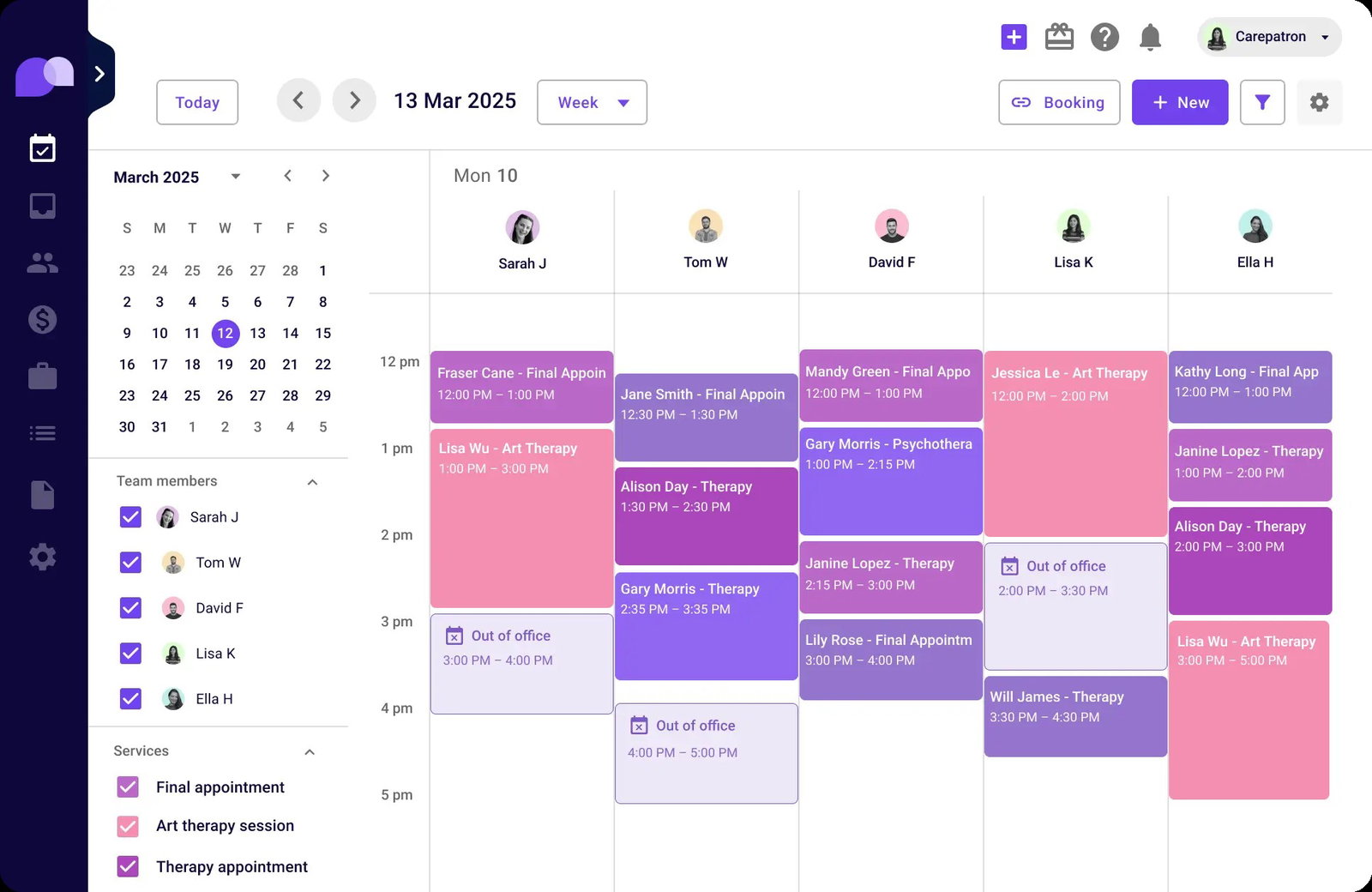
Its standout feature is its power from CarePatronAI. This capability enables instant answers, automated documentation, note generation, and workflow automation, reducing administrative workload. Its collaborative design creates a streamlined experience for patients, providers, and care teams.
Pricing
CarePatron's pricing includes a Free plan ($0/month) with unlimited clients, telehealth, 1GB of storage, client portal access, automated payments, and AI note-taking tools. Paid plans start at $11.50/month (Essential), $15.50/month (Plus), and $19.50/month (Advanced), with yearly billing offering 20% savings. A 30-day free trial is available, and a limited-time discount offers 50% off for 6 months.
What Works & What Doesn't
| Pros | Cons |
| AI transcribing and support | AI transcribing and support |
| Affordable pricing | Affordable pricing |
| Exceptional customer service | Billing issues |
Our Final Take
CarePatron is ideal for solo practitioners, small clinics, and growing healthcare teams seeking an affordable, user-friendly, AI-powered hospital management software. While it may lack some enterprise-level depth, its accessibility, customization, and strong feature set make it a compelling choice for modern practices.
ModMed: Best Customization
ModMed, an acronym for “Modernizing Medicine,” delivers an AI-powered platform that supports the clinical, operational, and financial aspects of medical practices. Built in collaboration with on-staff physicians, this platform was named a “Leader” in G2’s Summer 2025 report. It serves specialties such as dermatology, gastroenterology, OBGYN, orthopedics, ophthalmology, urology, and more.
Why We Chose ModMed In 2026
Unlike generic EHR systems, ModMed develops tailored workflows for each medical specialty and embeds clinical intelligence directly into its EMA EHR platform, which integrates seamlessly with practice management, revenue cycle management, telehealth, inventory, and patient engagement tools. The platform adapts to individual physician preferences, remembers documentation patterns, and automatically suggests exam notes and billing codes.
ModMed’s integrated practice management, revenue cycle management, analytics, telehealth, and patient engagement tools enable it to deliver a unified ecosystem that connects clinical and operational performance in a single platform. Combined with mobile tablet functionality featuring touch and swipe gestures for rapid charting, ModMed enhances both efficiency and accuracy in daily clinical workflows.
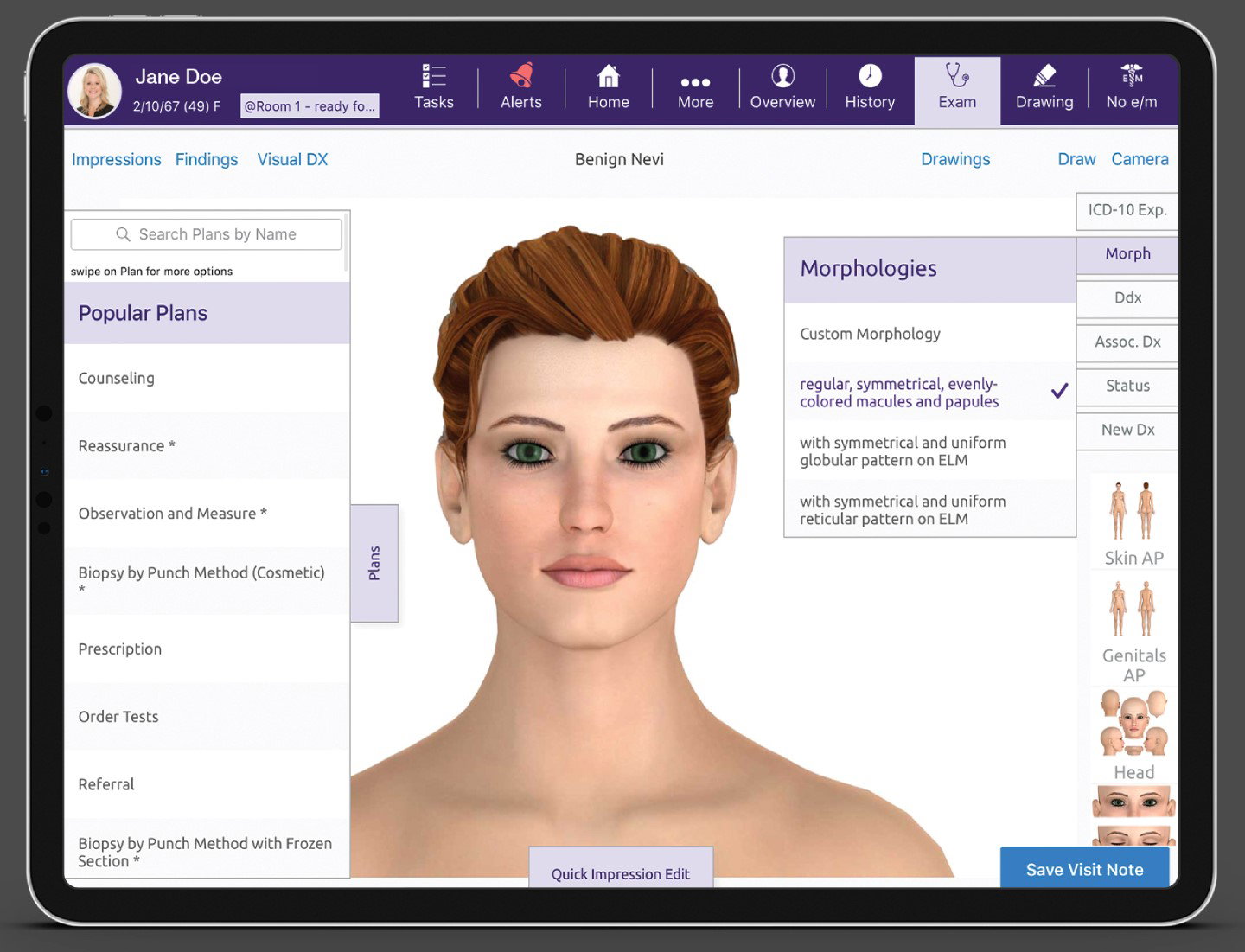
A key highlight is its AI-powered documentation and assistant tools, especially ModMed Scribe 2.0. Designed to listen to patient-provider conversations and generate suggested clinical actions, prescriptions, and documentation, it reduces administrative workload while keeping clinicians in control.
Pricing
ModMed offers custom pricing solutions based on specialty, practice size, selected modules, and service requirements. Interested customers can request a consultation and a personal demo to receive customized pricing aligned with their clinical, operational, and revenue cycle needs.
What Works & What Doesn't
| Pros | Cons |
| Workflow efficiency | Reporting features inadequate |
| Easy setup process | Poor customer support |
| User-friendly interface | Limited or missing features |
Our Final Take
ModMed is best suited for specialty medical practices and surgery centers seeking a deeply integrated, physician-driven platform. While onboarding and pricing may require consideration, practices seeking specialty-specific workflows, AI-assisted documentation, and unified clinical and financial visibility make ModMed a strong, scalable solution.
Top 5 Hospital Management Software Comparison
We know selecting the right tool can feel overwhelming, so we’ve done the heavy lifting for you. Here’s a simple comparison of the Top 5 Hospital Management Software in 2026 to make your decision easier in 2026.
P.S.: Always remember to visit the vendor's site for the latest information!
| Criteria |  |
 |
 |
 |
 |
| Starting Price | Custom | $649 | Custom | Free Version | Custom |
| Avg. User Rating | 4.7 | 3.3 | 3.4 | 4.5 | 4.5 |
| Trial Period/Demo | Demo | Demo | Demo | Live product walkthrough | Demo |
| Key Features | Hospital workflow management, cross-department integration, and flexible cloud or on-prem deployment | AI-powered billing automation, cloud practice management, and patient engagement tools | Unified clinical and billing system, connected provider network, and real-time insights | All-in-one practice system, built-in AI tools, and affordable pricing plans | Specialty-driven workflows, customizable documentation, and an integrated practice suite |
| Integrations | Microsoft BI, QuickBooks, HL7 Lab Machinesm, and more | Business Intelligence, payment processing, data exchange, and more | Radiology Information Systems, Suki AI, Talkie.ai, and more | Zoom, Google Calendar, Stripe, and more | Medsender, DataMatrix Medical, and more |
Conclusion
It's not enough to just care for patients; running a hospital also requires effective teamwork, making real-time decisions, and operating as efficiently as possible. By streamlining workflows, lowering administrative costs, and improving patient experiences, the right Hospital Management Software (HMS) can completely change how you operate!
Before making a choice, consider your facility's unique needs, budget, and integration requirements to find the best fit. An HMS that works well is what makes modern healthcare work!
P.S. For the latest features and pricing, always visit the vendor’s website!
Frequently Asked Questions
What Are The Best Hospital Management Software Solutions In 2026?
The top hospital management software solutions in 2026 include eHospital Systems by Adroit Infosystems, CareCloud, athenaOne by athenahealth, CarePatron and ModMed. Each platform caters to different healthcare needs, from large multi-location hospitals to solo practitioners and specialty clinics. While eHospital Systems focuses on comprehensive hospital workflows, CareCloud and athenaOne emphasize cloud-based, AI-powered practice management. CarePatron offers affordability and accessibility for smaller teams, whereas ModMed delivers specialty-specific clinical workflows with integrated AI tools.
How Do I Choose The Right Hospital Management Software For My Hospital?
Choosing the right hospital management software depends on your organization’s size, specialty, budget and operational complexity. Hospitals should evaluate whether they need full-scale inpatient and outpatient management, advanced revenue-cycle tools, AI-powered automation, or specialty-specific workflows. It is also important to consider deployment options (cloud or on-premises), integration capabilities, compliance requirements, and long-term scalability. Requesting demos and understanding pricing models can help decision-makers align the software with both clinical and financial goals.
What Features Should Hospital Management Software Include In 2026?
In 2026, hospital management software should include integrated electronic health records, billing and revenue cycle management, appointment scheduling, inventory tracking and patient portals. Advanced systems also offer AI-driven automation for documentation, claims processing and workflow optimization. Telehealth capabilities, mobile accessibility, compliance support and analytics dashboards are becoming essential for improving operational efficiency and patient engagement. A unified platform that connects clinical and financial data is increasingly important for delivering better care outcomes and sustainable hospital performance.
Wed, Feb 25, 2026

Enjoyed what you read? Great news – there’s a lot more to explore!
Dive into our content repository of the latest tech news, a diverse range of articles spanning introductory guides, product reviews, trends and more, along with engaging interviews, up-to-date AI blogs and hilarious tech memes!
Also explore our collection of branded insights via informative white papers, enlightening case studies, in-depth reports, educational videos and exciting events and webinars from leading global brands.
Head to the TechDogs homepage to Know Your World of technology today!
Disclaimer - Reference to any specific product, software or entity does not constitute an endorsement or recommendation by TechDogs nor should any data or content published be relied upon. The views expressed by TechDogs' members and guests are their own and their appearance on our site does not imply an endorsement of them or any entity they represent. Views and opinions expressed by TechDogs' Authors are those of the Authors and do not necessarily reflect the view of TechDogs or any of its officials. While we aim to provide valuable and helpful information, some content on TechDogs' site may not have been thoroughly reviewed for every detail or aspect. We encourage users to verify any information independently where necessary.
Loading comments...