
Health Care Technology
Top 5 Electronic Medical Record Systems In 2026
Share
TL;DR
Efficient EMR systems are essential for modern healthcare providers to streamline workflows and improve patient care coordination in 2026.
-
Epic: Stands out for its extensive interoperability and comprehensive patient portal features.
-
Oracle Cerner: Provides powerful data analytics and scalable solutions for large hospital networks.
-
eClinicalWorks: Offers a versatile cloud-based platform that simplifies clinical documentation and billing.
-
Athenahealth: Uses a unique cloud model to automate administrative tasks and enhance revenue cycles.
-
NextGen Healthcare: Focuses on specialized clinical workflows and robust tools for ambulatory care.
Introduction
What Is Electronic Medical Record (EMR) System?
Electronic Medical Record (EMR) Systems are digital platforms that store, manage, and track patient health information in a structured and secure manner. These healthcare systems replace traditional paper records, allowing healthcare providers to access real-time patient data, streamline administrative tasks, and enhance clinical decision-making.
These systems help centralize medical histories, prescriptions, lab findings, and treatment plans, allowing healthcare professionals to work more efficiently. EMR solutions play an important role in updating patient care by providing features such as AI-driven diagnostics, automatic medication interaction alerts, and interoperability across healthcare networks.
However, choosing the right EMR System is no easy task. With so many emerging options available on the market, each offering different features, integrations, and pricing models, how do you know which one is the best fit?
We're bringing you an up-to-date list of the Top 5 Electronic Medical Record Systems of 2026 to help you set new standards for patient care, speed, and interoperability.
Top 5 Electronic Medical Record (EMR) Systems Of 2026
Whether for small clinics or large hospital networks, Electronic Medical Record Systems are indispensable for improving efficiency, reducing errors, and delivering personalized healthcare experiences. With that in mind, let's explore the Top 5 Electronic Medical Record (EMR) Systems of 2026!
 |
 |
 |
 |
 |
Epic Systems: Best Overall
Epic Systems is still one of the best Electronic Medical Record providers. They provide healthcare businesses worldwide with scalable solutions that integrate with other systems. As we move into 2026, Epic's main goal is to make it easier for patients to access and share data, and to add more AI-powered features to its platform. Healthcare providers are increasingly adopting Epic to improve clinical workflows, support value-based care and enhance patient engagement.
Why We Chose Epic Systems in 2026?
Epic's strongest advantage is its end-to-end platform depth, plus the network effect of its customer base. It is built for complex workflows across specialties and care settings, and it is a safe pick when health systems want fewer integration gaps across departments. MyChart is a major differentiator for patient access and engagement at scale, with Epic citing 305M+ patient charts.
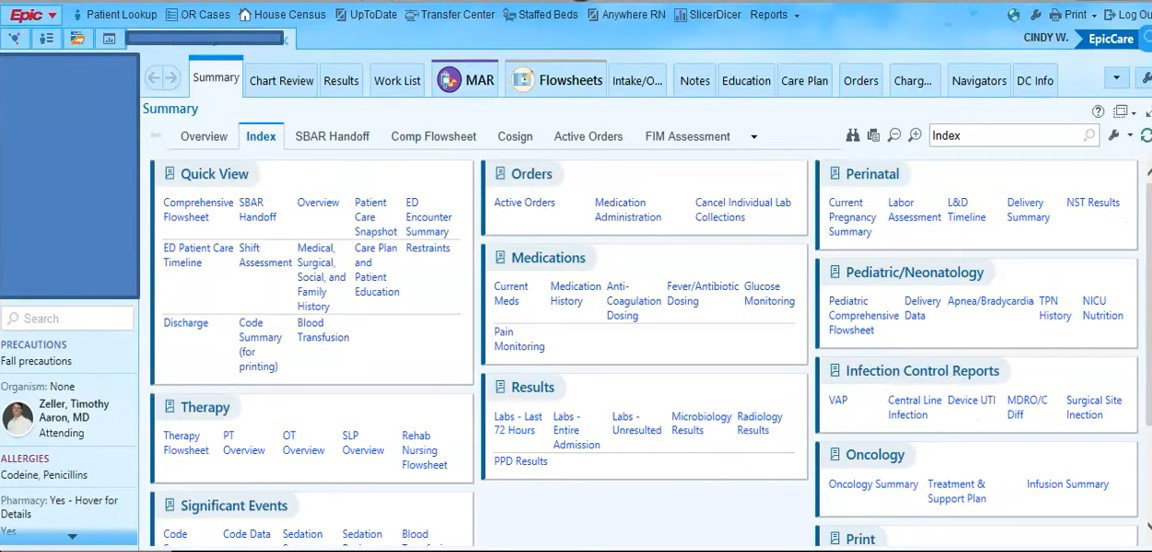
In 2026, Epic's practical value is evident in standardization and operational control: fewer "patchwork" apps, tighter clinical workflows, and robust patient engagement systems. Epic Research has published findings linking portal use to fewer no-shows, which reflect why portal adoption is now viewed as operational leverage.
Pricing
Epic does not publish standard public pricing tiers; pricing is available upon request and is typically tailored to the organization's size, required modules, and implementation scope. Epic pricing is typically quote-based and depends on organization size, modules, hosting model, and implementation scope.
What Works And What Doesn't
| Pros | Cons |
| Strong enterprise workflow coverage across specialties | Heavy implementations lift and change management |
| Mature interoperability ecosystem for large networks | Demands high-value training |
| Deep patient engagement via MyChart | Lack of transparency in pricing and subscriptions |
Our Final Take
Best suited for large hospitals and health systems that want a unified platform with strong patient engagement and deep clinical workflows. It may not be ideal for smaller practices due to implementation complexity and cost structure. Great choice if standardization is the priority.
Elation Health: Best User Experience (UX)
Elation Health is a new entrant on our 2026 list, bringing a clinical-first EHR purpose-built for primary care teams. While over 46,000 clinical users trust the company, it has been taking care of more than 24 million patients. It acquired Lightning MD in 2023 to strengthen billing and payer connectivity capabilities. Elation earned Best in KLAS 2025 recognition across small practice ambulatory EHR/PM and EHR-centric virtual care platforms.
Why We Chose Elation Health in 2026?
For primary care, Elation Health stands out for its clinical flow approach rather than administrative menus. Unified workflows minimize clicks and scrolling, and its three-panel console brings charting, history, and actions into one place. It also competes with more generic EHRs, which are more burdensome for day-to-day primary care, thanks to its purpose-built AI technologies and seamless integration approach.
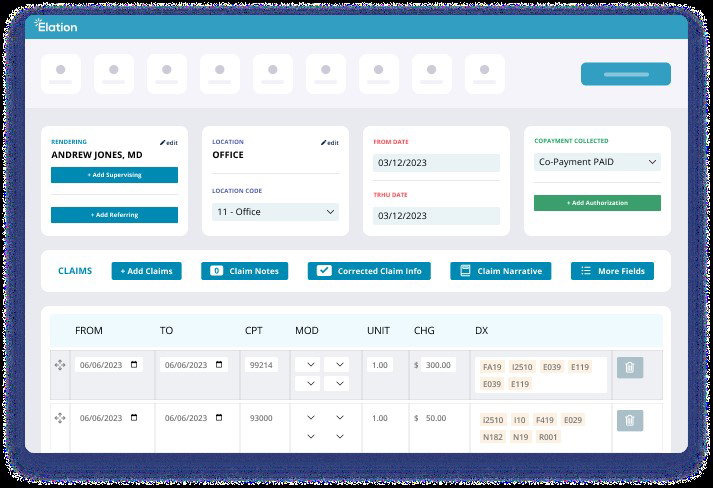
Elation supports modern care delivery without forcing a separate telehealth tool. It offers integrated video visits powered by Zoom, helping teams schedule and launch virtual visits directly from the calendar. Elation also positions its platform with integrated billing and AI-powered tools to reduce daily documentation time, which matters for lean practices.
Pricing
Elation Health's pricing is not fully published as standardized tiers on its website. Most buyers receive pricing through a quote or guided demo process based on practice size, required modules, and implementation needs. Some sources list $349/month as a starting point, but the final cost can vary depending on configuration, add-ons, and support requirements.
What Works And What Doesn't
| Pros | Cons |
| Single-page workflow | Hard to reach support |
| Highly customizable setup | Gaps in online booking |
| Smooth guided onboarding | Not ideal for complex, multi-specialty hospital workflows |
Our Final Take
Best suited for primary care and direct primary care practices looking for a clinical-first, cloud EHR that keeps documentation fast and workflows simple. It may not be ideal for teams that require extensive enterprise customization or in-house specialty modules. However, it is a great choice if you want a modern primary care EHR with built-in virtual visits.
Oracle Health: Best For Security
Oracle Health is a major EMR provider for acute care and multi-facility health systems. Following Oracle's 2022 acquisition of Cerner, the platform has accelerated its cloud modernization efforts. Oracle Health remains widely used across U.S. hospitals.
Why We Chose Oracle Health in 2026?
Oracle Health stands out when organizations seek enterprise-grade data infrastructure, advanced analytics, and broad clinical coverage across settings. It has also received third-party positioning signals, such as IDC MarketScape recognition in U.S. EHR vendor assessments, which keep it in serious consideration for large deployments.
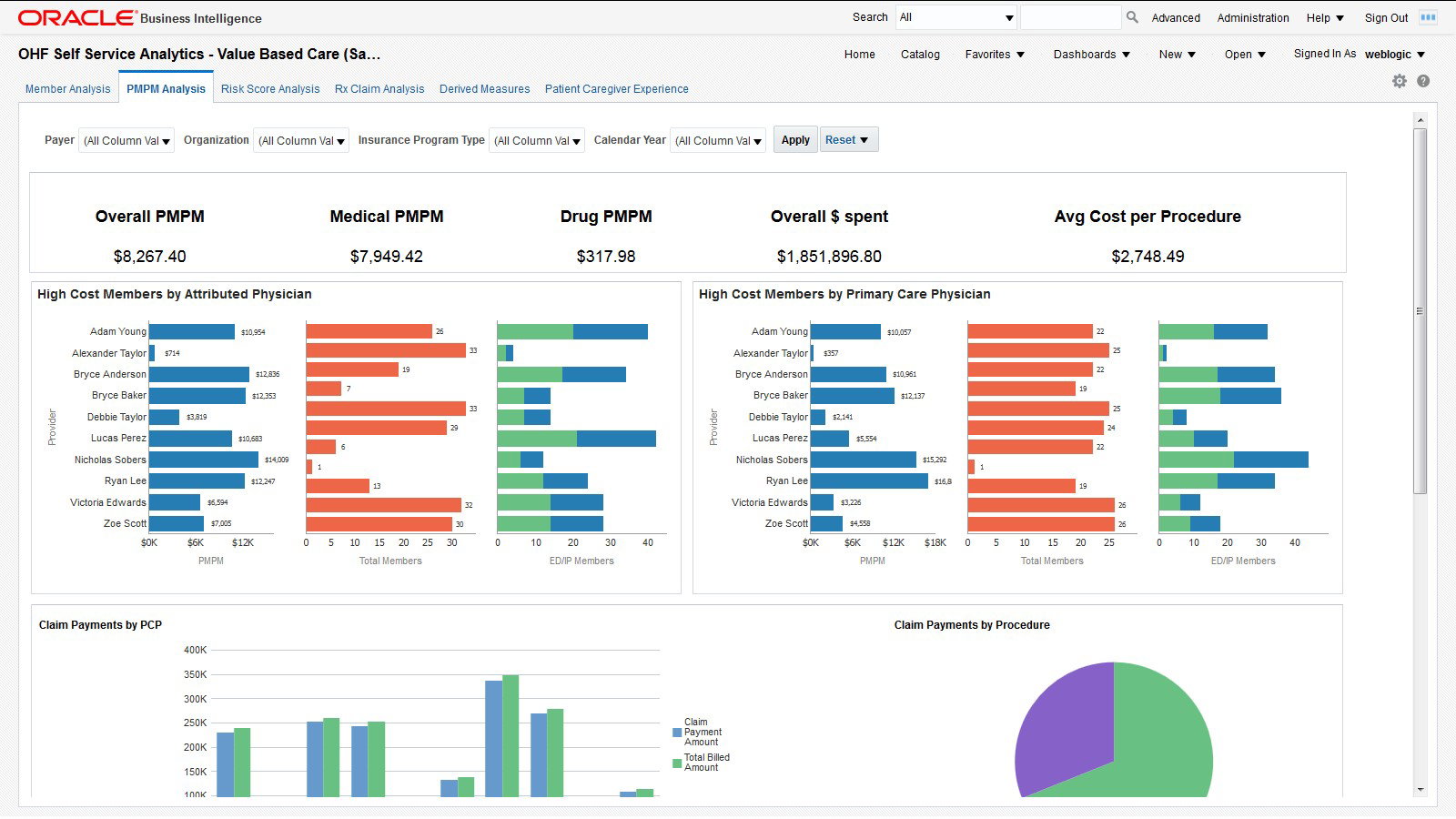
In 2026, the practical value is strongest for organizations that treat EMR modernization as a long-term data platform play. At the same time, security expectations are non-negotiable: Reuters reported an Oracle-related incident involving older Cerner servers, reinforcing why buyers now scrutinize hosting architecture and migration roadmaps during selection.
Pricing
Oracle Health pricing is generally quote-based. Costs vary by deployment size, modules, hosting, the scope of the implementation partner, and ongoing support requirements.
What Works And What Doesn't
| Pros | Cons |
| Clear labeled sections | Laggy user experience |
| Saves time through PowerPlans | Repetitive charting steps |
| Flexible customization options | Usability challenges in some workflows |
Our Final Take
Best suited for health systems seeking a large-scale platform with broad clinical coverage and a long-term modernization runway. However, it may not be ideal for teams that need a lightweight rollout.
Topics For More Insights
Carepatron: Best Value
Carepatron joins our 2026 list as a fast-growing, clinician-built practice management platform with built-in EHR, scheduling, telehealth, and an AI scribe. Over 100,000 clinicians across 120-plus countries trust the company, and G2 reports a 4.6 average rating based on 469 verified reviews. Recent funding coverage still describes Carepatron as an independent startup, with no acquisition announced. On G2, it earned Winter 2026 badges, including Results Leader for EHR and Telemedicine.
Why We Chose Carepatron In 2026?
Carepatron stands out as an all-in-one cloud platform that brings together everyday essentials: health records, online booking, tasks, notes, chat, video, and AI in a single workflow. It consolidates scheduling, billing, telehealth, and documentation, with an AI scribe layer that accelerates notetaking.
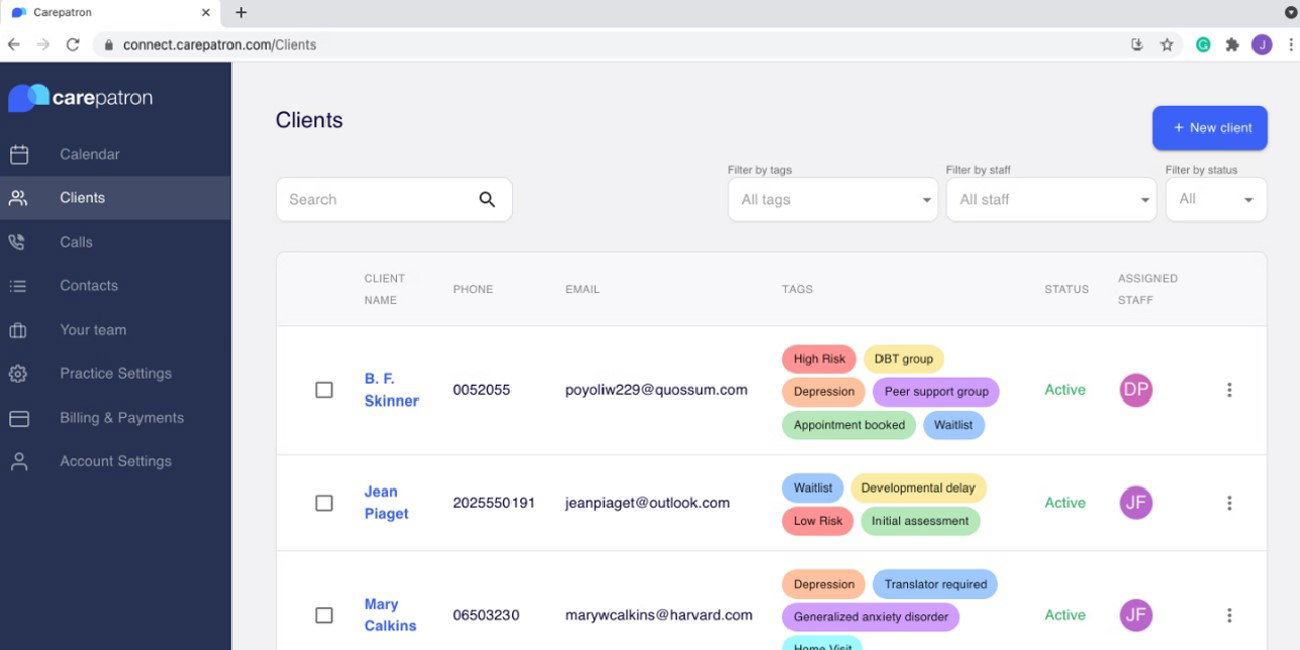
For the practical 2026 value, Carepatron combines automation and support with an accessible entry point. Its official pricing includes a free plan and paid tiers, which help teams start small and scale. Its support quality score is 9.1, and users report smoother day-to-day support when issues arise.
Pricing
Carepatron offers transparent pricing with a free plan and paid tiers. Its entry-level paid plan starts at $15/user/month, with higher plans available for teams that need more advanced features, storage, and workflow capabilities.
What Works And What Doesn't
| Pros | Cons |
| Easy to use | Limited feature depth |
| Affordable for clinics | Limited customization options |
| Helpful customer support | Billing payment limitations |
Our Final Take
Best suited for solo providers and small clinics looking for an all-in-one practice platform with scheduling, notes, and telehealth in one place. However, it may not be a good fit for larger enterprises that require customization.
ModMed: Best Customization
ModMed remains on our 2026 list, maintaining its position as a specialty-first EHR and practice platform built for high-volume clinical workflows. Around 40,000 plus providers nationwide use ModMed. ModMed was not acquired by another health tech vendor, but Clearlake completed a majority investment in 2025. For recent credibility, it was recognized in G2's 2025 Best Software Awards and ranked number one across its specialty EHRs in the 2025 Black Book survey.
Why We Chose ModMed In 2026
ModMed stands out because it is built for specialty practices, not generic workflows. It combines specialty-specific EHR and practice management with patient experience tools, analytics, and an app marketplace, along with a Certified FHIR API for integrations. ModMed is also pushing AI inside core workflows with ModMed Scribe 2.0, designed to reduce documentation friction.
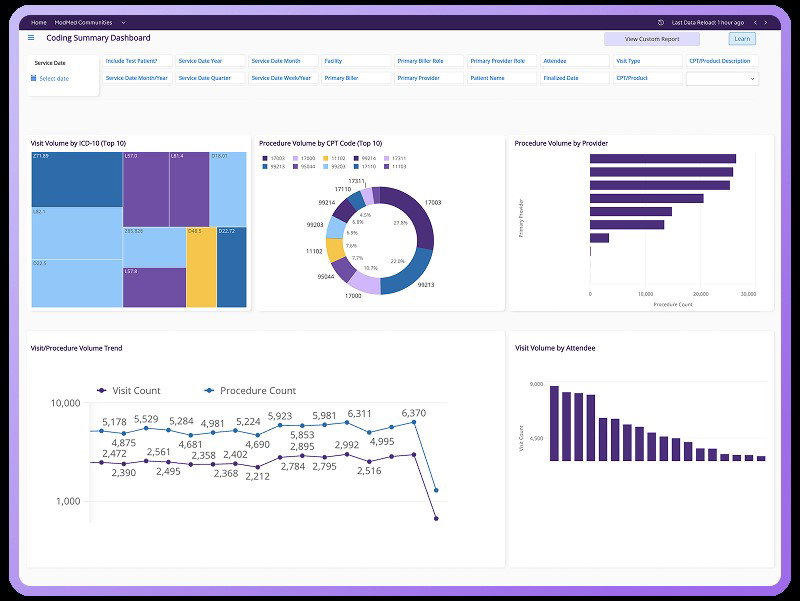
ModMed focuses on automation within EHR, practice management, RCM, and patient engagement, rather than as a separate add-on. ModMed. The company reports that more than 40,000 providers use ModMed and highlights 700 practices that have used its EHR for 10+ years, underscoring its long-term reliability.
Pricing
ModMed pricing is quote-based and not publicly listed. Capterra notes pricing details are not provided, and a free demo is available; there is no free plan.
What Works And What Doesn't
| Pros | Cons |
| Easy daily navigation | Reporting feels limited |
| Fast patient scheduling | Support response delays |
| Efficient documentation workflows | Portal scheduling cumbersome |
Our Final Take
ModMed is best suited for specialty practices that prioritize customization and automation in their clinical workflows. It offers a streamlined, efficient platform designed to meet the unique needs of high-volume practices, making it a top choice for those seeking an integrated, AI-enhanced EMR solution.
Top 5 EMR Systems Comparison
The table below provides a quick side-by-side view of pricing approach, user ratings, trial or demo availability, core strengths, and integration flexibility, so you can shortlist faster and move into demos with clearer priorities.
| Criteria |  |
 |
 |
 |
 |
| Starting Price | NA | $349/month | NA | $15/user/month | NA |
| Avg. User Rating | 4.2 | 4.5 | 4.8 | 4.6 | 4.5 |
| Free Trial/Demo | Free Demo | Free Demo | Free Demo | 30-day Free Trial | Free Demo |
| Key Features | Inpatient workflows, Scheduling, and Clinical documentation | Primary care EHR, Patient engagement, and Billing options | Ambulatory suite, Enterprise security, and Clinical workflows | Scheduling, Telehealth, Notes and tasks |
Specialty EHR, Practice management, and Patient engagement |
| Integrations | Epic App Orchard apps, Imaging systems, Billing platforms, and more | Zoom, HL7, FHIR APIs, and more | Enterprise interfaces, Ecosystem partners, and more | Google tools, accounting software, and more | Imaging systems, Billing platforms, Specialty modules, and more |
Conclusion
In 2026, choosing an EMR is less about feature checklists and more about operational fit. Prioritize documentation speed, interoperability, patient engagement, and security, then validate them in a real workflow demo, not a sales walkthrough.
Look beyond software costs and confirm the full rollout impact, including implementation, training, integrations, data migration, and ongoing support. Use third-party signals, such as KLAS and verified review platforms, to verify vendor claims, but always speak with references from organizations similar to yours.
The right EMR should reduce administrative load, support modern care delivery, and scale without creating new friction for clinicians and staff.
Frequently Asked Questions
Which Are The Top 5 Electronic Medical Record Systems Of 2026?
The top 5 EMR systems of 2026 are Epic Systems, Elation Health, Carepatron, Oracle Health, and ModMed, offering options that cover enterprise hospitals, primary care clinics, specialty practices, and all-in-one setups.
What Features Should I Look For In An EMR System?
Key EMR features to look for include clinical documentation and charting, interoperability and data sharing, scheduling and patient engagement, e-prescribing, billing or revenue cycle support, reporting and analytics, role-based access, and security and compliance controls.
How Do I Choose The Right EMR System?
Consider your care setting, specialty needs, team size, integration requirements, and implementation capacity. Choose an EMR that matches your daily workflow, supports secure data exchange, fits your budget model, and can scale as your organization grows.
Fri, Jan 30, 2026

Liked what you read? That’s only the tip of the tech iceberg!
Explore our vast collection of tech articles including introductory guides, product reviews, trends and more, stay up to date with the latest news, relish thought-provoking interviews and the hottest AI blogs, and tickle your funny bone with hilarious tech memes!
Plus, get access to branded insights from industry-leading global brands through informative white papers, engaging case studies, in-depth reports, enlightening videos and exciting events and webinars.
Dive into TechDogs' treasure trove today and Know Your World of technology like never before!
Disclaimer - Reference to any specific product, software or entity does not constitute an endorsement or recommendation by TechDogs nor should any data or content published be relied upon. The views expressed by TechDogs' members and guests are their own and their appearance on our site does not imply an endorsement of them or any entity they represent. Views and opinions expressed by TechDogs' Authors are those of the Authors and do not necessarily reflect the view of TechDogs or any of its officials. While we aim to provide valuable and helpful information, some content on TechDogs' site may not have been thoroughly reviewed for every detail or aspect. We encourage users to verify any information independently where necessary.
Loading comments...