

IT Security
Top 5 Fraud Detection Software In 2026
Share
TL;DR
-
Trustpair: Provides automated vendor payment security and global bank account validation across 190 countries.
-
Sift: Utilizes a massive global data network and AI-powered automation to scale fraud prevention for digital businesses.
-
SEON: Specializes in real-time digital footprint analysis and flexible risk scoring to stop account abuse and identity fraud.
-
Signifyd: Offers a 100 percent financial guarantee against fraud chargebacks by using AI to automate order decisions.
-
Fingerprint: Delivers high-accuracy device intelligence and persistent visitor identification to detect bots and suspicious returning users.
Introduction
Medical dramas often feature patients who seem perfectly fine until a sudden, rare diagnosis changes everything in an instant. Shows like House or Grey's Anatomy rely on this high-stakes tension where a brilliant doctor identifies a microscopic anomaly before it leads to a catastrophe. This constant vigilance is exactly how modern businesses must approach their digital health. Just as Dr. House reads between the lines to catch a one in a million parasite, companies need specialized eyes to spot the slight irregularities that signal a breach. In the high speed world of digital commerce, waiting for a symptom to become obvious is usually a recipe for disaster.
Fraud has evolved significantly since the first recorded maritime scam in 300 B.C., growing into a sophisticated web of identity theft and ransomware. Today, businesses require a digital crew capable of automating the hunt for suspicious patterns and real-time anomalies. By leveraging machine learning and data analytics, these tools flag high-risk activities to prevent damage before it occurs. This proactive layer of security is now essential for maintaining both regulatory compliance and operational efficiency. Explore the Top 5 Fraud Detection Software Of 2026 to keep your organization secure.
What Is Fraud Detection Software?
Let’s back it up and take it from the top. Fraud Detection Software identifies and prevents fraudulent activities by analyzing real-time patterns, anomalies, and suspicious behaviors. It uses machine learning (ML), rule-based algorithms, and data analytics to detect irregular transactions, account takeovers, and identity fraud.
The software flags high-risk activities, allowing you to investigate before real damage occurs. By automating fraud detection, businesses can act quickly, reducing manual effort while maintaining security and operational efficiency.
Top 5 Fraud Detection Software Of 2026
It’s hard to find a crew that's always looking out for you, tells you when you have spinach in your teeth, and identifies the digital red flags for you. If you find them, love them, and never let go - but when it comes to data safety, always trust technology. So, let’s kick off this party!
Here are the Top 5 Fraud Detection Software of 2026!
 |
 |
 |
 |
 |
Trustpair: Best Overall
Founded in 2017 by Baptiste Collot, Alexandre Gillier, and Simon Elcham, Trustpair was created to help businesses navigate the digital landscape securely through stronger fraud detection and prevention technologies. Today, the company operates with a team of 100+ professionals across offices in New York, Paris, Milan, and London. It serves over 500 customers, including big names such as Disney, Hershey’s, Uber Freight, Google, Roku, Danone, Ocean Spray, and more.
Why We Chose Trustpair In 2026
Trustpair offers a top fraud detection tool that helps secure vendor payments and prevent fraudulent transactions. It stands out for its ability to prevent vendor payment fraud through real-time bank account ownership verification and automated vendor validation workflows. The platform validates vendor bank accounts across 190+ countries, enabling finance and procurement teams to detect fraudulent changes in vendor payment details before transactions are processed.
Furthermore, deep integrations into ERP, procurement, and treasury systems enable Trustpair to automate fraud detection across the payment chain while ensuring compliance with regulatory frameworks such as NACHA, Anti-Money Laundering (AML), and international payment security standards.
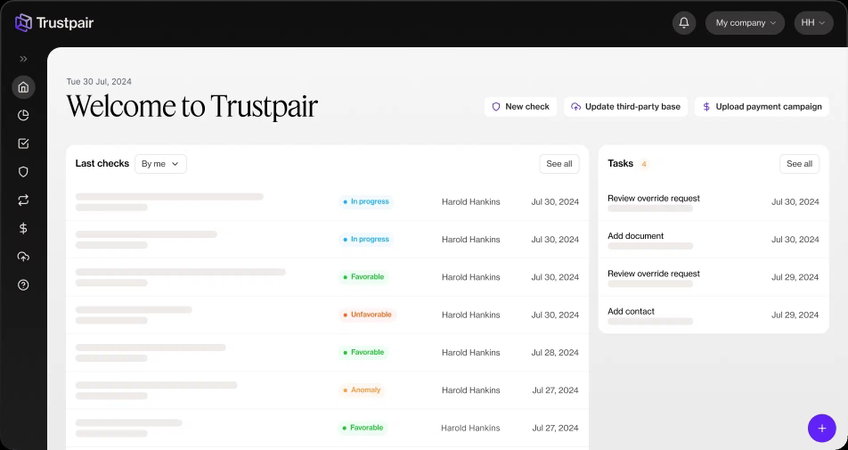
A major advantage that Trustpair possesses is its continuous monitoring of vendor master data and payment workflows. The platform analyzes vendor information from onboarding through payment execution to identify suspicious activity or inconsistencies. By replacing manual checks such as callbacks, emails, and spreadsheet reviews, Trustpair significantly reduces human error while improving payment security across the procure-to-pay lifecycle.
Pricing
Trustpair offers customized enterprise pricing based on factors such as the number of vendor evaluations, payment volume, and integration requirements. Businesses can choose between platform access to core fraud prevention features or tailored packages with additional services and dedicated support. The plans include capabilities such as global bank account validation across 190 countries, fraud detection dashboards, and system integrations to support secure vendor payments at scale.
What Works & What Doesn't
| Pros | Cons |
| Exceptional customer support | False alarms |
| Easy to use and efficient | Integration issues |
| Good automation | Inadequate reporting |
Our Final Take
Trustpair is best suited for large enterprises with complex global supply chains that need strong protection against vendor payment fraud. By automating vendor verification and monitoring payment data across the entire procure-to-pay lifecycle, Trustpair helps organizations reduce fraud risk while improving operational efficiency and compliance.
Sift: Best AI Features
Sift is an AI fraud detection software that enables more than 700 companies to detect and stop fraud effectively through fraud detection solutions, including ML and device fingerprinting. Sift was named as a Leader in G2’s Winter 2026 report, along with other titles including Top 50 Security Products, Best Usability, and Best Results.
Why We Chose Sift In 2026
Sift helps global businesses protect digital transactions with advanced ML, user identity insights, and a data network processing over a trillion events annually. It offers a comprehensive approach to fraud detection and prevention. Real-time monitoring, alerts, and fraud markers enable immediate detection and response. The platform’s robust analysis capabilities, including ID analytics and incident reports, offer detailed insights to guide decision-making.
Additionally, device tracking and fraud markers help pinpoint suspicious activity quickly. The tool’s administration features, including blacklisting and transaction scoring, ensure ongoing protection. Its customizable workflows and rule sets allow businesses to adapt fraud strategies to their risk tolerance and customer experience goals. These USPs allow for efficient, data-driven fraud prevention that supports proactive risk management and security.
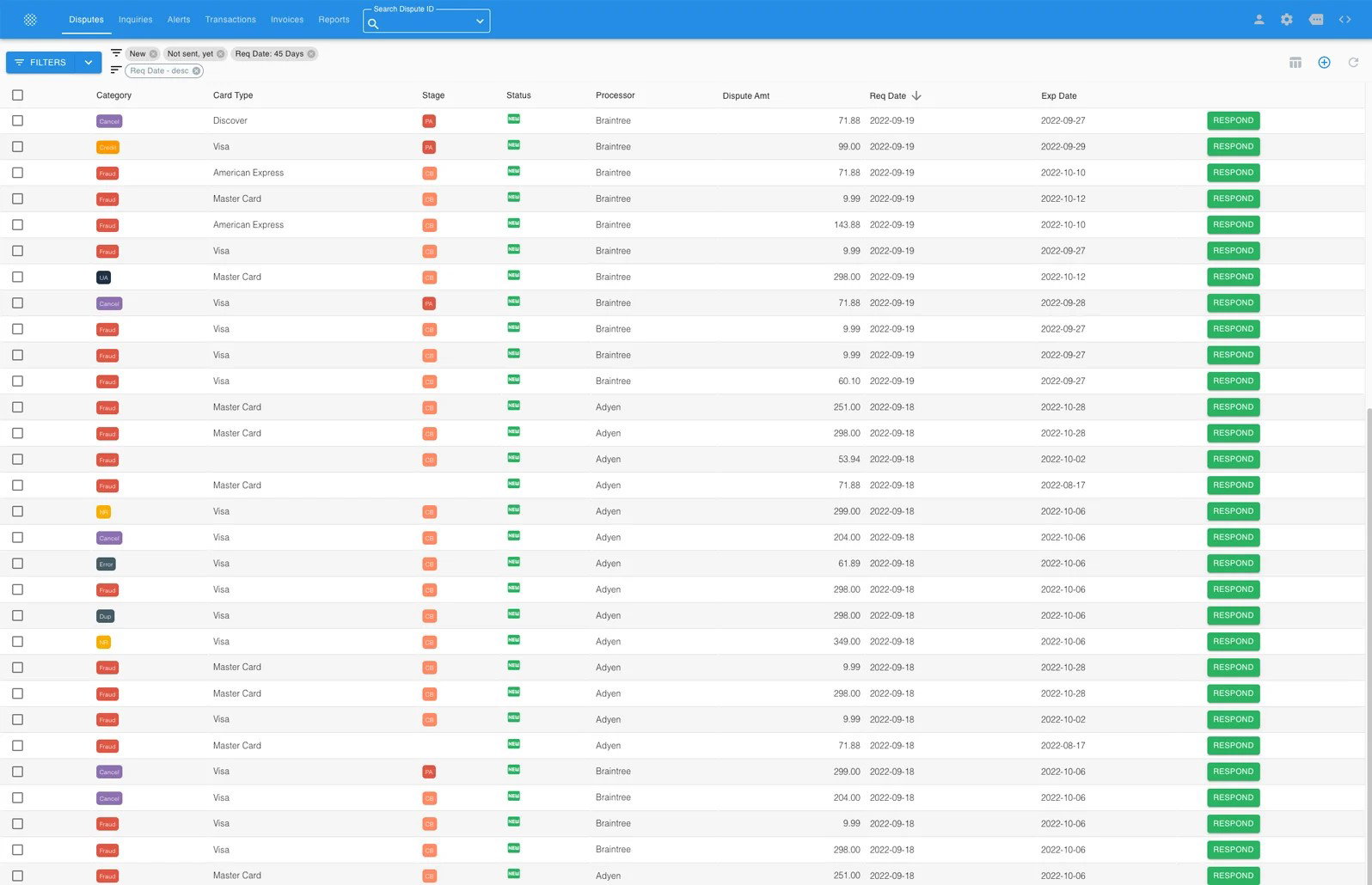
Sift’s key advantage is its AI-powered automation and decisioning engine, which allows teams to scale fraud prevention without increasing operational complexity. Intelligence features such as transaction scoring and risk assessment provide a deep understanding of potential threats.
Pricing
Sift hasn’t publicly disclosed fixed pricing tiers but offers interested customers customized pricing based on their personal requirements. The company also provided a demo if an interested customer requests one.
What Works & What Doesn't
| Pros | Cons |
| Customizable workflow | Lack of decision process clarity |
| Good data analysis | Scoring system inaccuracies |
| Effective risk management | Interface complexities |
Our Final Take
Sift is best suited for digital businesses, fintech companies, and ecommerce platforms that need advanced fraud detection without slowing down legitimate transactions. While some tuning may be required to refine risk scoring, its powerful ML models, real-time analysis, and scalable automation make it a strong solution for protecting revenue and customer trust.
SEON: Best For Integration
Almost a decade after its founding in 2017, SEON proudly boasts that it protects over 5,000 businesses globally with a team of more than 300 fraud experts, resulting in the prevention of over $300 billion in fraud losses and over 15 million daily transactions secured. The company was named a Leader in G2’s Winter 2026 report, also claiming the title of “Easiest To Do Business With.”
Why We Chose SEON In 2026
SEON brings in a real-time fraud detection and AML compliance platform designed to help digital businesses stop fraud, reduce risk, and protect revenue. It does this by analyzing over 900 real-time data signals to build detailed risk profiles and detect suspicious activity before it impacts transactions. SEON’s flexible risk management framework allows businesses to build customized fraud rules and combine them with ML risk scores and automate workflows that match their risk tolerance.
SEON enables organizations to go live in as little as 14 days while scaling fraud prevention across markets quickly. Its technology is widely used by online businesses to combat evolving threats such as account abuse, payment fraud, and synthetic identities. SEON has been known to be an effective fraud detection software for banks, too.
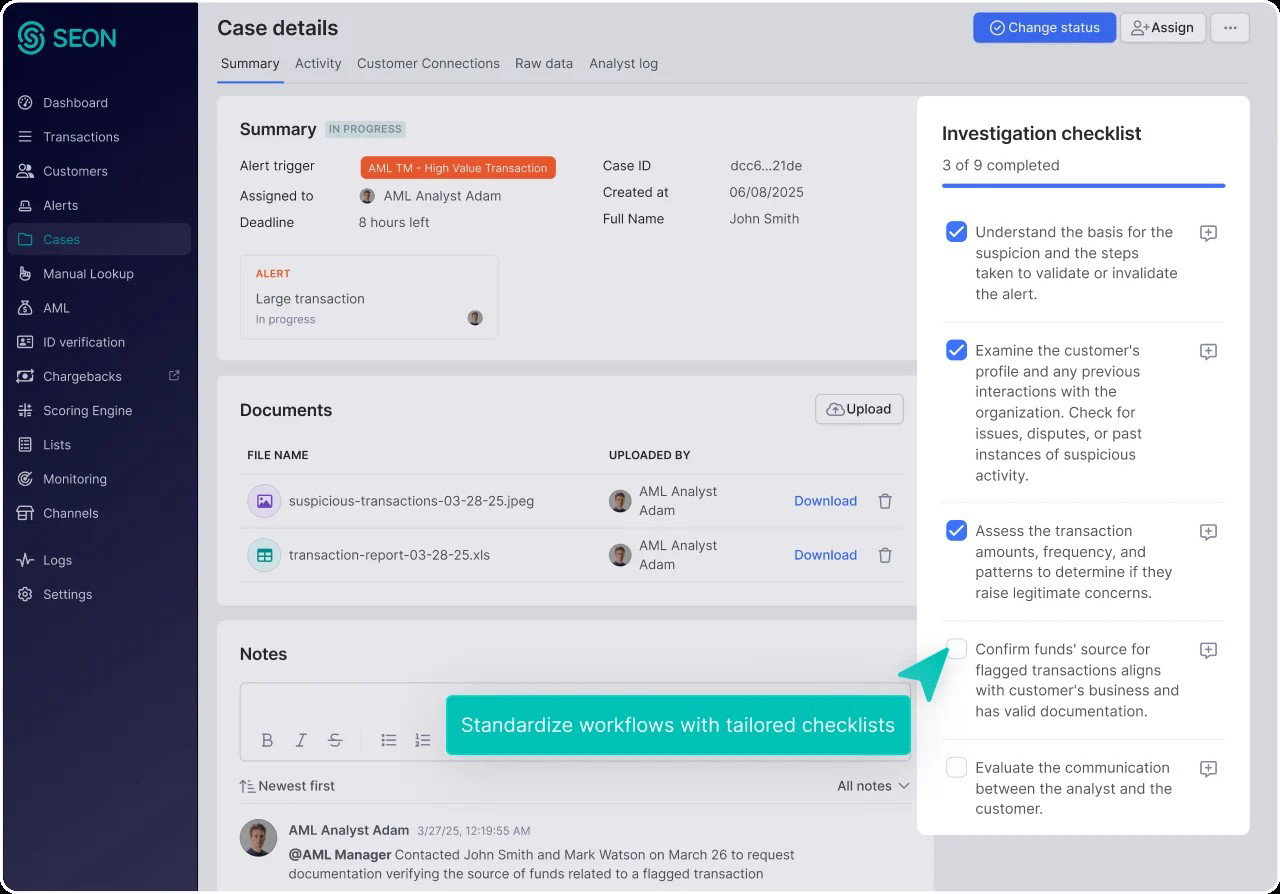
SEON stands out for its real-time fraud detection capabilities powered by first-party data signals. Instead of relying on outdated third-party databases, the platform analyzes digital footprints, AML data, device intelligence, and behavioral signals to identify suspicious activity. These risks include multi-accounting, bots, fraud rings, synthetic identities, and more, which are thwarted before they impact operations. Essentially, it allows teams to detect fraud earlier in the user journey.
Pricing
SEON offers a Starter plan that costs $699 per month, which includes 2,500 fraud checks per month, up to 10 users, and 50 customizable rules. For larger organizations, the Premium plan offers custom pricing with unlimited API calls, unlimited users and rules, advanced monitoring and reporting, 24/7 account management support, and more. It also offers interested customers a free trial.
What Works & What Doesn't
| Pros | Cons |
| Effective fraud detection | Limited customization options |
| Exceptional customer support | Instances of data inaccuracies |
| Good real-time monitoring | Steep learning curve |
Our Final Take
SEON is best suited for fintech companies, ecommerce platforms, and digital marketplaces that need accurate, real-time fraud detection and compliance tools. While configuring advanced rules may require some expertise, its powerful device intelligence, flexible risk scoring, and rapid deployment make SEON a strong solution.
Topics For More Insights
Signifyd: Best For Enterprise
As a top fraud detection software, Signifyd offers its users a comprehensive protection platform designed for online retailers that focuses on a seamless, secure shopping experience. The company uses big data, ML, and industry expertise to tackle fraud and abuse at critical touchpoints in the buyer journey. In its Winter 2026 report, G2 named Signifyd a Momentum Leader.
Why We Chose Signifyd In 2026
Signifyd is known for its ability to combine revenue optimization with real-time fraud detection, which spans the use of AI-powered decisioning that analyzes 25,000+ data signals from its global commerce network to determine fraud risk. Automating fraud decisions enables businesses to eliminate manual reviews, approve legitimate orders with confidence, and quicken order fulfillment. By blocking fraudulent activity instantly at checkout, Signifyd enabled businesses to offer their customers a trusted, seamless checkout experience.
With access to data from thousands of storefronts, it offers accurate decision-making, ensuring legitimate transactions are approved. By approving more legitimate orders while blocking fraud, Signifyd customers often see 5–9% revenue growth, and approved orders are backed by a 100% financial guarantee against fraud chargebacks.
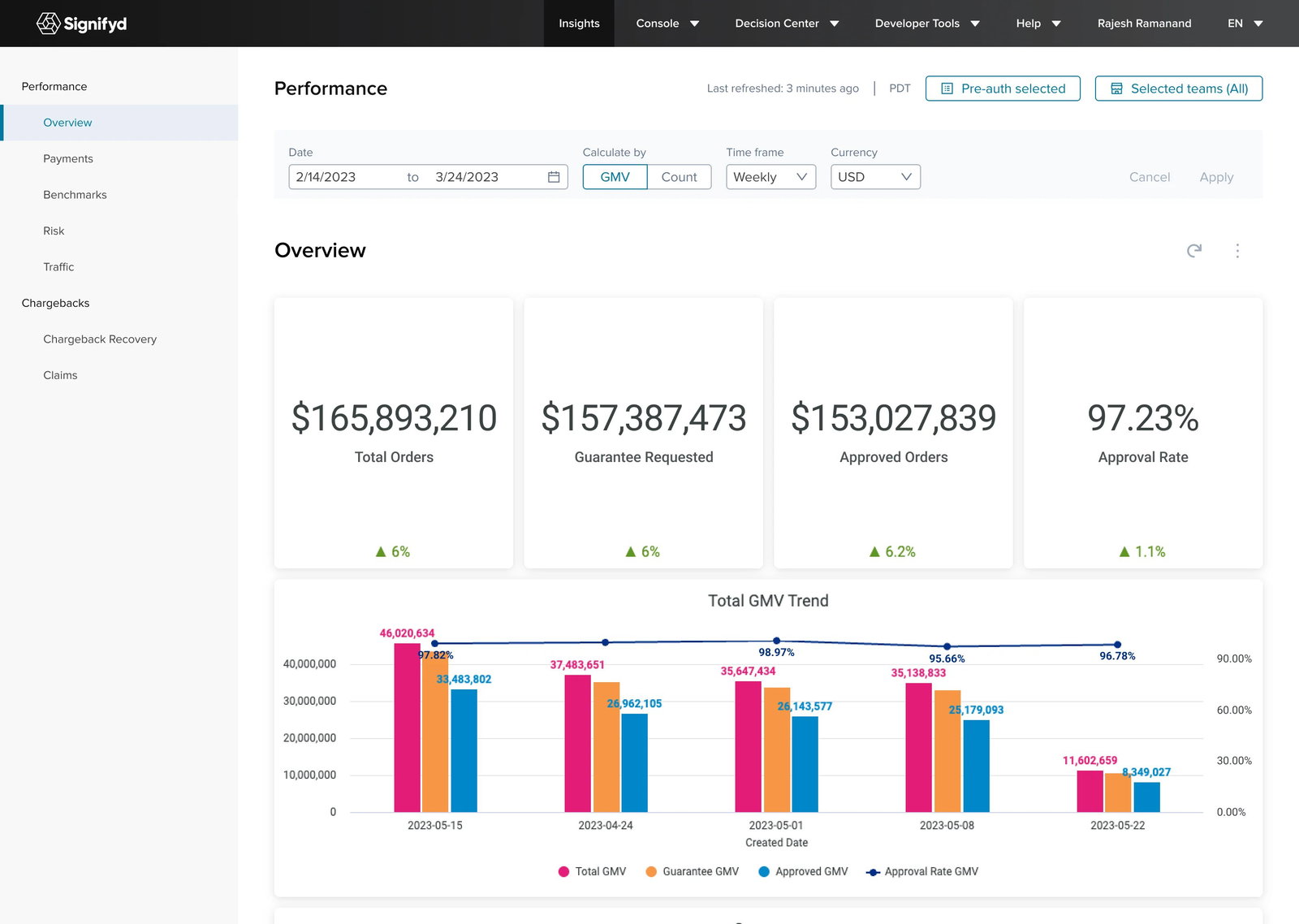
Signifyd’s key differentiator is its guaranteed fraud protection model. Each order approved by Signifyd is backed by a financial guarantee that promises to reimburse merchants for any resulting fraud chargebacks, including associated fees and shipping costs. This risk-transfer approach allows ecommerce businesses to confidently approve more orders and reduce false declines while maintaining strong protection against fraud and abuse.
Pricing
Signifyd offers custom pricing based on each merchant’s business size, transaction volume, and risk profile. Each plan is designed to align with e-commerce growth stages and include usage-based pricing models. Interested customers can get their personalized quotes by getting in touch with Signifyd’s team.
What Works & What Doesn't
| Pros | Cons |
| Financial guarantee against fraud | Poor customer support |
| Operational efficiency | Limited customizations |
| Exceptional fraud detection | Expensive pricing models |
Our Final Take
Signifyd is best suited for e-commerce retailers and digital marketplaces, especially merchants focused on scaling online sales, who want to increase conversions while protecting revenue from fraud. Its guaranteed fraud protection and AI-driven decisioning allow businesses to approve more legitimate orders with confidence.
Fingerprint: Best For Security
Fingerprint originally began as an open-source project called FingerprintJS in 2012. It wasn’t until 2019 that it was converted into a SaaS product known as FingerprintJS Pro. After this, it managed to raise $77 million across four funding rounds and is backed by Craft Ventures, which has previously invested in Tesla, Facebook, and Airbnb. It was even named a Momentum Leader in G2’s Winter 2026 report.
Why We Chose Fingerprint In 2026
Fingerprint provides device intelligence technology that helps businesses detect fraud, bots, and suspicious activity across digital platforms. Its platform generates highly accurate visitor IDs that can persist for months, allowing companies to recognize returning users even when cookies change or sessions reset.
Fingerprint analyzes 100+ devices, networks, and behavioral signals to identify fraudulent activity in real time. Its device intelligence API is widely used across the fraud prevention ecosystem, and many security and fraud tools rely on Fingerprint’s open-source technology to power their identification capabilities. Signals such as bot detection, IP geolocation, browser tamper detection, and high-activity device monitoring provide clear indicators of potential fraud.
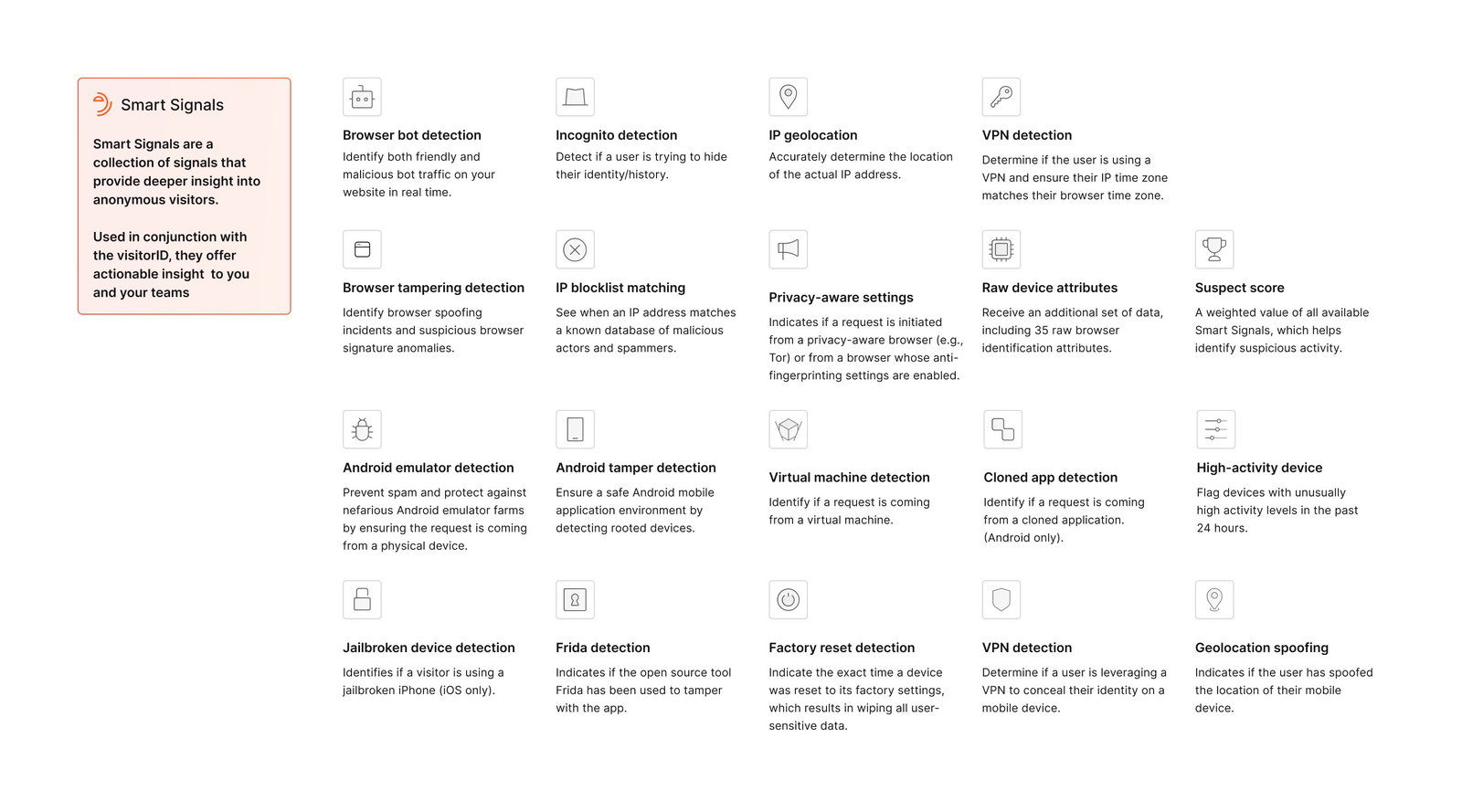
It’s no surprise that its biggest advantage comes from its device intelligence API, which is designed for fast decisioning and flexible integration. Businesses can incorporate device insights directly into their payment or authentication flows to monitor user activity, detect bots, and flag high-risk devices.
Pricing
Fingerprint offers three pricing plans, and one of them is completely free! The company says this is a newly introduced tier that is applicable for customers with up to 1,000 API calls per month, looking for web and mobile device identification. It also comes with a 14-day free trial of its next paid tier: the Pro Plus plan.
Pro Plus begins at $99 per month for 20K API calls, scales up to $4 per 1,000 additional API calls. However, this tier is customizable, with costs varying based on the selected number of monthly identifications. Users are offered the choice of 20K ($99), 100K ($419), 200K ($819), 500K ($2,019), or 1 million (custom quote).
Fingerprint has one more pricing plan: fully customizable Enterprise, allowing customers to build their own plan.
What Works & What Doesn't
| Pros | Cons |
| Easy to use | Steep pricing |
| High accuracy | High accuracy |
| Easy integration and implementation | Poor documentation |
Our Final Take
Fingerprint is best suited for e-commerce platforms, fintech companies, and SaaS businesses that need reliable device intelligence to detect fraud and automated attacks. Its persistent visitor identification and powerful fraud signals make it a capable platform for organizations looking to strengthen fraud detection while maintaining a smooth user experience.
Top 5 Fraud Detection Software Comparison
| Criteria |  |
 |
 |
 |
 |
| Starting Price | Custom | Custom | $699/month | Custom | Free |
| Avg. User Rating | 4.8 | 4.6 | 4.6 | 4.6 | 4.7 |
| Trial Period/Demo | Demo | Demo | Free Trial | Demo (Role Specific) |
Free version |
| Key Features | Automated bank account validation, vendor fraud detection, and global payment monitoring | AI-powered fraud detection, real-time risk decisioning, and automated fraud prevention workflows | Real-time fraud detection, device intelligence, and customizable risk scoring | AI-powered fraud detection, guaranteed chargeback protection, and automated order decisioning | Device intelligence, persistent visitor identification, and real-time fraud detection signals |
| Integrations | Ivalua, Kyriba, Oracle, and more | Okta, Stripe, PayPal, and more | Apple iOS, Microsoft Sentinel, Shopify Plus, and more | Shopify, Google Workspace, Salesforce Commerce, and more | Cloudflare, Google Workspace, Microsoft Azure, and more |
Conclusion
There you have it, our list of the Top Fraud Detection Software of 2026.Fraud Detection Solutions have now evolved into sophisticated tools, powered by AI and ML to predict various fraudulent tactics in real-time and help organizations adapt with more effective protection against new-age fraudsters.
Frequently Asked Questions
What Is Fraud Detection Software And Why Is It Important For Businesses?
Fraud detection software helps organizations identify and prevent fraudulent activities by analyzing transactions, user behavior, and data patterns in real time. Using technologies such as machine learning, analytics, and rule-based monitoring, these platforms detect anomalies that may indicate fraud, including identity theft, account takeovers, or payment fraud. Businesses use fraud detection software to minimize financial losses, reduce chargebacks, maintain compliance, and protect customer trust while ensuring legitimate transactions are processed smoothly.
What Are The Top Fraud Detection Software Solutions In 2026?
Some of the leading fraud detection software solutions in 2026 include Trustpair, Sift, SEON, Signifyd, and Fingerprint. These platforms use advanced technologies such as AI-driven analytics, device intelligence, and real-time transaction monitoring to detect suspicious behavior and prevent fraud. Each solution focuses on helping businesses reduce fraud risks, automate fraud prevention workflows, and maintain a seamless customer experience while protecting digital transactions.
How Do Companies Choose The Best Fraud Detection Software For Their Needs?
Businesses typically choose fraud detection software by evaluating factors such as real-time detection capabilities, accuracy of machine learning models, scalability, integration with existing payment or security systems, and the ability to customize fraud rules. Companies also consider pricing, deployment speed, and industry use cases such as e-commerce, fintech, or SaaS. Selecting the right solution ensures that organizations can prevent fraud effectively without disrupting legitimate customer activity.
Fri, Mar 13, 2026

Enjoyed what you've read so far? Great news - there's more to explore!
Stay up to date with the latest news, a vast collection of tech articles including introductory guides, product reviews, trends and more, thought-provoking interviews, hottest AI blogs and entertaining tech memes.
Plus, get access to branded insights such as informative white papers, intriguing case studies, in-depth reports, enlightening videos and exciting events and webinars from industry-leading global brands.
Dive into TechDogs' treasure trove today and Know Your World of technology!
Disclaimer - Reference to any specific product, software or entity does not constitute an endorsement or recommendation by TechDogs nor should any data or content published be relied upon. The views expressed by TechDogs' members and guests are their own and their appearance on our site does not imply an endorsement of them or any entity they represent. Views and opinions expressed by TechDogs' Authors are those of the Authors and do not necessarily reflect the view of TechDogs or any of its officials. While we aim to provide valuable and helpful information, some content on TechDogs' site may not have been thoroughly reviewed for every detail or aspect. We encourage users to verify any information independently where necessary.
Loading comments...