
Cloud
Top 5 Cloud Analytics Platforms In 2026
Share
TL;DR
-
Tableau Cloud from Salesforce: Delivers personalized AI-driven insights through Tableau Pulse for proactive decision-making.
-
Microsoft Power BI: Offers seamless integration with the Microsoft ecosystem and AI-powered report generation.
-
Looker: Provides a unified semantic modeling layer to ensure a single source of truth across organizations.
-
Sisense Cloud: Features a developer-friendly approach for embedding customizable analytics directly into applications.
-
Qlik Cloud Analytics: Combines an agentic analytics framework with predictive modeling to turn insights into immediate action.
Introduction
Do you know that feeling when your shopping app just gets you? Your favorite items are ready to reorder, fresh deals pop up, and you do not have to scroll endlessly to find what you need. It is as if the app anticipates your cravings before you even realize you are hungry for a snack.
This seamless experience mirrors what cloud analytics brings to the business world. Just as a smart app organizes data to serve you better, these platforms sort through massive amounts of information to deliver critical insights instantly.
With great power comes great responsibility, and in modern business, that power is data.
Research shows that 48% of businesses stored their most critical data in the cloud by 2023, yet navigating this growing digital mountain can be overwhelming.
Cloud analytics platforms simplify the chaos by processing and transforming raw information into actionable intelligence. This helps organizations move past guesswork and make smarter, faster decisions.
So, if you also need to move faster, we have got you with the top 5 Cloud Analytics Platforms shaping the future of business intelligence in 2026. Before that, let’s understand the cloud analytics platforms.
What Is A Cloud Analytics Platform?
A Cloud Analytics Platform is a cloud-based solution that collects, processes, and analyzes enterprise data in real time to help businesses uncover trends, automate insights, and makes smarter decisions without relying on heavy IT infrastructure. These platforms offer scalability, speed, and seamless integration with multiple data sources, transforming raw cloud data into actionable business intelligence.
As organizations generate larger volumes of data across operations, customer interactions, and digital ecosystems, choosing the right platform has become critical for staying competitive. The right solution can help businesses move faster, improve forecasting, and uncover opportunities that might otherwise go unnoticed.
To help you navigate the growing market, here are the Top 5 Cloud Analytics Platforms shaping the future of business intelligence in 2026.
Top 5 Cloud Analytics Platforms Of 2026
Cloud-Based Analytics Platforms help businesses make data-driven decisions, while offering AI automation and data integration. With countless options out there, picking the right one can be tough.
So, here are the best Cloud Analytics Platforms of 2026!
 |
 |
 |
 |
 |
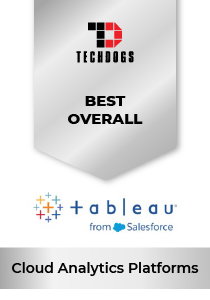
Tableau Cloud From Salesforce: Best Overall
There aren’t many people who haven’t heard of Salesforce. This 1999-founded tech giant is generally considered the world’s #1 AI customer relationship management (CRM) platform that enables businesses to outperform their rivals by combining people, AI agents, data, and apps. With over 80,000 employees spread across the globe, the company is the owner and operator of several top-rated software products, including Slack, MuleSoft, AppExchange, and Tableau. The last one there, which we’re talking about, has earned the title of Best Results (Enterprise) in G2’s Winter 2026 report.
Why We Chose Tableau Cloud From Salesforce In 2026
Tableau Cloud is a powerful cloud analytics tool that simplifies the entire data-to-decision lifecycle. It’s a fully hosted solution that eliminates the need for infrastructure management and enables teams to prepare, analyze, and share insights at scale. It comes with AI embedded across the platform, including tools like Tableau Agent, which allow users to accelerate data preparation and visualization, making analytics faster and more accessible.
Its seamless integration with enterprise systems, combined with global scalability and strong governance, makes it ideal for organizations undergoing digital transformation. Tableau Cloud’s fully hosted, AI-powered analytics is ideal for businesses looking to scale data-driven decision-making, as it’s recognized for its powerful visualization capabilities and enterprise-grade reliability.
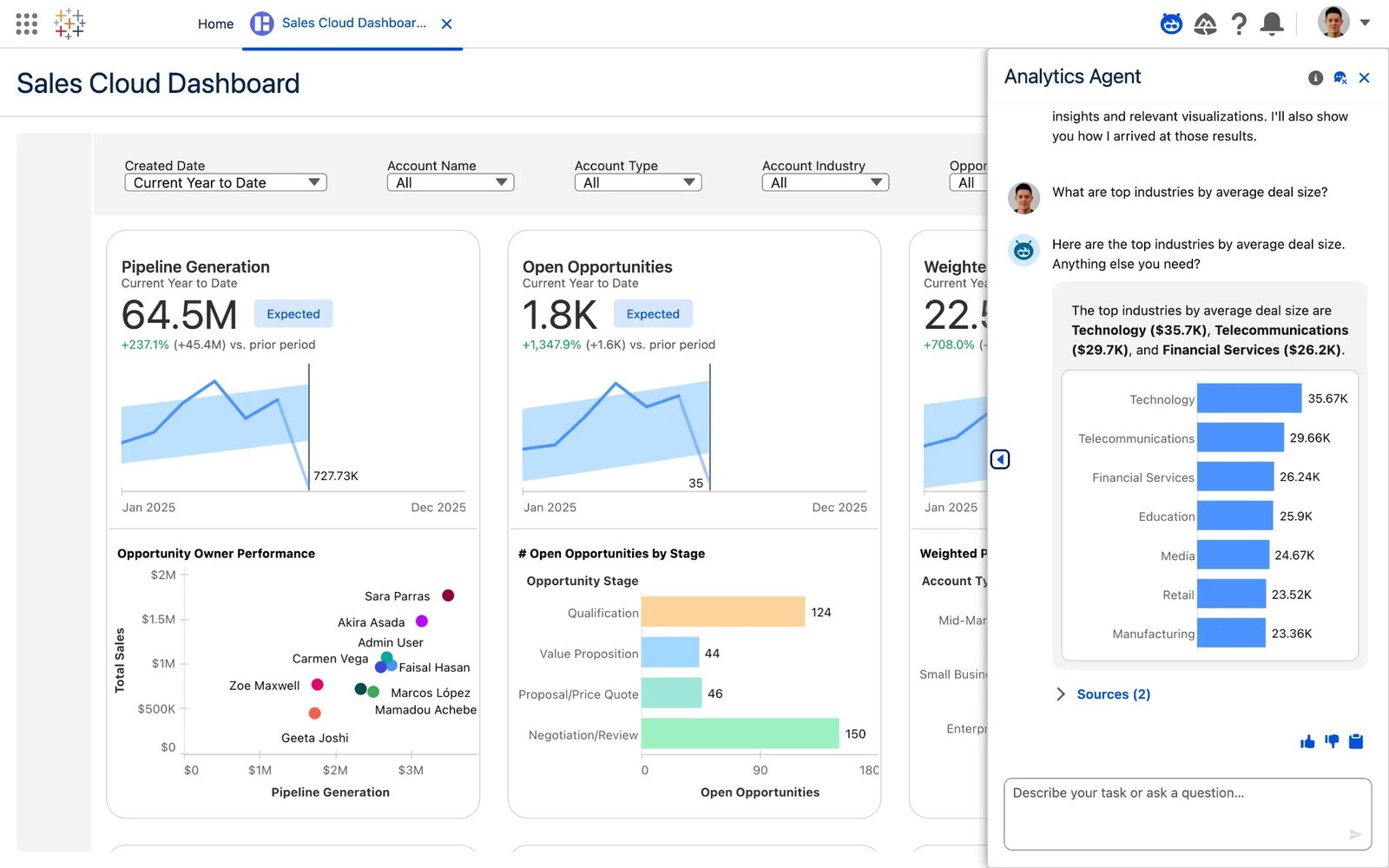
Tableau’s standout factor is Tableau Pulse, which delivers personalized, AI-driven insights directly into everyday workflows. Instead of requiring users to actively search for insights, it proactively surfaces key metrics, trends, and underlying drivers in real time. This enables every employee, regardless of technical expertise, to understand not just what is happening in the data, but why it is happening, and enables faster, more confident decisions at scale.
Pricing
Tableau Cloud follows a subscription-based pricing model, starting at $15 per user per month (billed annually) for the Standard edition. The Enterprise edition starts at $35 per user per month, offering advanced management, scalability, and security features. For enhanced AI capabilities and premium features, Tableau+ is available with custom pricing. All plans require at least one Creator license and are billed annually.
What Works & What Doesn't
| Pros | Cons |
| Intuitive design | Steep learning curve |
| Powerful visualization | High licensing cost |
| Versatile dashboard | Onboarding complexities |
Our Final Take
Tableau is best suited for mid-size to large organizations looking for a scalable and AI-powered cloud analytics platform. While pricing and complexity may be considerations for smaller teams, its strong visualization capabilities, seamless integrations, and proactive insights make it a top choice for businesses aiming to build a data-driven culture.
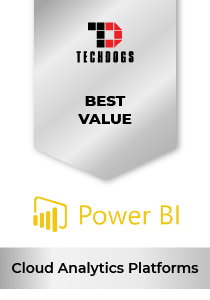
Microsoft Power BI: Best Value
There’s no way you haven’t heard about Microsoft. In fact, it’s most likely you’re reading this on a Microsoft-powered device, as Microsoft's Windows holds 60.8% of the global desktop operating system market share. When it comes to the OS market share for any device, Microsoft (26.33%) is second only to Android (37.92%), according to StatCounter Global Stats. Coming to its prized business analytics platform, Microsoft Power BI is rated 2nd Easiest To Use in Analytics Platforms Software by G2.
Why We Chose Microsoft Power BI In 2026
Microsoft Power BI is a highly accessible and scalable cloud analytics platform that caters to both individual users and large enterprises. It allows users to connect to hundreds of data sources, create datasets, and build interactive dashboards with ease. Power BI supports both self-service and enterprise analytics, helping teams turn raw data into actionable insights.
Its integration with Microsoft Fabric and OneLake helps organizations establish a unified data source, while built-in AI features enable faster analysis, automated insights, and report generation. It also excels at embedding analytics into everyday workflows, making data-driven decision-making more seamless across teams.
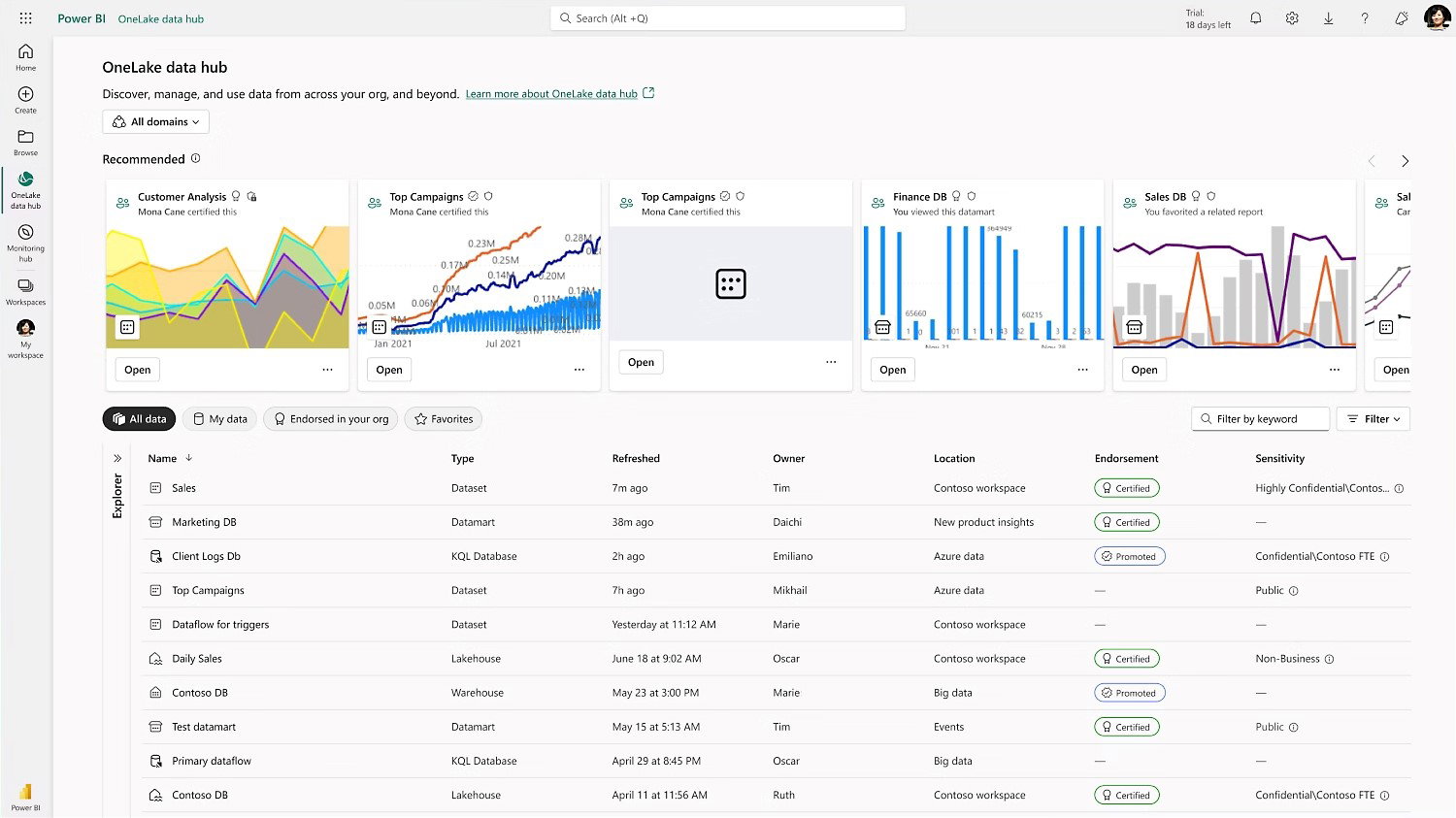
Microsoft also brings Power BI to users through Microsoft Azure, its flagship cloud computing platform. This allows organizations to extend analytics across a full cloud data ecosystem and connect with services such as Azure Synapse Analytics, Azure Data Lake, and Azure Databricks. This integration enhances data accessibility and modeling, ensuring insights can be delivered across applications and devices, making enterprise-wide analytics more connected and impactful.
Pricing
Power BI offers flexible pricing tiers to suit different needs. A Free plan allows users to create and view reports individually. Power BI Pro starts at $14 per user per month (billed yearly), enabling report sharing and collaboration. Power BI Premium Per User is priced at $24 per user per month, offering advanced features like larger datasets and more frequent refreshes. Microsoft Power BI on Azure and Power BI in Fabric come with their own pricing plans.
What Works & What Doesn't
| Pros | Cons |
| Offers a free plan | Steep learning curve |
| Excellent data visualization capabilities | Limited customization |
| Seamless data integration | Slow working with large datasets |
Our Final Take
Microsoft Power BI is best suited for organizations already using Microsoft tools and those looking for a scalable, cloud-based analytics platform. While it may have some limitations outside its ecosystem, its affordability, strong integrations, and AI-powered insights make it a top choice for businesses building a data-driven culture.
Looker: Best For Integration
The next Cloud Analytics Tool on our list is brought to you by another tech conglomerate: Google. This giant, which is owned by Alphabet, employs over 177,000 people across over 85 offices in more than 50 countries. While it doesn’t need an introduction, Google’s flagship product is its search engine of the same name, which holds 90% of the search engine market. In addition to cloud computing, Google is also big in the artificial intelligence (AI) sector. You know you can expect big things from Looker.
Why We Chose Looker In 2026
Looker, accessed through Google Cloud, delivers consistent, governed analytics through its powerful semantic modeling layer. This unified layer ensures that all users across the organization work with the same trusted metrics, eliminating inconsistencies and improving decision-making, enabling businesses to explore, analyze, and act on data.
Its conversational analytics, powered by Gemini, enables users to interact with data using natural language, making insights more accessible to both technical and non-technical users.
At Google Cloud Next 2026, Google enhanced Looker with deeper Gemini and Agentic Data Cloud integrations. It introduced Looker BI Agents that move beyond static dashboards by enabling users to trigger actions directly from insights. New features such as Dashboard Agents, upgraded Conversational Analytics, and Agentic Workflows will help users identify trends faster and act on recommendations quickly. Looker’s semantic layer also simplifies self-service analytics with AI assistants, while also strengthening governance.
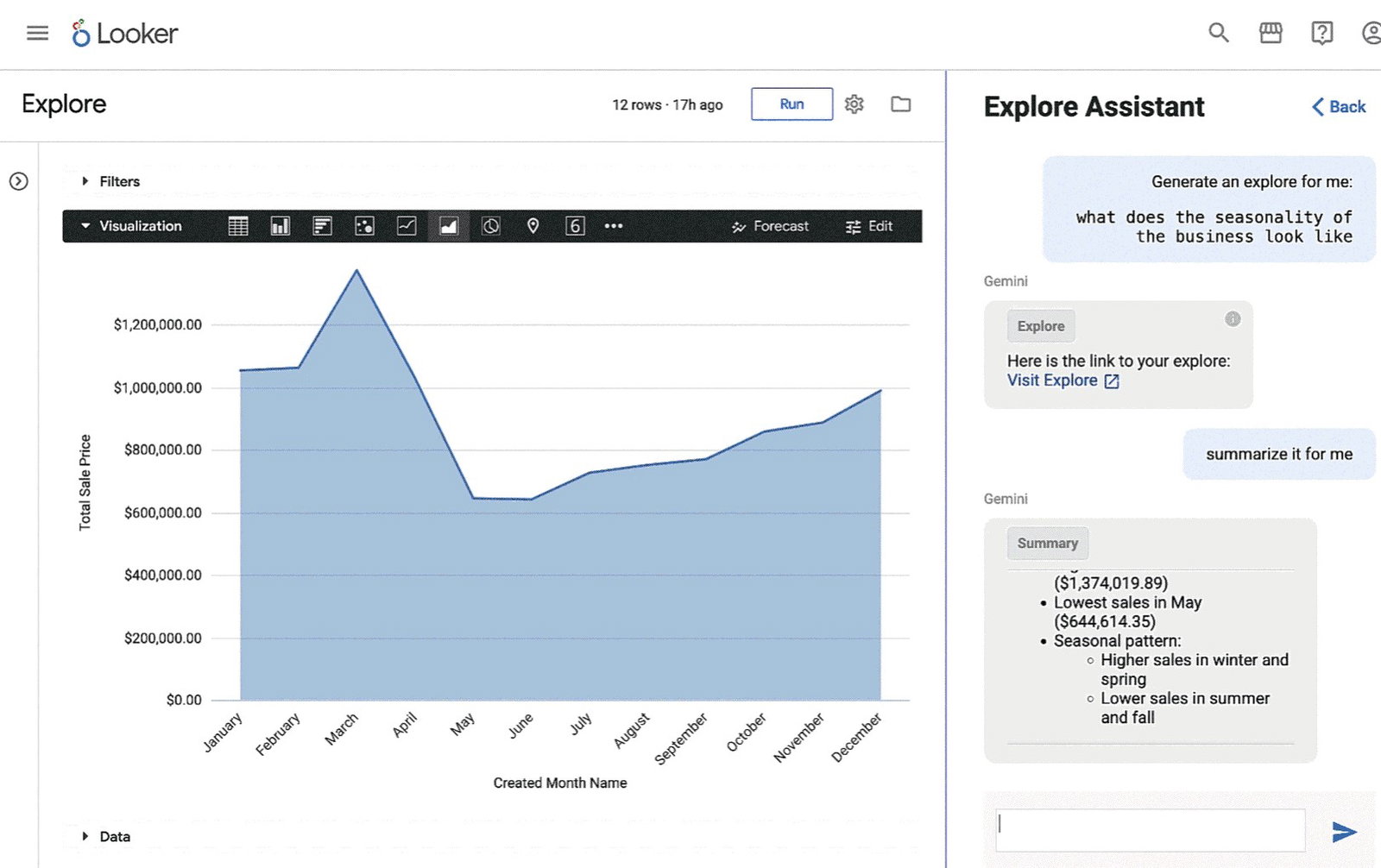
Looker’s special factor is its collaborative analytics ecosystem, particularly its integration with Google Workspace and BigQuery. Workspace allows teams to monitor collaboration, security, and adoption across tools such as Gmail, Drive, and Meet using prebuilt dashboards and audit-ready insights. This enables users to embed analytics into applications, integrate with spreadsheets, and support real-time, AI-powered insights.
Pricing
Looker follows a custom pricing model with two main components: platform pricing and user licensing. Platform pricing depends on the deployment and edition (Standard, Enterprise, or Embed), each offering different levels of scalability, API usage, and security. User pricing varies based on roles such as Developer, Standard, and Viewer. All plans require an annual commitment.
What Works & What Doesn't
| Pros | Cons |
| Easy to use | Steep learning curve |
| Ease of centralized dashboards | Slow working with large datasets |
| Exceptional real-time insights | Some features can get overwhelming |
Our Final Take
Looker is best suited for mid-size to large enterprises that require governed, scalable, and customizable cloud analytics. While it may require technical expertise and tailored pricing, its semantic modeling, AI capabilities, and deep integrations make it a powerful platform for organizations aiming to build reliable, data-driven operations.
Topics For More Insights
Sisense Cloud: Best For Customization
Founded in 2004, Sisense houses over 500 employees across two office locations, which include its headquarters in New York and another office in Tel Aviv. The company holds an impressive list of companies as its customers, including Philips, Skullcandy, USA Swimming, PagerDuty, Seismic, Tessitura, Barrios, and more. It was even named in G2’s Top 50 Analytics Products in 2025, as well as a Leader in embedded business intelligence.
Why We Chose Sisense Cloud In 2026
Sisense is a modern cloud analytics platform designed to help organizations build, scale, and embed data-driven insights into their operations and applications. It's known for its ability to deliver flexible cloud analytics with a developer-friendly approach. The platform allows organizations to seamlessly add users, data, and projects while maintaining consistent performance and predictable costs.
Sisense enables teams to go beyond traditional dashboards by integrating AI, machine learning, and embedded analytics into their workflows. The platform supports scalable data strategies with strong collaboration, governance, and customization capabilities. It simplifies collaboration by integrating with existing data systems and access controls, while cutting out silos.
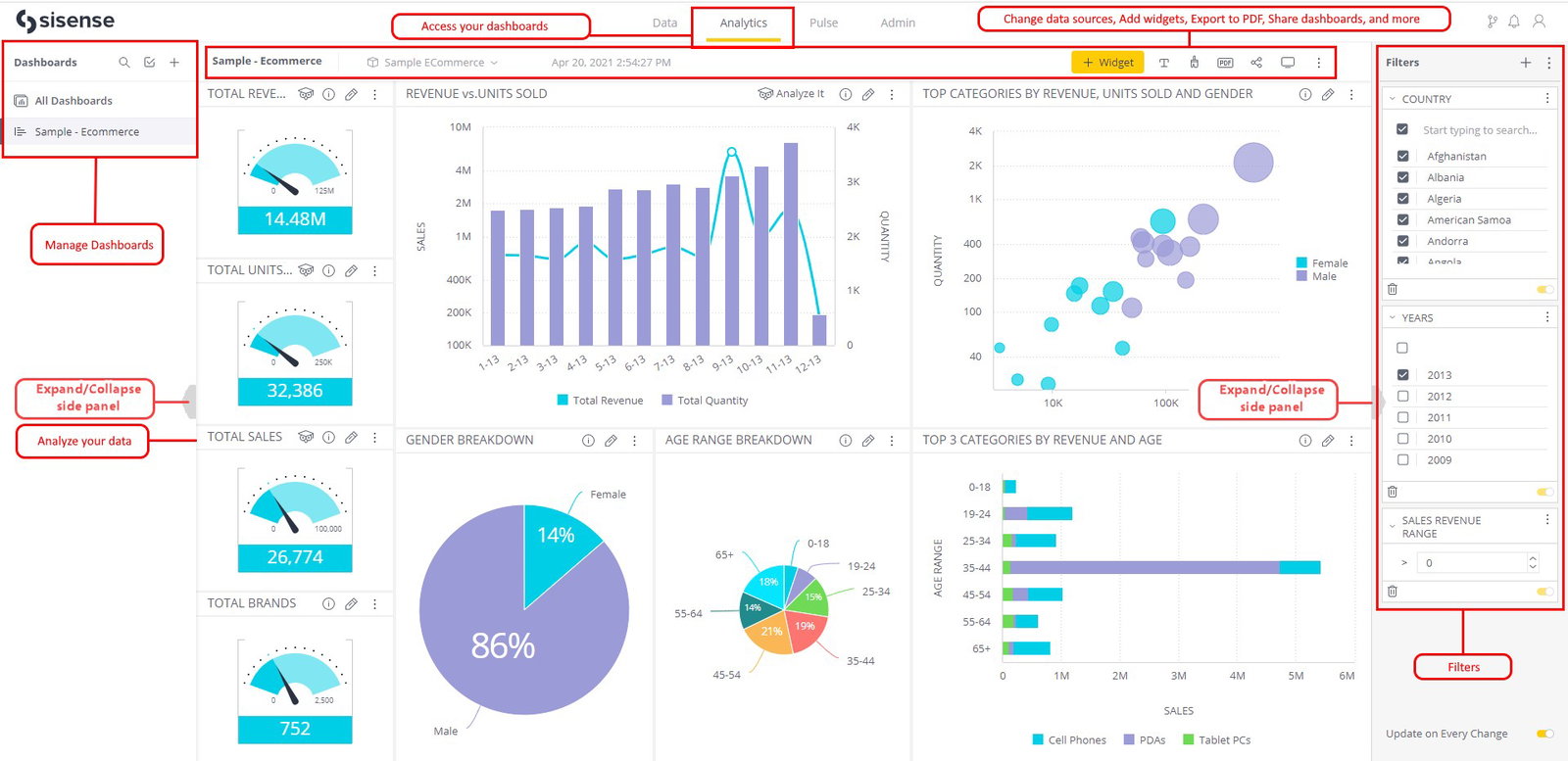
Sisense Cloud stands out for its proactive support and secure environment, which ensures reliability and peace of mind. With 24/7 monitoring by dedicated cloud operations teams, issues are detected and resolved before they impact users. The platform adheres to industry-standard security frameworks, including SOC 2 Type II and ISO certifications, ensuring strong data protection and compliance.
Pricing
Sisense Cloud offers flexible pricing plans starting with a 7-day free trial. Paid plans begin at $399 per month (Launch), which includes 20GB storage, 20K credits, and 50 viewer seats. The Grow plan is priced at $1,299 per month, offering higher storage, credits, and user capacity. For large-scale deployments, a custom Scale plan is available with tailored resources and pricing.
What Works & What Doesn't
| Pros | Cons |
| Easy to use | Steep learning curve |
| Intuitive data visualization | Limited or missing features |
| Exceptional customer support | Occasional issues with bugs and updates |
Our Final Take
Sisense Cloud is best suited for mid-size to large organizations and product teams that need scalable, embedded, and customizable cloud analytics. While it may require technical expertise and higher investment for advanced use cases, its flexibility, proactive support, and strong security make it a powerful platform for building modern, data-driven applications.
Qlik Cloud Analytics: Best AI Features
Qlik was founded in 1993 in Lund, Sweden. Today, the company has over 2,000 employees spread across more than 50 offices worldwide, is headquartered in King of Prussia, USA, and boasts a customer base of over 40,000 companies. This spans 75% of the Fortune 500 and includes names such as Ford, HSBC, PayPal, BP, Lenovo, Samsung, Deloitte, NHS, and more. Qlik has also been named a Leader in Gartner’s Magic Quadrant for three categories: Data Integration, Data Quality, and Data Analytics.
Why We Chose Qlik Cloud Analytics In 2026
Qlik Cloud Analytics combines interactive analytics, AI-powered insights, and automation into a single cloud-native platform. Users can explore data freely, ask questions in natural language, and generate real-time insights using its powerful analytics engine. The platform also supports predictive analytics, allowing teams to build and deploy machine learning models with ease.
With no-code data preparation, built-in data quality management, and seamless integration with external AI and analytics tools, Qlik Cloud simplifies complex data workflows and enables faster, smarter decision-making. Its ability to automate workflows, trigger actions, and embed analytics into everyday business processes ensures that insights are not just discovered but acted upon in real time.
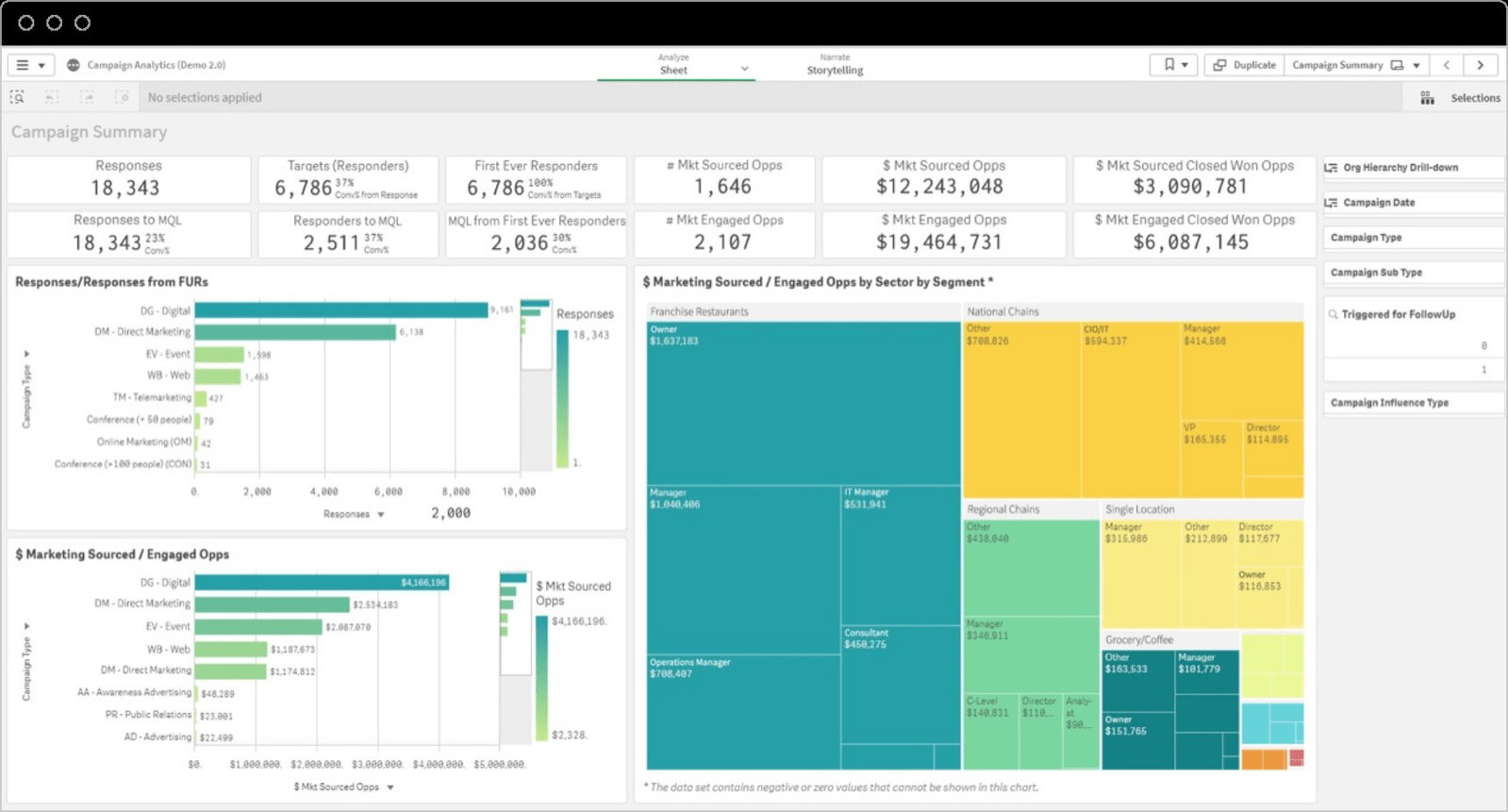
Here, the standout factor is Qlik’s agentic analytics framework, which transforms insights into immediate action. With features such as the Qlik Analytics Engine for high-speed contextual calculations, natural language assistants for intuitive data interaction, and embedded AI capabilities across applications, Qlik enables users to move from analysis to execution seamlessly.
Pricing
Qlik Cloud Analytics offers tiered pricing plans to support different business needs. The Starter plan begins at $300 per month for 10 users (billed annually). The Standard plan starts at $825 per month for 25GB of data, while the Premium plan is priced at $2,750 per month for 50GB of data. For large-scale deployments, the Enterprise plan offers custom pricing, starting with 250GB of data capacity.
What Works & What Doesn't
| Pros | Cons |
| Seamless integration capabilities | Steep learning curve |
| Interactive and user-friendly interface | Limited or missing features |
| Customizable data visualizations | Can be expensive |
Our Final Take
Qlik Cloud Analytics is best suited for mid-size to large organizations looking to combine AI, automation, and analytics into a single cloud platform. While pricing and complexity may be considerations for smaller teams, its powerful engine, predictive capabilities, and ability to turn insights into action make it a strong cloud analytics platform.
Top 5 Cloud Analytics Platforms Comparison
| Criteria |  |
 |
 |
 |
 |
| Starting Price | $15 per month | Free Version | Custom | $399 per month | $300 per month |
| Avg. User Rating | 4.4 | 4.5 | 4.4 | 4.2 | 4.4 |
| Trial Period/Demo | Free Trial | Free trial | Free trial | 7-day free trial | 30-day free trial |
| Key Features | AI-driven insights, advanced data visualization, and real-time analytics | Seamless data integration, interactive dashboards, and AI-powered reports | Semantic data modeling, governed analytics layer, and API-first architecture | Embedded analytics tools, scalable data workflows, and AI-driven analytics | Predictive analytics models, natural language queries, and automated data workflows |
| Integrations | Digital Ocean, Databricks, MySQL, Jira, and more | Jira, Google Analytics, Databricks, MySQL, and more | AdSense, Fivetran, Hootsuite, Facebook, and more | Agentforce Sales, Google Analytics, Snowflake, Shopify, and more | Google Analytics, Shopify, Mailchimp, Splunk, and more |
Conclusion
Just like a well-stocked grocery cart makes it easier to turn ingredients into delectable meals, the right Cloud Analytics Platform helps you seamlessly turn raw data into smart decisions. Whether you're looking for AI-powered insights or real-time analytics for your cloud, having the right tools makes all the difference!
The top Cloud Analytics Platforms mentioned here are touted to transform raw data into valuable insights, helping you make smarter decisions and drive sustainable growth in 2026 and beyond.
So, fill your cart wisely and serve up cloud success in 2026!
P.S. Always remember to visit the vendor's site for the latest information.
Frequently Asked Questions
What Are The Top Cloud Analytics Platforms To Consider In 2026?
The top cloud analytics platforms in 2026 include Tableau Cloud, Microsoft Power BI, Looker, Sisense Cloud, and Qlik Cloud Analytics. These tools stand out for their ability to combine real-time data processing, AI-driven insights, and scalable cloud infrastructure, helping businesses transform raw data into actionable intelligence. Each platform caters to different needs, from advanced visualization and seamless integrations to embedded analytics and predictive capabilities.
How Do Cloud Analytics Platforms Help Businesses Make Better Decisions?
Cloud analytics platforms help businesses make better decisions by centralizing data from multiple sources and turning it into real-time, actionable insights. They use automation and AI to identify trends, generate reports, and even predict future outcomes, allowing teams to act quickly and confidently. By eliminating the need for heavy infrastructure and enabling collaboration across departments, these platforms ensure that decision-makers always have accurate, up-to-date information at their fingertips.
What Should You Look For When Choosing A Cloud Analytics Platform?
When choosing a cloud analytics platform, businesses should focus on scalability, ease of use, integration capabilities, and AI-powered features. A good platform should seamlessly connect with existing data sources, support both technical and non-technical users, and offer strong data governance and security. Pricing flexibility and performance at scale are also critical, especially for growing organizations that need a solution capable of evolving alongside their data needs.
Tue, Apr 28, 2026

Enjoyed what you read? Great news – there’s a lot more to explore!
Dive into our content repository of the latest tech news, a diverse range of articles spanning introductory guides, product reviews, trends and more, along with engaging interviews, up-to-date AI blogs and hilarious tech memes!
Also explore our collection of branded insights via informative white papers, enlightening case studies, in-depth reports, educational videos and exciting events and webinars from leading global brands.
Head to the TechDogs homepage to Know Your World of technology today!
Disclaimer - Reference to any specific product, software or entity does not constitute an endorsement or recommendation by TechDogs nor should any data or content published be relied upon. The views expressed by TechDogs' members and guests are their own and their appearance on our site does not imply an endorsement of them or any entity they represent. Views and opinions expressed by TechDogs' Authors are those of the Authors and do not necessarily reflect the view of TechDogs or any of its officials. While we aim to provide valuable and helpful information, some content on TechDogs' site may not have been thoroughly reviewed for every detail or aspect. We encourage users to verify any information independently where necessary.
Loading comments...