
Software Development
Top 5 API Management Tools In 2026
Share
TL;DR
-
MuleSoft Anypoint Platform: Provides a unified environment for managing the complete API lifecycle across hybrid and cloud-based systems.
-
Postman: Offers an AI-native interface that simplifies testing, debugging, and collaboration for developers and large-scale enterprises.
-
Azure API Management: Integrates deeply with the Microsoft ecosystem to provide high-level governance and compliance for distributed landscapes.
-
Amazon API Gateway: Utilizes a serverless architecture to process massive volumes of concurrent API calls with minimal operational overhead.
-
Workato: Features an agentic AI approach that orchestrates APIs alongside automated workflows to create context-aware business operations.
Introduction
The past few years have made one thing clear: we are all just living in Taylor Swift’s world. Her record-breaking Eras Tour was a masterclass in logistical perfection, spanning 149 dates across 21 countries and grossing over $2 billion. This level of global success is not just about a powerful voice or sheer grit. It requires an entire army of experts managing everything from sound and lighting to ticketing and real estate. Every single moving part must sync perfectly to create the magic fans see on stage.
The same principle applies to enterprise technology. Behind every incredible digital product lies a world of complex lifecycle planning that ensures peak performance. This is exactly where API Management Tools come into play, acting as the behind-the-scenes event managers for your software ecosystem. They help businesses create, secure, and analyze the connections that allow applications to communicate. By streamlining these workflows, you can ensure your digital infrastructure performs like a global superstar. Here are the Top 5 API Management Tools to help you succeed in 2026.
What Are API Management Tools?
Application Programming Interfaces (APIs) create connections between applications to allow them to communicate with one another. This connectivity is integral to how the digital world functions today. An API Management Tool is a platform that helps businesses create, deploy, secure, and analyze APIs efficiently. It works alongside API lifecycle management tools to streamline lifecycle management, support new integrations, ensure robust security, and follow through on compliance.
So, what are the best API management tools available in the market? Let’s find out.
Top 5 API Management Tools Of 2026
Now that we have you all squared up, without further delay, here are the Top 5 handpicked API Management Tools of 2026. Choose wisely!
 |
 |
 |
 |
 |
MuleSoft Anypoint Platform By Salesforce: Best Overall
MuleSoft is a Salesforce company; it’s backed by the vast experience and expertise that the 26-year-old multinational corporation brings, along with its 80,000+ employees housed in more than 100 offices. Salesforce’s MuleSoft was named a Leader in G2’s Winter 2026 report and was also recognized as a Leader in Gartner’s Magic Quadrant for iPaaS.
Why We Chose MuleSoft Anypoint Platform By Salesforce In 2026
MuleSoft Anypoint Platform stands out for delivering a complete API management lifecycle within a single, secure unified platform. It allows organizations to design, build, deploy, manage, and secure APIs across cloud, on-premises, and hybrid environments. The platform also supports extensive integrations through prebuilt connectors, enabling seamless connectivity between SaaS applications, legacy systems, and modern microservices.
With features such as API gateways, policy enforcement, access control, and real-time monitoring, teams can maintain consistent governance and performance across all APIs. Combined with AI-powered tooling, low-code capabilities, and centralized API catalogs, MuleSoft helps both developers and business users collaborate effectively, making it easier to scale API programs while maintaining control and compliance.
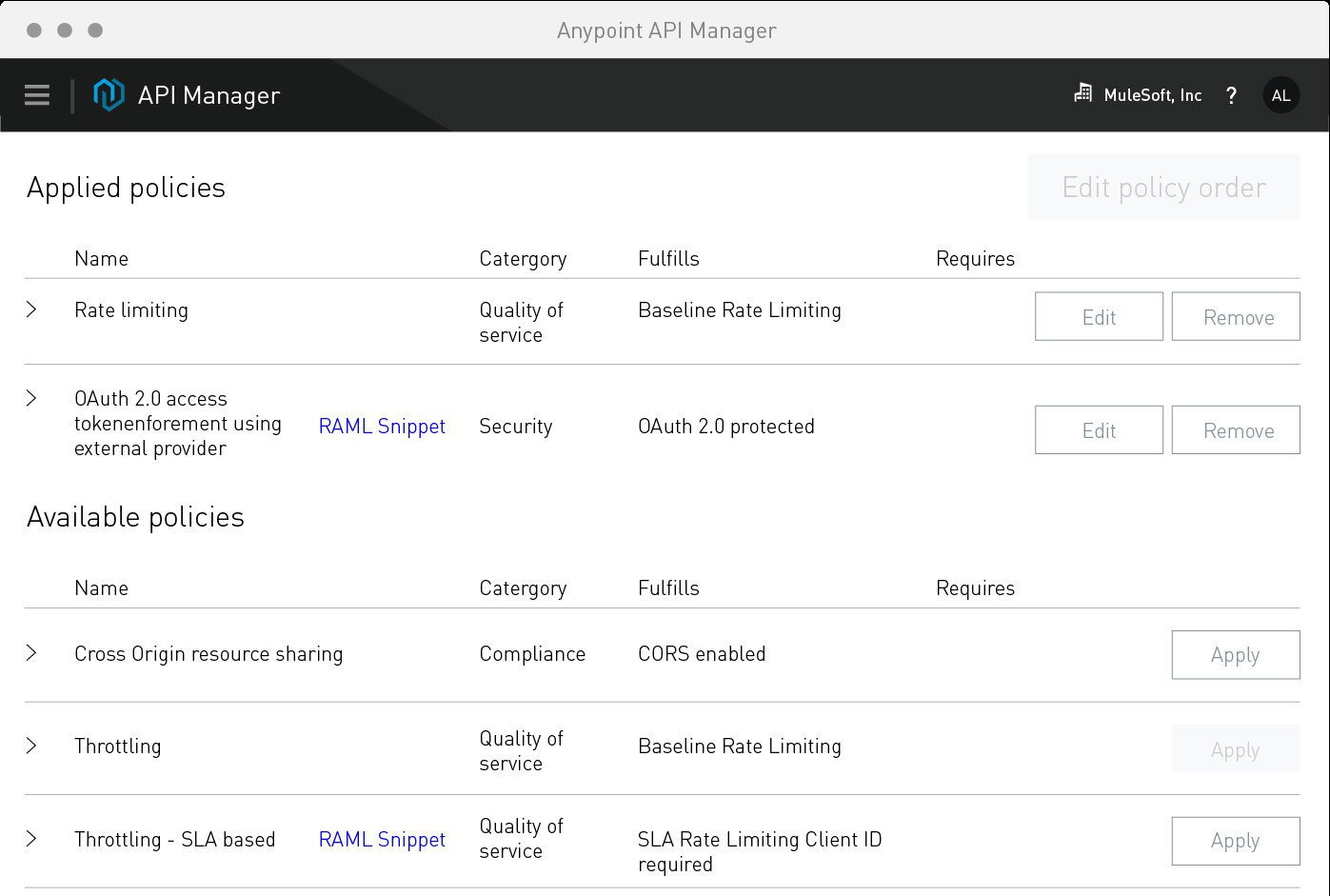
A key highlight is its API-led connectivity and asset reuse model, which enables teams to reuse APIs, integrations, and components across projects. This reduces duplication, accelerates development, and improves efficiency over time. This makes the platform a trusted choice for managing complex API ecosystems at scale.
Pricing
MuleSoft Anypoint Platform offers custom pricing based on business needs and selected capabilities. The Integration Starter plan includes core API and integration features, while the Integration Advanced plan adds advanced monitoring, multi-cloud deployment, and hybrid support. It also offers a 30-day free trial for users to explore the platform.
What Works & What Doesn't
| Pros | Cons |
| Clean user interface | High cost |
| Feature-rich | Performance issues |
| Boosts project delivery speed | Licensing concerns |
Our Final Take
MuleSoft Anypoint Platform is best suited for large enterprises managing complex integrations and API ecosystems across multiple environments. While it may require technical expertise and investment, its comprehensive lifecycle management, scalability, and strong governance features make it a powerful API management solution.
Postman: Best User Experience (UX)
Postman was officially incorporated in 2014 in Bangalore, India. Today, it houses around 3,000 employees across offices in San Francisco (HQ), New York, Bangalore, and Tokyo. It boasts customers such as Microsoft, Meta, Mastercard, AWS, Mercedes-Benz, PayPal, HubSpot, Uber, and more, including 98% of the Fortune 500. The company ranked #34 in G2’s list of top Global Software Companies in 2026, a list that selected the top 100 companies from 116,198 total vendors (3,938 eligible).
Why We Chose Postman In 2026
Trusted by 40+ million developers and 500,000+ organizations worldwide, the platform’s AI-powered capabilities further enhance productivity by helping automate testing, debugging, and API design tasks. This AI-native platform supports the entire API lifecycle, from design and testing to governance and distribution, making it a widely adopted choice for teams looking to streamline API workflows and improve productivity at scale.
Postman is a leading API Management solution designed to help developers and enterprises build, test, manage, and scale APIs across multiple protocols, including HTTP, GraphQL, gRPC, and WebSockets. It comes with features such as shared workspaces, version control integration, automated testing, and API catalogs.
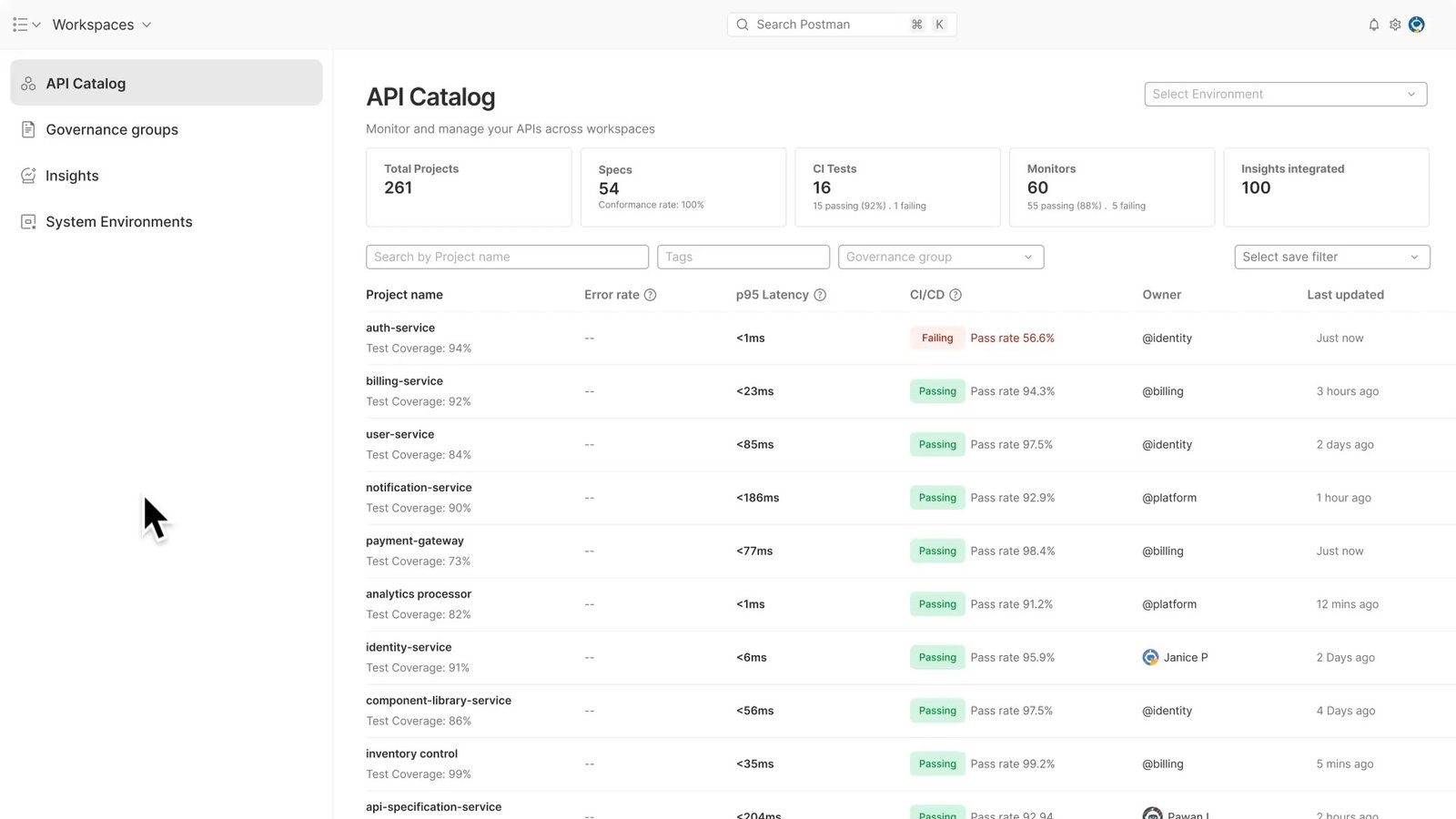
A key highlight is Postman’s enterprise-grade API security framework, built on a cloud-native architecture. It offers robust access controls, SSO, audit logs, and encryption to protect sensitive data, while providing centralized visibility into API activity. Features such as secret scanning, API key management, and SIEM integrations enable real-time threat detection and compliance readiness. With secure local vault storage and flexible data residency options, Postman ensures organizations can scale API programs confidently while maintaining strong governance and security standards.
Pricing
Postman offers flexible pricing plans for individuals, teams, and enterprises. The Free plan ($0) includes core API tools and limited AI credits. The Solo plan ($9/month) adds advanced testing and documentation features. The Team plan ($19/user/month) supports collaboration and basic access control, while the Enterprise plan ($49/user/month) includes API catalog, governance, advanced RBAC, and reporting. Interested customers can save up to 25% if they opt to pay annually.
What Works & What Doesn't
| Pros | Cons |
| Intuitive and user-friendly | Slow performance |
| Easy to test and manage APIs | Limited resources |
| Quick requests, responses, and debugging | Limited features |
Our Final Take
Postman is best suited for developers, startups, and enterprises looking for a scalable, all-in-one API management platform with strong collaboration and testing capabilities. While advanced features may increase costs, its ease of use, broad protocol support, and enterprise-grade security make it a top API management tool.
Azure API Management By Microsoft: Best For Enterprise
Microsoft’s Azure API Management is a fully managed service that enables organizations to publish, secure, and analyze APIs across various environments. The portal spans an API gateway, a management plane, and a developer portal, all of which help users manage Azure-hosted API deployments. It was named a Leader in the 2023 Gartner Magic Quadrant for Full Life Cycle API Management, a title it has held for several years consecutively, including 2022, 2021, and 2020 as well.
Why We Chose Azure API Management By Microsoft In 2026
Microsoft Azure API Management is a fully managed, Azure-native platform designed to help organizations publish, secure, monitor, and scale APIs across cloud, hybrid, and on-premises environments. It enables organizations to design, publish, secure, and monitor APIs from a centralized control plane while supporting multiple protocols such as REST, GraphQL, and WebSockets.
Built for enterprise use, the platform combines strong governance, performance, and integration with the broader Microsoft Azure ecosystem, making it a reliable choice for organizations managing complex and distributed API landscapes.
With features such as rate limiting, authentication, caching, and analytics, businesses can ensure performance, reliability, and consistent policy enforcement. Its centralized API catalog and federated management approach allow teams to manage APIs independently while maintaining enterprise-wide standards.
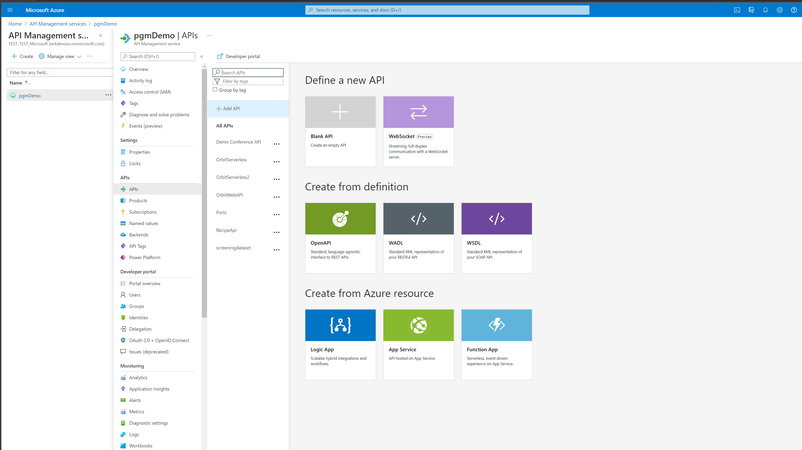
A key highlight is its embedded security and compliance ecosystem. With over 34,000 engineers dedicated to security, 15,000 specialized security partners, and 100+ compliance certifications, Azure ensures strong protection and regulatory alignment. Organizations can also scale API programs using Azure’s flexible cloud model, with options such as a free account, pay-as-you-go pricing, and $200 credits, making it easy to scale securely across cloud, hybrid, and edge environments.
Pricing
Azure API Management offers flexible, tier-based pricing to suit different workloads and scales. The Consumption tier provides a serverless, pay-per-use model ideal for lightweight or variable workloads, while the Developer tier (~$48/month) is suited for testing and non-production use. For production, Basic (~$147/month) and Standard (~$686/month) tiers support growing workloads, while the Premium (~$2,795/month) and Isolated tier (custom pricing) cater to enterprise environments requiring high scalability, performance, and isolation.
The newer v2 tiers include Basic v2 (~$150/month), Standard v2 (~$700/month), and Premium v2 (~$2,801/month), offering enhanced scalability, performance, and API request capacity. New users can also start with a free Azure account with credits and limited free services.
What Works & What Doesn't
| Pros | Cons |
| Easy to use | Difficulty in coding components |
| Flexible | Complex for new users |
| Scalable, reliable, and secure | Difficult to navigate intricate configurations |
Our Final Take
Microsoft Azure API Management is best suited for mid-size to large enterprises already using Azure or managing complex, hybrid API ecosystems. While it may require expertise and investment, its scalability, strong governance, and AI-ready capabilities make it a powerful API management platform.
Topics For More Insights
Amazon API Gateway: Best For Scalability
Amazon API Gateway is a product of Amazon Web Services (AWS), meaning that it brings with it the full force of integrating with other AWS products as well as AWS’s robust infrastructure capabilities. In 2024, AWS won the Global Industrial Water Reuse Champion Award for quadrupling its number of data centers using recycled water (US) and building capacity to support an additional 80+ data centers by 2030.
Why We Chose Amazon API Gateway In 2026
Amazon Web Services offers Amazon API Gateway, a fully managed API management service that enables developers to create, publish, maintain, monitor, and secure APIs at any scale. It allows seamless access to backend services, data, and business logic. Built-in monitoring, flexible security controls, and API lifecycle management features allow organizations to maintain control, optimize performance, and continuously improve their APIs as they scale.
With native support for REST and WebSocket APIs, it enables both traditional API use cases and real-time communication scenarios like chat apps and live dashboards. It can handle API management on a massive scale with minimal operational overhead, managing everything from traffic routing and throttling to authentication, monitoring, and version control, allowing teams to focus on building applications rather than managing infrastructure.
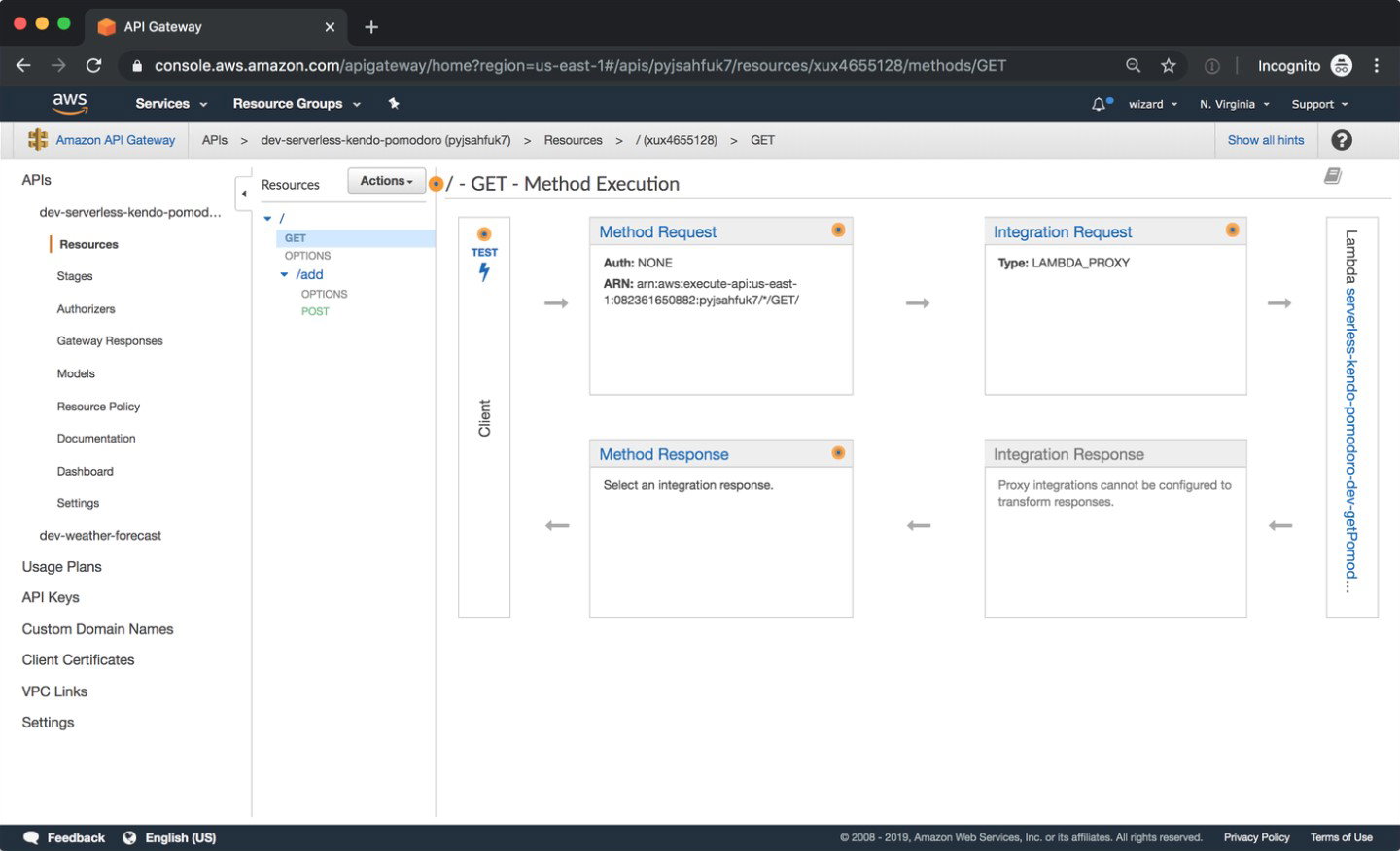
A key highlight is its serverless, auto-scaling architecture, which can process hundreds of thousands of concurrent API calls while maintaining low latency through Amazon CloudFront’s global edge network. This ensures consistent performance and reliability even during traffic spikes. Furthermore, its integration with AWS services like Lambda, CloudWatch, and IAM ensures seamless development, deployment, and monitoring within a unified ecosystem.
Pricing
Amazon API Gateway follows a pay-as-you-go pricing model, where users only pay for API calls received and data transferred, with no minimum fees or upfront costs. The free tier includes 1 million API calls per month for REST and HTTP APIs, along with WebSocket usage for up to 12 months.
Pricing for HTTP APIs starts at $1.00 per million requests (dropping to $0.90 at higher volumes), while REST APIs start at $3.50 per million requests, decreasing with scale. WebSocket APIs are priced based on messages and connection minutes. Additional costs may apply for caching, developer portals (starting at $125/month), and integrations with other AWS services. New customers can also receive up to $200 in AWS Free Tier credits.
What Works & What Doesn't
| Pros | Cons |
| Robust security features | Costly and complex pricing structure |
| Easy to use | Difficult configuration |
| Good monitoring features | Tough to manage multiple stages and integrations |
Our Final Take
Amazon API Gateway is best suited for developers and organizations already using AWS or building serverless applications at scale. While pricing and setup may require familiarity with AWS, its scalability, performance, and deep integrations make it a powerful API management solution for modern, cloud-native architectures.
Workato: Best AI Features
Coming in as the #1-rated iPaaS and the leader in Enterprise MCP, Workato has over 12,000 customers, including half the Fortune 500, spanning names such as Adobe, Broadcom, HP, AT&T, monday.com, MGM, Epic Games, Autodesk, HubSpot, Shutterstock, Atlassian, and more. It was also named a Leader in G2’s Summer 2025 report.
Why We Chose Workato In 2026
Workato brings in a modern API management solution as part of its broader integration and automation platform. Built for the AI era, it enables organizations to design, deploy, secure, and scale APIs while connecting applications, data, and workflows seamlessly. It delivers a complete API lifecycle solution within a low-code, enterprise-ready platform, while also enforcing governance policies such as rate limiting, quotas, and threat protection.
With support for modern authentication standards such as OAuth 2.0, JWT, and OpenID Connect, organizations can ensure secure API access across environments. Its flexible deployment model, supporting both cloud and hybrid setups, combined with a high-performance API gateway, enables businesses to scale APIs efficiently while maintaining performance and reliability.
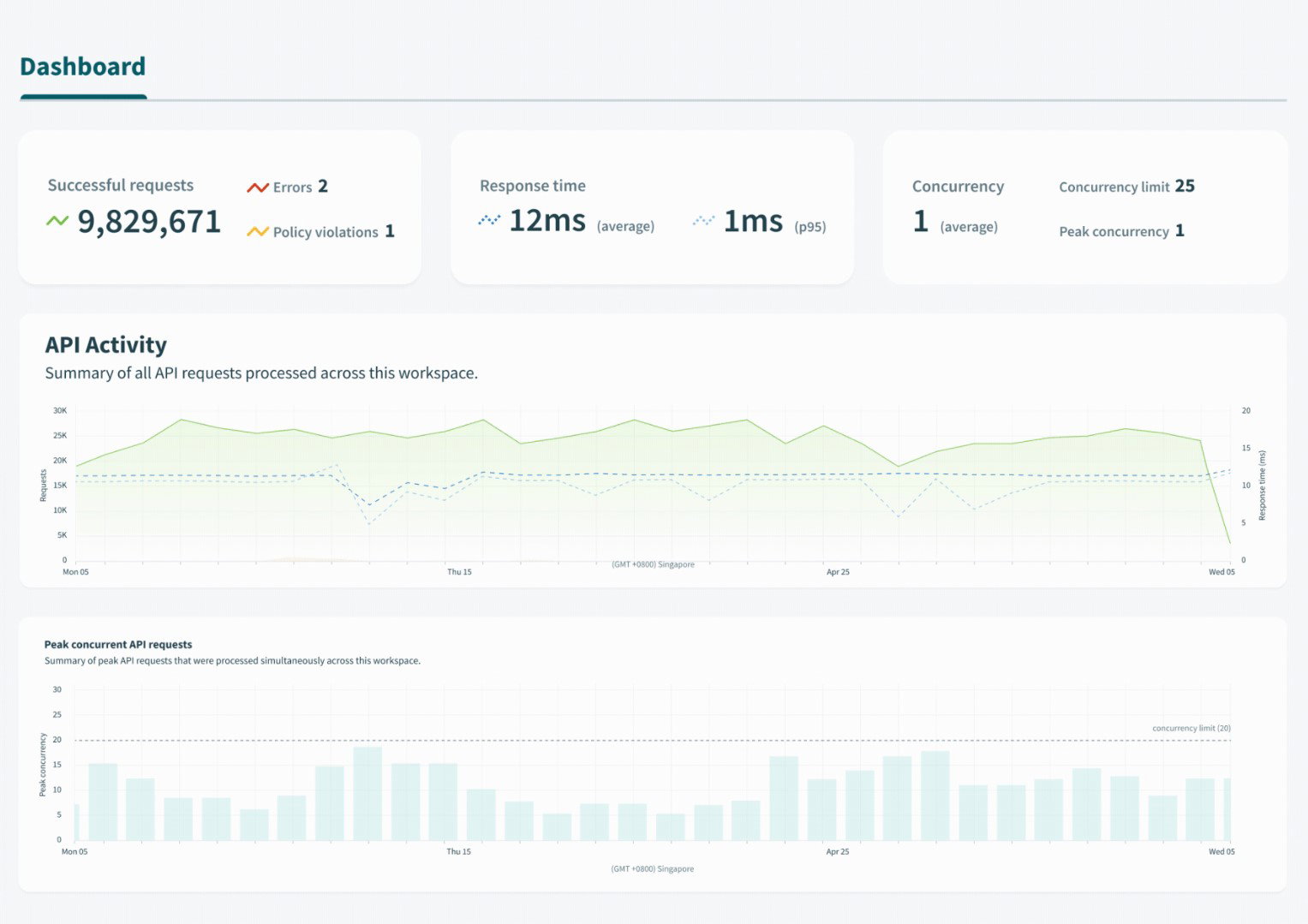
A key highlight is Workato Orchestrate (iPaaS+) on the Workato ONE platform, which brings an agentic, AI-powered approach to API management. Instead of treating APIs as isolated endpoints, it enables organizations to orchestrate APIs alongside data, apps, and workflows through AI-driven agents. This allows APIs to power end-to-end processes across systems, delivering more connected, automated, and context-aware operations, helping businesses move toward an “Agentic Enterprise” where APIs and AI work together seamlessly.
Pricing
Workato offers interested customers a flexible, consumption-based pricing model tailored to business needs. Organizations pay for a platform edition along with usage, such as the number of automation “recipes” deployed. Pricing includes features such as unlimited connections, workflows, collaborators, and governance controls. Businesses can customize plans based on their scale and requirements, with predictable usage tracking and support included. Pricing details are available upon request through a demo.
What Works & What Doesn't
| Pros | Cons |
| Low-code, user-friendly interface | Steep learning curve |
| Easy usability and integrations | Missing features |
| Good automation capabilities | Data limitations |
Our Final Take
Workato API Management is best suited for mid-size to large enterprises looking to combine API management with automation and integration in a single platform. While it may require investment and onboarding, its orchestration capabilities and AI-driven approach help organizations build connected, intelligent API ecosystems.
Top 5 API Management Tools Comparison
| Criteria |  |
 |
 |
 |
 |
| Starting Price | Custom | Free Version | $48 per month | Free Version | Custom |
| Avg. User Rating | 4.5 | 4.6 | 4.2 | 4.2 | 4.7 |
| Trial Period/Demo | 30-Day Free Trial | 30-Day Free Trial | NA | NA | Demo |
| Key Features | API lifecycle management, prebuilt connectors, and policy enforcement | API testing automation, shared workspaces, and API security framework | Centralized control plane, rate limiting policies, and compliance certifications | Serverless architecture, traffic throttling, and real-time monitoring | Low-code automation, API orchestration, and AI-driven agents |
| Integrations | Salesforce, ServiceNow, and Workday | Jira, Slack, Amazon API, and Splunk | Azure services and other third-party services | AWS services and other third-party services | Adobe Marketo Engage, Databricks, and Google Workspace |
Conclusion
API Management Tools are essential for managing, securing, and scaling APIs while integrating them within existing software applications, databases, and systems. Each aforementioned tool has its own pros and cons, unique strengths, and limitations that make it suitable for some businesses.
By carefully understanding your business needs, technical stack, and team size, you can align the best tool for your goals. Here’s a table that can help you crack the code!
P.S. Always remember to check the vendor’s site for the latest information!
Frequently Asked Questions
What Are The Best API Management Tools In 2026?
Some of the top API management tools in 2026 include MuleSoft Anypoint Platform by Salesforce, Postman, Azure API Management by Microsoft, Amazon API Gateway, and Workato. These platforms offer a mix of API lifecycle management, security, scalability, and integration capabilities, helping businesses efficiently design, deploy, and manage APIs across cloud, hybrid, and on-premises environments.
What Features Should You Look For In An API Management Tool?
When choosing an API management tool, businesses typically look for features such as API lifecycle management, strong security and governance controls, scalability, integration capabilities, and performance monitoring. Additional features like AI-powered automation, low-code development, and developer-friendly portals can further enhance productivity and make it easier to manage complex API ecosystems.
Why Do Businesses Need API Management Tools?
Businesses need API management tools to streamline how applications communicate, ensuring secure, reliable, and scalable integrations. These tools help organizations manage the full API lifecycle, enforce governance policies, monitor performance, and maintain compliance, ultimately enabling faster development, better collaboration, and more efficient digital transformation.
Wed, Mar 25, 2026

Enjoyed what you read? Great news – there’s a lot more to explore!
Dive into our content repository of the latest tech news, a diverse range of articles spanning introductory guides, product reviews, trends and more, along with engaging interviews, up-to-date AI blogs and hilarious tech memes!
Also explore our collection of branded insights via informative white papers, enlightening case studies, in-depth reports, educational videos and exciting events and webinars from leading global brands.
Head to the TechDogs homepage to Know Your World of technology today!
Disclaimer - Reference to any specific product, software or entity does not constitute an endorsement or recommendation by TechDogs nor should any data or content published be relied upon. The views expressed by TechDogs' members and guests are their own and their appearance on our site does not imply an endorsement of them or any entity they represent. Views and opinions expressed by TechDogs' Authors are those of the Authors and do not necessarily reflect the view of TechDogs or any of its officials. While we aim to provide valuable and helpful information, some content on TechDogs' site may not have been thoroughly reviewed for every detail or aspect. We encourage users to verify any information independently where necessary.
Loading comments...