
Software Development
Top 5 Software Configuration Management Tools Of 2026
Share
TL;DR
-
Salt Project: Provides high-performance, event-driven automation that is ideal for rapidly scaling large enterprise estates.
-
Ansible Collaborative: Offers an agentless architecture and simple YAML playbooks for easy onboarding and flexible orchestration.
-
Puppet: Uses a declarative, model-driven approach to guarantee a consistent system state and robust compliance auditing.
-
Terraform: Excels at infrastructure-as-code provisioning with deep multi-cloud reach and a vast provider ecosystem.
-
Progress Chef: Utilizes a mature policy-as-code model to enforce desired system states across diverse, heterogeneous infrastructures.
Introduction
When businesses scale at an unprecedented rate, Netflix often comes to mind. The streaming giant successfully transitioned from mailing DVDs to delivering billions of hours of content globally. This massive evolution relies on Software Configuration Management (SCM) to act as the backbone for consistency across the entire development lifecycle. Just as a hit series must maintain its quality and character depth across multiple seasons, SCM provides the essential quality control that keeps development and deployment on point. It allows teams to manage complex microservices and infrastructure updates in real time, ensuring that even as new technical "plot twists" arise, the system remains stable and reliable.
By automating security checks and version control, these digital solutions empower developers to focus on innovation rather than the chaos of scaling. Staying ahead in this fast-paced environment requires the right tools to navigate modern software deployment with confidence. Explore these 5 Software Configuration Management tools that are redefining operational excellence for 2026. Read on!
What Is A Software Configuration Management Tool?
Software Configuration Management Tools are digital solutions that help development teams manage, control, and track changes in software code, configurations, and documents across multiple environments. By incorporating automation, consistency, and security checks, SCM tools are helping businesses navigate the complexities of modern software deployment, keeping pace with industry giants and startups alike.
These tools ensure that software systems evolve without breaking under pressure, much like how a hit show remains consistent across seasons, even as new plot twists and characters are introduced.
It’s 2026, and just like last year, we’re back with an updated list of Software Configuration Management examples. So, let’s explore the top 5 Software Configuration Management Tools of 2026, along with standout features and key benefits.
Top 5 Software Configuration Management Tools Of 2026
The rise of DevOps and continuous integration/continuous delivery (CI/CD) pipelines has made SCM tools indispensable. Below are the tools that have helped businesses with all of that.
Thus, let’s look into the top 5 Software Configuration Management Tools of 2025, listed in no particular order.
 |
 |
 |
 |
 |
Salt Project: Best For Scalability
Salt Project (commercially aligned with VMware Aria Automation Config and backed by Broadcom) stays on our 2026 list as a high-performance, event-driven configuration management platform for large estates. It combines fast remote execution with declarative states to enforce consistency across thousands of nodes. It is consistently rated in configuration-management categories, including an 82% satisfaction profile on G2 and 6.3/10 on TrustRadius, plus a 3.8/5 Gartner Peer Insights score.
Why We Chose Salt Project In 2026
Salt Project stands out in 2026 for its event-driven architecture, which lets teams react to infrastructure changes in real time and remediate drift automatically. Its master–minion model, ZeroMQ-based transport, and YAML/Jinja “states” enable very fast fan-out and fine-grained orchestration across thousands of systems, making it particularly attractive for enterprises with dynamic, heterogeneous Linux-first estates where simple, agentless tools can struggle to keep pace.
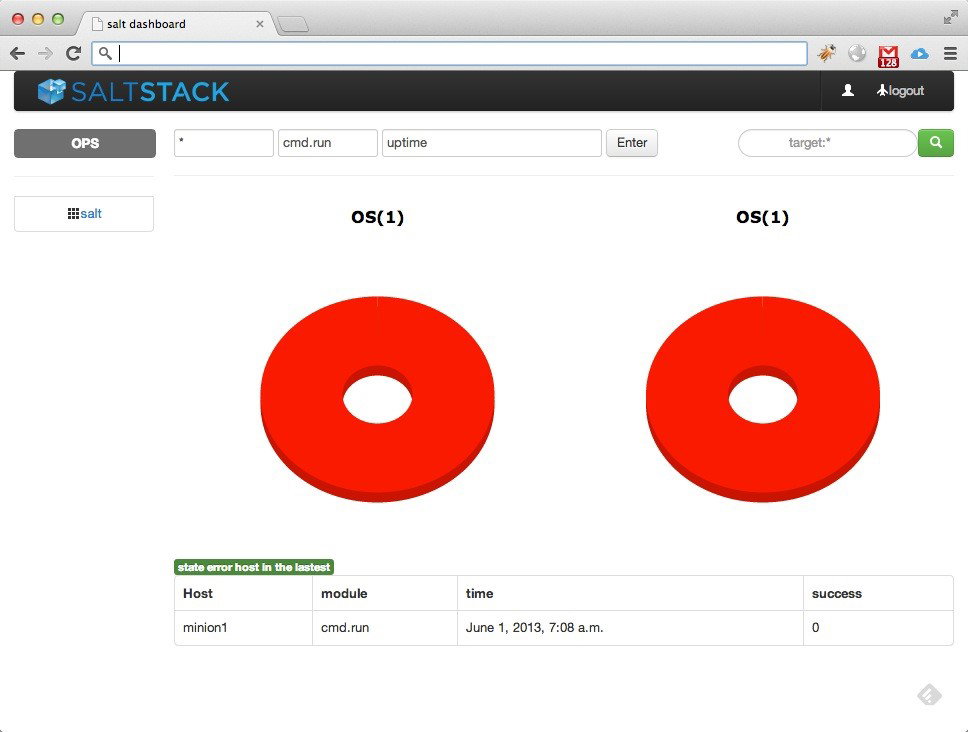
Salt delivers strong practical value where speed, scale, and customization matter: it handles configuration management, remote execution, cloud provisioning via Salt Cloud, and complex orchestration workflows in one toolchain. In enterprise deployments, Salt’s commercial counterpart (VMware Aria Automation Config) can run on ISO-certified VMware Cloud infrastructure and forms part of the VMware Aria Suite, which carries ISO/IEC 27018:2019 and related certifications, with SOC 2-attested cloud platforms and TLS-encrypted channels plus encrypted storage helping teams align to GDPR and other regulatory frameworks.
Pricing
Salt Open is free under the Apache 2.0 license, while Aria Automation Config (enterprise Salt) follows quote-based, per-node licensing bundled into the VMware Aria suite with a short integrated trial rather than public list pricing.
What Works And What Doesn’t
| Pros | Cons |
| Real-time, event-driven automation for rapid remediation | Requires deeper expertise compared to simpler CM tools |
| Extremely fast scaling across large node counts | More operational overhead |
| Highly customizable with Python modules and flexible state definitions | Smaller ecosystem and fewer ready-made patterns |
Our Final Take
Salt Project is best suited for large or rapidly scaling engineering and operations teams that need high-speed, event-driven configuration management and orchestration across complex hybrid or multi-cloud estates. It is less ideal for very small teams or simple environments that prioritize minimal tooling complexity. If you are prepared to invest in its learning curve and want powerful, programmable control at scale, Salt remains a compelling 2026 choice.
Ansible Collaborative: Best User Experience (UX)
A new entrant in our 2026 list, Ansible Collaborative, remains a top-tier configuration-management and automation platform in 2026. Industry trackers report more than 80,000 companies using Ansible across multiple regions. While not tied to formal 2024–2025 G2 or Gartner awards, it continues to earn community-driven recognition through repeated Opensource.com Community Awards and ongoing editorial mentions highlighting its large contributor ecosystem and extensive Ansible Galaxy module library.
Why We Chose Ansible Collaborative In 2026
Ansible Collaborative stands out in 2026 for its agentless architecture and simplicity—no need to install agents on managed nodes, instead using secure SSH/WinRM transports, which makes onboarding and day-to-day operation easier. Its playbooks use human-readable YAML, enabling fast adoption by teams without a deep programming background while still supporting complex orchestration, deployment, and configuration workflows across cloud, on-premises, or hybrid environments.
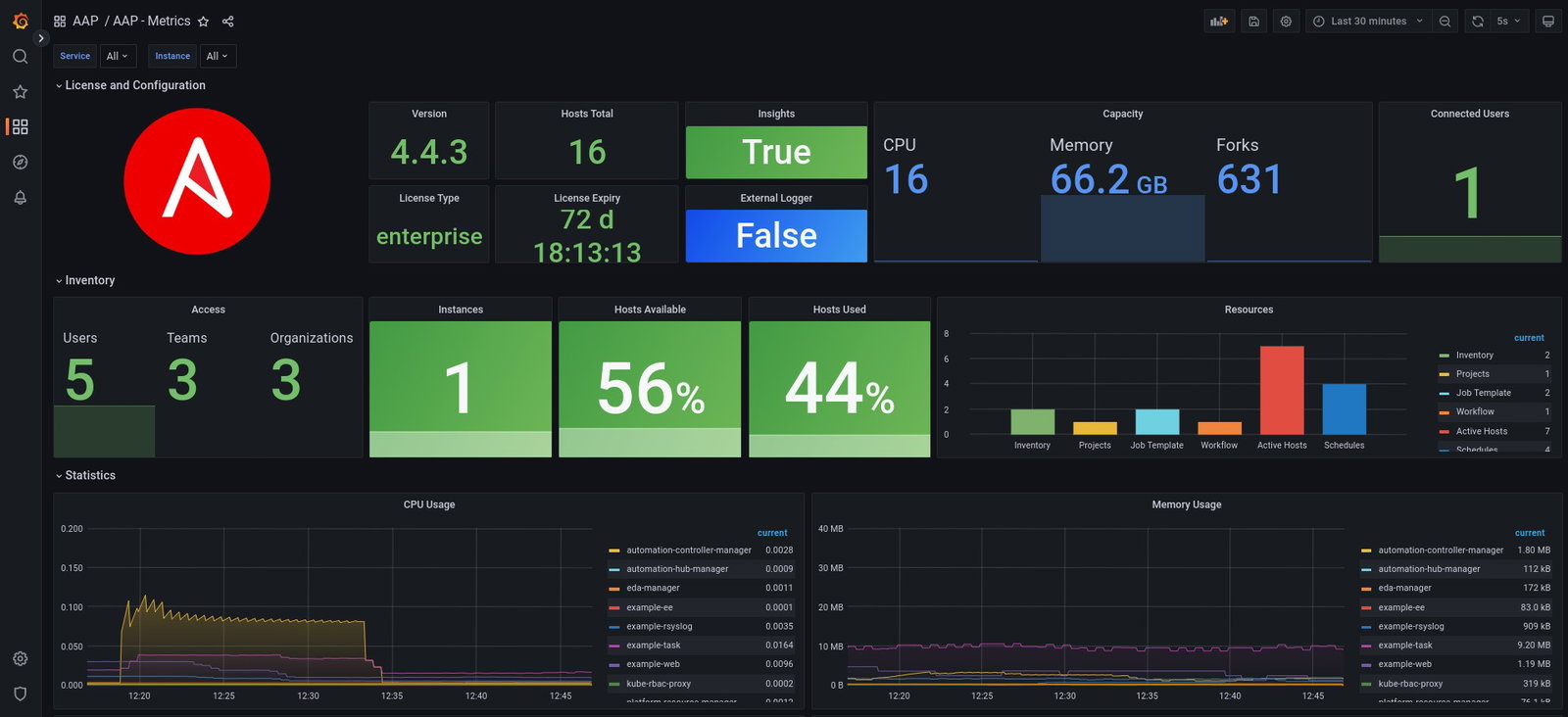
Ansible is widely deployed for configuration management, application deployment, orchestration, and cloud provisioning—making infrastructure setup, scaling, updates, and patching consistent and repeatable across large fleets of servers. Its modular design and extensive support for OSes, network devices, and cloud providers let teams automate heterogeneous environments with minimum overhead, reducing human error and boosting operational reliability.
Pricing
Ansible core (open-source) is free under the GPL-3.0 license. Enterprise-grade Ansible (Ansible Automation Platform/Ansible Collaborative) is offered by a subscription/licensing model; pricing depends on the number of managed nodes and support level, which is not publicly disclosed.
What Works And What Doesn’t
| Pros | Cons |
| Agentless setup reduces operational overhead | Slower execution at a very large scale |
| Simple YAML playbooks accelerate adoption | Playbooks become complex in large environments |
| A broad module ecosystem supports diverse platforms | Limited state-enforcement compared to strict CM tools |
Our Final Take
Ansible Collaborative is a great System Configuration Management tool for teams of all sizes seeking a simple, flexible, and widely supported automation tool that handles configuration, deployment and orchestration without heavyweight requirements. It may be less ideal where ultra-fast execution or strict state enforcement is critical. In those cases, combining Ansible with complementary tools could help. For most organizations wanting a low-overhead, versatile, and scalable automation foundation, Ansible remains a top choice in 2026.
Puppet: Best For Enterprise
Puppet, acquired by Perforce in 2022, continues as a retained tool on our 2026 list, widely adopted across enterprise and hybrid infrastructures. The platform serves thousands of organizations globally and is consistently recognized by industry analysts. It earned a 2024 TrustRadius Top Rated Award in Configuration Management and was listed in the 2024 Gartner Peer Insights Customers’ Choice distinctions for configuration automation platforms. Puppet’s 2025 updates further introduced hardened binaries and enhanced package delivery, strengthening security while preserving its open-source foundation.
Why We Chose Puppet In 2026
Puppet is chosen for its declarative, model-driven approach to configuration: administrators define the desired end-state, and Puppet ensures infrastructure converges to that state. Its resource abstraction layer and cross-platform support, including Linux, Unix variants, and Windows, let teams manage heterogeneous environments with consistency. Puppet Enterprise further adds enterprise-grade automation, security compliance enforcement, real-time reporting, and orchestration capabilities suitable for regulated or large-scale infrastructures.
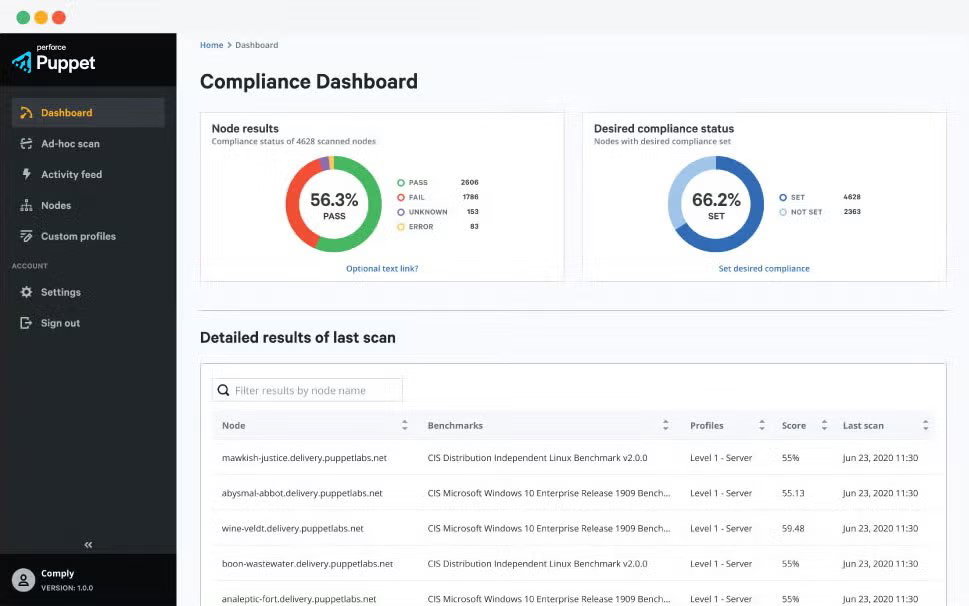
With Puppet, organizations can codify infrastructure state as code (in its DSL), automate software deployments, manage configurations across on-premise servers, cloud, or hybrid environments, and enforce compliance and security baselines via policy-as-code. For enterprises needing centralized control, auditability, drift detection, and consistent configuration across thousands of nodes, Puppet offers a stable, mature, and scalable solution.
Pricing
Open-source Puppet is available for free under the Apache 2.0 license. Puppet Enterprise uses a per-node licensing model; basic licenses are reportedly priced around a few dollars per node/year for standard support, with premium support options costing more.
What Works And What Doesn’t
| Pros | Cons |
| Declarative model guarantees a consistent system state | Agent-based architecture increases operational overhead |
| Broad OS support for heterogeneous environments | Steeper learning curve for new teams |
| Strong compliance, reporting, and drift-detection features | Less flexible for ad-hoc automation tasks |
Our Final Take
Puppet is best suited for medium-to-large organizations seeking robust, scalable, and consistent configuration management across diverse environments with strong compliance and audit requirements. It may be less ideal for small teams seeking lightweight, minimal-overhead automation. Although for enterprises needing state enforcement, cross-platform support, and detailed infrastructure control, Puppet remains a top-tier choice in 2026.
Topics for more insights
Terraform: Best For Integration
Terraform, now part of IBM following the completion of the HashiCorp acquisition in February 2025, joins our 2026 list as a new entrant for infrastructure provisioning at scale. Market trackers report 52,600+ companies using HashiCorp Terraform globally, with a strong presence in the US and UK and broad international adoption. Terraform holds an 8.8/10 TrustRadius rating from 150+ reviews as of late 2024, reflecting strong user sentiment. Forrester analysis in 2024 continues to highlight Terraform as a core IaC automation platform in the modern cloud landscape.
Why We Chose Terraform In 2026
In 2026, we selected Terraform for its dominance in infrastructure-as-code provisioning and its deep multi-cloud reach. Terraform’s declarative language, vast provider ecosystem, and module registry let teams standardize infrastructure definitions across AWS, Azure, Google Cloud, and on-prem platforms, while Terraform 2.0 features such as Stacks improve modularity and scalability for complex, multi-environment topologies.
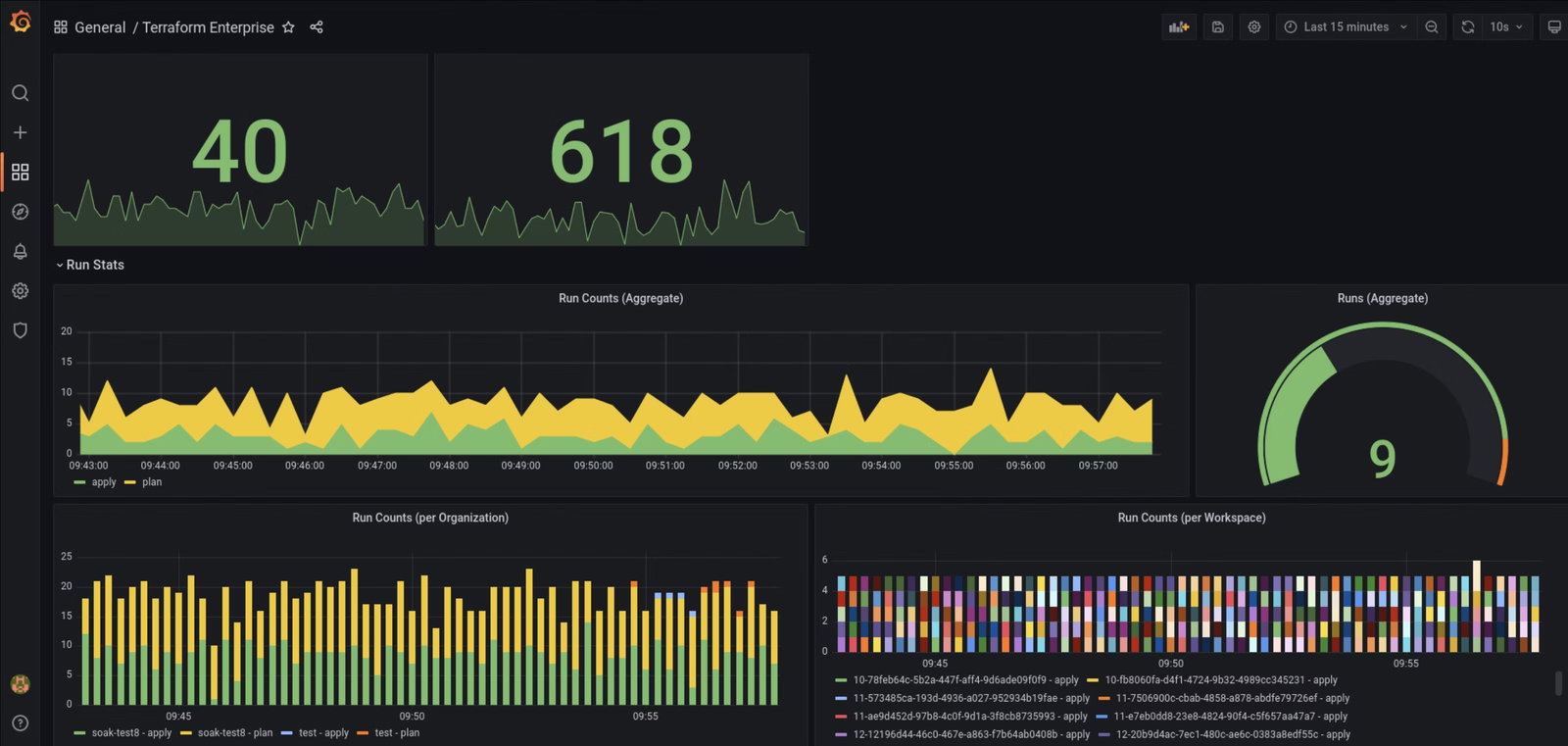
Terraform provides a unified workflow to provision and update infrastructure safely via plan/apply, enabling repeatable, version-controlled changes and automated rollouts across hybrid estates. Terraform Cloud and Terraform Enterprise add state management, workspaces, policy-as-code with Sentinel, SSO, and team governance, and run on SOC 2-audited, ISO 27001-certified infrastructure with encrypted data at rest and in transit, helping organizations align to frameworks like GDPR and HIPAA when combined with compliance-as-code practices.
Pricing
What Works And What Doesn’t
| Pros | Cons |
| Wide multi-cloud support via rich providers | Not suitable for in-guest configuration |
| Predictable plan/apply workflow for safe changes | State files require strict governance controls |
| Strong security, governance, and policy features | Complex modules and workspace structure |
Our Final Take
Terraform is best suited for teams that need standardized, repeatable IaC across multi-cloud or hybrid environments and want governance, security, and collaboration around infrastructure changes. It is less ideal as a stand-alone tool where deep in-guest configuration management is required. As the provisioning backbone in a toolchain alongside Ansible, Puppet, Salt, or Chef, Terraform is a powerful 2026 choice for modern platform and DevOps teams.
Progress Chef: Best Customization
Progress Chef remains a key configuration-management and automation platform in 2026, widely used by enterprises seeking robust policy-driven infrastructure control. The 2024 G2 Grid® Report lists Chef as a “Leader” in configuration-management tooling based on high customer satisfaction and strong market presence.
Why We Chose Progress Chef In 2026
Progress Chef stands out for its mature, policy-as-code model: using Ruby-based DSL to define “recipes” and “cookbooks,” it enforces desired infrastructure and system states consistently across machines. From Linux, Windows, to cloud and on-prem servers, its platform-agnostic design allows management of heterogeneous environments, offering flexibility to handle complex, mixed infrastructures.
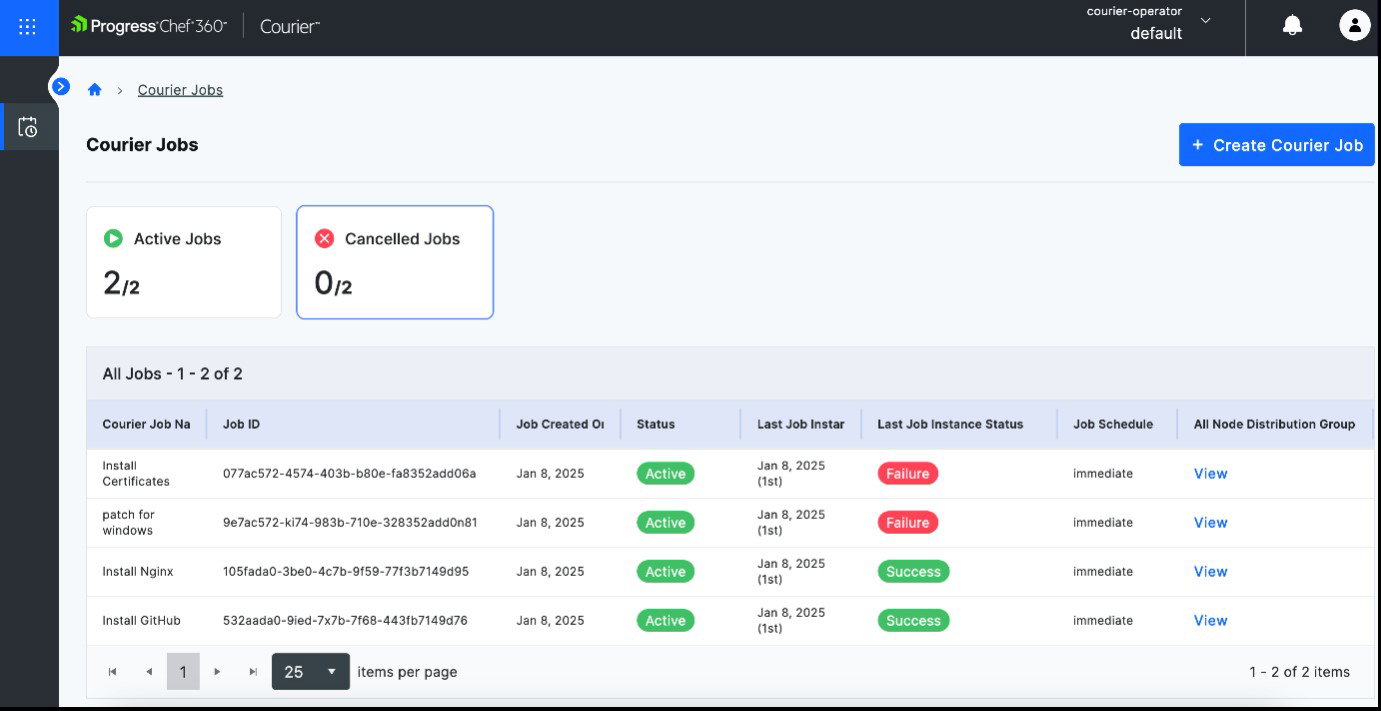
With Progress Chef, organizations automate configuration, deployment, compliance checks, and system maintenance—reducing manual effort, human error, and configuration drift while improving reproducibility. Its built-in support for compliance frameworks (e.g., CIS benchmarks, regulatory standards) plus integrations with CI/CD pipelines, cloud providers, and orchestration tools make it valuable when compliance, scale, and reliability matter.
Pricing
Progress Chef uses a per-node annual subscription model. The Business plan is $59 per node/year, Enterprise is $189 per node/year, and Enterprise Plus is available via custom quote for advanced security and compliance needs. Pricing can vary depending on deployment scale and cloud-marketplace purchasing options.
What Works And What Doesn’t
| Pros | Cons |
| Strong policy-as-code for consistent automation | Ruby DSL requires a steep learning effort |
| Broad OS and cloud environment support | Higher setup complexity than agentless tools |
| Robust compliance, auditing, and integration features | Premium cost unsuitable for smaller teams |
Our Final Take
Progress Chef is best suited for medium-to-large organizations requiring robust, policy-driven configuration management with compliance and cross-platform support. It may be less ideal for small teams or simple setups where overhead and complexity outweigh benefits. For enterprises needing flexibility, standardization, and strong governance around infrastructure, Progress Chef remains a compelling 2026 choice.
Top 5 Software Configuration Management Tools Comparison
P.S.: Always remember to visit the vendor’s site for the latest information!
| Criteria |  |
 |
 |
 |
 |
| Starting Price | N/A | N/A | N/A | N/A | $59/node/year |
| Avg. User Rating | 4.2 | 4.6 | 4.3 | 4.7 | 4.1 |
| Trial/ Demo | Demo | Demo | Demo | 30-Day | Demo |
| Key Features | Event-driven automation, fast remote execution, and scalable orchestration | Agentless automation, YAML playbooks, and a large module ecosystem | Declarative CM, compliance enforcement, and drift detection | Multi-cloud IaC, plan/apply workflow, and policy-as-code | Policy-as-code CM, compliance scanning, and cross-platform automation |
| Integrations | Cloud providers, CI/CD tools, monitoring systems, and more | Clouds (AWS/Azure/GCP), OS, network devices, and more | CI/CD, cloud providers, OS platforms, and more | AWS, Azure, GCP, on-prem, and more | Clouds, CI/CD, security tools, and more |
Conclusion
The 2026 configuration-management landscape highlights five tools that excel in different operational needs. Terraform leads in multi-cloud provisioning and governance, while Ansible offers unmatched accessibility and a strong open-source ecosystem. Salt and Puppet remain reliable for state enforcement, compliance, and managing large, complex infrastructures. Progress Chef adds mature policy-as-code capabilities suited for security-focused environments.
Choosing the right software configuration tool depends on scale, compliance requirements, team expertise, and infrastructure complexity. For many organizations, a combination—such as Terraform for provisioning and Ansible or Puppet for configuration—delivers the most resilient and efficient automation strategy for 2026.
Frequently Asked Questions
What Are The 5 Software Configuration Management Tools Of 2026?
The top SCM tools of 2026 are Salt Project, Ansible Collaborative, Puppet, Terraform, and Progress Chef, each excelling in automation, state management, provisioning, and compliance across hybrid and multi-cloud environments.
What Are The Features Of Software Configuration Management?
SCM tools provide version control, automated configuration enforcement, infrastructure provisioning, compliance checks, drift detection, orchestration, policy-as-code, and integration with CI/CD pipelines, ensuring consistent, secure, and repeatable infrastructure management across diverse environments.
What Is The Best Software Configuration Management Tool Of 2026?
Terraform leads for multi-cloud provisioning, Ansible for simplicity and adoption, and Puppet/Salt/Chef for state enforcement and compliance. The “best” depends on needs, though Terraform and Ansible remain the most widely preferred combinations in 2026.
Tue, Mar 10, 2026

Enjoyed what you've read so far? Great news - there's more to explore!
Stay up to date with the latest news, a vast collection of tech articles including introductory guides, product reviews, trends and more, thought-provoking interviews, hottest AI blogs and entertaining tech memes.
Plus, get access to branded insights such as informative white papers, intriguing case studies, in-depth reports, enlightening videos and exciting events and webinars from industry-leading global brands.
Dive into TechDogs' treasure trove today and Know Your World of technology!
Disclaimer - Reference to any specific product, software or entity does not constitute an endorsement or recommendation by TechDogs nor should any data or content published be relied upon. The views expressed by TechDogs' members and guests are their own and their appearance on our site does not imply an endorsement of them or any entity they represent. Views and opinions expressed by TechDogs' Authors are those of the Authors and do not necessarily reflect the view of TechDogs or any of its officials. While we aim to provide valuable and helpful information, some content on TechDogs' site may not have been thoroughly reviewed for every detail or aspect. We encourage users to verify any information independently where necessary.
Loading comments...