
Data Management
Move It Easily With Database Migration Tools
Share
Overview
I like to move it, move it
I like to move it, move it
Ya like to (move it!)”
Are you grooving to this tune from the Madagascar movies? We can’t blame you; no one can resist showing their moves while this song is playing. This song would have landed you on the sets of Madagascar where Marty (the zebra), Alex (the lion), Melman (the giraffe) and Gloria (the hippopotamus) are being shipped to a Kenyan wildlife preserve as they tried to break out of Central Park Zoo. You must be thinking, why are we talking about this when the article reads Database Migration Tools?
Do you know there is a striking similarity between Database Migration Tools and the Madagascar movies? Database Migration Tools help you to move data from one type of database to another, just like the animals of Central Park Zoo wanted to migrate to a wildlife preserve.
Well, the grooving can wait - read on to know everything about Database Migration Tools!
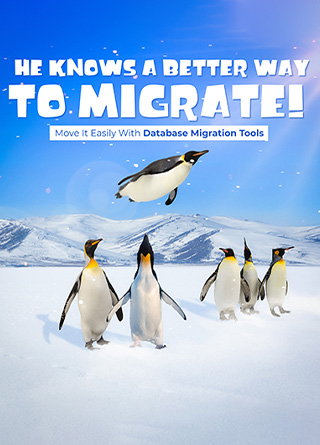
.jpg.aspx "TechDogs-\"Move It Easily With Database Migration Tools\" He Knows A Better Way To Migrate!")
What comes to your mind when you hear about the Madagascar movie series, besides nostalgia, of course? The friendship between the four zoo animals, the not-so-smart penguins, their plan to break out of the zoo and their accidental migration to Madagascar. Oh, sugar honey iced tea!
The movie is all about their migration, right? Well, today we will also be talking about another type of migration – Database Migration Tools.
You could be a developer, a business owner, or a data analyst – regardless of your profession, databases are an integral part of your life. You might have a MySQL database on your laptop to use for testing and development, or you might have a SQL server running in the cloud that stores all your customer information. Regardless of the type of database you are working with, managing your data can be tricky. That’s because the process of migrating databases from one system to another is never easy.
Database Migration Tools are an important component of any database application. They allow you to move your data from one database to another with minimal downtime.
Want to know more about Database Migration Tools? Read on!
First Things First - What are Database Migration Tools?
Migration is never easy – be it the migration of animals of Central Zoo Park or data. It always has challenges, like the one faced by Alex, Gloria, Melman and Marty while migrating from the zoo, which accidentally landed them on the island of Madagascar. Although databases are not ruled by the king of lemurs, King Julien XIII, it is still a tough move. However, to make the process of migration easy for data, Database Migration Tools come to the rescue. Before hopping directly to the Database Migration Tools, let’s first know about database migration.
The database migration process involves migrating data from one or more databases (source) to one or more databases (target). Database migrations are designed to modify the structure of relational database objects. FYI: they can also be called schema migrations, database schema migrations, or simply migrations.
There are more and more companies that want to relocate their workloads to new types of storage systems as well as cloud-based services. Businesses that adopt these technologies need tools that allow them to move large amounts of data without interrupting user access. This is where Database Migration Tools come in.
Database Migration Tools allow you to migrate data from one database to another or from a database into an archive like a data warehouse or data lake with no downtime.
It is always better to know everything from the very start, so let’s know the history of these tools in the next section.
History Of Database Migration Tools
Let’s dive in and understand the history of Database Migration Tools.
In 2005, when Git – an open-source distributed version control system – became popular, web-based applications also started being developed with Object-Relational Mapping (ORM) libraries. The idea of this trend was that since developers can make code changes that are easy to roll back using Git, they should be able to do the same thing when it comes to schema changes. After all, any reasonable new feature involves code and schema updates! So, frameworks such as Rails and Django were added to support ORM. However, Database Migration Tools aren't just for these types of frameworks – there are standalone ones like Flyway or Liquibase out there too!
As business requirements demand uninterrupted access and service during the migration phase, better tools were developed. Today, almost every business invests in Database Migration Tools.
Now that you know the history let’s know how these tools work in the next section.
How Do Database Migration Tools Work?
The zoo animals were migrated by packing them in boxes that had air holes. However, the process of migrating data is different. Without further ado, let’s know the steps involved in migrating data:
Step 1: Assess The Data Environment
Evaluate the size of the entire database so that you know how much storage you will require post-migration; assess the applications to make sure that they are cloud-compatible; determine which databases and apps are mission-critical and then decide whether or not the migration is feasible.Step 2: Choose The Right Database Migration Tool
There are many Database Migration Tools in the market, such as Microsoft Azure SQL database, Amazon Web Services (AWS), Google Cloud Platform’s Alooma and many others. However, selecting the right Database Migration Tool is critical so it suits your team's skills and business needs.Step 3: Deploy Proof Of Concept
When you deploy a proof of concept, it allows you to work through the challenges and risks that were identified during your initial assessment. It also brings unforeseen issues to the surface and ensures that your migration will be successful later.Step 4: Review The Migration Plan
The review process will involve multiple business units, including compliance and legal teams. This maintains the integrity of existing security as well as any legal requirements for data that is being moved.Step 5: Data Cleansing
Data cleansing refers to fixing or removing incorrect, corrupt, incorrectly formatted or duplicate data within the database. Since the data won't be cleaned again for some time after the migration, you should make sure that it's accurate before the migration.Step 6: Rebuild A Database Schema That Works With New Schema
Before the migration starts, your IT team needs to convert your current database schema to one that works with the new system.Step 7: Migrate, Validate And Repair
The size of your database will let you decide if you need to load it in stages. The initial data load can take days and it will be transformed, normalized and checked for errors during this process. Once the actual data is loaded into the system, depending on the size of your database, any issues should be addressed before migrating to another database to its new home.Step 8: Migrate Access Privileges And Security Settings To The New Database
Ensure that you duplicate all of the access privileges and security settings in your new migration target. This ensures the older security and access policies are still valid.After knowing the working of Database Migration Tools, let us drive on to the following section and look at the types.

Types Of Database Migration Tools
In Madagascar, the zoo animals were migrated to the Kenyan wildlife preserves. However, there were many wildlife preserves where they could have been migrated to. Their fate took them to Madagascar. This is a story for another day. The gist is just as with wildlife preserves, there are different types of Database Migration Tools. They are:
-
On-premises
These tools are best for changing data warehouses or moving the location of your main data store. It is also useful if you are simply gathering data from disparate sources on-premises as they are capable of managing the broadest range of data integration initiatives as a single platform. On-premises solutions can migrate databases within a large or medium enterprise without moving data to the cloud. Some companies with very specific security restrictions prefer this type of solution. For example – IBM InfoSphere, Microsoft SQL, Information PowerCenter, Oracle Data Service Integrator and many others.
-
Open Source
Open-source tools are developed by communities of database professionals and made available for free or at a low cost. Open-source Database Migration Tools are designed to be universal across databases, allowing you to migrate data from and to any database using standard filters. These tools can run in real time or in batches. For example – Apache NiFi, Flyway, Pentaho and others.
-
Cloud-based
Cloud-based migration tools effectively handle large amounts and types of data, offering greater security capabilities and agility than other tool types. Cloud-based Database Migration Tools can integrate well with both the source and target systems, enabling you to migrate databases using various database engines without any effort or overhead. For example – Alooma, Matillion, Snaplogic and many others.
After knowing their types, let us know the benefits of Database Migration Tools.
Topics For More Insights
Benefits Of Database Migration Tools
Have you ever experienced a tough time deciding whether to use Database Migration Tools? We have mentioned some benefits which you can’t ignore:
-
Increased Efficiency And Cost-efficient
These tools help businesses move databases to platforms that can serve their needs better and help in saving on infrastructure costs as well as manpower. Besides, they also help in reducing downtime due to technological gaps.
-
Upgrading To New Technologies
This is a prevalent reason for migration, where the company shifts from an outdated system or legacy one to one that's designed for today's needs and requirements.
-
Reduced Redundancy
Data migration tools are essential for companies to move all company data to unified storage. This helps minimize redundant data and makes accessing it easy, no matter which division of the company needs it and from which location.
-
Better Security
In most cases, database migration comes with upgraded security options, meaning that the only way to protect your database is to update it regularly.

Yes, we agree! Yet, the future of Database Migration Tools that awaits in the next section is even more awesome!
Future Of Database Migration Tools
The future of the zoo animals in Madagascar is unknown; however, we know what’s in store for Database Migration Tools!
The future of database migration will be focused on agile development techniques to better suit the needs of their clients. Businesses are becoming more competitive as time goes on and they need to make use of newer technology that can keep up with this pace or risk being left behind by newer companies entering their space.
Refactoring databases (a change to the database schema that improves its design with minimal effort) is another area where a lot is happening in terms of innovation as it helps developers use old code for new projects without having to rewrite everything from scratch. This is key in saving both time and money when launching new products into the marketplace. Lastly, businesses that want longevity regarding staying ahead of competitors will be helped by advancements in geospatial databases (a time-based database that is related to a specific location on the Earth's surface). These future trends in database migration could help them achieve a lot more without any back-breaking budgets or timeline constraints.
How cool is that?
Conclusion

Migration of databases is a big undertaking. There are many Database Migration Tools out there with different features and capabilities. It is important to understand the different types of database migrations before choosing a tool that will best suit your needs. Hope this article helped you to understand Database Migration Tools and why you need them!
Frequently Asked Questions
What Are Database Migration Tools?
Database Migration Tools facilitate the transfer of data from one database system to another, minimizing downtime and ensuring seamless migration. Whether you're a developer, business owner, or data analyst, managing databases can be complex. These tools simplify the migration process by efficiently moving data between databases, enabling you to maintain data integrity and accessibility across different platforms.
How Do Database Migration Tools Work?
Database Migration Tools follow a structured process to ensure smooth data migration. First, they assess the data environment to understand the scope of migration and feasibility. Then, the appropriate tool is selected based on business needs and technical requirements. A proof of concept is deployed to address challenges and validate the migration plan. Data cleansing is performed to ensure data accuracy, followed by schema rebuilding to align with the new system. The actual migration involves loading, validating, and repairing data, with access privileges and security settings replicated in the new database.
What Are The Benefits Of Database Migration Tools?
Database Migration Tools offer several benefits, including increased efficiency and cost-effectiveness by optimizing database platforms, upgrading to new technologies, reducing data redundancy, and enhancing security measures. These tools empower businesses to migrate databases seamlessly, enabling them to adapt to evolving technological landscapes and improve operational effectiveness.
Mon, Mar 20, 2023

Enjoyed what you read? Great news – there’s a lot more to explore!
Dive into our content repository of the latest tech news, a diverse range of articles spanning introductory guides, product reviews, trends and more, along with engaging interviews, up-to-date AI blogs and hilarious tech memes!
Also explore our collection of branded insights via informative white papers, enlightening case studies, in-depth reports, educational videos and exciting events and webinars from leading global brands.
Head to the TechDogs homepage to Know Your World of technology today!
Disclaimer - Reference to any specific product, software or entity does not constitute an endorsement or recommendation by TechDogs nor should any data or content published be relied upon. The views expressed by TechDogs' members and guests are their own and their appearance on our site does not imply an endorsement of them or any entity they represent. Views and opinions expressed by TechDogs' Authors are those of the Authors and do not necessarily reflect the view of TechDogs or any of its officials. While we aim to provide valuable and helpful information, some content on TechDogs' site may not have been thoroughly reviewed for every detail or aspect. We encourage users to verify any information independently where necessary.
Loading comments...