
Networking Solutions
A Simple Guide To Network Traffic Analysis
Share
Overview
What’s even more relatable for us is the “Rush Hour” trilogy, starring the iconic Jackie Chan and Chris Tucker. In the first movie, Chris Tucker’s character James Carter is demoted to a traffic cop, which gave rise to the unforgettable scene of him directing traffic while dancing like Michael Jackson. He may have made directing traffic fun for us but he hated being on traffic duty. Carter felt his skills could be better used to help the FBI solve a kidnapping case (no spoilers here!). However, he later teams up with Inspector Lee (Jackie Chan) despite his preference to work alone – and look how well that worked out!
Well, Carter, we bet you would have appreciated having a partner to help manage traffic by analyzing the flow and movement of cars. While that might seem a bit challenging, we know the perfect partner to help you manage the traffic on your business network – and no, it’s not Jackie Chan!
Read on to learn about Network Traffic Analysis (NTA)!
.jpg.aspx "TechDogs-\"A Simple Guide To Network Traffic Analysis\" I Have Analyzed This Network Traffic.")
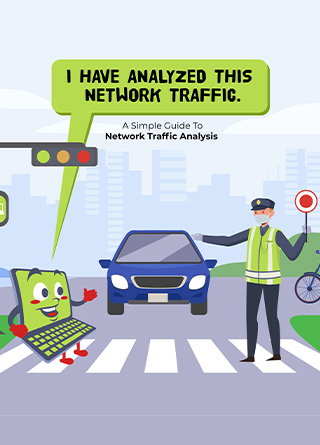
Have you ever been stuck in traffic, having bought some ice cream to take home, asking yourself if there’s a better way to manage the situation? Well, traffic analysis is one way to understand what causes traffic jams and mitigate those factors. It has already helped city planners decongest busy interstates and urban roads, leading to quicker travel times and fewer fender-benders. So, what happens when we translate this concept to traffic on digital networks?
We get Network Traffic Analysis, or NTA. It refers to techniques for monitoring network availability and activity as well as detecting anomalies and risks, including security and operational issues within the network. Businesses can gain insights to optimize the network performance, reduce the attack surface and improve network security by using NTA solutions that continuously monitor the network traffic. NTA also supports IT teams in enhancing the management of bandwidth and network resources. Hence, to efficiently monitor your network traffic, you must understand the concept of Network Traffic Analysis.
Let’s take a road trip through the world of Network Traffic Analysis (NTA)!
What Is Network Traffic Analysis (NTA)?
.gif.aspx "TechDogs-\"What Is Network Traffic Analysis (NTA)?\" A GIF Of James Carter Dancing")
Before we begin, can we just take a moment to appreciate James Carter doing his thing? Similarly, Network Traffic Analysis does its thing for businesses that heavily rely on their networks to operate – and by that, we mean every damn business! Networks are what connect the workforce to their online software, cloud tools, data, communication channels, etc. Hence, the health of a business is directly tied to how quickly and effectively its network traffic moves. This is why businesses and IT teams need Network Traffic Analysis (NTA).
Businesses use tools to tap into their flow data (that is acquired from connected network devices such as routers, PCs, firewalls, etc.) and packet data (from network ports, network TAPs, etc.). This data gives them a holistic view of their network’s performance and health. When combined with Network Traffic Analysis, this data helps them identify problem areas in real time and resolve issues.
Think of this: although Carter and Lee were a great team, they needed LAPD bomb expert Tania Johnson to analyze bomb fragments so they could track down the notorious villain Juntao. In the same way, businesses and IT teams need an expert to look at the data, identify what’s out of place and tell them where they should focus their efforts – that expert is Network Traffic Analysis (NTA).
As the Rush Hour movies progressed, we saw the deepening friendship between the two polar opposite cops – James Carter and Inspector Lee. Similarly, the progression of NTA is a story of deepening friendships between IT teams and technology. Read on to learn how that happened!
Evolution And Origins Of Network Traffic Analysis (NTA)
Black-listing harmful signatures was a long-standing technique in network security. Network analysts could also manually add false positives to a whitelist. This method proved ineffective against evolving threats as the quickly increasing number of alerts rendered it slow and ineffective. Even traditional intrusion detection systems (IDS) and intrusion prevention systems (IPS), as well as other signature-based alternatives, had several drawbacks. The data only revealed the why and how of the attack, making it impossible to predict attacks on the networks well in advance.
SIEM (Security Information And Event Management) tools were widely used by enterprises as an alternative. SIEM solutions could create and aggregate alerts but did not provide analysts with all the information they needed to evaluate and identify threats. Although SIEM was a great place to start the process of network analysis, it lacked information and insights about the specific actions that took place on the network.
Consequently, it was necessary for IT teams to demand tools that could instantly tell apart between legitimate behavior and malicious behavior. Such tools could alert IT teams about unusual traffic which may be a potential attack. This prompted the creation of the NTA.
Newer tools provided the capacity to examine packets on the enterprise network in real time. This was accomplished through a thorough real-time analysis of the network traffic. Since NTA tools enabled companies to see risks in real time and take appropriate actions, NTA became the industry standard by the early 2000s.
With that done, we have covered the working of NTA next!
How Does Network Traffic Analysis (NTA) Work?
Network Traffic Analysis generates a baseline that reflects normal network behavior using a combination of machine learning and behavioral analytics. These solutions notify the IT security team when any unusual network activity or traffic patterns are discovered. NTA can also link malicious behavior to specific IP addresses, ports, or devices, allowing enterprises to conduct forensic analysis and establish which sections of the network are affected.
NTA solutions can also analyze network traffic or flow records to monitor inter-network communications (communications within the network). This is in addition to traffic that passes through the company network's perimeter (communications from outside the network). As a result, any possible risks to the network can be identified and mitigated instantly.
Naturally, this offers several benefits to businesses – read all about it ahead.
Benefits Of Network Traffic Analysis (NTA)
.gif.aspx "TechDogs-\"Benefits Of Network Traffic Analysis (NTA)\" A GIF Showing A Dancing Traffic Cop")
Just as this cop smoothly manages traffic on the streets, organizations use NTA to smoothly manage the traffic on their networks. This provides several advantages, including:
-
Lower Dwell Time Of Infections
The best way to minimize harm is to identify threats immediately. An infection can cause more harm the longer it stays in a network. With NTA, threats can be quickly identified, minimizing the damage they can cause.
-
Improved Efficiency
The majority of businesses lack the personnel or resources necessary to continuously monitor and analyze the network. By automating threat detection through NTA solutions, businesses can ensure that security analysts concentrate on more serious, genuine threats.
-
Network-Wide Coverage
Different operating systems and device types can be monitored by NTA solutions. For instance, most NTA solutions are OS-independent and can monitor traffic from workstations running on Linux, iOS and Windows.
-
Endpoint Protection
Many IoT and edge devices on the network frequently go unnoticed, exposing hidden gaps that can be exploited. No device is overlooked as Network Traffic Analysis is agentless and platform-independent in operation. This gives businesses ongoing visibility across the entire environment.
-
Multiple Threat Detection Engines
Setting a baseline is common practice but Network Traffic Analysis solutions can go further by utilizing multiple detection engines targeted at analyzing the behavior, content, payload, threats, etc. By doing this, businesses can avoid false-positive alerts and make sure they have concrete evidence before responding to a potential threat.
-
Comprehensive Threat Databases
Most Network Traffic Analysis tools don’t just learn from your network’s baseline behavior. They integrate databases with evidence collected from previous threats, malware samples and billions of malicious domains, providing unmatched threat intelligence.
With so many benefits, NTA is a bit like James Carter – always on the move and the prowl for clues about malicious actors threatening the network. Or in his case, malicious drivers threatening to disturb his dance moves while he is “managing” the traffic.
Here’s why NTA is as essential to businesses as James Carter’s playlist is to him!
.gif.aspx "TechDogs-\"Here’s why NTA is as essential to businesses as James Carter’s playlist is to him!\" A GIF Of James Carter Dancing")
How Does Network Traffic Analysis (NTA) Help Businesses?
Businesses understand that managing the network is critical as it is the largest element of their infrastructure. This also means it has a wide attack surface and needs to be regularly monitored. Only by gaining visibility into their network data, baseline behavior and anomalies can IT teams provide resilience, detect attacks and stop them early on. This is where NTA becomes crucial to the network’s functioning.
Even with well-built firewalls, rogue users may still manage to get past them due to network leaks. Hackers may use malicious VPNs, external anonymizers or tunneling to bypass firewalls and gain access to the network. We mean, one of the accomplices of the villain in Rush Hour was a high-ranking police official. This goes to show hackers can infiltrate your “network” without your knowledge. NTA then becomes a necessity for large organizations.
Furthermore, Network Traffic Analysis is even more crucial now that ransomware has become more prevalent. An NTA solution can detect activity indicating a potential ransomware attack before it causes harm. The WannaCry ransomware, for instance, was made possible by attackers actively searching for networks with an open TCP port 445. They then gained access to the network using a flaw in SMBv1, an application layer network protocol in the Windows operating system. This makes NTA much more crucial. Moreover, using NTA, IT teams can quickly identify unusual activities such as lengthy downloads, unapproved streaming, or suspicious inbound or outbound traffic.
As we mentioned earlier, NTA arose from the need to stay on par with the increasing rate of network threats. As these threats continue to grow, Network Traffic Analysis will need to adapt in the near future.
What’s The Future Of Network Traffic Analysis (NTA)?
The global Network Traffic Analysis market size had a valuation of USD 2.49 billion in 2020 and is expected to grow at a compound annual growth rate (CAGR) of 9.7% from 2021 to 2028. The growth can be attributed to the rising demand for effective network administration in response to the increasing network risks and complexity. Additionally, as companies expand their networks with more devices, particularly edge and IoT devices, the requirement to analyze network traffic has grown.
The traditional network's boundaries have also been broadened by the rise in remote work and cloud-based software demand. This will fuel the demand for Network Traffic Analysis in the upcoming years. The need to secure the business network will be driven by the demand for professionals to access everything on the go. Businesses will need to scale their network analytics as their network size grows and NTA will soon become invaluable.
Conclusion
Network Traffic Analysis (NTA) is an important aspect of every business’s security arsenal. It enables IT teams to constantly monitor the network for threats, potential cyber-attacks, intrusions, etc. It tags activities that do not comply with the baseline operations of the network and even identifies the source of the malicious activity. If you’re like James Carter and like working alone, we’re sure working with this tool will change your mind!
Frequently Asked Questions
What Is Network Traffic Analysis (NTA)?
Network Traffic Analysis (NTA) is a method used by businesses to monitor their network activity and identify anomalies or risks, including security and operational issues. Just as city planners analyze traffic patterns to improve road systems, NTA allows businesses to gain insights into their network performance, optimize network resources, and enhance security. By continuously monitoring network traffic, businesses can mitigate potential threats and streamline their network operations effectively.
How Does Network Traffic Analysis (NTA) Work?
Network Traffic Analysis works by generating a baseline of normal network behavior using machine learning and behavioral analytics. It monitors network traffic in real-time, notifying IT security teams of any unusual activity or traffic patterns. NTA solutions can identify malicious behavior, trace it to specific IP addresses or devices, and enable forensic analysis to determine the extent of the network affected. By analyzing both internal and external communications, NTA helps businesses detect and mitigate potential risks promptly.
What Are the Benefits of Network Traffic Analysis (NTA)?
Network Traffic Analysis offers several benefits to businesses, including minimizing the dwell time of infections by quickly identifying threats, improving operational efficiency by automating threat detection, providing network-wide coverage across different devices and operating systems, ensuring endpoint protection by monitoring all network devices, and utilizing multiple threat detection engines to avoid false-positive alerts. Additionally, NTA solutions integrate comprehensive threat databases, offering businesses unmatched threat intelligence and enabling proactive network security measures. By leveraging NTA, businesses can effectively manage their network traffic, enhance security, and mitigate potential risks.
Thu, Mar 16, 2023

Enjoyed what you've read so far? Great news - there's more to explore!
Stay up to date with the latest news, a vast collection of tech articles including introductory guides, product reviews, trends and more, thought-provoking interviews, hottest AI blogs and entertaining tech memes.
Plus, get access to branded insights such as informative white papers, intriguing case studies, in-depth reports, enlightening videos and exciting events and webinars from industry-leading global brands.
Dive into TechDogs' treasure trove today and Know Your World of technology!
Disclaimer - Reference to any specific product, software or entity does not constitute an endorsement or recommendation by TechDogs nor should any data or content published be relied upon. The views expressed by TechDogs' members and guests are their own and their appearance on our site does not imply an endorsement of them or any entity they represent. Views and opinions expressed by TechDogs' Authors are those of the Authors and do not necessarily reflect the view of TechDogs or any of its officials. While we aim to provide valuable and helpful information, some content on TechDogs' site may not have been thoroughly reviewed for every detail or aspect. We encourage users to verify any information independently where necessary.
Loading comments...