
Featured
E-commerce
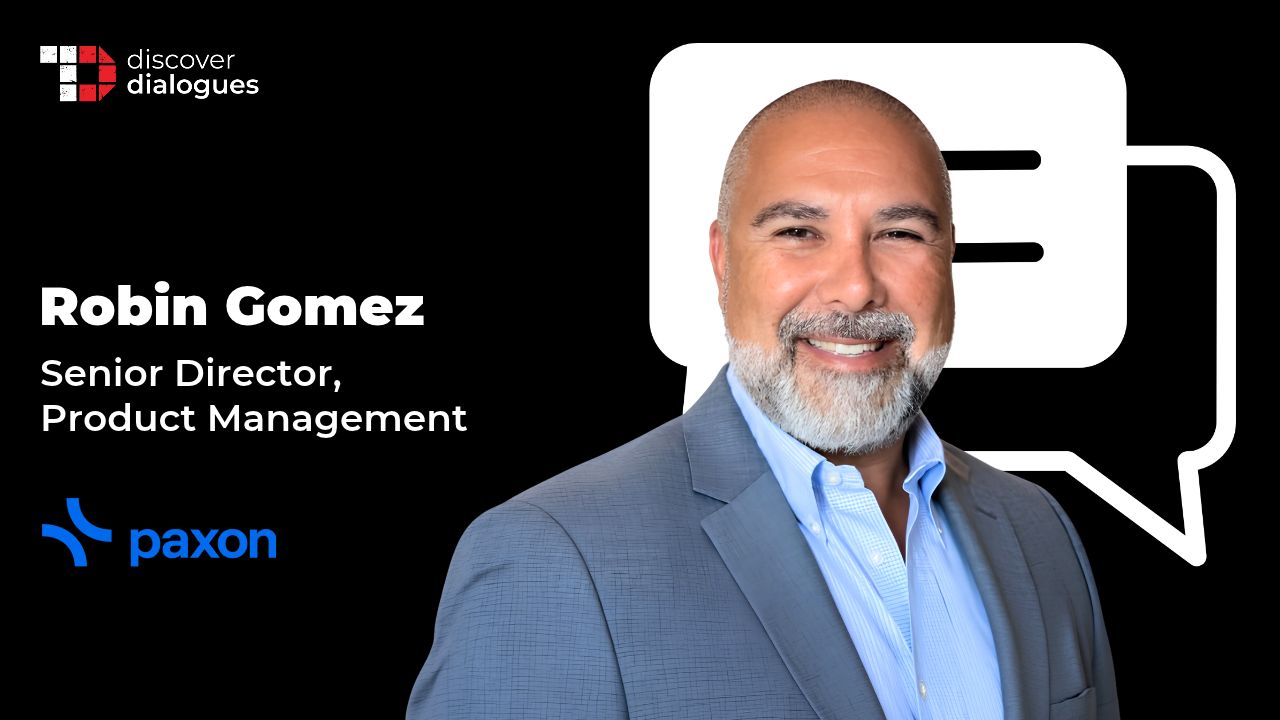
Robin Gomez, Senior Director, Product Management At Paxon, On How Agentic Commerce Is Changing The Future Of Retail
Share
Overview
In this TechDogs Q&A, Robin Gomez, Senior Director, Product Management at Paxon, shares his perspective on how agentic commerce could reshape the future of retail. He explores consumer readiness for autonomous shopping, the importance of secure payments and fraud prevention, and the role of operational excellence in building trust. He also discusses how AI shopping agents could influence product discovery, customer loyalty, and retail competitiveness, while highlighting the infrastructure investments retailers should prioritize to prepare for an increasingly AI-driven shopping experience.
Here is a brief introduction of Robin:
Robin Gomez is Senior Director of Product Management at Paxon (formerly Radial), with over 27 years of experience in strategic operations, product management, and team development. He drives operational excellence through innovative technology-led initiatives that streamline processes, enhance customer experiences, and improve customer care.
Throughout his career, Robin has held leadership roles across Operational Excellence, Data & Analytics, and Consumer Insight, building cross-functional teams and delivering measurable improvements in profitability and employee engagement. At Paxon, he leads AI initiatives and supports product development across order management, payments, fraud, tax, and dropship technologies, bringing a practical perspective to the evolving role of AI in retail and commerce.
TD Editor: Personal AI shopping agents are gaining attention as they evolve from helping consumers discover products to potentially making purchasing decisions on their behalf. From your perspective, what is driving the growing interest in these agents, and how could they change the relationship between consumers and retailers?
As consumers, we are looking for ways to maximize the value we can receive from our purchases, reduce the time to find “deals” and new products, understand what “good” products and services are, and do this in a way that is convenient for us without having to invest a lot of time in virtual window shopping. The agents are providing a conversational way for us to find and research products and services based around more than size, color, etc. but more tailored to contextual needs such as an upcoming event, or activities we enjoy doing. While consumers are not yet fully embracing end-to-end action inclusive of payments at the same pace as discovery, it is growing.
These behavioral changes can have profound impacts on retailers and brands. It will be critical to ensure that they are “visible” to agents and that the operational delivery meets the promises that are made by the retailer to the consumer. Missing promises will have more immediate and negative impacts on agent selection and recommendations.
TD Editor: While AI shopping agents promise greater convenience and personalization, allowing them to make independent purchases requires a different level of trust. How ready do you think consumers are to give AI agents control over their shopping decisions, and what concerns could slow adoption?
Consumers are displaying a growing confidence in agents to make certain purchasing decisions that are more transactional in nature, and the perceived value of the purchase is utilitarian versus experiential. With the current skepticism and reluctance around AI, there may be some collateral impacts slowing adoption for full agent autonomy, but as more basic use cases show customer value, agent adoption will appear in different stages of the retail journey.
Recent research from Paxon (formerly Radial) underscores the distinction between assistance and autonomy, finding that 34% of consumers would allow AI agents to take actions only with their approval, while another 23% would prefer agents to make suggestions without acting on their behalf.
TD Editor: As AI agents begin handling more of the shopping journey, retailers will need to adapt their existing commerce infrastructure. Based on your experience in product management and retail operations, how prepared are retailers for this transition, and what role will fulfillment, payment systems, and operational technology play in supporting fully autonomous purchases?
Retailers have historically taken a more tempered approach to new technology and heavy investments. That said, I think retailers, like other industries, have a wide spectrum of preparedness based on their overall tech stack, business model, product offerings, etc. Fulfillment will play a critical role in consumer adoption of agentic commerce as the promises made to the agent and, in turn, to the consumer need to be met consistently.
Just as the growth of ecommerce was initially challenged due to fragmentation of the purchase, return, and policies from the in-store experience, agentic commerce needs to establish reliability. Payments need to demonstrate security, fraud protection, variety in payment tenders, digital wallets, and more to make it easy for the consumer but difficult for fraudsters. Operational technology needs to readily connect and interact with agents using a common “language” and protocols to facilitate growth and ease of integrations, and transfer of data such as inventory availability, delivery, and post-purchase support.
TD Editor: Imagine an AI shopping agent purchases the wrong product or makes a decision the consumer never intended. How should responsibility be shared when autonomous shopping goes wrong, and what safeguards can retailers put in place to build consumer trust in AI-driven purchases?
Ultimately, agents are tools, and the responsibility needs to be shared between the consumer and the agent provider. Just as financial institutions provide potential fraud alerts and notifications of irregular purchases, these agents need to allow for similar notifications being sent to the consumer. Guidelines and parameters need to be exposed to the consumer to allow for more rigid controls, or more freedom with the agent decisioning.
The importance of these safeguards is reinforced by Paxon’s research, which found that 53% of consumers would require approval before any purchase goes through, and 41% require two-factor authentication for every transaction.
Retailers should monitor and help register agents that are shopping on behalf of consumers and ensure that the purchases are tied to the consumer’s account or records. Retailers should proactively work with providers that can assist with fraud reviews, highlight irregular purchases, and notify customers immediately when a purchase is made, so that the consumer can be aware and, if there are errors, have some time to correct them.
Traditional remorse periods – a window of time after purchase when a customer can cancel or change their order without any penalty – are challenging due to a balance of speed to fulfill and allocate inventory versus accounting for the consumer error. With more agent integration across a fulfillment order flow, these corrections can be made faster and with lower human engagement, providing a better overall experience to the consumer, reduced cost to the retailer, and reduced cost to the fulfillment operation.
TD Editor: As AI shopping agents increasingly influence which products consumers discover and purchase, retailers may need to rethink how they attract customers and differentiate their offerings. How do you see autonomous shopping changing product discovery, brand loyalty, and the way retailers compete for customers?
Discovery becomes even more dependent on retailers’ or brands’ ability to provide accurate inventory, delivery costs, and promise dates. Being able to share accurate information will differentiate retailers especially when combined with product and brand reviews. In fact, the data shows that 43% of shoppers are more likely to try an AI-recommended brand if they have great (human) reviews.
Retailers’ qualitative and quantitative performance will be a critical determinant for agents making decisions to recommend, present, and potentially purchase on a consumer’s behalf. Yet, there still needs to be consumer engagement, marketing, and more connections with the consumer across broader channels to get on their radar.
Loyalty becomes more challenging but can be made even stronger through operational excellence and meeting consumer promises, like ensuring a product is delivered within the communicated timeframe or ensuring easy returns if that’s a significant brand claim. Agents may also look at loyalty programs in the discovery and recommendation algorithms based on consumer settings selecting items like “show me where I can get the best deal and most reward points, or best overall value…”.
As AI agents increasingly incorporate these factors and preferences into recommendation and purchasing decisions, the retailers that consistently deliver on their promises will be better positioned to turn initial recommendations into repeat purchases and lasting customer loyalty.
TD Editor: Looking ahead, how do you see autonomous AI shopping evolving over the next few years, and what will determine whether it becomes a mainstream part of the retail experience? What should retailers prioritize today to prepare for this shift?
Autonomous shopping will continue to grow and expand product categories. For example, take automated recurring purchases that may not be tied to a specific date for traditional subscriptions but are tied to smart devices that require replenishment like refrigerators, filters, or batteries. Consumers need to see the recommendations and promises made by retailers realized with timely delivery, quality of products, ease of customer service, and returns. More integrations across systems make it easier for consumers to access and tie into their mobile devices and other AI-enabled wearables.
Providing experiences that make it seamless, within a budget, controlled, and secure, will help grow agentic shopping and make it second nature for many purchases. While not all shopping will, or even should be, done fully autonomously, I do think that agents will play a role in surfacing products and brands, and then based on the purchase characteristics, either we as consumers will close the action, or the agent will take care of our needs. Retailers should immediately focus on ensuring the foundational components such as data integrity, inventory visibility, operational fulfillment consistency, and policies are ready for agentic commerce, and review their current tech stack and plan for necessary investments should there be gaps in capabilities.
Published on Wed, Nov 18, 2026

Liked what you read? That’s only the tip of the tech iceberg!
Explore our vast collection of tech articles including introductory guides, product reviews, trends and more, stay up to date with the latest news, relish thought-provoking interviews and the hottest AI blogs, and tickle your funny bone with hilarious tech memes!
Plus, get access to branded insights from industry-leading global brands through informative white papers, engaging case studies, in-depth reports, enlightening videos and exciting events and webinars.
Dive into TechDogs' treasure trove today and Know Your World of technology like never before!
Disclaimer - Reference to any specific product, software or entity does not constitute an endorsement or recommendation by TechDogs nor should any data or content published be relied upon. The views expressed by TechDogs' members and guests are their own and their appearance on our site does not imply an endorsement of them or any entity they represent. Views and opinions expressed by TechDogs' Authors are those of the Authors and do not necessarily reflect the view of TechDogs or any of its officials. While we aim to provide valuable and helpful information, some content on TechDogs' site may not have been thoroughly reviewed for every detail or aspect. We encourage users to verify any information independently where necessary.
Loading comments...