
Samsung used NVIDIA GTC 2026 to introduce its next-generation HBM4E memory while outlining a broader strategy to power AI infrastructure. The company also reinforced its collaboration with NVIDIA, highlighting its growing role in the global AI semiconductor ecosystem.
The move underscores Samsung’s ambition to lead in high-performance memory and advanced AI chip solutions.
TL;DR
- Samsung unveiled its next-gen HBM4E memory at GTC 2026.
- The company highlighted deeper collaboration with NVIDIA.
- It showcased end-to-end AI semiconductor capabilities.
- Samsung aims to power next-generation AI workloads and data centers.
The announcement positions Samsung as a key player in the rapidly evolving AI infrastructure race.
Samsung Unveils HBM4E To Power Next-Gen AI Workloads
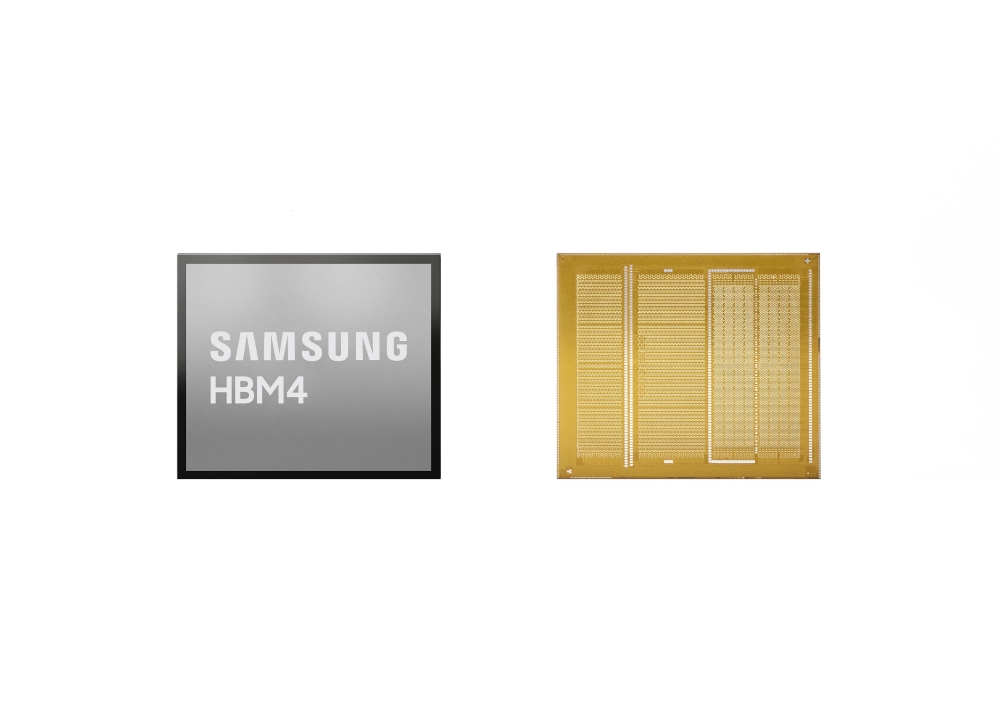
Samsung introduced its latest high-bandwidth memory innovation, HBM4E, designed to meet the growing demands of AI workloads.
HBM4E is expected to deliver significantly improved performance and bandwidth, enabling faster data processing for large-scale AI models and high-performance computing environments.
source
The memory technology plays a crucial role in AI systems, where massive datasets and complex computations require ultra-fast data transfer between processors and memory.
By advancing its HBM roadmap, Samsung aims to support next-generation GPUs and AI accelerators used in training and inference.
The company emphasized that innovations in memory are becoming just as critical as compute in scaling AI capabilities.
Samsung Strengthens NVIDIA Partnership Around AI Infrastructure
Samsung also highlighted its expanding collaboration with NVIDIA during the event.
The partnership focuses on enabling advanced AI systems by combining NVIDIA’s GPU platforms with Samsung’s memory and semiconductor technologies.
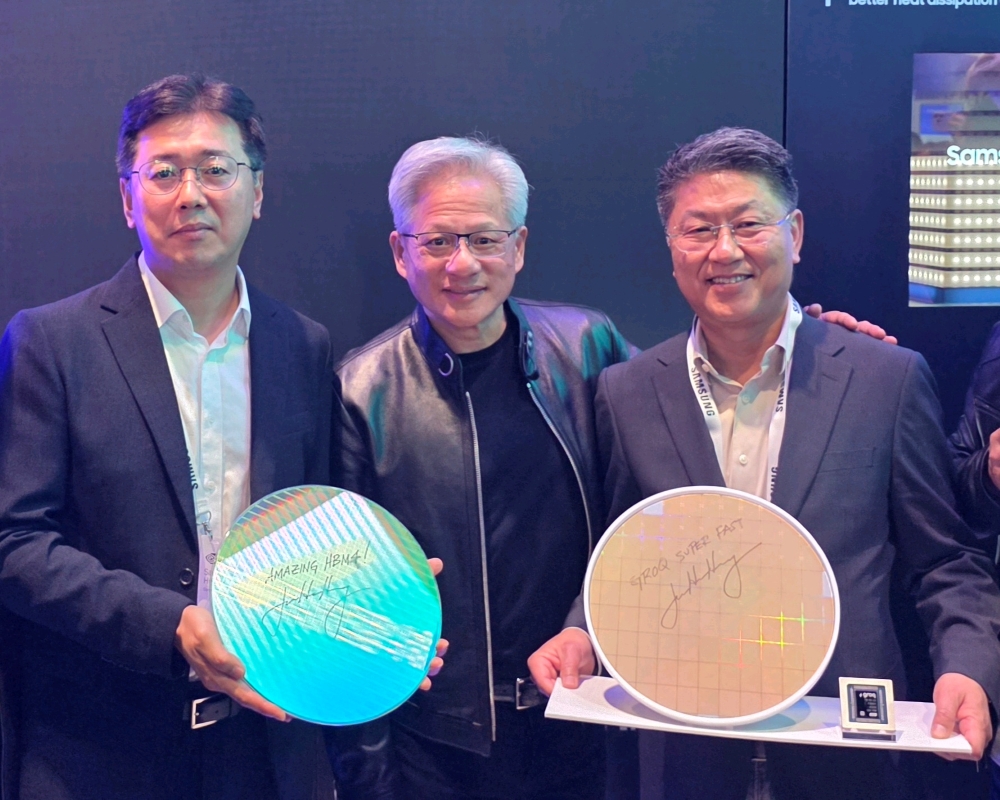
This collaboration is aimed at delivering optimized performance for AI data centers, generative AI models, and emerging workloads such as robotics and autonomous systems.
Samsung noted that working closely with ecosystem partners is essential to accelerate AI innovation and deployment at scale.
The continued alignment with NVIDIA reinforces Samsung’s position within the AI hardware supply chain.
Samsung Showcases End-To-End AI Semiconductor Capabilities
Beyond memory, Samsung used GTC 2026 to present its broader AI semiconductor portfolio.
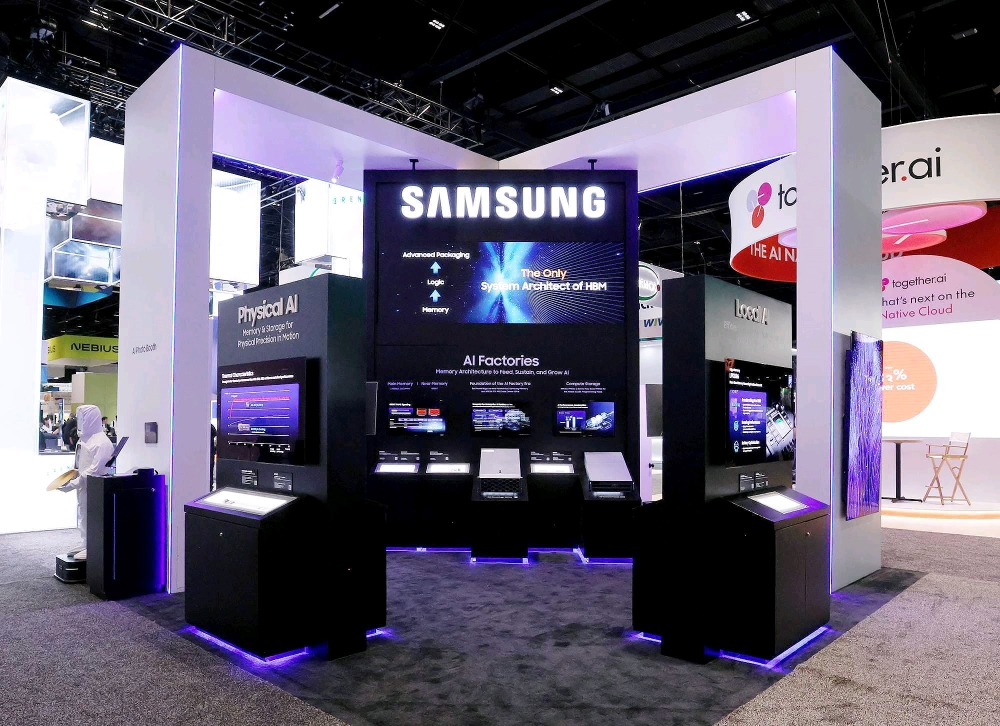
This includes advanced logic chips, foundry services, and packaging technologies that together form a comprehensive AI solution stack.
The company is focusing on integrating these capabilities to deliver higher efficiency, performance, and scalability for AI infrastructure.
Advanced packaging, in particular, is becoming increasingly important as AI chips grow more complex and require tighter integration between components.
Samsung’s approach reflects a shift toward full-stack semiconductor solutions tailored for AI-driven applications.
Samsung Positions Itself In The AI Infrastructure Race
The announcements come as competition intensifies among semiconductor companies to support the rapid growth of artificial intelligence.
With AI models becoming larger and more compute-intensive, demand for high-performance memory and efficient chip design continues to rise.
Samsung is positioning itself as a critical enabler of this ecosystem by supplying key components used in AI systems worldwide.
By combining innovations in memory, chip manufacturing, and strategic partnerships, the company aims to capture a larger share of the AI infrastructure market.
The showcase at GTC 2026 signals that Samsung is not just competing in memory, but aiming to play a central role in shaping the future of AI hardware.
