
Artificial Intelligence
Project Stargate Adds 5 New Sites, NVIDIA Invests $100 Billion In OpenAI & More
Updated on Wed, Sep 24, 2025
Share
A few months ago, just as President Donald Trump returned to office, the $500 billion Project Stargate was announced, roping in AI bigwigs such as OpenAI, Oracle, SoftBank, MGX, and others.
While the project got running to a shaky start, it’s well and truly on its way now, considering the latest information provided by the project’s three leading companies—OpenAI, Oracle, and SoftBank.
According to a news release published by OpenAI, the three are expanding the project with five new AI data center sites, ahead of schedule.
The move is expected to help the project achieve its 10-gigawatt commitment by the end of 2025.
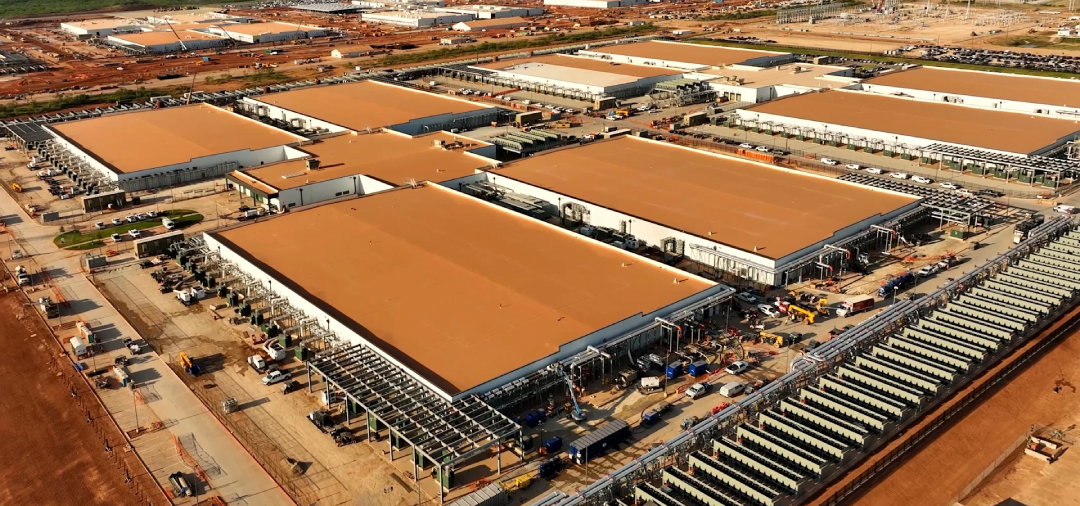
The five new sites, along with OpenAI’s flagship data center in Abilene, Texas, and ongoing projects with CoreWeave, bring Stargate’s potential up to around 7 gigawatts of planned capacity, spanning an investment of over $400 billion spread across four years.
This adds to the July agreement between OpenAI and Oracle to build up to 4.5 gigawatts of additional Stargate capacity, which represents a $300 billion spend between the two over five years.
“Together, these sites represent an important step in enabling faster deployment, greater scalability, and improved cost efficiency—making high-performance compute more widely accessible,” reads an excerpt from the release.
Three of the new sites are located in Shackelford County, Texas; Doña Ana County, New Mexico; and a soon-to-be-revealed site in the Midwest, which are expected to deliver over 5.5 gigawatts of capacity when combined with an additional potential expansion of 600 megawatts at the Abilene site.
Furthermore, it’s expected to create more than 25,000 onsite jobs, as well as tens of thousands of additional jobs across the country—as the project’s stakeholders continue to evaluate additional sites.
As for the other two sites, they will be able to scale to 1.5 gigawatts over the next 18 months, as per the release. They will be developed by SoftBank and OpenAI. They are located in Lordstown, Ohio—where work has already begun—and Milam County, Texas—which will be developed in partnership with SoftBank’s SB Energy and OpenAI.
“AI can only fulfill its promise if we build the compute to power it,” said Sam Altman, CEO of OpenAI. “That compute is the key to ensuring everyone can benefit from AI and to unlocking future breakthroughs. We’re already making historic progress toward that goal through Stargate and moving quickly not just to meet its initial commitment, but to lay the foundation for what comes next.”
On a separate note, OpenAI and GPU leader NVIDIA announced a partnership of their own, aimed at boosting AI infrastructure in the U.S.
The deal has been described as “the biggest AI infrastructure deployment in history” by NVIDIA CEO Jensen Huang. “This partnership is about building an AI infrastructure that enables AI to go from the labs into the world.”
This move, too, aims at deploying at least 10 gigawatts of NVIDIA systems for OpenAI to train and run its models aimed at developing superintelligence.
NVIDIA’s investment to support this deployment will include data center and power capacity and is expected to reach up to $100 billion. Its first phase is expected to come online in the second half of 2026.
The partnership will use the NVIDIA Vera Rubin platform.
“NVIDIA and OpenAI have pushed each other for a decade, from the first DGX supercomputer to the breakthrough of ChatGPT,” said Jensen Huang. “This investment and infrastructure partnership mark the next leap forward — deploying 10 gigawatts to power the next era of intelligence.”
“Everything starts with compute,” said Sam Altman. “Compute infrastructure will be the basis for the economy of the future, and we will utilize what we’re building with NVIDIA to both create new AI breakthroughs and empower people and businesses with them at scale.”
Meanwhile, in China, Alibaba announced a partnership with NVIDIA to build physical AI capabilities such as data synthesis, model training, environmental simulation and validation testing.
The company’s new developments through Alibaba’s annual Apsara Conference, which also spoke about global data center expansion plans, including locations such as Brazil, France and the Netherlands. However, it’s unclear whether the new data centers would be powered by NVIDIA chips.
Alibaba also revealed its largest-ever AI language model—Qwen3-Max—which contains over 1 trillion parameters, capable of determining how an AI system processes information. It’s also adept at code generation and autonomous agent capabilities.
Alibaba also released Qwen3-Omni, a multimodal, immersive system that can be used in smart glasses, intelligent cockpits, and other virtual and augmented reality applications.
“The speed of AI industry development has far exceeded our expectations, and the industry's demand for AI infrastructure has also far exceeded our expectations,” said Eddie Wu, Alibaba’s CEO.
The announcements saw Alibaba’s Hong Kong-listed shares soar nearly 10% to a four-year high, while its U.S.-listed shares also jumped 10%.
Do you think Stargate will be able to propel the United States to the top of the global AI sector, or will China’s threat prove to be costly?
Let us know in the comments below!
First published on Wed, Sep 24, 2025

Liked what you read? That’s only the tip of the tech iceberg!
Explore our vast collection of tech articles including introductory guides, product reviews, trends and more, stay up to date with the latest news, relish thought-provoking interviews and the hottest AI blogs, and tickle your funny bone with hilarious tech memes!
Plus, get access to branded insights from industry-leading global brands through informative white papers, engaging case studies, in-depth reports, enlightening videos and exciting events and webinars.
Dive into TechDogs' treasure trove today and Know Your World of technology like never before!
Disclaimer - Reference to any specific product, software or entity does not constitute an endorsement or recommendation by TechDogs nor should any data or content published be relied upon. The views expressed by TechDogs' members and guests are their own and their appearance on our site does not imply an endorsement of them or any entity they represent. Views and opinions expressed by TechDogs' Authors are those of the Authors and do not necessarily reflect the view of TechDogs or any of its officials. While we aim to provide valuable and helpful information, some content on TechDogs' site may not have been thoroughly reviewed for every detail or aspect. We encourage users to verify any information independently where necessary.
Loading comments...