
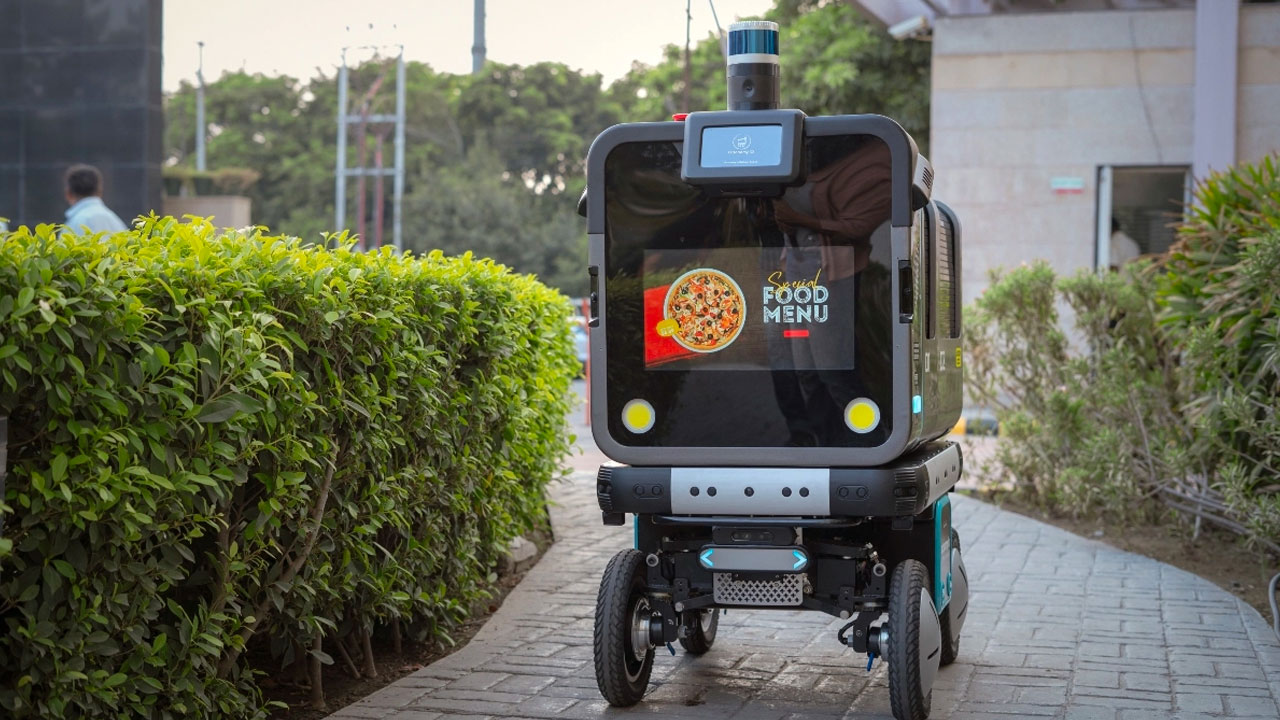
Ottonomy Inc unveiled its end-to-end autonomous delivery ecosystem at the India AI Impact Summit 2026, demonstrating how Made-in-India robotics and AI-powered systems are transforming logistics across healthcare, industrial campuses and urban environments through fully autonomous, multi-modal operations.
TL;DR
- Ottonomy unveiled its integrated autonomous delivery ecosystem at India AI Impact Summit 2026
- Ecosystem combines Ottobots, Arrive Points and Skyeair drone logistics
- World’s first fully asynchronous autonomous medical delivery deployed in the US
- India positioned as a global hub for AI-driven logistics and robotics
Ottonomy’s ecosystem integrates its Level-4 autonomous delivery robots, known as Ottobots, with Arrive AI’s smart storage infrastructure called Arrive Points and drone logistics capabilities from Skyeair Mobility. Together, the platform enables seamless, unattended movement of goods across indoor and outdoor environments without manual intervention.
The Made-in-India Ottobots are capable of navigating complex real-world settings including hospital corridors, elevators, sidewalks and service roads. Powered by an AI-driven autonomy stack, the robots use advanced perception and decision-making models to understand surroundings, adapt to changing conditions and make real-time navigation decisions.
“With Ottobots and Arrive Points, we’re proving that Made-in-India robots can power world-class automation in US hospitals and global industrial sites,” said Ritukar Vijay, CEO and Founder of Ottonomy Inc. “Together with Arrive AI and Skyeair Mobility, we’re showcasing at the India AI Impact Summit how India is at the core of advanced, multi-modal logistics solutions to the world.”
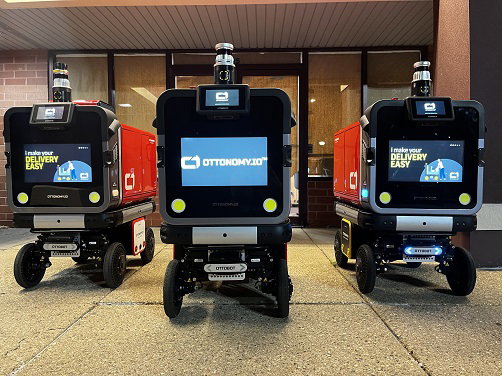
A major highlight of the announcement is the deployment at Hancock Regional Hospital in Greenfield, Indiana. Arrive AI and Ottonomy have implemented what they describe as the world’s first fully asynchronous, autonomous medical delivery system using Arrive Points and Ottobots.
At the hospital campus, Arrive Points are strategically positioned near laboratories, surgical areas and specialty centers. Staff deposit lab samples or medical supplies into a pod, which dispatches an Ottobot that autonomously navigates indoor corridors, elevators and outdoor pathways to deliver items to the designated Arrive Point.
The robots operate reliably in varying lighting, weather and traffic conditions while safely sharing space with patients, staff and vehicles. According to the company, the system eliminates thousands of manual transport steps daily, allowing clinical staff to focus more on patient care while helping address labor shortages. Items remain in secure, climate-assisted storage until retrieved by authorized personnel, preserving chain of custody and clinical integrity.
Beyond healthcare, the platform supports industrial and logistics campuses by automating the movement of parts, tools, maintenance and repair items, quality samples and documents between warehouses, production lines and offices. Arrive Points function as always-available handoff nodes, while Ottobots adapt to dynamic shop-floor and yard conditions.
The solution is designed for end-to-end indoor-outdoor autonomy. Robots can move from hospital wards or factory floors through corridors and elevators, exit buildings and traverse sidewalks or service roads to reach perimeter or satellite Arrive Points.
“Arrive Points act as the connective tissue across ground robots, drones and human workflows,” an Arrive AI spokesperson said. “Our work with Ottonomy at Hancock Health shows how asynchronous infrastructure and autonomous robots can transform hospital logistics, and our collaboration in India with Skyeair demonstrates the same model for quick-commerce and smart cities.”
Ottonomy added that its autonomy stack runs advanced perception and decision-making models directly on the robot, enabling safe, low-latency operations without constant cloud connectivity. This aligns with India’s broader push toward scalable, affordable AI infrastructure built for public good.
With integrated robotics, smart pods and drone corridors, the company is positioning Indian-built AI and automation systems as a significant contributor to the evolving global autonomous delivery market.
