
OpenAI’s ChatGPT has begun rejecting direct requests to reproduce the distinctive writing styles of famous authors, including living and deceased writers, while offering original alternatives based on broader qualities such as mood, genre, pacing and narrative structure.
TL;DR
- ChatGPT is refusing prompts that ask it to closely imitate named authors.
- Ars Technica, Engadget and The Verge observed the change in late July 2026.
- Users can still request broad literary traits, analyze writing styles and generate original content with a similar mood or genre.
ChatGPT Draws A New Line Around Literary Imitation
According to Ars Technica, ChatGPT rejected requests to reproduce the voices of both living and deceased writers. When prompted to emulate Stephen King, the chatbot reportedly offered atmospheric horror and small-town dread as broader creative characteristics, while declining to copy his distinctive voice.
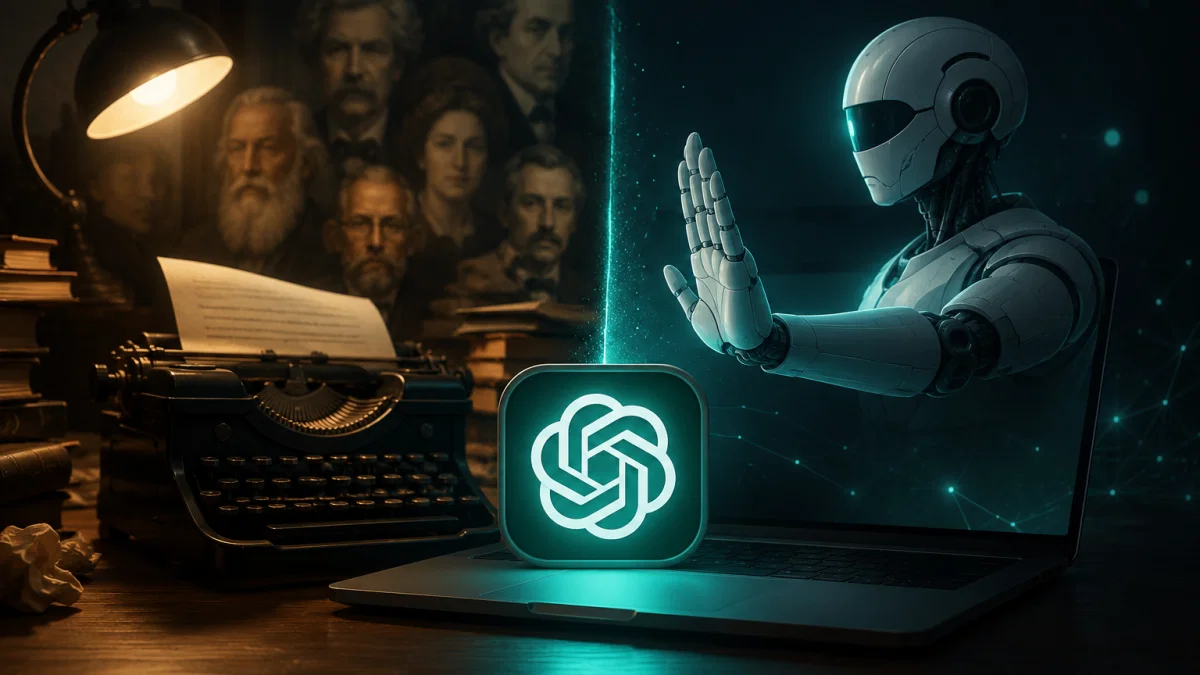
The Verge observed the same pushback around authors such as Stephen King and Agatha Christie. It noted that ChatGPT still offers content with similar characteristics, meaning the restriction targets close imitation rather than entire genres, techniques or literary moods.
Engadget independently tested the behavior with an Agatha Christie-inspired mystery. ChatGPT responded, “Agatha Christie’s works are still under copyright, so I can’t provide text that closely imitates her distinctive style,” before offering to produce an original alternative.
The Boundary Appears To Have Expanded
An earlier July 2026 audit by research publication No Latency compared ChatGPT, Claude, Gemini, Copilot and Perplexity across seven literary-style prompt categories. At the time, ChatGPT refused direct imitation of living authors but complied with prompts involving deceased writers.
The later tests reported by Ars Technica and Engadget suggest that ChatGPT’s restriction subsequently expanded to at least some deceased authors. However, OpenAI has not publicly presented the change as a formal product update, and the three reports did not cite an official announcement explaining when or how broadly it was deployed.
The behavior could also vary depending on the selected model, prompt wording, account or ongoing product testing.
Copyright Is Only Part Of The Debate
The Verge and Ars Technica framed the disclaimers as potentially significant while OpenAI faces copyright litigation from writers and other rights holders. Yet the No Latency study noted that the debate extends beyond whether literary style is directly protected by copyright.
Named-author imitation can also raise concerns involving creator consent, market substitution, reputational harm, false attribution and confusion over whether an author produced or endorsed the resulting work.
Topics for more insights:
For users, the practical workaround is to describe the required creative qualities without naming an author. Requests for gothic suspense, an unreliable narrator, conversational horror or tightly plotted detective fiction remain more likely to receive a full response.
OpenAI’s official writing page describes ChatGPT as “a sounding board, story consultant, research assistant, and editor,” indicating that the company continues to position the chatbot as a creative collaborator, even as it places tighter boundaries around direct imitation.
