
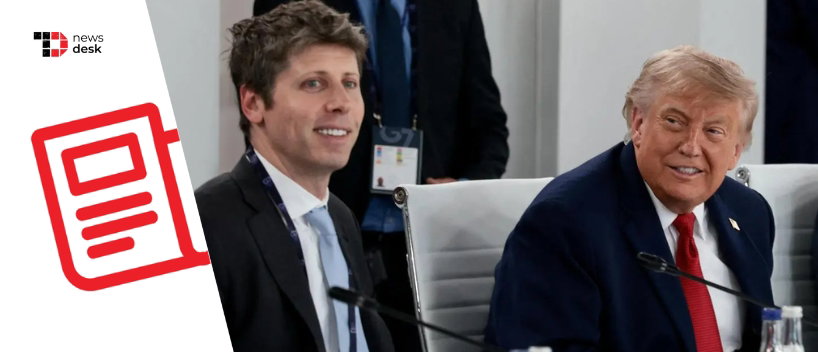
OpenAI is reportedly in early talks over a plan that could give the US government a 5% stake in the AI company, as Washington weighs how Americans should benefit from the financial upside of artificial intelligence.
TL;DR
- OpenAI CEO Sam Altman has reportedly proposed giving 5% of the company’s equity to a US sovereign wealth fund.
- Based on OpenAI’s reported $852 billion valuation, the stake would be worth about $42.6 billion.
- OpenAI has previously floated a public wealth fund to distribute AI-driven returns to citizens.
- The talks are preliminary, and any formal deal could require congressional approval.
OpenAI may be looking to turn the US government into one of its most unusual stakeholders.
As per reports citing the Financial Times, the ChatGPT-maker has discussed giving the US government a 5% equity stake in the company. The proposal is said to be in early conversations and has not been finalized. OpenAI has not publicly confirmed the plan.
At OpenAI’s reported $852 billion valuation, a 5% stake would be valued at roughly $42.6 billion. The proposal would reportedly place that stake into a US sovereign wealth fund or similar public investment vehicle, with the broader idea being that Americans could benefit financially from the rise of AI.
The idea builds on OpenAI’s April policy paper, Industrial Policy for the Intelligence Age, where the company proposed creating a Public Wealth Fund that gives every citizen, including those not invested in financial markets, exposure to AI-driven economic growth. OpenAI also said returns from such a fund could be “distributed directly to citizens.”
The plan reportedly goes beyond OpenAI. Other major AI companies such as Anthropic, Google, and Meta could be encouraged to contribute similar stakes, although there is no confirmed industry agreement yet.
Reuters reported that the Trump administration and Anthropic have not discussed the government taking a stake in Anthropic, according to a source familiar with the matter. Anthropic declined to comment.
The discussions arrive as the US government takes a more active role in AI oversight. In June, President Donald Trump said his team would “look into” the idea of the American public receiving a stake in AI companies. “There’s something very interesting about it, where it almost becomes a partnership with the American public,” Trump said, according to Reuters.
Topics For More Insights
Sam Altman has also argued for government involvement in setting AI rules. “The labs develop the technology, but citizens and their elected representatives must make the rules,” Altman wrote, as quoted by Axios from his Financial Times article.
However, the proposal could face major hurdles. Axios reported that a deal involving AI labs would likely require an act of Congress, while TechCrunch noted that the talks remain preliminary.
Critics also argue that a government stake could blur the line between regulator and investor, especially if the same administration is deciding when advanced AI models can be released.
The debate is also being shaped by more aggressive proposals. Reuters reported that Senator Bernie Sanders has proposed using the tax system to capture AI-driven wealth, including large firms giving the government a 50% ownership stake and board representation.
For now, OpenAI’s reported 5% proposal remains just that, a reported proposal. Yet it shows how quickly the AI debate is moving from model launches and infrastructure spending to ownership, regulation, public wealth, and who gets to share in the industry’s upside.
