
Gaming Technology
NVIDIA Confirms DLSS 5 Is Coming To RTX 40 GPUs After RTX 50 Optimization
Updated on Fri, Sep 4, 2026
Share
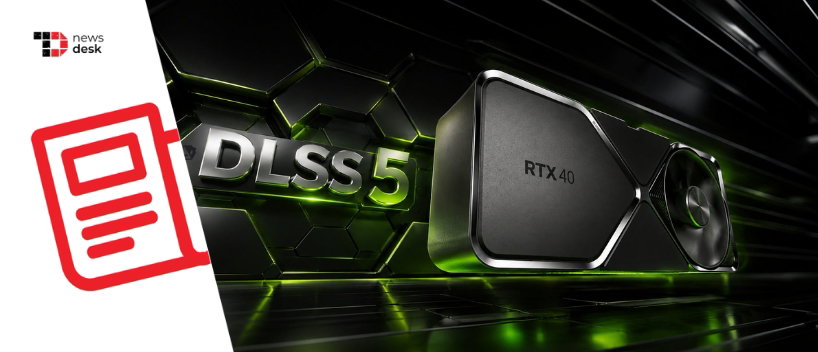
NVIDIA has confirmed that DLSS 5 support is planned for GeForce RTX 40 Series GPUs, although RTX 50 owners remain the priority as the company continues optimizing its demanding new AI-powered neural rendering technology.
The confirmation means RTX 40 owners will eventually gain official access to DLSS 5, but NVIDIA has not provided a release date or committed to support for older RTX 30 and RTX 20 GPUs.
TL;DR
- NVIDIA plans to bring DLSS 5 to GeForce RTX 40 Series GPUs.
- RTX 50 Series optimization remains the company’s immediate priority.
- NVIDIA says DLSS 5 performance has improved 5X since its March reveal.
- No RTX 40 release date has been announced yet.
- DLSS 5 currently officially supports RTX 50 GPUs and debuted with NBA 2K27.
NVIDIA Confirms DLSS 5 Support For RTX 40 GPUs
NVIDIA confirmed plans to expand official support to its GeForce RTX 40 Series after completing more performance optimization work for the newer RTX 50 Series.
“DLSS 5 is our most computationally demanding model to date. Since we initially announced it in March, we’ve achieved a 5X performance gain and there’s more to come,” NVIDIA told Wccftech.
The company added that its current focus is optimizing DLSS 5 for RTX 50 Series GPUs, with more model updates expected later this fall.
“Once RTX 50 Series performance is more fully tuned, we plan to work on expanding official support to the GeForce RTX 40 Series,” NVIDIA said.
That means NVIDIA has confirmed the direction of its rollout, but not exactly when RTX 40 owners will receive the feature.
DLSS 5 Remains An RTX 50 Feature For Now
NVIDIA officially launched DLSS 5 on September 3, with NBA 2K27 becoming the first game to support its new 3D-Guided Neural Rendering technology.
At launch, the feature works across GeForce RTX 50 Series desktop and laptop GPUs, as well as GeForce NOW systems powered by RTX 50 hardware.
NVIDIA’s current DLSS supported hardware compatibility table also lists 3D-Guided Neural Rendering exclusively for RTX 50 Series GPUs. RTX 40, RTX 30 and RTX 20 Series GPUs remain unsupported for that specific DLSS 5 capability at present.
DLSS 5 differs from earlier generations because it goes beyond reconstructing resolution or generating additional frames.
According to NVIDIA, 3D-Guided Neural Rendering uses game data including rendered frames, geometry, textures and lighting information to generate more realistic lighting and material details while preserving the underlying structure created by developers.
The technology is designed as the final rendering stage in the graphics pipeline rather than a replacement for the game engine itself.
Topics For More Insights
NVIDIA Says DLSS 5 Is Already 5X Faster
Getting DLSS 5 onto RTX 40 hardware appears to depend largely on reducing its computational demands.
When NVIDIA first demonstrated the technology in March, DLSS 5 reportedly required two GeForce RTX 5090 GPUs. The company has since achieved a 5X performance improvement in six months, allowing the technology to operate across the full RTX 50 Series lineup.
NVIDIA attributes those gains to pipeline optimization and refinements to the neural model.
The company says further improvements are already under development, with model updates expected during the fall.
RTX 40 GPUs also lack the Dynamic Multi Frame Generation capabilities available on newer RTX 50 hardware, potentially making efficiency improvements especially important before DLSS 5 can offer acceptable performance on Ada Lovelace GPUs.
No RTX 40 Release Date Yet
NVIDIA has not announced when official RTX 40 support will arrive.
The company told The Verge that RTX 50 optimization comes first before it moves its attention to RTX 40 Series hardware.
NVIDIA spokesperson Rajal Maharaj also reiterated that the company will evaluate RTX 40 support once it believes RTX 50 performance is in a satisfactory position.
Interestingly, modders have already managed to get leaked versions of DLSS 5 working on older RTX hardware, including RTX 40 and even RTX 20 and RTX 30 GPUs. However, these unofficial implementations can suffer from severe performance and stability problems and are not supported by NVIDIA.
The company has not promised official DLSS 5 support for those older generations.
Gamers also should not expect the same level of control developers receive over the technology. NVIDIA confirmed gamers will get an on-off toggle, while granular controls such as model selection, structure intensity, tone intensity and masking remain primarily developer-facing tools.
Developers may still choose to expose some settings through their own games.
For RTX 40 owners, the most important development is therefore the confirmation that their GPUs have not been excluded from NVIDIA’s DLSS 5 roadmap. What remains unknown is how long the optimization process will take and how well the demanding neural rendering model will perform once official support arrives.
First published on Fri, Sep 4, 2026

Liked what you read? That’s only the tip of the tech iceberg!
Explore our vast collection of tech articles including introductory guides, product reviews, trends and more, stay up to date with the latest news, relish thought-provoking interviews and the hottest AI blogs, and tickle your funny bone with hilarious tech memes!
Plus, get access to branded insights from industry-leading global brands through informative white papers, engaging case studies, in-depth reports, enlightening videos and exciting events and webinars.
Dive into TechDogs' treasure trove today and Know Your World of technology like never before!
Disclaimer - Reference to any specific product, software or entity does not constitute an endorsement or recommendation by TechDogs nor should any data or content published be relied upon. The views expressed by TechDogs' members and guests are their own and their appearance on our site does not imply an endorsement of them or any entity they represent. Views and opinions expressed by TechDogs' Authors are those of the Authors and do not necessarily reflect the view of TechDogs or any of its officials. While we aim to provide valuable and helpful information, some content on TechDogs' site may not have been thoroughly reviewed for every detail or aspect. We encourage users to verify any information independently where necessary.
Loading comments...