
Midjourney, best known for its AI image-generation platform, is moving into health technology with Midjourney Medical, a new division built around a full-body ultrasound scanner and a planned San Francisco spa that could open by the end of 2027.
TL;DR
- Midjourney Medical has unveiled a water-based Ultrasonic CT scanner that aims to capture whole-body scans in as little as 60 seconds.
- The first Midjourney Spa is planned for San Francisco by the end of 2027, with hot tubs, saunas, cold plunges, and 10 scanners.
- The device is not FDA-cleared for diagnostics yet, and Midjourney says it will begin with body composition maps while pursuing broader approvals.
Midjourney is taking a surprising leap from generative AI images to medical imaging.
The company announced Midjourney Medical, a new division focused on a full-body ultrasound system it calls Ultrasonic CT or the full body ultrasound. According to Midjourney, the goal is to make whole-body imaging faster, more casual, and more accessible than today’s clinical scanning experiences.
The company’s first hardware product, the Midjourney Scanner, uses a water-immersion design. A person steps onto a platform, descends into water, and passes through a ring of ultrasonic sensors that send sound waves through the body from multiple angles. Midjourney says the scan is designed to take no more than 60 seconds.
Midjourney describes the idea as “just sound and water and 60 seconds,” while claiming it is aiming for whole-body imaging that could be “in many ways superior to even MRI machines.”
The technical ambition is significant. The company says the scanner’s ring is made of half a million tiny squares, each acting as a speaker and microphone, generating terabytes of data every second. That data is then processed to reconstruct internal body images based on how waves change as they move through water, skin, fat, muscle, bone, and other tissues.
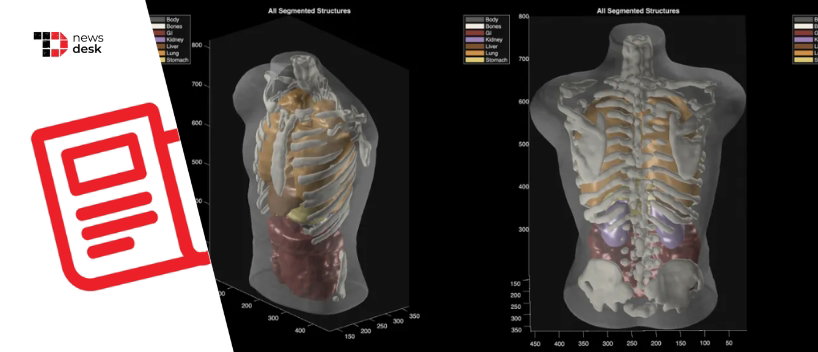
Midjourney says these reconstructed images can create a 3D map of the body down to a fraction of a millimeter. It also showed examples of scan slices and AI segmentation overlays, indicating what the system can identify inside the body.
The company is not positioning the scanner as a hospital-only device. Instead, it plans to integrate the technology into a wellness-style environment called the Midjourney Spa.
Topics For More Insights
The first location is planned for San Francisco by the end of 2027. Midjourney says the flagship spa will include hot tubs, saunas, cold plunges, and 10 scanners, turning scans into a side-effect of a spa visit rather than a standalone medical appointment.
Midjourney’s long-term goal is even more ambitious. It says it wants to deploy about 50,000 scanners worldwide over the next six years and eventually support one billion full-body scans every month.
However, the medical side remains early. The scanner is not yet cleared by the U.S. Food and Drug Administration for diagnostic use. AuntMinnie reported that Midjourney currently plans to start with body composition mapping and submit regular test results to the FDA as it develops diagnostic capabilities.
The Verge also reported that Midjourney CEO David Holz has discussed the device as a way to track changes in the body over time, including changes related to diet and exercise. The report also noted that the scanner was developed with Butterfly Network and uses 40 Butterfly Ultrasound-on-Chip imaging modules per system.
That partnership gives the project a clearer medical technology foundation, but questions remain around clinical accuracy, regulation, privacy, pricing, and how users will interpret frequent full-body scans without medical context.
For now, Midjourney Medical is best understood as a bold research and hardware bet rather than a ready diagnostic replacement for MRI. Still, if the company can prove performance, safety, affordability, and regulatory compliance, it could mark one of the strangest and most ambitious pivots in AI so far.
