
Artificial Intelligence
Meta Extends Llama AI To The Federal Government To Boost US National Security
Updated on Thu, Sep 25, 2025
Share
The U.S. General Services Administration (GSA) has partnered with Meta to make Llama available to all federal agencies through the OneGov initiative. This approach removes the need for each department to negotiate separately, saving time and reducing overlap.
Llama has already been used in national security projects and even tested on the International Space Station (ISS). Under this new arrangement, federal agencies can develop mission-specific applications while keeping full control of their data and infrastructure.
“America is leading on AI and we want to make sure all Americans see the benefit of AI innovation through better, more efficient public services. With Llama, America’s government agencies can better serve people,” said Mark Zuckerberg, Founder and CEO of Meta Platforms.

As Llama is freely available, agencies can build and scale solutions at lower cost and deliver more value to taxpayers. The agreement supports the goals of America’s AI Action Plan and federal directives focused on innovation, efficiency, and public trust.
“Thanks to Meta and its commitment to advancing public sector services, our federal partners now have easier access to Llama and open-source tools, which offer unique benefits for federal agencies and government use cases,” said Josh Gruenbaum, Federal Acquisition Service Commissioner.
This initiative is part of a larger effort to speed up technology adoption in government, providing agencies with secure and efficient tools to enhance public services.
Since first making Llama available to government agencies and contractors, the technology has now been introduced to strengthen U.S. defense and national security.
Industry partners, such as Amazon Web Services (AWS) and Snowflake, are helping to turn this into reality through deployments within sensitive networks. Meanwhile, defense startup Legion Intelligence has partnered with the U.S. Special Operations Command (USSOCOM) to launch SOFChat, the first enterprise-wide generative AI platform for special operations forces.
With Llama, SOFChat produces intelligence reports 18 times faster and processes video footage 9 times quicker, providing a critical advantage when every second counts.
Llama can be fine-tuned and deployed directly on local devices, making it especially useful in the field. EdgeRunner AI has created a version that runs on laptops, providing personnel with reliable access to advanced tools on-the-go even without connectivity.
From translating languages to calculating supplies, it helps them make faster and more informed decisions while keeping sensitive data secure.
Lockheed Martin is also utilizing Llama within its AI Factory platform, known as the Skunk Works, to support training and flight simulations for the Air Force, Navy, and international pilots. Acting as a virtual expert, it helps engineers develop new capabilities faster and integrate seamlessly with the government’s Joint Simulation Environment (JSE).
These initiatives highlight Llama’s growing role in defense, improving efficiency, accelerating operations, and supporting missions in the field.
Meta said, “These are just a few examples of the many ways Llama supports American national security. We look forward to continuing to support the US government and its allies as they use AI to enable discoveries and breakthroughs, drive growth and efficiency, and help keep our nation safe.”
Building on these initiatives, Meta continues to expand the reach of Llama models, demonstrating how open and adaptable tools are shaping national security, government efficiency, and international collaboration.
Meta is expanding access to its Llama models, introducing them to the defense and national security efforts of America’s closest democratic allies. Meta believes that Llama can be securely deployed in sensitive environments. This ensures sensitive data remains protected while helping governments to fine-tune the model.

That access has since widened. Alongside America’s Five Eyes partners, such as, Australia, Canada, New Zealand, and the United Kingdom, Llama is now being made available to allies such as France, Germany, Italy, Japan, and South Korea, as well as NATO and EU institutions.
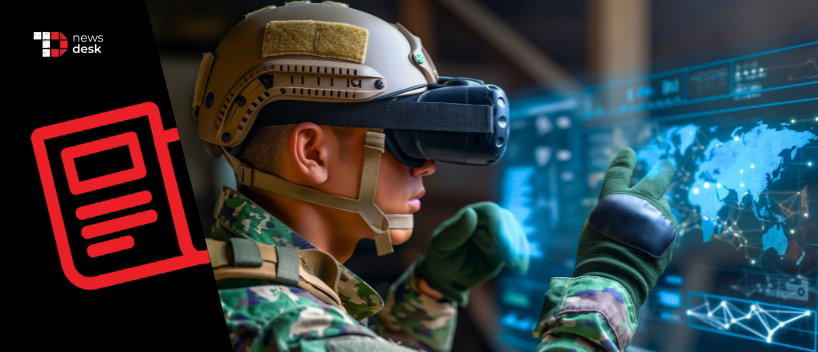
The model is already being applied in U.S. military and national security programs. For one project, Meta is collaborating with the Army’s Combined Arms Support Command to test how immersive tools, such as augmented reality (AR) and virtual reality (VR), can accelerate routine repairs and return equipment to the field more quickly.
Meta’s partners in delivering these solutions include Accenture, Google Cloud, IBM, Microsoft, Oracle, Palantir, and Scale AI, among others. It is also teaming up with Anduril on wearable technologies to give U.S. soldiers better perception and decision-making, the largest effort of this kind.
Framing this effort in broader terms, Meta emphasized, “In a world where geopolitical power and national security are deeply intertwined with economic output, innovation, and growth, the widespread adoption of open source models like Llama will be essential to maintaining US and allied AI leadership and ensuring our shared values underpin the systems and standards adopted elsewhere.”
Do you think access to open-source AI tools can make a significant difference in public services? Will federal adoption give Meta an edge over its AI rivals?
Let us know your thoughts in the comments section below!
First published on Thu, Sep 25, 2025

Enjoyed what you read? Great news – there’s a lot more to explore!
Dive into our content repository of the latest tech news, a diverse range of articles spanning introductory guides, product reviews, trends and more, along with engaging interviews, up-to-date AI blogs and hilarious tech memes!
Also explore our collection of branded insights via informative white papers, enlightening case studies, in-depth reports, educational videos and exciting events and webinars from leading global brands.
Head to the TechDogs homepage to Know Your World of technology today!
Disclaimer - Reference to any specific product, software or entity does not constitute an endorsement or recommendation by TechDogs nor should any data or content published be relied upon. The views expressed by TechDogs' members and guests are their own and their appearance on our site does not imply an endorsement of them or any entity they represent. Views and opinions expressed by TechDogs' Authors are those of the Authors and do not necessarily reflect the view of TechDogs or any of its officials. While we aim to provide valuable and helpful information, some content on TechDogs' site may not have been thoroughly reviewed for every detail or aspect. We encourage users to verify any information independently where necessary.
Loading comments...