
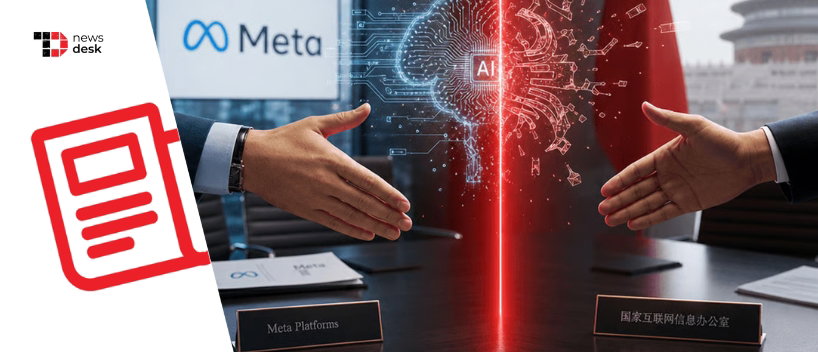
Meta has reportedly started dismantling its $2 billion acquisition of AI startup Manus after Chinese authorities ordered a divestiture on national security grounds. The move marks one of the clearest examples yet of Beijing intervening to retain oversight of strategically important AI companies, even when they operate through offshore structures.
The separation comes as China expands regulatory controls over AI firms, talent mobility, and foreign investment, creating new challenges for global technology companies seeking access to the country's fast-growing artificial intelligence ecosystem.
TL;DR
- Meta has reportedly cut Manus off from internal systems and stopped data sharing as it moves toward a full operational separation.
- Beijing ordered the divestiture roughly two months ago, citing national security concerns and potential technology export control issues.
- Manus founders are reportedly exploring a $1 billion fundraising round to potentially regain control of the company.
- China is simultaneously tightening restrictions on AI talent movement and foreign investment into leading AI firms.
Meta's acquisition of Manus, once viewed as a landmark exit for a Chinese AI startup, is rapidly unraveling under regulatory pressure from Beijing.
According to reports, Meta has begun implementing a full operational separation from Manus by disconnecting the startup from internal company systems and preventing Meta employees from using Manus products in internal projects. The steps represent the most significant progress toward complying with a divestiture order issued by Chinese regulators earlier this year.
The acquisition, valued at approximately $2 billion, had been announced in December and was initially seen as a major milestone for China's AI startup ecosystem. However, regulators reportedly raised concerns over technology export controls, foreign investment regulations, and the strategic importance of advanced AI technologies.
The situation has prompted Manus' leadership to explore alternative ownership structures. Reports from May indicated that the startup's co-founders have held preliminary discussions with investors regarding a potential $1 billion funding round. Such a transaction could enable the founders and new investors to reclaim the company from Meta and potentially establish a Chinese joint venture structure.
Industry observers believe such a move could position Manus for a future public listing in Hong Kong, which has emerged as a favored destination for Chinese AI companies. Recent listings and fundraising activities involving firms such as MiniMax and Zhipu have highlighted growing investor interest in China's domestic AI sector.
Topics For More Insights
The development also reflects a broader policy shift in China regarding artificial intelligence. Beyond the Manus transaction, authorities have reportedly increased oversight of private-sector AI companies by introducing stricter travel requirements for researchers and executives. Under the reported measures, certain overseas travel may require government approval.
At the same time, reports suggest that major AI companies, including ByteDance, Moonshot AI, and StepFun, could face additional scrutiny before accepting investment from U.S. entities. The measures collectively point to a more centralized approach to managing AI development, capital flows, and intellectual property.
Despite the uncertainty surrounding ownership, Manus has continued to launch new products and capabilities. The company recently introduced integrations with Similarweb and Shopify, signaling that product development remains active even as the corporate restructuring process unfolds.
Manus first gained international attention through a viral AI agent demonstration that showcased autonomous task execution capabilities. The company later relocated staff operations to Singapore in 2025 before agreeing to the Meta acquisition.
According to reports, investors have largely cooperated with the unwinding process. U.S.-based investor Benchmark has already received acquisition proceeds, while Asian investors including Tencent, HSG, and ZhenFund are reportedly working with stakeholders as discussions continue.
Neither Meta nor Manus had publicly commented on the latest reports at the time of writing.
