
Google used I/O 2026 to expand Antigravity into a wider agent-first development platform, launching Antigravity 2.0 as a standalone desktop app, adding a new CLI, SDK, Gemini API Managed Agents, and deeper Google Cloud integrations for enterprise developers.
TL;DR
- Google launched Antigravity 2.0 at I/O 2026 as a standalone desktop app for orchestrating multiple AI agents.
- The update adds Antigravity CLI, Antigravity SDK, Managed Agents in the Gemini API, and Google AI Studio integrations.
- Google says the platform is powered by Gemini 3.5 Flash, which is built for speed, coding, and real-world agentic workflows.
- The move puts Google deeper into competition with AI coding tools such as Cursor, Claude Code, and OpenAI Codex.
Google Turns Antigravity Into A Full Agentic Coding Platform
Google has announced Antigravity 2.0 at Google I/O 2026, turning its agentic coding tool into a broader platform for developers building software with AI agents.
The company described Google Antigravity as an agent-first development platform that helps developers take an idea and turn it into a production-ready app. The latest version shifts Antigravity further away from a conventional AI-assisted coding experience and toward a workspace where developers can steer, customize, and orchestrate agents across multiple tasks.
At the center of the announcement is Antigravity 2.0, a new standalone desktop application. Google said the app acts as a central home for agent interaction and allows users to orchestrate multiple agents to execute tasks in parallel. It also supports dynamic subagents for parallelized workflows, scheduled tasks for background automation, and integrations across Google AI Studio, Android, and Firebase.
The update is part of a larger push from Google to help developers move from prompts to action, with Gemini 3.5 Flash serving as the engine behind many of the new agentic workflows.
What’s New In Antigravity 2.0?
Google’s Antigravity rollout includes more than just a redesigned desktop experience.
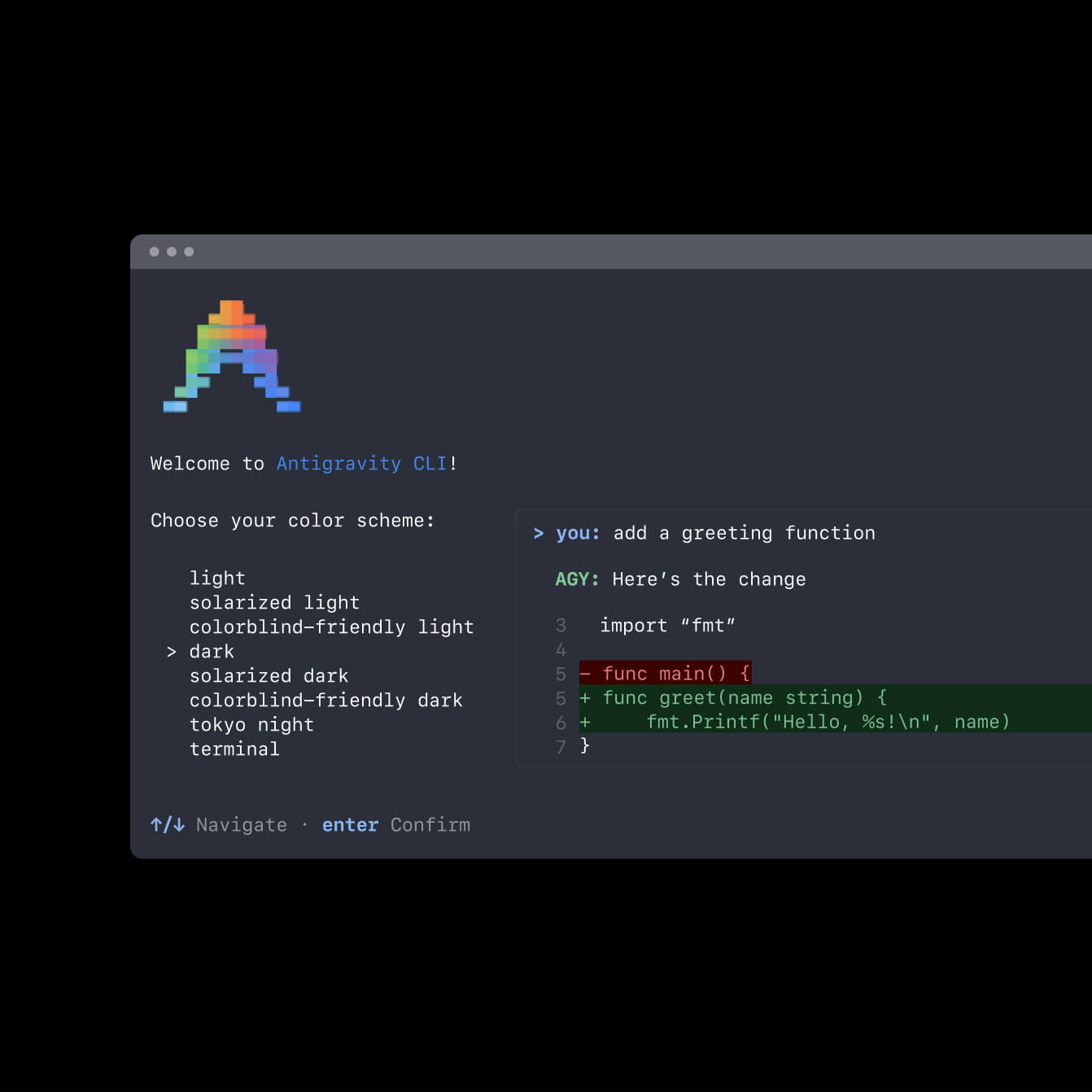
For developers who prefer to work from the terminal, Google introduced Antigravity CLI. The company said the command-line tool lets developers create agents without a graphical user interface and encouraged Gemini CLI users to migrate to Antigravity CLI.
Google also launched Antigravity SDK, which gives developers programmatic access to the agent harness powering Google’s own products. The SDK is optimized for Gemini models and allows developers to define custom agent behaviors and host them on their preferred infrastructure.
Another major addition is Managed Agents in the Gemini API. Google said developers can now use a single API call to spin up an agent that can reason, use tools, and execute code in an isolated Linux environment. These agents are powered by the Antigravity agent harness, built on Gemini 3.5 Flash, and available through the Interactions API and Google AI Studio.
Google AI Studio also gets deeper Antigravity integration. Developers can export entire projects from AI Studio to local development in Antigravity with a single click, while retaining project context. Google is also adding native Android support and Play Console integration, enabling developers to build and test Android apps more directly from AI Studio.
Gemini 3.5 Flash Powers The Agentic Push
Google said the new Antigravity ecosystem is closely tied to Gemini 3.5 Flash, which was launched at I/O 2026.
According to Google, Gemini 3.5 Flash combines stronger intelligence with speed and outperforms Gemini 3.1 Pro across almost all benchmarks while running four times faster than other frontier models. The company positioned it as a high-speed engine for real-world agentic workflows.
Google Cloud’s announcement added that Antigravity, powered by Gemini 3.5 Flash, can deliver more rapid development cycles and lower operational costs for production-scale AI initiatives. It also said Google Cloud customers can access Antigravity through Agent Platform, keeping customer data under Google Cloud’s standard privacy protections and allowing agent activity to run within a secure cloud boundary by default.
The enterprise angle is important because many companies are still trying to balance AI coding productivity with governance, data control, and security requirements.
Why It Matters For Developers And Enterprises
Antigravity 2.0 lands at a time when agentic coding tools are becoming one of the most competitive areas in AI.
TechCrunch reported that Google unveiled Antigravity 2.0 with an updated desktop app, CLI tool, and SDK for custom workflows, adding that the tool was originally launched as a response to agentic coding software such as Cursor. It also noted that Google is adding native voice command support and a new AI Ultra plan starting at $100 with higher Antigravity usage limits than the Pro plan.
Google is also extending agent support across the web. Chrome DevTools for agents is now available for Antigravity and more than 20 other coding agents, giving agents access to console logs, network traffic, and accessibility trees to verify, debug, and optimize code in real time.
For developers, the message is clear: Google wants Antigravity to become more than a coding assistant. It wants it to become a control layer for AI agents that can build, test, debug, and deploy software across Google’s developer ecosystem.
For enterprises, the bigger question will be whether Antigravity can turn agentic coding from an experimental productivity boost into a governed, secure, and repeatable engineering workflow.
