

Google is expanding its Play Age Signals API to Android users worldwide by the end of 2026, giving developers a privacy-focused way to receive age-range signals and tailor app experiences while leaving users and parents in control of sharing.
TL;DR
- Google will expand the Play Age Signals API globally by the end of 2026.
- Australia and Canada will receive the technology by mid-August, following its availability in Brazil.
- The global API shares age ranges rather than exact birth dates, while separate verification requirements may apply in regulated regions such as Texas.
Google announced the global expansion of its Play Age Signals API on July 29, 2026, describing it as a tool that will help developers offer safer and more age-appropriate experiences within their apps.
According to Google’s Android Developers Blog, the API is already available in Brazil and will reach users in Australia and Canada by mid-August. Google plans to complete the rollout across all supported markets later in 2026.
Paul Feng, Vice President of Product Management at Google Play, described the expansion as “another big step in our ongoing partnership with parents and developers.”
What Does The Play Age Signals API Do?
The system allows participating developers to receive an age range associated with a user, rather than receiving the person’s exact date of birth or other identifying information.
Parents can use Google Family Link to choose whether their child’s age range, such as 16 to 17, should be shared with apps that support the API. Adults can also choose to share their age range when prompted by an app developer.
Google said age ranges will not be shared by default. Parents can update or disable age sharing through Family Link, without having to configure the setting separately inside every participating application.
Developers may then use the signal to adjust content, features and safety settings. Google’s documentation says information received through the API can only be used to provide age-appropriate experiences and cannot be used for advertising, marketing, analytics or user profiling.
Will Every Play Store User Need To Verify Their Age?
Not necessarily.
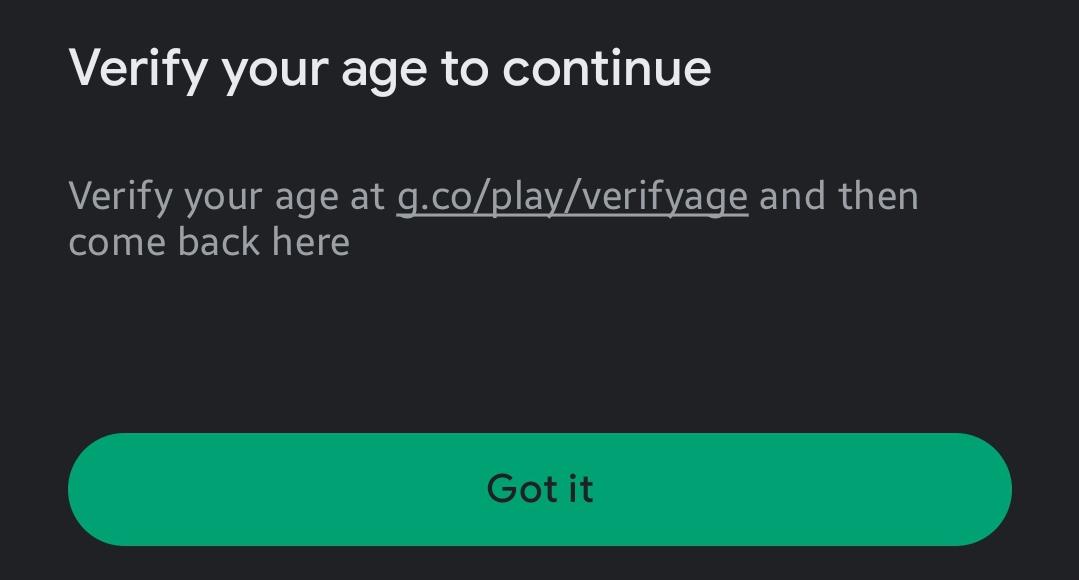
Techlusive reported that some Play Store users could be offered verification options such as a government-issued ID, credit card or facial age estimation, depending on the account, country and applicable regulations. It also noted that users who decline verification could lose access to certain age-restricted apps or content rather than their entire Google Account.
News18 similarly presented the development as an expansion of age verification for Android users. However, Google’s first-party announcement focuses specifically on the worldwide expansion of the Play Age Signals API, which shares age ranges and does not automatically require every user to upload an ID or selfie.
More stringent verification processes may operate separately in regions where laws require app stores to confirm users’ ages.
Google’s Play Console Help page says eligible accounts in applicable US states will be required to complete age verification according to each state law’s effective date. The company began rolling out age signals and a Play Store verification flow for new Texas users whose accounts were created after May 28, 2026.
Google’s current API documentation also states that version 0.0.3 can return age signals for eligible users in Texas and Brazil, with wider availability planned through the newly announced rollout.
What Changes For Parents And Developers?
Parents will retain access to existing Family Link controls, including app-download approvals, content filters and screen-time limits. In applicable US states, Google may also seek parental consent for downloads, purchases and significant changes involving supervised accounts.
Topics for more insights:
Developers are not universally required by Google Play to use the API. However, they remain responsible for determining whether local regulations apply to their apps and for providing appropriate experiences to younger users.
As the global rollout progresses, Android users may encounter more apps that adjust their content or safety controls according to an age range. Still, the expansion should not be interpreted as an immediate, universal identity-verification requirement for everyone using the Play Store.
